Portret Johann Carl Loth

46 najsłynniejszych obrazów artysty Johann Carl Loth, każdy niepowtarzalny

Aktualizacja: Listopad 2026 · ranking według naszego wskaźnika popularności (liczba wyszukiwań, wizyt i zamówień dla każdego dzieła) · 47 dzieł Johann Carl Loth w naszym katalogu

W skrócie

Selene and Endymion (1670) to obraz autorstwa Johann Carl Loth, który przyciąga najwięcej spojrzeń; oryginał znajduje się w Rijksmuseum, Amsterdam. Następnie wzrok kieruje się na Jacob Blesses Ephraim and Manasseh (1692) i Old Peasant Lighting a Pipe (1660). Spośród 47 dzieł Johann Carl Loth w naszym katalogu, tych 46 jest najbardziej znanych – każde z nich to unikatowy oryginał, przedstawiony wraz z rokiem powstania, muzeum oraz powodem, dla którego przetrwało próbę czasu.

1632 – 1698, Monachium Baroque Najwięcej dzieł: Bawarskie Państwowe Zbiory Malarstwa

10 najlepszych obrazów autorstwa Johann Carl Loth według oka galerii

1
Selene and Endymion (1670) autorstwa Johann Carl Loth

Selene and Endymion

1670 · Oil On Canvas · Rijksmuseum, Amsterdam

In this dramatic oil painting, we find ourselves witnessing a moment of profound stillness and longing. The scene captures the mythological meeting between Selene, the personification of the Moon, and the sleeping Endymion. The composition moves with a heavy, diagonal energy, pulling the eye from the upper left down toward the lower right, following the curve of the figures. Endymion lies in a deep, earthly slumber, his muscular form rendered…

2
Jacob Blesses Ephraim and Manasseh (1692) autorstwa Johann Carl Loth

Jacob Blesses Ephraim and Manasseh

1692 · Oil On Canvas · Kunsthistorisches Museum, Wiedeń

In this 1692 oil on canvas, an aged, semi-nude patriarch leans forward to bestow a blessing upon two young boys, Ephraim and Manasseh. The composition is tightly packed, utilizing a dynamic, triangular formation that directs the viewer's eye toward the central elderly figure. The scene captures a moment of profound interpersonal drama, where the physical presence of the figures is emphasized through heavy drapery and muscular contours. Light falls theatrically…

3
Old Peasant Lighting a Pipe (1660) autorstwa Johann Carl Loth

Old Peasant Lighting a Pipe

1660 · Oil On Canvas · Art Institute of Chicago, Chicago

A single, focused light source pierces a heavy darkness, illuminating a weathered face in a moment of profound concentration. This profile view captures an elderly man as he attends to a clay pipe, the thin stem acting as a visual guide through the composition. The scene is defined by a stark chiaroscuro, where deep shadows recede into an indeterminate background, pushing the subject into the immediate foreground. Every wrinkle in…

4
Music Lesson (1650) autorstwa Johann Carl Loth

Music Lesson

1650 · Oil On Canvas · Muzeum Pałacu Króla Jana III w Wilanowie, Warszawa

In the oil painting Music Lesson by Johann Carl Loth, the artist employs an oval composition to frame a tightly cropped scene. The figures are arranged in a triangular formation, a structural choice that directs the viewer's eye toward the central action. A muscular male figure plays a pan flute, or syrinx, while an older man wearing a laurel wreath observes or instructs a younger woman. This arrangement creates a…

5
Diogenes (1650) autorstwa Johann Carl Loth

Diogenes

1650 · Oil On Canvas · Minneapolis Institute of Art, Minneapolis

A muscular, bearded man emerges from a dark, near-black background in this 1650 oil painting. He is positioned in a tight, close-up composition that focuses on his upper torso and head. His skin is rendered with detailed musculature, particularly across the shoulder, chest, and arm. A single light source, a lit candle contained within a handheld lantern, casts sharp highlights onto his anatomy. This light creates a strong chiaroscuro effect,…

6
Susannah and the Elders (1650) autorstwa Johann Carl Loth

Susannah and the Elders

1650 · Oil On Canvas · Muzeum J. Paula Getty'ego, Los Angeles

In Susannah and the Elders, Johann Carl Loth brings a heavy, dramatic tension to the canvas. The scene unfolds from a narrative found within the Old Testament, capturing a moment of profound intrusion. Susannah finds herself cornered by two men, their presence a sudden and unsettling weight in her private space. The air feels thick with the gravity of this confrontation, as the figures press into a tight, triangular arrangement…

7
The Exposure of the Infant Moses (1665) autorstwa Johann Carl Loth

The Exposure of the Infant Moses

1665 · Oil · Bawarskie Państwowe Zbiory Malarstwa, Monachium

In The Exposure of the Infant Moses, Johann Carl Loth captures a heavy moment from the Book of Exodus. The scene centers on a small infant resting in a vessel upon the ground. A muscular man reaches toward the child, his body taut with effort. To the side, a woman collapses in grief, her hand pressed against her forehead as she faces a moment of profound despair. The weight of…

8
Christ Appears to Saint Anthony (1665) autorstwa Johann Carl Loth

Christ Appears to Saint Anthony

1665 · Oil · Bawarskie Państwowe Zbiory Malarstwa, Monachium

In this dramatic Baroque oil painting, titled Christ Appears to Saint Anthony, Johann Carl Loth captures a profound mystical encounter. Created about 1665, the work focuses on the intimate connection between the Christ Child and the saint. The composition centers on the upper bodies of these two figures, drawing the viewer into a private moment of spiritual presence. The Christ Child is depicted as a plump, nude infant leaning forward…

10
John the Baptist (1665) autorstwa Johann Carl Loth

John the Baptist

1665 · Oil · Bawarskie Państwowe Zbiory Malarstwa, Monachium

This oil painting, titled John the Baptist, was executed by the German Baroque painter Johann Carl Loth. The work dates to about 1665. It presents a vertical portrait that focuses on the head and the upper torso of the subject. The figure is a muscular man characterized by a beard and a gaze directed upward and to his right. He is depicted in a state of intense spiritual or emotional…

Słynne obrazy artysty Johann Carl Loth, od 11 do 46

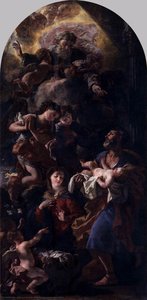
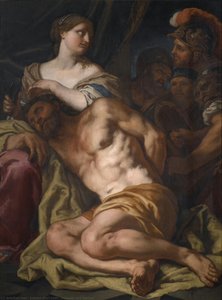
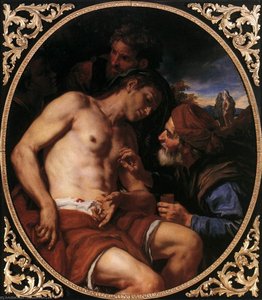
11Christ on the Cross (1665) autorstwa Johann Carl LothChrist on the Cross1665 · Bawarskie Państwowe Zbiory Malarstwa 12Adoration of the Shepherds (1665) autorstwa Johann Carl LothAdoration of the Shepherds1665 · Bawarskie Państwowe Zbiory Malarstwa 13David with the Head of Goliath (1665) autorstwa Johann Carl LothDavid with the Head of Goliath1665 · Bawarskie Państwowe Zbiory Malarstwa 14Mockery of Christ (1665) autorstwa Johann Carl LothMockery of Christ1665 · Bawarskie Państwowe Zbiory Malarstwa 15Isaac Blesses Jacob (1665) autorstwa Johann Carl LothIsaac Blesses Jacob1665 · Bawarskie Państwowe Zbiory Malarstwa 16The Shame of Noah (1674) autorstwa Johann Carl LothThe Shame of Noah1674 · Bawarskie Państwowe Zbiory Malarstwa 17The Dying Seneca (1665) autorstwa Johann Carl LothThe Dying Seneca1665 · Bawarskie Państwowe Zbiory Malarstwa 18The Rescue of Agrippina, Mother of Nero (1665) autorstwa Johann Carl LothThe Rescue of Agrippina, Mother of Nero1665 · Bawarskie Państwowe Zbiory Malarstwa 19Boy in Armor (1665) autorstwa Johann Carl LothBoy in Armor1665 20Cato the Younger's Death (1672) autorstwa Johann Carl LothCato the Younger's Death1672 · Statens Museum for Kunst 21Saint Joseph with the Christ Child (1680) autorstwa Johann Carl LothSaint Joseph with the Christ Child1680 · Bawarskie Państwowe Zbiory Malarstwa 22Holy Family with the Christ Child John (1680) autorstwa Johann Carl LothHoly Family with the Christ Child John1680 · Bawarskie Państwowe Zbiory Malarstwa 23Saint John the Baptist (1680) autorstwa Johann Carl LothSaint John the Baptist1680 · Słowacka Galeria Narodowa w Bratysławie 24Saint Paul (1675) autorstwa Johann Carl LothSaint Paul1675 · Muzeum Narodowe w Warszawie 25Faun playing the flute. (1675) autorstwa Johann Carl LothFaun playing the flute.1675 · Muzeum Narodowe w Warszawie 26Martyrdom of Gerard of Csanád (1677) autorstwa Johann Carl LothMartyrdom of Gerard of Csanád1677 · Musée Des Beaux 27Holy Family and God the Father (1681) autorstwa Johann Carl LothHoly Family and God the Father1681 · San Silvestro 28The Guardian Angel and Archangel Michael (1691) autorstwa Johann Carl LothThe Guardian Angel and Archangel Michael1691 · Bawarskie Państwowe Zbiory Malarstwa 29Saint Dominic Receives the Rosary (1691) autorstwa Johann Carl LothSaint Dominic Receives the Rosary1691 · Bawarskie Państwowe Zbiory Malarstwa 30The Death of Cato. (1700) autorstwa Johann Carl LothThe Death of Cato.1700 · Muzeum Narodowe w Warszawie 31Abraham Visited by the Angels autorstwa Johann Carl LothAbraham Visited by the Angels 32Death of St Peter Martyr (1691) autorstwa Johann Carl LothDeath of St Peter Martyr1691 · Bazylika San Zanipolo 33Lowering of Moses into the Nile (Amram and Jochebed lowering their son Moses in a basket into the Nile) (1700) autorstwa Johann Carl LothLowering of Moses into the Nile (Amram and Jochebed lowering their son Moses in a basket into the Nile)1700 · Ernest Zmeták Art Gallery 34Apollo, Pan, and Marsyas autorstwa Johann Carl LothApollo, Pan, and MarsyasBerlińskie Muzea Państwowe 35Eliezer i Rebeka przy studnie (1670) autorstwa Johann Carl LothEliezer i Rebeka przy studnie1670 · Ermitaż 36Self-Portrait autorstwa Johann Carl LothSelf-PortraitBawarskie Państwowe Zbiory Malarstwa 37The Crowning with thorns autorstwa Johann Carl LothThe Crowning with thornsFinnish National Gallery 38Saint Sebastian autorstwa Johann Carl LothSaint SebastianNational Gallery Prague 39Kampf des Jakob mit d. Engel ? autorstwa Johann Carl LothKampf des Jakob mit d. Engel ? 40Adam and Eve autorstwa Johann Carl LothAdam and EveKedleston Hall 41Lot and His Daughters autorstwa Johann Carl LothLot and His Daughters 42Samson and Delilah autorstwa Johann Carl LothSamson and DelilahFondazione Brescia Musei 43Mercury Piping to Argus autorstwa Johann Carl LothMercury Piping to ArgusNational Gallery 44Jupiter and Mercury at Philemon and Baucis autorstwa Johann Carl LothJupiter and Mercury at Philemon and BaucisKunsthistorisches Museum 45The Good Samaritan autorstwa Johann Carl LothThe Good SamaritanKunsthistorisches Museum 46The Good Samaritane (1676) autorstwa Johann Carl LothThe Good Samaritane1676 · Kunstsammlungen Graf von Schönborn

Tematy, które przyciągnęły wzrok Johann Carl Loth

Cztery motywy najczęściej powracające w tych oryginałach, z których każdy doczekał się swojego najdoskonalszego przykładu.

Muzea przechowujące oryginały Johann Carl Loth

8 muzeów, w których znajduje się najwięcej obrazów z tej strony.

Muzea Miasto Dzieła artysty Johann Carl Loth Obrazy z tej listy
Bawarskie Państwowe Zbiory Malarstwa, MonachiumBawarskie Państwowe Zbiory Malarstwa Monachium 17 The Exposure of the Infant Moses, Christ Appears to Saint Anthony, The Penitent Mary Magdalene
Kunsthistorisches Museum, WiedeńKunsthistorisches Museum Wiedeń 3 Jacob Blesses Ephraim and Manasseh, Jupiter and Mercury at Philemon and Baucis, The Good Samaritan
Muzeum Narodowe w Warszawie, WarszawaMuzeum Narodowe w Warszawie Warszawa 3 Saint Paul, Faun playing the flute., The Death of Cato.
Rijksmuseum, AmsterdamRijksmuseum Amsterdam 1 Selene and Endymion
Art Institute of Chicago, ChicagoArt Institute of Chicago Chicago 1 Old Peasant Lighting a Pipe
Muzeum Pałacu Króla Jana III w Wilanowie, WarszawaMuzeum Pałacu Króla Jana III w Wilanowie Warszawa 1 Music Lesson
Minneapolis Institute of Art, MinneapolisMinneapolis Institute of Art Minneapolis 1 Diogenes
Muzeum J. Paula Getty'ego, Los AngelesMuzeum J. Paula Getty'ego Los Angeles 1 Susannah and the Elders

Johann Carl Loth na przestrzeni dekad: jeden unikatowy oryginał dla każdego

Dzieła według dekad

Wybierz dekadę, aby zobaczyć dzieło, które ją definiuje.

Obrazy artysty Johann Carl Loth: pytania do galerii

Jakie jest najsłynniejsze dzieło artysty Johann Carl Loth?Odkryj odpowiedź

Selene and Endymion (1670), Rijksmuseum, Amsterdam. Następne są Jacob Blesses Ephraim and Manasseh (1692) oraz Old Peasant Lighting a Pipe (1660).

W jakim wieku Johann Carl Loth stworzył/a Selene and Endymion?Odkryj odpowiedź

38 lat: Selene and Endymion pochodzi z 1670, a Johann Carl Loth urodził(a) się w 1632.

Które dziesięć obrazów Johann Carl Loth jest najbardziej znanych?Odkryj odpowiedź

Selene and Endymion, Jacob Blesses Ephraim and Manasseh, Old Peasant Lighting a Pipe, Music Lesson, Diogenes, Susannah and the Elders, The Exposure of the Infant Moses, Christ Appears to Saint Anthony, The Penitent Mary Magdalene i John the Baptist. Powyższy ranking zawiera rok powstania oraz muzeum dla każdego z nich.

Ile znanych dzieł stworzył Johann Carl Loth?Odkryj odpowiedź

Nasz katalog zawiera 47 dzieł artysty Johann Carl Loth, datowanych od 1650 do 1692.

Gdzie można zobaczyć najsłynniejsze oryginały Johann Carl Loth?Odkryj odpowiedź

W większości znajdują się w Bawarskie Państwowe Zbiory Malarstwa (Monachium), Kunsthistorisches Museum (Wiedeń) i Muzeum Narodowe w Warszawie (Warszawa). Powyższa tabela muzeów zawiera ich pełną listę.

W jakim okresie Johann Carl Loth stworzył/a swoje najsłynniejsze obrazy?Odkryj odpowiedź

W 1660s: 13 z 46 dzieł na tej stronie powstało w tym czasie, w tym Old Peasant Lighting a Pipe.

Który z najsłynniejszych obrazów artysty Johann Carl Loth powstał najwcześniej, a który najpóźniej?Odkryj odpowiedź

Na tej stronie najwcześniejszy to Music Lesson (1650), a najpóźniejszy Jacob Blesses Ephraim and Manasseh (1692).

Jakie tematy preferował Johann Carl Loth?Odkryj odpowiedź

Man (28), Drapery (15) i Skin (11), w ramach 46 dzieł na tej stronie.

Jakich materiałów Johann Carl Loth używał najczęściej?Odkryj odpowiedź

Oil On Canvas, dla 23 z 46 dzieł na tej stronie.

Do jakiego nurtu należy twórczość Johann Carl Loth?Odkryj odpowiedź

Baroque, sądząc po oryginałach na tej stronie.

Jakie oryginały Johann Carl Loth można zobaczyć w Bawarskie Państwowe Zbiory Malarstwa?Odkryj odpowiedź

The Exposure of the Infant Moses, Christ Appears to Saint Anthony i The Penitent Mary Magdalene: Bawarskie Państwowe Zbiory Malarstwa, Monachium posiada 17 dzieł widocznych na tej stronie.

Johann Carl Loth: portret artysty

Wenecki mistrz dramatu: Życie i dziedzictwo Johann Carl Loth

W skąpanej w słońcu, teatralnej atmosferze siedemnastowiecznej Wenecji, niewielu artystów potrafiło uchwycić głębokie napięcie między tym, co boskie, a tym, co ziemskie, z taką biegłością jak Johann Carl Loth. Urodzony około 1632 roku w Monachium, w granicach Elektoratu Bawarii, Loth był malarzem, którego tożsamość łączyła solidne tradycje niemieckiego rzemiosła z świetlistym, pełnym emocji przepychem baroku włoskiego. Choć jego nazwisko może nie budzić tak natychmiastowego rozpoznania jak imię Tycjana, jego obecność w weneckim krajobrazie artystycznym była monumentalna. Słynął z tego, że biograf Arnold Houbraken wymieniał go jako jednego z trzech wielkich mistrzów sztuki noszących imię „Karel” – prestiżowe wyróżnienie, które postawiło go obok takich luminarzy jak Karel Duijardin czy Carlo Maratta, zwiastując jego wejście do elity europejskiego malarstwa.

Artystyczna droga Lotha rozpoczęła się pod czujnym okiem jego ojca, Johann Ulrich Loth, malarza, który zapewnił mu fundamenty technicznej rygorystyczności, pozwalającej synowi na późniejsze eksperymentowanie z tak wielką skalą dzieł. Wczesne szkolenie w Monachium zaszczepiło w nim zdyscyplinowane podejście do kompozycji, jednak to przeprowadzka do Wenecji prawdziwie rozpaliła jego kreatywnego ducha. W tętniącym życiem weneckim środowisku Loth chłonął wpływy Giovan Battista Langettiego, przyjmując styl definiowany przez chiaroscuro – dramatyczną grę światła i cienia – oraz skłonność do tenebrizmu. Ta technika pozwalała mu rzeźbić postaci z mroku, nadając płótnom poczucie ciężaru, tajemnicy i duchowej pilności, co stało się jego niekwestionowanym podpisem.

Tkanina mitu i pisma

Prawdziwy geniusz dzieł Lotha tkwi w jego zdolności do przekształcania płótna w scenę dla najbardziej epickich narracji ludzkiej historii. Specjalizował się w wielkoformatowych malowidłach historycznych, często charakteryzujących się gęsto zaludnionymi, tłumnymi scenami grupowymi, które wymagały ogromnych umiejętności kompozycyjnych. Jego tematy czerpano ze źródła, jakim była mitologia klasyczna oraz głębokie pokłady Starego Testamentu, traktowane nie tylko jako ilustracje, lecz jako żywe, oddychające dramaty. Bez względu na to, czy przedstawiał niebiańską interwencję bogów, czy bolesne próby biblijnych patriarchów, Loth wykorzystywał paletę żywych kolorów i swobodnych, ekspresyjnych pociągnięć pędzla, aby wywołać intensywne emocje.

Mistrzostwo to doskonale widać w takich dziełach jak Jowisz i Merkury u Filemona i Bauki, gdzie boska obecność jest wyczuwalna poprzez nagłe, iluminujące światło, które przenika skromne otoczenie śmiertelnej chaty. Podobnie jego kompozycje religijne, takie jak Święta Rodzina i Bóg Ojciec, ukazują głębokie panowanie nad głębią atmosferyczną i sakralną intymnością. Jego zdolność do wplatania złożonych ludzkich emocji – oddania, strachu, zachwytu i miłości rodzinnej – w te wielkie narracje sprawiła, że jego twórczość rezonowała daleko poza granicami Włoch, przyciągając uwagę prestiżowych mecenasów, w tym cesarza Leopolda I z dworu Habsburgów w Wiedniu.

Wpływ, współpraca i nieprzemijające znaczenie

Kariera Lotha nie była samotnym wysiłkiem, lecz procesem naznaczonym znaczącą synergią artystyczną. W Wenecji podejmował owocne współprace z innymi mistrzami, takimi jak Pietro Liberi, wspólnie realizując ambitne zlecenia, które podnosiły standardy historycznego opowiadania obrazem. Jego pracownia stała się latarnią dla aspirujących talentów; Loth kształtował pokolenia malarzy, w tym Michaela Wenzla Halbaxa oraz Johann Michaela Rottmayra, dbając o to, by jego znaki szczególne – dramatyczne oświetlenie i teatralne kompozycje – niosły się przez kolejne dekady sztuki barokowej. Nawet poza światem malarstwa, sława Lotha przyciągała zamożnych podróżników i artystów, takich jak Cornelis de Bruijn, czyniąc jego studio kluczowym węzłem w europejskiej sieci artystycznej.

Pod koniec życia, mieszkając w Wenecji aż do śmierci w 1698 roku, Loth zabezpieczył dziedzictwo, które wykraczało poza jego niemieckie pochodzenie. Był malarzem, który potrafił władać zarówno intymnym cieniem pojedynczej postaci, jak i chaotyczną energią tłumu. Dziś jego dzieła znajdują się w najbardziej cenionych instytucjach świata, od Kunsthistorisches Museum w Wiedniu po Ermitaż w Petersburgu. Dzięki umiejętności połączenia strukturalnej dyscypliny młodości z emocjonalną płynnością szkoły weneckiej, Johann Carl Loth pozostaje definitywnym głosem epoki baroku, przypominając nam o czasach, gdy sztuka była wielką, teatralną pogonią za tym, co wzniosłe.