
Duomo: En florentinsk vev av tro og kunst
Dypt inne i hjertet av Firenze, Italia, står Duomo – formelt kjent som katedralen Santa Maria del Fiore – ikke bare som en religiøs bygning, men som et monumentalt vitnesbyrd om byens evige arv av kunstnerisk innovasjon og borgerstolthet. Mer enn bare en kirke er det en oppslukende opplevelse, en lagdelt fortelling vevd sammen av århundreers ambisjoner, kløkt og åndelig hengivenhet. Duomo-komplekset, som omfatter selve katedralen, Giottos klokketårn og Museo dell’Opera del Duomo, tilbyr besøkende en dyp reise inn i sjelen til renessansens Firenze – en by som fortsetter å vekke ærefrykt og undring.
Historien begynner i 1296 med Arnolfo di Cambio, som fikk i oppdrag av pave Bonifatius VIII å erstatte en tidligere romansk struktur. Hans design var banebrytende for sin tid, men ble til slutt ansett som for beskjedent for den storslåtte visjonen man hadde. Det var ikke før midten av det 14. århundret at Francesco Talenti dramatisk utvidet katedralens omfang ved å ta i bruk en mesterlig gotisk stil, preget av svevende buer og vidstrakte skip. Likevel er det Filippo Brunelleschis dristige kuppel – fullført i 1436 – som virkelig definerer Duomoens ikoniske silhuett. Brunelleschis ingeniørmessige underverk, bygget uten stillas ved bruk av innovative teknikker, står fremdeles som en pustløs bragd innen renessansens oppfinnsomhet, et symbol på Firenzes grenseløse ambisjoner og mestring av materialer.
- Sentrale arkitektoniske trekk: Katedralen prydes av fantastiske polykrome marmorpaneler på ytterveggene, som viser frem intrikate geometriske mønstre og stiliserte blomstermotiver. Fasaden, et nygotisk mesterverk fra det 19. århundre av Emilio De Fabris, står i skarp kontrast til det opprinnelige middelalderske designet, men komplementerer det likevel på vakkert vis.
- Interiørets prakt: Innvendig blir de besøkende møtt av enorme rom opplyst av fjorten praktfulle glassmalerier, der hvert bilde skildrer bibelske scener og figurer. Gulvet er en bergtagende mosaikk av marmor, møysommelig utformet gjennom århundrer.
- Giottos Campanile: Ved siden av katedralen reiser Giottos klokketårn seg og tilbyr panoramautsikt over Firenze – et absolutt must for enhver besøkende. Selve tårnet er utsmykket med skulpturer som fremstiller bibelske scener og skikkelser fra Firenzes historie.
Skatter i Museo dell’Opera del Duomo
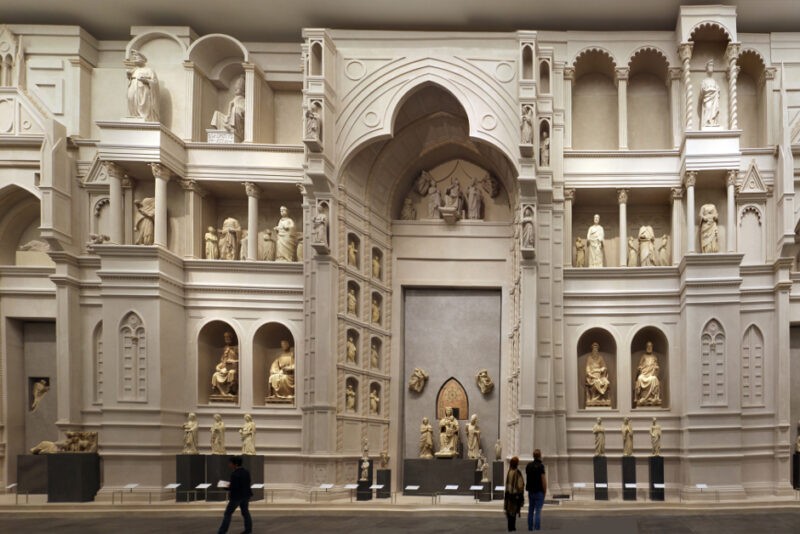
Museo dell’Opera del Duomo, som ligger rett ved katedralen, fungerer som et avgjørende depot for gjenstander direkte knyttet til konstruksjonen og restaureringen av Duomo-komgi. Det er her besøkende virkelig kan fordype seg i de intrikate detaljene i dette monumentale arbeidet og være vitne til den kunstneriske arven det skapte. Museet huser en ekstraordinær samling av originale skulpturer, mosaikker, glassmalerier og arkitektoniske modeller – mange av disse ble reddet fra katedralen under restaureringsarbeider.
Et høydepunkt er uten tvil Ghibertis Paradisport, et par bronse dører som opprinnelig prydet dåpskapellet. Disse detaljrike panelene skildrer scener fra Det gamle testamentet og viser Ghibertis uovertrufne ferdigheter innen skulptur og hans mestring av perspektiv. Donatellos skulpturer, inkludert de ikoniske verkene St. Markus og St. Sebastian , er også fremtredende utstilt og gir et gripende innblikk i renessansens kunstneriske sans. Museet gir en uvurderlig kontekst for å forstå Duomoens utvikling og kunstnerne som formet dens varige skjønnhet.
Domenico di Michelino: En florentinsk visjonær
Verkene til Domenico di Michelino tilbyr et fascinerende vindu inn i den religiøse kunsten i Firenze under renessansen. Han er primært kjent for sine fresker inne i selve Duomo, særlig de som skildrer scener fra Det gamle testamentet og Dantes Den guddommelige komedie . Di Michelinos stil kjennetegnes av dramatiske komposisjoner, levende farger og en nitid oppmerksomhet på detaljer. Hans fremstillinger av bibelske figurer er gjennomsyret av en dyp følelse av menneskelighet, noe som reflekterer de humanistiske idealene som vant frem i denne epoken.
Di Michelinos «Komedie som lyser opp Firenze», et storskala panelmaleri, eksemplifiserer hans kunstneriske visjon – en feiring av florentinsk borgerstolthet og religiøs tro. Kunstverket er et vitnesbyrd om byens kulturelle dynamikk og dens rolle som et sentrum for lærdom og innovasjon. Museo dell’Opera del Duomo rommer flere eksempler på Di Michelinos arbeid, noe som gir besøkende en intim forståelse av hans kunstneriske bidrag til Duomo-komplekset.
En arv av innovasjon og kunstnerisk ekspertise
Duomo er mer enn bare en bygning; det er et symbol på Firenzes urokkelige ånd – et vitnesbyrd om menneskelig kløkt, kunstnerisk briljans og urokkelig tro. Fra Brunelleschis revolusjonerende kuppel til Ghibertis Paradisport, legemliggjør Duomo-komplekset selve essensen av renessansen. Pågående restaureringsarbeid sikrer at dette storslåtte monumentet vil fortsette å inspirere kommende generasjoner og bevare sin arv som en av verdens største arkitektoniske bragder.
Nåværende utstillinger og arrangementer: Museo dell’Opera del Duomo arrangerer regelmessig midlertidige utstillinger som viser relaterte kunstverk og historiske dokumenter. Sjekk deres nettside for detaljer om aktuelle begivenheter og spesialprogrammer. Ikke gå glipp av muligheten til å klatre opp i Giottos klokketårn for en pustløs panoramautsikt over Firenze!