Portrett av Mary Beale

Mary Beales malerier: De 64 mest kjente, sett gjennom et galleris øyne

Oppdatert October 2026 · rangert etter vår popularitetsscore (søk, besøk og bestillinger for hvert verk) · 65 verk av Mary Beale i vår katalog

Kort fortalt

Etter galleriets vurdering er Mary Beales mest kjente maleri King Charles II (1675), hvis original henger i National Portrait Gallery, London. Bartholomew Beale (1663) og Portrait of a lady (1680) fullfører trioen som alle kjenner igjen. Av de 65 verkene til Mary Beale i vår katalog, presenterer galleriet de 64 mest kjente nedenfor; hvert originalverk med årstall, museum og hva som gjør det unikt.

1633 – 1699, Barrow Baroque Flest verk: National Portrait Gallery

Galleriets 10 beste malerier av Mary Beale

1
King Charles II (1675) av Mary Beale

King Charles II

1675 · Oil On Canvas · National Portrait Gallery, London

The monarch emerges from a deep, shadowy void, his presence commanding the space within an oval frame. King Charles II gazes outward with a somber, regal expression that suggests the heavy weight of sovereignty. Light sweeps in from the upper left, catching the high ridge of his cheekbone and the delicate, intricate folds of a white lace cravat. This directional glow carves his features out of the darkness, creating a…

2
Bartholomew Beale (1663) av Mary Beale

Bartholomew Beale

1663 · Oil On Paper · Yale Center for British Art, New Haven

A young boy gazes out from the canvas, his eyes wide and filled with a quiet, thoughtful intensity. He sits slightly off-center, his small form bathed in a soft, directional light that spills from the upper left, casting gentle shadows across the right side of his face. This light creates a sense of three-dimensional volume, making his youthful features feel tangible and present. His hair, a halo of light brown…

4
Viscountess Frances Hatton (1664) av Mary Beale

Viscountess Frances Hatton

1664 · Oil On Canvas · Smithsonian American Art Museum, Washington, D.C.

In this close-up portrait of Viscountess Frances Hatton by Mary Beale, the subject is positioned in a three-quarter view. The figure is contained within a painted trompe l'oeil oval frame that sits against a background of deep, dark umber and black. This dark backdrop creates a sharp contrast with the subject, focusing the viewer's attention on the sitter. The color palette is dominated by warm, muted tones, specifically ochre, gold,…

6
Bartholomew Beale, in Profile (1660) av Mary Beale

Bartholomew Beale, in Profile

1660 · Oil On Paper · Tate Britain, London

In this intimate Baroque oil on paper painting, titled Bartholomew Beale, in Profile, the artist Mary Beale turns her gaze toward a young boy. The work emerges from the year 1660, capturing a fleeting moment of childhood through a side view that emphasizes the soft contours of a small face. This portrait offers a quiet glimpse into the artist's private sphere, as the subject is her own son.

7
An Unknown Man, called John Milton (1608-1674) (1660) av Mary Beale

An Unknown Man, called John Milton (1608-1674)

1660 · Oil · Nostell Priory, Wakefield

In this 1660 portrait, we encounter a man captured in a moment of profound contemplation. The subject is presented in a three-quarter view, framed by an illusionistic painted oval that lends a sense of depth to the composition. There is a certain gravity to his presence, an intellectual weight that seems to emanate from his calm expression. The lighting is deliberate, employing a chiaroscuro technique that pulls the face and…

8
Portrait of a woman with a black hood (1660) av Mary Beale

Portrait of a woman with a black hood

1660 · Oil On Canvas · National Museum of Women in the Arts, Washington, D.C.

The gaze of a single female figure meets the viewer in Portrait of a woman with a black hood, an oil work created by Mary Beale in 1660. This portrait captures a moment of quietude, presenting the subject in a bust-length view that feels immediate and personal. The woman appears framed within an oval-shaped trompe l'oeil effect, a visual device that creates the illusion of a window into her private…

9
Sir Courtenay Pole, 2nd Bt, MP (1618/19–1695) (1670) av Mary Beale

Sir Courtenay Pole, 2nd Bt, MP (1618/19–1695)

1670 · Oil On Canvas · Antony House

This portrait depicts Sir Courtenay Pole, 2nd Bt, MP (1618/19–1695). The subject is rendered in a bust-length composition, presented within an illusionistic painted oval frame that creates a trompe l'oeil effect. The sitter is shown in military attire, specifically wearing a polished steel cuirass and a white cravat. The work is an oil on canvas painting executed by the artist Mary Beale.

10
Self-Portrait Holding a Palette (1670) av Mary Beale

Self-Portrait Holding a Palette

1670 · Oil On Canvas

Mary Beale's Self-Portrait Holding a Palette, executed about 1670, presents a formal and dignified three-quarter length portrait. The subject is a woman, identified as the artist herself, seated and turned slightly toward the viewer. She holds an artist's palette in one hand and a fine brush in the other, establishing her professional identity through these symbolic attributes.

Mary Beale sine malerier, rangert fra 11 til 64

11Jan Baptist Van Helmont (not Robert Hooke) (1674) av Mary BealeJan Baptist Van Helmont (not Robert Hooke)1674 12Lady Sadleir (1687) av Mary BealeLady Sadleir1687 · Sutton House 13Sir Edwyn Sadleir, 2nd Baronet of Temple Dinsey (1656-1719) (1687) av Mary BealeSir Edwyn Sadleir, 2nd Baronet of Temple Dinsey (1656-1719)1687 · Sutton House 14Lady Elizabeth Percy, Countess of Ogle, later Duchess of Somerset (1667-1722) and Algernon, later 7th Duke of Somerset (1684 - 1750) as 'Madonna and Child' (after Van Dyck) (1685) av Mary BealeLady Elizabeth Percy, Countess of Ogle, later Duchess of Somerset (1667-1722) and Algernon, later 7th Duke of Somerset (1684 - 1750) as 'Madonna and Child' (after Van Dyck)1685 · Petworth House 15An Unknown Man (1676) av Mary BealeAn Unknown Man1676 · Dunster Castle 16Possibly Mary Morice, Lady Carew  (d. 1698) (1687) av Mary BealePossibly Mary Morice, Lady Carew (d. 1698)1687 · Antony House 17Rachel Carew, Mrs Ambrose Manaton (1669–1705) (1684) av Mary BealeRachel Carew, Mrs Ambrose Manaton (1669–1705)1684 · Antony House 18Portrait of a Young Girl (1681) av Mary BealePortrait of a Young Girl1681 19Charles Beale the Younger (1680) av Mary BealeCharles Beale the Younger1680 20Self-Portrait (1675) av Mary BealeSelf-Portrait1675 21Portrait of Nell Gwyl (1697) av Mary BealePortrait of Nell Gwyl1697 22The Reverend William Cremer (1663/4-1736) (1692) av Mary BealeThe Reverend William Cremer (1663/4-1736)1692 · Felbrigg Hall 23Untitled 2 av Mary BealeUntitled 2 24Portrait of a Physician av Mary BealePortrait of a PhysicianDulwich Picture Gallery 25Portrait of a Mathematician av Mary BealePortrait of a Mathematician 26Mary Wither of Andwell (1670) av Mary BealeMary Wither of Andwell1670 · Art Gallery of South Australia 27Anna Maria, Countess of Shrewsbury (1642–1702) (1659) av Mary BealeAnna Maria, Countess of Shrewsbury (1642–1702)1659 28Master Child, one of the Sons of Sir Francis Child the Elder (1642-1713) (1687) av Mary BealeMaster Child, one of the Sons of Sir Francis Child the Elder (1642-1713)1687 · Osterley Park And House 29Master Child, one of the Sons of Sir Francis Child the Elder (1642-1713) (1687) av Mary BealeMaster Child, one of the Sons of Sir Francis Child the Elder (1642-1713)1687 · Osterley Park And House 30An Unknown Gentleman (believed to be a Member of the Williams Family) av Mary BealeAn Unknown Gentleman (believed to be a Member of the Williams Family)Penmaenmawr Museum 31An Unknown Lady (believed to be a Member of the Williams Family) av Mary BealeAn Unknown Lady (believed to be a Member of the Williams Family)Penmaenmawr Museum 32Lady Leake (1657-1709) av Mary BealeLady Leake (1657-1709)National Maritime Museum 33Unknown woman av Mary BealeUnknown womanNationalmuseum 34Sir Nicholas Stuart, Bart av Mary BealeSir Nicholas Stuart, BartAuckland Art Gallery Toi o Tāmaki 35Aphra Behn, (Engraving) av Mary BealeAphra Behn, (Engraving) 36Head of a man av Mary BealeHead of a man 37Portrait of a Lady as St Agnes av Mary BealePortrait of a Lady as St Agnes 38Half-length seated figure of a leather worker av Mary BealeHalf-length seated figure of a leather worker 39Charles II (1630–1685) av Mary BealeCharles II (1630–1685) 40Figure studies av Mary BealeFigure studies 41John Wilkins av Mary BealeJohn Wilkins 42Portrait of a Baby av Mary BealePortrait of a Baby 43Edward Stillingfleet av Mary BealeEdward Stillingfleet 44Aphra Behn av Mary BealeAphra Behn 45Portrait of a Youth av Mary BealePortrait of a YouthDulwich Picture Gallery 46Thomas Sydenham av Mary BealeThomas SydenhamNational Portrait Gallery 47Charles Beale the Elder av Mary BealeCharles Beale the ElderNational Portrait Gallery 48Mary Beale av Mary BealeMary BealeNational Portrait Gallery 49portrait of the King's mistress, the actress Moll Davis av Mary Bealeportrait of the King's mistress, the actress Moll Davis 50Portrait of a young girl av Mary BealePortrait of a young girl 51John Lake av Mary BealeJohn Lake 52Unknown man av Mary BealeUnknown manNational Portrait Gallery 53Mary Beale with her family av Mary BealeMary Beale with her family 54George Savile, 1st Marquess of Halifax av Mary BealeGeorge Savile, 1st Marquess of HalifaxNational Portrait Gallery 55Portrait of a young boy av Mary BealePortrait of a young boy 56self portrait av Mary Bealeself portrait 57Francis Turner av Mary BealeFrancis Turner 58William Pierrepont av Mary BealeWilliam Pierrepont 59Portrait of an unknown young boy av Mary BealePortrait of an unknown young boy 60Portrait of a Young Child av Mary BealePortrait of a Young Child 61Portrait of Zachary Cradock av Mary BealePortrait of Zachary Cradock 62Portrait of a Gentleman av Mary BealePortrait of a Gentleman 63Portrait of Charles Beale in a Black Hat av Mary BealePortrait of Charles Beale in a Black Hat 64Portrait of Sir Thomas Isham av Mary BealePortrait of Sir Thomas Isham

Motivene som fanget Mary Beales blikk

De fire motivene som går igjen hyppigst i disse originalverkene, hver med sitt fremste eksempel.

Museene som har Mary Beales originalverk

De 8 museene som innehar flest av maleriene på denne siden.

Museum By Verker av Mary Beale Malerier fra denne listen
National Portrait Gallery, LondonNational Portrait Gallery London 6 King Charles II, Thomas Sydenham, Charles Beale the Elder
Antony HouseAntony House 3 Sir Courtenay Pole, 2nd Bt, MP (1618/19–1695), Possibly Mary Morice, Lady Carew (d. 1698), Rachel Carew, Mrs Ambrose Manaton (1669–1705)
Sutton HouseSutton House 2 Lady Sadleir, Sir Edwyn Sadleir, 2nd Baronet of Temple Dinsey (1656-1719)
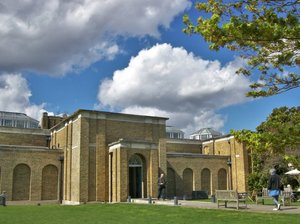
Dulwich Picture Gallery, LondonDulwich Picture Gallery London 2 Portrait of a Physician, Portrait of a Youth
Osterley Park And House, LondonOsterley Park And House London 2 Master Child, one of the Sons of Sir Francis Child the Elder (1642-1713), Master Child, one of the Sons of Sir Francis Child the Elder (1642-1713)
Penmaenmawr Museum 2 An Unknown Gentleman (believed to be a Member of the Williams Family), An Unknown Lady (believed to be a Member of the Williams Family)
Yale Center for British Art, New HavenYale Center for British Art New Haven 1 Bartholomew Beale
National Gallery of Victoria, MelbourneNational Gallery of Victoria Melbourne 1 Portrait of a lady

Mary Beale, ett signaturmaleri per tiår

Verk per tiår

Velg et tiår for å se originalverket som definerer det.

Mary Beales malerier: galleriets svar

Hvilket maleri av Mary Beale er det mest kjente av alle?Avslør svaret

King Charles II (1675), National Portrait Gallery, London. Deretter følger Bartholomew Beale (1663) og Portrait of a lady (1680).

Hvor gammel var Mary Beale da King Charles II ble ferdigstilt?Avslør svaret

42 år gammel: King Charles II er fra 1675, og Mary Beale ble født i 1633.

Hvilke er de 10 beste maleriene til Mary Beale?Avslør svaret

King Charles II, Bartholomew Beale, Portrait of a lady, Viscountess Frances Hatton, Lady Elizabeth Cavendish, Countess of Bridgewater (c.1627-1663), Bartholomew Beale, in Profile, An Unknown Man, called John Milton (1608-1674), Portrait of a woman with a black hood, Sir Courtenay Pole, 2nd Bt, MP (1618/19–1695) og Self-Portrait Holding a Palette. Rangeringen ovenfor viser årstall og museum for hvert verk.

Hvor mange verk skapte Mary Beale?Avslør svaret

Vår katalog inneholder 65 verk av Mary Beale, datert fra 1659 til 1697.

Hvor henger de mest kjente originalverkene til Mary Beale?Avslør svaret

Hovedsakelig i National Portrait Gallery (London), Antony House og Sutton House. Museumslisten ovenfor viser alle.

Når malte Mary Beale sine mest kjente malerier?Avslør svaret

I 1680s: 10 av de 64 verkene på denne siden ble laget da, Portrait of a lady av dem.

Hvilke er Mary Beales tidligste og nyeste berømte verk?Avslør svaret

På denne siden er det eldste Anna Maria, Countess of Shrewsbury (1642–1702) (1659) og det nyeste Portrait of Nell Gwyl (1697).

Hvilke motiver vendte Mary Beale oftest tilbake til?Avslør svaret

Woman (13), Portraits (13) og Royalty (11), fordelt på 64 verk på denne siden.

Hvilket medium arbeidet Mary Beale mest med?Avslør svaret

Oil On Canvas, for 19 av de 64 verkene på denne siden.

Hvilken kunstretning er Mary Beale tilknyttet?Avslør svaret

Baroque, basert på originalene på denne siden.

Hvilke originalverk av Mary Beale har National Portrait Gallery i sin samling?Avslør svaret

King Charles II, Thomas Sydenham og Charles Beale the Elder: National Portrait Gallery, London har 6 av verkene på denne siden.

Mary Beale: kunstneren

A Life Illuminated: The World of Mary Beale

Born in the quiet Suffolk rectory of Barrow in late March 1633, Mary Cradock entered a world where artistic inclination was considered an acceptable pastime, but a profession for a woman remained largely uncharted. Her father, John Cradock, a rector with a painter’s hand himself, provided her initial grounding in the arts—a fortunate circumstance that would shape her destiny. Growing up near Bury St Edmunds, young Mary likely encountered established artists like Peter Lely and Matthew Snelling, absorbing influences that would later blossom into her own distinctive style. This early exposure to the burgeoning London art scene planted a seed of ambition within her, even as societal expectations sought to confine her talents to the domestic sphere. The loss of her mother at age ten brought hardship, but also a strengthened bond with her father and an increased focus on artistic pursuits as a source of solace and expression.

Navigating Convention: Portraiture and Family Life

In 1652, Mary married Charles Beale, a civil servant who would become not only her husband but also her indispensable partner in navigating the complexities of a professional life. Theirs was an unusual collaboration for the era—a true partnership built on mutual respect and shared ambition. The Beales established a home and family, welcoming two sons, Bartholomew and Charles Jr., while simultaneously building Mary’s artistic career. Initially working from their residences in Covent Garden and later Albrook, Hampshire, she began to accept commissions, slowly gaining recognition for her skill. Charles played a pivotal role, managing the practicalities of her studio—preparing materials, handling finances, meticulously recording every detail of her work in his now-famous notebooks. These records offer an invaluable glimpse into 17th-century artistic practice and provide compelling evidence of Mary’s burgeoning success. Her portraits weren't merely likenesses; they were intimate studies of character, capturing the essence of her sitters with a remarkable degree of realism and sensitivity. She specialized in depicting members of her family, friends, local gentry, nobility, and clergy—a diverse clientele that speaks to her growing reputation.

A Baroque Sensibility: Style and Technique

Mary Beale’s artistic style was deeply rooted in the Baroque period, characterized by dramatic lighting, rich colors, and a keen attention to detail. However, she wasn't simply an imitator of prevailing trends. She developed a distinctive approach that set her apart from contemporaries like Lely, infusing her portraits with a warmth and psychological depth that resonated with her sitters. Her technique involved careful observation and meticulous rendering, but also a willingness to experiment with materials and methods. Charles Beale’s notes reveal her innovative exploration of cheaper supports for paintings—such as onion bags and bed-ticking—demonstrating both resourcefulness and a commitment to accessibility. She was particularly adept at capturing the textures of fabrics and the nuances of human expression, creating portraits that felt remarkably alive. Her 1663 manuscript on painting techniques, specifically focusing on apricot hues, stands as the earliest known instructional text by a female painter in English—a testament to her knowledge, skill, and willingness to share her expertise.

Breaking Barriers: Legacy and Historical Significance

Mary Beale’s career was not without its challenges. As a woman artist in 17th-century England, she faced societal constraints that limited opportunities for professional advancement. Yet, she persevered, establishing a thriving practice while simultaneously fulfilling her roles as wife and mother—a remarkable feat in an era when women were largely excluded from public life. Her financial independence, achieved through her art, was particularly noteworthy, challenging conventional expectations and demonstrating her business acumen. She received praise from prominent artists like Sir Peter Lely and recognition in contemporary writings about British art, solidifying her position within the artistic community. Beale’s legacy extends beyond her individual achievements; she paved the way for future generations of women artists, proving that talent knew no gender. In recent decades, her work has experienced a well-deserved rediscovery, with increased scholarly attention and exhibitions showcasing her remarkable contributions to English portraiture. The detailed records kept by Charles Beale provide invaluable insights into the art world, social customs, and daily life of 17th-century England, ensuring that Mary Beale’s story—and her artistry—continues to inspire and captivate audiences today. Her work is preserved on platforms like OriginalUniqueArt, OriginalUniqueArt, and others, guaranteeing her enduring presence in the cultural landscape.

Influences and Connections

Mary's artistic development was shaped by a confluence of factors. Firstly, her father’s own painting skills provided her with an invaluable foundation. Secondly, her proximity to Bury St Edmunds allowed her access to established artists like Peter Lely and Matthew Snelling, offering opportunities for observation and potential mentorship – though the extent of Lely's direct influence remains debated. The artistic circles of London, particularly during her time in Covent Garden, exposed her to the latest trends and techniques. Notably, she studied the work of Sir Anthony van Dyck, a leading court painter at the time, whose style profoundly impacted her own approach to portraiture. Her adoption of Lely’s courtly style—characterized by elegant poses, rich fabrics, and an emphasis on aristocratic grandeur—demonstrates her ability to synthesize diverse influences into a cohesive artistic identity. Furthermore, Charles Beale's meticulous record-keeping provides crucial evidence of the social networks she cultivated, including connections with prominent clergymen and members of the gentry who served as her clients.