Portrett av Théodore Géricault

De 100 mest kjente Théodore Géricault-maleriene, hvert og ett unikt

Oppdatert November 2026 · rangert etter vår popularitetsscore (søk, besøk og bestillinger for hvert verk) · 183 verk av Théodore Géricault i vår katalog

Kort fortalt

Raftet av Medusa (1818) er maleriet av Théodore Géricault som vekker mest oppmerksomhet; originalen befinner seg i Louvre, Paris. Deretter går blikket til Nymph and Satyr (Jupiter and Antiope) (1820) og The Oath of Brutus after the Death of Lucretia (1815). Blant de 183 verkene til Théodore Géricault i vår katalog, er disse 100 de mest kjente – hver og en et unikt originalverk presentert med sitt årstall, sitt museum og årsaken til at det består.

1791 – 1824, Rouen Romantic painting Flest verk: Louvre

Topp 10 malerier av Théodore Géricault, sett gjennom galleriets øyne

1
Raftet av Medusa (1818) av Théodore Géricault

Raftet av Medusa

1818 · Olje på lerret · Louvre, Paris

Jean-Louis André Théodore Géricaults monumentale mesterverk er mer enn bare en skildring av en maritim katastrofe; det er en instinktiv utforskning av menneskelig desperasjon, politisk skandale og naturens sublime kraft. Dette overnaturlige store lerretet (491 x 716 cm), fullført i 1819, foreviger de hjerteskjærende ettervirkningene av forliset til den franske fregatten Méduse i 1816 – en tragedie født ut av inkompetanse og korrupsjon som rystet hele Frankrike.

2
Nymph and Satyr (Jupiter and Antiope) (1820) av Théodore Géricault

Nymph and Satyr (Jupiter and Antiope)

1820 · Acrylic On Canvas · Musée des Beaux-Arts et de la Céramique, Rouen

The Allure of the Divine Encounter: Géricault’s *Nymph and Satyr* Jean-Louis André Théodore Géricault's *Nymph and Satyr*, painted in 1819, isn’t merely a depiction of a mythological scene; it’s a profound exploration of desire, transgression, and the inherent tension between innocence and primal instinct. Born amidst the tumultuous backdrop of post-revolutionary France, Géricault, already recognized for his dramatic intensity, sought to capture not just a narrative but an emotional truth—a…

4
Lions in a Mountainous Landscape (1818) av Théodore Géricault

Lions in a Mountainous Landscape

1818 · Oil · Metropolitan Museum of Art, New York

Six lions occupy a remote, spectrally illuminated lair. The scene is set within a rugged, mountainous landscape, perhaps the Atlas Mountains of Morocco. Four lions dominate the foreground and middle ground, their bodies locked in a moment of intense interaction or struggle. One lion rests on the left, while two others clash in the center, and a fourth occupies the right. High above this animal drama, a solitary figure watches…

5
The Kiss (1822) av Théodore Géricault

The Kiss

1822 · Acrylic On Canvas · Thyssen-Bornemisza-museet, Madrid

Théodore Géricault's "The Kiss," painted in 1816, isn’t merely a depiction of lovers entwined; it’s a visceral embodiment of the burgeoning Romantic movement’s fascination with raw emotion, dramatic intensity, and the sublime. This arresting work, housed within the Thyssen-Bornemisza Museum in Madrid, transcends simple representation to become a profound meditation on passion, vulnerability, and the very essence of human connection. Géricault, already a figure known for his unflinching portrayals of…

6
Wounded Soldiers Retrating from Russia (1814) av Théodore Géricault

Wounded Soldiers Retrating from Russia

1814 · Acrylic On Canvas · Musée des Beaux-Arts, Rouen

A Symphony of Suffering: Géricault’s “Wounded Soldiers Retrating from Russia” Jean-Louis André Théodore Géricault's "Wounded Soldiers Retrating from Russia" is not merely a painting; it’s a visceral embodiment of the horrors and human cost of war, rendered with an unprecedented level of realism and emotional intensity for its time. Completed in 1814, this monumental canvas—measuring a commanding 250 x 206 cm—captures a pivotal moment during Napoleon's disastrous invasion of Russia,…

7
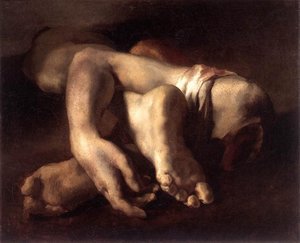
Study of Feet and Hands (1818) av Théodore Géricault

Study of Feet and Hands

1818 · Oil On Canvas · Musée Fabre, Montpellier

Jean-Louis André Théodore Géricault's "Study of Feet and Hands," painted in 1818, isn’t a grand statement of Romantic drama like his monumental “The Raft of the Medusa.” Instead, it offers a profoundly intimate glimpse into the artist’s meticulous process and a poignant meditation on the human form. This unassuming oil painting—measuring a modest 52 x 64 cm—is far more than just a preparatory sketch; it's a concentrated distillation of Géricault’s…

8
The Raft of the Medusa (detail) (1818) av Théodore Géricault

The Raft of the Medusa (detail)

1818 · Oil On Canvas · Louvre, Paris

Jean-Louis André Théodore Géricault's "The Raft of the Medusa," a monumental detail from his 1818 painting, isn’t merely a depiction of shipwreck; it’s a visceral plunge into the depths of human suffering and political indictment. The scene, rendered with a dramatic intensity characteristic of Romanticism, captures the harrowing aftermath of the French frigate *Medusa*'s wreck off the coast of Mauritania in 1816. This disaster, largely attributed to the incompetence and…

9
Leda and the Swan (1817) av Théodore Géricault

Leda and the Swan

1817 · Watercolor · Louvre, Paris

In this study created about 1817, Théodore Géricault captures a moment of profound transformation and divine intrusion. The artwork, titled Leda and the Swan, brings the ancient Greek myth to life through a raw, immediate lens. We witness the instant where the boundaries between the mortal and the divine begin to blur. Leda, an Aetolian princess, finds herself intertwined with a large swan, a creature that is actually Zeus in…

10
The Wreck (1821) av Théodore Géricault

The Wreck

1821 · Oil On Canvas · Louvre, Paris

Théodore Géricault's "The Wreck," painted in 1821, isn’t merely a seascape; it’s a visceral confrontation with the sublime—a raw depiction of humanity’s vulnerability against the overwhelming force of nature. Born amidst the turbulent currents of post-revolutionary France, Géricault, a figure both lauded and controversial within the burgeoning Romantic movement, channeled his own anxieties and the era's fascination with dramatic events into this monumental canvas. The painting immediately commands attention not…

Théodore Géricaults berømte malerier, nummer 11 til 100

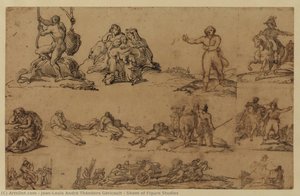
11The Horse Race (1816) av Théodore GéricaultThe Horse Race1816 · Thyssen-Bornemisza-museet 12Swiss Guard and Wounded Veteran (1819) av Théodore GéricaultSwiss Guard and Wounded Veteran1819 · Louvre 13Mazeppa (1823) av Théodore GéricaultMazeppa1823 · Château de Chantilly 14Two Horses (1809) av Théodore GéricaultTwo Horses1809 · The Phillips Collection 15A Turk (Mustapha) (1820) av Théodore GéricaultA Turk (Mustapha)1820 · Louvre 16A Carabinier with his Horse (1814) av Théodore GéricaultA Carabinier with his Horse1814 · Musée des Beaux-Arts 17Riderless Horse Races (detail) (1817) av Théodore GéricaultRiderless Horse Races (detail)1817 · Louvre 18Boxers (1818) av Théodore GéricaultBoxers1818 · Château de Chantilly 19Horse Market: Five Horses at the Stake (1816) av Théodore GéricaultHorse Market: Five Horses at the Stake1816 · Louvre 20The Epsom Derby (1821) av Théodore GéricaultThe Epsom Derby1821 · Louvre 21Mounted Trumpeters of Napoleon's Imperial Guard (1813) av Théodore GéricaultMounted Trumpeters of Napoleon's Imperial Guard1813 · National Gallery of Art 22Three Lovers (1817) av Théodore GéricaultThree Lovers1817 · J. Paul Getty Museum 23Portrait of Simon Bonnesoeur-Bourginire (1812) av Théodore GéricaultPortrait of Simon Bonnesoeur-Bourginire1812 · Minneapolis Institute of Art 24Equestrian portrait of Wincenty Krasiński. (1814) av Théodore GéricaultEquestrian portrait of Wincenty Krasiński.1814 · Nasjonalmuseet i Warszawa 25The Wounded Cuirassier, study (1814) av Théodore GéricaultThe Wounded Cuirassier, study1814 · Brooklyn Museum 26Lion devouring a horse av Théodore GéricaultLion devouring a horseChâteau de Chantilly 27Français Étude de bras et de main realisé par Géricault por son oeuvre Le Radeau de la Méduse (1819) av Théodore GéricaultFrançais Étude de bras et de main realisé par Géricault por son oeuvre Le Radeau de la Méduse1819 28Untitled (ARJCHM) av Théodore GéricaultUntitled (ARJCHM)Louvre 29Scene from the Epidemic of Yellow Fever in Cadiz (1819) av Théodore GéricaultScene from the Epidemic of Yellow Fever in Cadiz1819 · Virginia Museum of Fine Arts 30Head of a Drowned Man (1819) av Théodore GéricaultHead of a Drowned Man1819 31Portrait of a Young Man (1818) av Théodore GéricaultPortrait of a Young Man1818 · Minneapolis Institute of Art 32A study for a nude. (1801) av Théodore GéricaultA study for a nude.1801 · Nasjonalmuseet i Warszawa 33Study of a Model (1818) av Théodore GéricaultStudy of a Model1818 · J. Paul Getty Museum 34The Martyrdom of Saint Peter (1814) av Théodore GéricaultThe Martyrdom of Saint Peter1814 · Kunstmuseum Basel 35The Scotsman (1801) av Théodore GéricaultThe Scotsman1801 · Petit Palais 36Mater dolorosa, Copy after Ribera (1811) av Théodore GéricaultMater dolorosa, Copy after Ribera1811 · Kunstmuseum Basel 37Lion in Repose av Théodore GéricaultLion in ReposeWalters Art Museum 38Equestrian Portrait of Jérôme Bonaparte, after Antoine-Jean GROS (1813) av Théodore GéricaultEquestrian Portrait of Jérôme Bonaparte, after Antoine-Jean GROS1813 · Musée Eugène Delacroix 39Justice and Divine Vengeance Pursuing Crime (1811) av Théodore GéricaultJustice and Divine Vengeance Pursuing Crime1811 40Lying Lions (1812) av Théodore GéricaultLying Lions1812 41The Trumpeter of the Orleans Hussars (1813) av Théodore GéricaultThe Trumpeter of the Orleans Hussars1813 42The Trumpeter of the Lancers of the Guard (1813) av Théodore GéricaultThe Trumpeter of the Lancers of the Guard1813 · Burrell Collection 43The horse is out of the stable (1810) av Théodore GéricaultThe horse is out of the stable1810 · Musée Condé 44Un carabinier, vu à mi-corps (1814) av Théodore GéricaultUn carabinier, vu à mi-corps1814 45Portrait of Louise Vernet (1812) av Théodore GéricaultPortrait of Louise Vernet1812 46Head of a woundet Man (1814) av Théodore GéricaultHead of a woundet Man1814 · Wallraf-Richartz-Museum 47Untitled (ARJCJD) (1814) av Théodore GéricaultUntitled (ARJCJD)1814 48The Monomaniac of Child Abduction (1822) av Théodore GéricaultThe Monomaniac of Child Abduction1822 49Horse Race, Moving to the Right (1820) av Théodore GéricaultHorse Race, Moving to the Right1820 · Musée des Beaux-Arts de Caen 50The Raft of the Medusa (1818) av Théodore GéricaultThe Raft of the Medusa1818 51Etude d'un homme nu (Study of a Nude Man) (1817) av Théodore GéricaultEtude d'un homme nu (Study of a Nude Man)1817 · The New Art Gallery Walsall 52Mounted Jockey (1821) av Théodore GéricaultMounted Jockey1821 · Virginia Museum of Fine Arts 53Portrait of a Negro (1822) av Théodore GéricaultPortrait of a Negro1822 · Buffalo AKG Art Museum 54Portrait Study of a Youth (1819) av Théodore GéricaultPortrait Study of a Youth1819 · Kimbell Art Museum 55The White Horse Tavern (1821) av Théodore GéricaultThe White Horse Tavern1821 · Fogg Museum 56Cattle Market (1817) av Théodore GéricaultCattle Market1817 · Fogg Museum 57Fighting Horses (1820) av Théodore GéricaultFighting Horses1820 · Cleveland Museum of Art 58Wounded Soldiers in a Cart (1815) av Théodore GéricaultWounded Soldiers in a Cart1815 · Fitzwilliam Museum 59Shipwrecked on a Beach (The Tempest) (1822) av Théodore GéricaultShipwrecked on a Beach (The Tempest)1822 · Yale University Art Gallery 60Alexandre Colin (1815) av Théodore GéricaultAlexandre Colin1815 61The Raft of the Medusa (1818) av Théodore GéricaultThe Raft of the Medusa1818 62Course de Chevaux montés allant à gauche, au moment du départ (1822) av Théodore GéricaultCourse de Chevaux montés allant à gauche, au moment du départ1822 63Francisco de Moncada Marqués d'Aytona (1815) av Théodore GéricaultFrancisco de Moncada Marqués d'Aytona1815 · Amsterdam Museum 64Riderless Racers at Rome (1817) av Théodore GéricaultRiderless Racers at Rome1817 · Walters Art Museum 65Trumpeter of the Hussars (1817) av Théodore GéricaultTrumpeter of the Hussars1817 66Nude Warrior with a Spear (1816) av Théodore GéricaultNude Warrior with a Spear1816 · National Gallery of Art 67The Wild Horse Race at Rome (1817) av Théodore GéricaultThe Wild Horse Race at Rome1817 68The Raft of the Medusa, Detalj, (1819) av Théodore GéricaultThe Raft of the Medusa, Detalj,1819 69Portrait of a Negro (1800) av Théodore GéricaultPortrait of a Negro1800 · Palácio Nacional da Ajuda 70Head of a Youth (1824) av Théodore GéricaultHead of a Youth1824 · Art Gallery of South Australia 71Portrait d'homme (1825) av Théodore GéricaultPortrait d'homme1825 · Musée Fabre 72Equestrian Portrait of Charles V (1814) av Théodore GéricaultEquestrian Portrait of Charles V1814 · Fine Arts Museums of San Francisco 73Chestnut horse in a stable (1814) av Théodore GéricaultChestnut horse in a stable1814 · Cantor Arts Center at Stanford University 74Horses of the Auvergne (1822) av Théodore GéricaultHorses of the Auvergne1822 · University of Michigan Museum of Art 75A Prancing Grey Horse (1812) av Théodore GéricaultA Prancing Grey Horse1812 · Burrell Collection 76The Raft of the Medusa (Le Radeau de la Méduse) - Théodore Géricault (2026) av Théodore GéricaultThe Raft of the Medusa (Le Radeau de la Méduse) - Théodore Géricault2026 77Sheet of Figure Studies (1818) av Théodore GéricaultSheet of Figure Studies1818 · Courtauld Gallery 78Portrait of an Artist in His Studio (1820) av Théodore GéricaultPortrait of an Artist in His Studio1820 · Louvre 79An Officer of the Chasseurs Commanding a Charge (1812) av Théodore GéricaultAn Officer of the Chasseurs Commanding a Charge1812 · Louvre 80Study of a nude man av Théodore GéricaultStudy of a nude manNasjonalmuseet i Warszawa 81The Plaster Kiln (1823) av Théodore GéricaultThe Plaster Kiln1823 · Louvre 82Officer of Chasseurs à Cheval of the Imperial Guard Charging (1812) av Théodore GéricaultOfficer of Chasseurs à Cheval of the Imperial Guard Charging1812 83Dogs Fighting Bears (1814) av Théodore GéricaultDogs Fighting Bears1814 · Foundation E.G. Bührle Collection 84Cheval gris au râtelier (1811) av Théodore GéricaultCheval gris au râtelier1811 85Untitled (ARJCGT) (1814) av Théodore GéricaultUntitled (ARJCGT)1814 86The Woman with Gambling Mania, ca (1822) av Théodore GéricaultThe Woman with Gambling Mania, ca1822 87Deutsch Firmenschild für einen Hufschmied, Detail (1814) av Théodore GéricaultDeutsch Firmenschild für einen Hufschmied, Detail1814 88Italian Landscape with Tomb (1818) av Théodore GéricaultItalian Landscape with Tomb1818 · Petit Palais 89A Cart Loaded with Kegs (1822) av Théodore GéricaultA Cart Loaded with Kegs1822 · Rhode Island School of Design Museum of Art 90Cinq chevaux vus par la croupe (1821) av Théodore GéricaultCinq chevaux vus par la croupe1821 91The Race of the Riderless Horses (1817) av Théodore GéricaultThe Race of the Riderless Horses1817 · J. Paul Getty Museum 92Dervish in His Stall (1820) av Théodore GéricaultDervish in His Stall1820 93Untitled (ARJCHB) (1819) av Théodore GéricaultUntitled (ARJCHB)1819 94Untitled (ARJCJF) (1818) av Théodore GéricaultUntitled (ARJCJF)1818 95Untitled (ARJCHV) (1817) av Théodore GéricaultUntitled (ARJCHV)1817 · Palais des Beaux-Arts de Lille 96German Der Page Mazeppa (1820) av Théodore GéricaultGerman Der Page Mazeppa1820 97English Anatomical Pieces (1819) av Théodore GéricaultEnglish Anatomical Pieces1819 · Musée des Beaux-Arts de Rouen 98A Shipwreck (1817) av Théodore GéricaultA Shipwreck1817 99Français Têtes coupées English Cut heads Português Cabeças cortadas (1818) av Théodore GéricaultFrançais Têtes coupées English Cut heads Português Cabeças cortadas1818 100English Study of Feet and Hands (1819) av Théodore GéricaultEnglish Study of Feet and Hands1819

Théodore Géricaults berømte malerier, periode for periode

Motivene som fanget Théodore Géricaults blikk

De fire motivene som går igjen hyppigst i disse originalverkene, hver med sitt fremste eksempel.

Museene som har Théodore Géricaults originalverk

De 8 museene som innehar flest av maleriene på denne siden.

Museum By Verker av Théodore Géricault Malerier fra denne listen
Louvre, ParisLouvre Paris 19 Raftet av Medusa, The Raft of the Medusa (detail), Leda and the Swan
Château de Chantilly, ChantillyChâteau de Chantilly Chantilly 6 Mazeppa, Boxers, Lion devouring a horse
J. Paul Getty Museum, Los AngelesJ. Paul Getty Museum Los Angeles 3 Three Lovers, Study of a Model, The Race of the Riderless Horses
Nasjonalmuseet i Warszawa, WarszawaNasjonalmuseet i Warszawa Warszawa 3 Equestrian portrait of Wincenty Krasiński., A study for a nude., Study of a nude man
Burrell Collection, GlasgowBurrell Collection Glasgow 8 The Trumpeter of the Lancers of the Guard, A Prancing Grey Horse
Musée Fabre, MontpellierMusée Fabre Montpellier 4 Study of Feet and Hands, Portrait d'homme
Petit Palais, ParisPetit Palais Paris 3 The Scotsman, Italian Landscape with Tomb
Thyssen-Bornemisza-museet, MadridThyssen-Bornemisza-museet Madrid 2 The Kiss, The Horse Race

Théodore Géricault gjennom tiårene: ett unikt originalverk for hvert tiår

Verk per tiår

Velg et tiår for å se originalverket som definerer det.

Théodore Géricaults malerier: spørsmål til galleriet

Hva er det mest kjente verket til Théodore Géricault?Avslør svaret

Raftet av Medusa (1818), Louvre, Paris. Deretter følger Nymph and Satyr (Jupiter and Antiope) (1820) og The Oath of Brutus after the Death of Lucretia (1815).

Hvor gammel var Théodore Géricault da Raftet av Medusa ble skapt?Avslør svaret

27 år gammel: Raftet av Medusa er fra 1818, og Théodore Géricault ble født i 1791.

Hvilke ti malerier av Théodore Géricault er de mest kjente?Avslør svaret

Raftet av Medusa, Nymph and Satyr (Jupiter and Antiope), The Oath of Brutus after the Death of Lucretia, Lions in a Mountainous Landscape, The Kiss, Wounded Soldiers Retrating from Russia, Study of Feet and Hands, The Raft of the Medusa (detail), Leda and the Swan og The Wreck. Rangeringen ovenfor viser årstall og museum for hvert verk.

Hvor mange verk av Théodore Géricault er kjent?Avslør svaret

Vår katalog inneholder 183 verk av Théodore Géricault, datert fra 1800 til 1824.

Hvor kan de mest kjente originalverkene til Théodore Géricault ses?Avslør svaret

Hovedsakelig i Louvre (Paris), Château de Chantilly (Chantilly) og J. Paul Getty Museum (Los Angeles). Museumslisten ovenfor viser alle.

I hvilken periode malte Théodore Géricault sine mest kjente malerier?Avslør svaret

I 1810s: 67 av de 100 verkene på denne siden ble laget da, Raftet av Medusa av dem.

Hvilket kjent maleri av Théodore Géricault er det eldste, og hvilket er det nyeste?Avslør svaret

På denne siden er det eldste Portrait of a Negro (1800) og det nyeste Head of a Youth (1824).

Hvilke motiver foretrakk Théodore Géricault?Avslør svaret

Man (27), Horse (19) og Landscape (12), fordelt på 100 verk på denne siden.

Hvilke materialer brukte Théodore Géricault mest av?Avslør svaret

Oil On Canvas, for 47 av de 100 verkene på denne siden.

Hvilken kunstretning tilhører verkene til Théodore Géricault?Avslør svaret

Romantic painting, basert på originalene på denne siden.

Hvilke originalverk av Théodore Géricault kan jeg se på Louvre?Avslør svaret

Raftet av Medusa, The Raft of the Medusa (detail) og Leda and the Swan: Louvre, Paris har 13 av verkene på denne siden.

Théodore Géricault: et portrett av kunstneren

A Life Forged in Romantic Fire

Jean-Louis André Théodore Géricault, a name that echoes through the annals of French art history, was born into a world poised on the precipice of profound change. Emerging from Rouen in 1791, his early years unfolded amidst the reverberations of revolution and the burgeoning ambitions of Napoleon. Though inheriting a comfortable existence through his family’s legal and business endeavors – including a thriving tobacco enterprise – Géricault's destiny wasn’t etched in law or commerce, but rather within the vibrant realm of artistic expression. His initial training under Carle Vernet, a master of English sporting art, instilled in him a keen eye for anatomy and movement, particularly evident in his depictions of horses—a fascination that would define much of his work. However, it was his subsequent studies with Pierre-Narcisse Guérin that provided the bedrock for his artistic vision, grounding him in the principles of classical composition while simultaneously fueling his restless spirit to seek knowledge independently within the hallowed halls of the Louvre.

The Louvre as Academy: A Dialogue with Masters

From 1810 to 1815, the Louvre transformed into Géricault’s true academy—a sanctuary where he immersed himself in the works of the Old Masters. Rubens, Titian, Velázquez, and Rembrandt became his mentors, not merely through imitation but through a profound engagement with their artistic philosophies. This period wasn't about slavish copying; it was an intense dialogue, an attempt to internalize the very essence of these masters’ approaches to light, shadow, and the human form. He spent countless hours studying their brushstrokes, analyzing their compositions, and grappling with their emotional intensity. This self-directed education fostered a unique artistic voice—a bold departure from the prevailing Neoclassical conventions that emphasized restraint and idealized beauty. His early works, such as *The Charging Chasseur* (1812), already hinted at this emerging sensibility, showcasing a remarkable dynamism of execution and a fascination with movement reminiscent of Rubens’ energetic canvases. He continued to explore equestrian themes, honing his skills in capturing the power and grace of horses—a subject that would remain a recurring motif throughout his career, often imbued with a sense of dramatic tension and impending conflict.

The Raft of the Medusa: A Monument to Human Suffering

Géricault’s name is inextricably linked with *The Raft of the Medusa* (1818-1819), a monumental canvas that transcends mere historical depiction and becomes a searing indictment of human fallibility and societal injustice. Inspired by the harrowing true story of the shipwreck of the French frigate Méduse in 1816, where negligence and incompetence led to unimaginable suffering for its passengers, the painting is a visceral portrayal of desperation, hope, and despair. Géricault undertook meticulous research—interviewing survivors, studying corpses at hospitals, and even constructing a scale model of the raft itself to ensure accuracy—a testament to his commitment to realism and emotional truth. The resulting work isn’t simply a depiction of tragedy; it's an immersive experience that confronts viewers with the raw reality of human suffering. The composition, built around two pyramidal structures – one representing despair and death, the other embodying hope and potential rescue – creates a dynamic tension that draws the eye across the canvas, mirroring the struggle for survival amidst overwhelming odds. *The Raft of the Medusa* was controversial upon its exhibition at the Salon of 1819, sparking political debate and solidifying Géricault’s reputation as a daring and unconventional artist. The painting's impact extended beyond the art world, becoming a symbol of governmental incompetence and human resilience in the face of unimaginable hardship.

Beyond Tragedy: Military Themes and Artistic Legacy

While *The Raft of the Medusa* remains his most celebrated achievement, Géricault’s artistic output extended far beyond this singular masterpiece. He continually returned to military themes—evident in works like *Wounded Cuirassier* (1814) and *The Derby of Epsom* (1821)—demonstrating a fascination with drama and expressive force. These paintings reveal his continued exploration of human emotion under duress, often focusing on the physical and psychological toll of conflict. He also ventured into portraiture and lithography, further expanding his artistic repertoire and solidifying his position as a leading figure in the burgeoning Romantic movement. Sadly, Géricault’s life was tragically cut short by illness at the age of 32 in 1824, following years of suffering from riding accidents and a chronic tubercular infection. His premature death robbed the art world of a prodigious talent, but his influence on subsequent generations of artists—particularly Eugène Delacroix—was profound. He is remembered as a pioneer of Romanticism, an artist who dared to confront difficult truths and imbue his work with a powerful emotional resonance that continues to captivate audiences today. His bronze figure reclines, brush in hand, on his tomb at Père Lachaise Cemetery in Paris, above a low-relief panel depicting the harrowing scene from *The Raft of the Medusa*—a fitting tribute to an artist who dedicated his life to capturing the complexities and contradictions of the human condition.

Key Characteristics & Influences

  • Romanticism: Géricault is considered one of the first French Romantic painters, moving away from Neoclassical ideals towards emotional intensity and dramatic expression.
  • Dramatic Composition: His paintings are known for their dynamic compositions, often utilizing diagonal lines and contrasting light and shadow to create a sense of movement and tension.
  • Realism & Research: Géricault was committed to realism, conducting extensive research—including studying corpses and interviewing survivors—to ensure the accuracy and emotional impact of his work.
  • Influence of Old Masters: He drew inspiration from Baroque masters like Rubens, Titian, and Velázquez, adopting their techniques for dramatic lighting and expressive brushwork.
  • Focus on Human Suffering: His art often depicts scenes of tragedy, despair, and the darker aspects of human experience, reflecting a Romantic fascination with intense emotions.