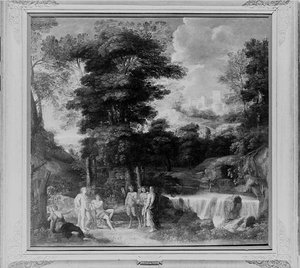
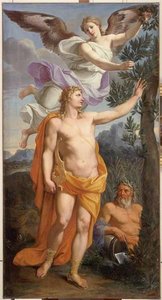
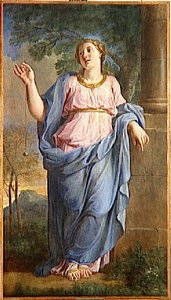
Portrett av Noël Coypel

Noël Coypels malerier: De 83 mest kjente, sett gjennom et galleris øyne

Oppdatert November 2026 · rangert etter vår popularitetsscore (søk, besøk og bestillinger for hvert verk) · 90 verk av Noël Coypel i vår katalog

Kort fortalt

Etter galleriets vurdering er Noël Coypels mest kjente maleri LE TRIOMPHE D'APOLLON, hvis original henger i Louvre, Paris. The Martyrdom of James, Son of Zebedee (1661) og Neptune enlevant la nymphe Amymone fullfører trioen som alle kjenner igjen. Av de 90 verkene til Noël Coypel i vår katalog, presenterer galleriet de 83 mest kjente nedenfor; hvert originalverk med årstall, museum og hva som gjør det unikt.

1628 – 1707, Paris Baroque Flest verk: Louvre

Galleriets 10 beste malerier av Noël Coypel

1
LE TRIOMPHE D'APOLLON av Noël Coypel

LE TRIOMPHE D'APOLLON

Oil On Canvas · Louvre, Paris

To stand before Noel Nicolas Coypel’s Le Triomphe d'Apollon is to step directly into the gilded halls of Baroque mythology. This painting is not merely a depiction; it is an immersion in idealized classical splendor. The central figure, embodying the radiant power and divine grace associated with Apollo—the god of light, music, and the arts—commands the viewer’s gaze. Coypel masterfully frames this apotheosis within an architectural setting so opulent, one…

2
The Martyrdom of James, Son of Zebedee (1661) av Noël Coypel

The Martyrdom of James, Son of Zebedee

1661 · Oil On Canvas

Noël Coypel executed The Martyrdom of James, Son of Zebedee in 1661. The artist, born in Paris, France, in 1628, was a significant figure in the French classical tradition. This work captures a violent moment of religious history through a dramatic composition.

3
Neptune enlevant la nymphe Amymone av Noël Coypel

Neptune enlevant la nymphe Amymone

Oil On Canvas

The canvas titled Neptune enlevant la nymphe Amymone presents a sudden collision of salt and skin. In this work by Noël Coypel, the god Neptune reaches through the spray to claim the nymph Amymone. It is a moment of divine movement captured in oil, dating to about 1720. The scene freezes the instant of abduction, where the ruler of the seas meets the resistance of the mortal world.

4
Birth of Venus (1732) av Noël Coypel

Birth of Venus

1732 · Eremitasjen, St. Petersburg

Noël-Nicolas Coypel’s “Birth of Venus,” painted in 1732, isn't merely a depiction of a classical myth; it’s a vibrant embodiment of the Baroque spirit – a theatrical celebration of beauty, divine grace, and the potent allure of love. This magnificent canvas, now residing within the esteemed collection of the Tokyo Fuji Art Museum, transports us to a world where mythology intertwines with opulent grandeur and sensual delight. It's a painting…

5
Arabesques. A Sacrifice (1650) av Noël Coypel

Arabesques. A Sacrifice

1650 · Oil On Canvas

The air within this grand, multi-panel composition feels thick with the scent of ancient incense and the weight of divine ritual. Six vertical sections pull the eye upward, creating a rhythmic ascent that mimics the movement of smoke rising toward the heavens. Figures do not merely sit; they float and descend in a swirling, choreographed dance of flesh and drapery. Cherubs, or putti, drift through a sky of pale blues…

6
The Triumph of Bacchus (five fragments) (1675) av Noël Coypel

The Triumph of Bacchus (five fragments)

1675 · Oil On Canvas

This large-scale decorative scheme, composed of five fragments, presents a complex mythological scene through a monochromatic lens. The composition is structured around a dense, vertical arrangement of figures, garlands, and architectural elements. It reflects the French Baroque style, characterized by movement and theatricality. The arrangement of nymphs, satyrs, and deities amidst lush vegetation and classical architecture suggests a highly organized, ornamental design intended for a larger wall or ceiling decoration.…

7
The Triumph of Apollo (three fragments) (1675) av Noël Coypel

The Triumph of Apollo (three fragments)

1675 · Oil On Canvas

The gaze meets The Triumph of Apollo (three fragments), a work that emerges from the brush of Noël Coypel. Created about 1675, this piece captures a moment of mythological significance, centering on the celestial victory of Apollo. The scene unfolds through an allegorical lens, presenting the triumph of the god of light and music in a way that feels both structured and alive. It is a window into the grand…

8
The Triumph of Minerva (four fragments) (1675) av Noël Coypel

The Triumph of Minerva (four fragments)

1675 · Oil On Canvas

The Triumph of Minerva (four fragments) is a significant work by the French painter Noël Coypel. Created during the second half of the seventeenth century, specifically between 1684 and 1690, these fragments represent a substantial undertaking from the artist's career. The work is part of the Collection de Louis XIV, originating from the manufacture des Gobelins.

9
The Reprobation of Cain after the Death of Abel (1675) av Noël Coypel

The Reprobation of Cain after the Death of Abel

1675 · Oil

In The Reprobation of Cain after the Death of Abel, Noël Coypel captures the harrowing aftermath of the first fratricide. The scene unfolds with a heavy, visceral weight, presenting a moment of eternal consequence where the silence of sin meets the light of the heavens. Cain kneels in the foreground, his body language conveying a soul fractured by his own actions. He shields a face contorted by despair, his hands…

10
The Triumph of Mars (one of four fragments) (1687) av Noël Coypel

The Triumph of Mars (one of four fragments)

1687 · Oil On Canvas

The Triumph of Mars (one of four fragments) is a monumental Baroque oil painting by Noël Coypel. Executed around 1687, this vertical composition functions as an allegorical study of power and classical authority. The work belongs to a larger series of four fragments, of which this piece remains a significant component.

Noël Coypel sine malerier, rangert fra 11 til 83

11The Triumph of Mars (one of four fragments) (1687) av Noël CoypelThe Triumph of Mars (one of four fragments)1687 12The Triumph of Mars (one of four fragments) (1687) av Noël CoypelThe Triumph of Mars (one of four fragments)1687 13Spring and Summer (1695) av Noël CoypelSpring and Summer1695 14Apollo Shepherd Guarding the Herds of Admetus (1688) av Noël CoypelApollo Shepherd Guarding the Herds of Admetus1688 · Opera House 15Autumn and Winter (1697) av Noël CoypelAutumn and Winter1697 16The Chariot of the Day Natural (1695) av Noël CoypelThe Chariot of the Day Natural1695 17Apollo Crowned by Victory (1688) av Noël CoypelApollo Crowned by Victory1688 · Opera House 18The Sacrifice of Manoah and His Wife, Parents of Samson (1690) av Noël CoypelThe Sacrifice of Manoah and His Wife, Parents of Samson1690 · Hood Museum of Art 19Jupiter Raised by the Korybantes (1701) av Noël CoypelJupiter Raised by the Korybantes1701 20Madame de Bourbon-Conti (1731) av Noël CoypelMadame de Bourbon-Conti1731 · Ringling Museum of Art 21Justice Punishing (1681) av Noël CoypelJustice Punishing1681 · Château de Versailles 22The Bath of Diana (1732) av Noël CoypelThe Bath of Diana1732 · Eremitasjen 23The Rape of Europa (detail) (1727) av Noël CoypelThe Rape of Europa (detail)1727 · Philadelphia Museum of Art 24Trajan donnant des audiences publiques av Noël CoypelTrajan donnant des audiences publiquesLouvre 25Christ at Prayer on the Mount of Olives (1704) av Noël CoypelChrist at Prayer on the Mount of Olives1704 26Jupiter Chariot between Justice and Piety (study) (1671) av Noël CoypelJupiter Chariot between Justice and Piety (study)1671 27APOLLON COURONNE PAR MINERVE av Noël CoypelAPOLLON COURONNE PAR MINERVELouvre 28Equity (also known as Equité) (1668) av Noël CoypelEquity (also known as Equité)1668 · Château de Fontainebleau 29Hercules Fighting Achelous (1669) av Noël CoypelHercules Fighting Achelous1669 30LA REPROBATION DE CAIN APRES LA MORT D'ABEL av Noël CoypelLA REPROBATION DE CAIN APRES LA MORT D'ABELLouvre 31Jupiter Raised by the Korybantes (1705) av Noël CoypelJupiter Raised by the Korybantes1705 32Loth and his Daughters (1704) av Noël CoypelLoth and his Daughters1704 · Musée Des Beaux 33LA NATIVITE av Noël CoypelLA NATIVITE 34The Rape of Europa (1727) av Noël CoypelThe Rape of Europa1727 · Philadelphia Museum of Art 35A Landscape with the Flight into Egypt av Noël CoypelA Landscape with the Flight into Egypt 36FIGURE ALLEGORIQUE av Noël CoypelFIGURE ALLEGORIQUEBavarian State Painting Collections 37LA TERRE av Noël CoypelLA TERRE 38SAINTE FAMILLE av Noël CoypelSAINTE FAMILLE 39APOLLON ET MARSYAS av Noël CoypelAPOLLON ET MARSYAS 40TRAJAN RENDANT LA JUSTICE av Noël CoypelTRAJAN RENDANT LA JUSTICE 41JUPITER ENFANT ELEVE PAR LES CORYBANTES av Noël CoypelJUPITER ENFANT ELEVE PAR LES CORYBANTES 42PTOLEMEE PHILADELPHE REND LA LIBERTE AUX JUIFS av Noël CoypelPTOLEMEE PHILADELPHE REND LA LIBERTE AUX JUIFS 43La Vigilance av Noël CoypelLa Vigilance 44NYMPHES PRESENTANT UNE CORNE D'ABONDANCE A AMALTHEE av Noël CoypelNYMPHES PRESENTANT UNE CORNE D'ABONDANCE A AMALTHEE 45HERCULE ET NESSUS av Noël CoypelHERCULE ET NESSUS 46SOLON EXPLIQUANT SES LOIS av Noël CoypelSOLON EXPLIQUANT SES LOIS 47La Résurrection du Christ av Noël CoypelLa Résurrection du Christ 48DEJANIRE ENVOYANT LA CHEMISE EMPOISONNEE DE NESSUS A HERCULE av Noël CoypelDEJANIRE ENVOYANT LA CHEMISE EMPOISONNEE DE NESSUS A HERCULE 49Apollon vainqueur du serpent Python av Noël CoypelApollon vainqueur du serpent PythonOpera House 50APOLLON ET MERCURE av Noël CoypelAPOLLON ET MERCUREOpera House 51Junon apparaît à Hercule av Noël CoypelJunon apparaît à HerculeOpera House 52HERCULE FAISANT UN SACRIFICE A JUPITER av Noël CoypelHERCULE FAISANT UN SACRIFICE A JUPITER 53HERCULE ET ACHELOUS av Noël CoypelHERCULE ET ACHELOUSOpera House 54L'ABONDANCE av Noël CoypelL'ABONDANCE 55ALEXANDRE SEVERE FAIT DISTRIBUER DU BLE AU PEUPLE DANS UN TEMPS DE DISETTE av Noël CoypelALEXANDRE SEVERE FAIT DISTRIBUER DU BLE AU PEUPLE DANS UN TEMPS DE DISETTE 56APOTHEOSE D'HERCULE av Noël CoypelAPOTHEOSE D'HERCULE 57LA JUSTICE RECOMPENSANTE av Noël CoypelLA JUSTICE RECOMPENSANTE 58SOULAGEMENT DE LA FAMINE PAR LES ENFANTS DE LA PIETE av Noël CoypelSOULAGEMENT DE LA FAMINE PAR LES ENFANTS DE LA PIETE 59LA JUSTICE PUNISSANTE av Noël CoypelLA JUSTICE PUNISSANTE 60ESCLAVES RECEVANT DES MARQUES DE LEUR LIBERTE av Noël CoypelESCLAVES RECEVANT DES MARQUES DE LEUR LIBERTE 61SIMON GUILLAIN (1581 1658) av Noël CoypelSIMON GUILLAIN (1581 1658) 62JUPITER ACCOMPAGNE DE LA JUSTICE ET DE LA PIETE av Noël CoypelJUPITER ACCOMPAGNE DE LA JUSTICE ET DE LA PIETE 63La Résurrection av Noël CoypelLa Résurrection 64ANGES PRESENTANT LE MEDAILLON DE LOUIS XIV av Noël CoypelANGES PRESENTANT LE MEDAILLON DE LOUIS XIV 65Sacrifice to Jupiter av Noël CoypelSacrifice to JupiterOpera House 66ALEXANDRE SEVERE FAISANT DISTRIBUER DU BLE AU PEUPLE DE ROME DANS UN TEMPS DE DISETTE av Noël CoypelALEXANDRE SEVERE FAISANT DISTRIBUER DU BLE AU PEUPLE DE ROME DANS UN TEMPS DE DISETTELouvre 67The Justice of Trajan (small version) (1675) av Noël CoypelThe Justice of Trajan (small version)1675 68Apollon couronne par la Victoire av Noël CoypelApollon couronne par la VictoireLouvre 69PTOLEMEE PHILADELPHE DONNANT LA LIBERTE AUX JUIFS av Noël CoypelPTOLEMEE PHILADELPHE DONNANT LA LIBERTE AUX JUIFSLouvre 70Saint Jacques le Majeur, conduit au supplice, guérit un paralytique et embrasse son accusateur av Noël CoypelSaint Jacques le Majeur, conduit au supplice, guérit un paralytique et embrasse son accusateurLouvre 71L'Equité av Noël CoypelL'Equité 72Christ on the Cross av Noël CoypelChrist on the Cross 73Apollo Crowned by Minerva av Noël CoypelApollo Crowned by Minerva 74Apollo Crowned by Victory av Noël CoypelApollo Crowned by Victory 75Story of Hercules - Hercules Making a Sacrifice to Jupiter av Noël CoypelStory of Hercules - Hercules Making a Sacrifice to Jupiter 76Holy Family (after Raphael, small version) av Noël CoypelHoly Family (after Raphael, small version)Musée des Beaux-Arts de Dijon 77Purchase av Noël CoypelPurchase 78Story of Hercules - The Apotheosis of Hercules av Noël CoypelStory of Hercules - The Apotheosis of Hercules 79Hercule combattant Achelous av Noël CoypelHercule combattant Achelous 80The Nativity (study) av Noël CoypelThe Nativity (study)Musée Des Beaux 81Les échevins parisiens quittent l'Hôtel de Ville pour se rendre à Notre Dame assister au Te Deum, à l'occasion de la victoire de Seneffe (1674) av Noël CoypelLes échevins parisiens quittent l'Hôtel de Ville pour se rendre à Notre Dame assister au Te Deum, à l'occasion de la victoire de Seneffe (1674)Carnavalet Museum 82Marsyas Playing Flute before Apollo and Midas av Noël CoypelMarsyas Playing Flute before Apollo and MidasMusée des Beaux-Arts de Marseille 83SOLON SOUTENANT LA JUSTICE DE SES LOIS CONTRE LES OBJECTIONS DES ATHENIENS av Noël CoypelSOLON SOUTENANT LA JUSTICE DE SES LOIS CONTRE LES OBJECTIONS DES ATHENIENSLouvre

Noël Coypels berømte malerier, periode for periode

Motivene som fanget Noël Coypels blikk

De fire motivene som går igjen hyppigst i disse originalverkene, hver med sitt fremste eksempel.

Museene som har Noël Coypels originalverk

De 8 museene som innehar flest av maleriene på denne siden.

Museum By Verker av Noël Coypel Malerier fra denne listen
Louvre, ParisLouvre Paris 9 LE TRIOMPHE D'APOLLON, Trajan donnant des audiences publiques, APOLLON COURONNE PAR MINERVE
Opera House, VersaillesOpera House Versailles 7 Apollo Shepherd Guarding the Herds of Admetus, Apollo Crowned by Victory, Apollon vainqueur du serpent Python
Eremitasjen, St. PetersburgEremitasjen St. Petersburg 2 Birth of Venus, The Bath of Diana
Philadelphia Museum of Art, PhiladelphiaPhiladelphia Museum of Art Philadelphia 2 The Rape of Europa (detail), The Rape of Europa
Musée Des Beaux, RennesMusée Des Beaux Rennes 2 Loth and his Daughters, The Nativity (study)
Hood Museum of Art, HanoverHood Museum of Art Hanover 1 The Sacrifice of Manoah and His Wife, Parents of Samson
Ringling Museum of Art, SarasotaRingling Museum of Art Sarasota 1 Madame de Bourbon-Conti
Château de Versailles, VersaillesChâteau de Versailles Versailles 1 Justice Punishing

Noël Coypel, ett signaturmaleri per tiår

Verk per tiår

Velg et tiår for å se originalverket som definerer det.

Noël Coypels malerier: galleriets svar

Hvilket maleri av Noël Coypel er det mest kjente av alle?Avslør svaret

LE TRIOMPHE D'APOLLON, Louvre, Paris. Deretter følger The Martyrdom of James, Son of Zebedee (1661) og Neptune enlevant la nymphe Amymone.

Hvilke er de 10 beste maleriene til Noël Coypel?Avslør svaret

LE TRIOMPHE D'APOLLON, The Martyrdom of James, Son of Zebedee, Neptune enlevant la nymphe Amymone, Birth of Venus, Arabesques. A Sacrifice, The Triumph of Bacchus (five fragments), The Triumph of Apollo (three fragments), The Triumph of Minerva (four fragments), The Reprobation of Cain after the Death of Abel og The Triumph of Mars (one of four fragments). Rangeringen ovenfor viser årstall og museum for hvert verk.

Hvor mange verk skapte Noël Coypel?Avslør svaret

Vår katalog inneholder 90 verk av Noël Coypel, datert fra 1650 til 1705.

Hvor henger de mest kjente originalverkene til Noël Coypel?Avslør svaret

Hovedsakelig i Louvre (Paris), Opera House (Versailles) og Eremitasjen (St. Petersburg). Museumslisten ovenfor viser alle.

Når malte Noël Coypel sine mest kjente malerier?Avslør svaret

I 1670s: 6 av de 83 verkene på denne siden ble laget da, The Triumph of Bacchus (five fragments) av dem.

Hvilke er Noël Coypels tidligste og nyeste berømte verk?Avslør svaret

På denne siden er det eldste Arabesques. A Sacrifice (1650) og det nyeste Jupiter Raised by the Korybantes (1705).

Hvilke motiver vendte Noël Coypel oftest tilbake til?Avslør svaret

Mythology (9), Man (9) og Woman (9), fordelt på 83 verk på denne siden.

Hvilket medium arbeidet Noël Coypel mest med?Avslør svaret

Oil On Canvas, for 29 av de 83 verkene på denne siden.

Hvilken kunstretning er Noël Coypel tilknyttet?Avslør svaret

Baroque, basert på originalene på denne siden.

Hvilke originalverk av Noël Coypel har Louvre i sin samling?Avslør svaret

LE TRIOMPHE D'APOLLON, Trajan donnant des audiences publiques og APOLLON COURONNE PAR MINERVE: Louvre, Paris har 9 av verkene på denne siden.

Noël Coypel: kunstneren

En arv smidd i klassisk lys: Livet og kunsten til Noël Nicolas Coypel

Noël Nicolas Coypel, et navn som ofte nevnes med ærbødighet ved siden av sin forgjenger Nicolas Poussin, var en sentral skikkelse i det 17. århundrets franske malerkunst. Han ble født 25. desember 1628 i hjertet av Paris, og hans kunstneriske reise var ikke preget av umiddelbar berømmelse, men snarere av en gradvis oppstigning formet av familiær oppmuntring og en dyp fordypelse i den klassiske tradisjonen. Hans far, selv en kunstner, manglet betydelig suksess, men det var han som tente den første gnisten hos unge Noël – en lidenskap for maleriet som til slutt skulle definere hele hans liv. Denne tidlige eksponeringen viste seg å være mer enn bare et fundament; den inngød i Coypel en besluttsomhet om ikke bare å mestre håndverket, men også å heve dets status gjennom streng studie og urokkelig dedikasjon.

Tidlig opplæring og innflytelsen fra Poussin

Coypels formative år ble i betydelig grad påvirket av hans fascinasjon for verkene til Nicolas Poussin, en monumental skikkelse hvis vektlegging av orden, klarhet og klassisk tematikk resonnerte dypt i den unge kunstneren. Denne beundringen var ikke bare passiv; Coypel søkte aktivt å forstå og etterligne Poussins teknikker ved å studere hans komposisjoner, fargepaletter og tilnærming til form med største nøyaktighet. Et avgjørende skritt i hans utvikling kom da han ble ansatt av Charles Errard, en fremtredende dekoratør som hadde i oppgave å skape en rekke malerier for Louvre-palasset. Dette oppdraget ga uvurderlig praktisk erfaring og lot Coypel foredle sine ferdigheter mens han bidro til et av Frankrikes mest prestisjetunge kunstprosjekter. Han nøt også godt av veiledning under Noël Quillerier, en annen respektert maler som ytterligere forfinede hans forståelse av klassiske prinsipper og komposisjonell balanse.

En karriere definert av institusjonelle roller og storslåtte oppdrag

Coypels karriere utfoldet seg gjennom en serie stadig mer fremtredende roller innen det franske kunstetablissementet. I 1672 ble han utnevnt til direktør for det prestisjetunge franske akademiet i Roma – en stilling som ga ham fire år til å fordype seg i Europas kunstneriske hjerte og ytterligere kultivere sin klassiske sans. Denne utnevnelsen var ikke bare en ære; den signaliserte en anerkjennelse av hans talent og potensial som leder innen kunstverdenen. Ved sin retur til Frankrike steg Coypel i gradene og ble direktør for malerakademiet, hvor han viet seg til å fremme den neste generasjonen kunstnere og opprettholde standardene for akademisk ekspertise. Blant hans mest feirede bragder var arbeidet med storskala dekorative prosjekter, inkludert malerier for Louvre og andre betydningsfulle parisiske institusjoner. Hans Martyrdom of Saint James in Notre Dame står som et vitnesbyrd om hans mestring av klassiske temaer, dramatisk komposisjon og teknisk dyktighet – en kraftfull fremstilling som fanger den elegansen og grandiositeten som er så karakteristisk for hans stil.

Familiearv og varig innvirkning

Navnet Coypel ble synonymt med kunstnerisk talent, en arv som strakte seg langt utover Noël Nicolas selv. Hans sønner, Antoine og Noël-Nicolas Coypel, fulgte i sin fars fotspor, etablerte seg som dyktige malere og bidro til å føre familiens ettermæle videre. Denne familiære hengivenheten understreker betydningen av kunstnerisk opplæring innenfor Coypel-hjemmet og den varige innflytelsen fra Noël Nicolas' eksempel. Utover sin egen produktive virksomhet spilte Coypel en vital rolle i å forme den franske kunstscenen i en periode med betydelige endringer. Hans vektlegging av klassiske prinsipper, kombinert med en raffinert sans for eleganse, etterlot et uutslettelig merke på de mange kunstnerne som fulgte ham. Han var ikke bare en maler; han var en lærer, en administrator og en forkjemper for kunstnerisk fortreffelighet hvis innflytelse fortsatt kan merkes i dag. For å utforske bredden i hans arbeid, inkludert mesterverk som The Martyrdom of Saint James, kan man besøke ressurser som OriginalUniqueArt.com, hvor en omfattende samling av hans malerier venter på å bli oppdaget. Hans kunst forblir en kraftfull påminnelse om den vedvarende skjønnheten og den tidløse appellen i klassisk malerkunst.