Portrett av Jan Provoost

De 55 mest kjente maleriene av Jan Provoost, et gallerivalg

Oppdatert November 2026 · rangert etter vår popularitetsscore (søk, besøk og bestillinger for hvert verk) · 56 verk av Jan Provoost i vår katalog

Kort fortalt

Av alle originalverkene Jan Provoost etterlot seg, er det mest kjente The Virgin and Child (1505), som er en del av samlingen til Scottish National Gallery i Edinburgh. Like bak følger The Dispute of Saint Catherine of Alexandria (1505) og Zechariah (1510). Vår katalog inneholder 56 verk av Jan Provoost; galleriet har bevart de 55 verkene som verden beundrer mest, hver vist med sin dato, sitt museum og sin historie.

1465 – 1529, Mons Northern renaissance Flest verk: Groeningemuseum

Jan Provoosts topp 10 malerier: galleriets utvalg

1
The Virgin and Child (1505) av Jan Provoost

The Virgin and Child

1505 · Oil On Panel · Scottish National Gallery, Edinburgh

The composition centers on the Virgin Mary, her form framed by a structured arch that defines a sacred, enclosed space. She holds the Christ Child against a backdrop of rolling hills and dark foliage under a pale sky. A deep red mantle covers her shoulders, contrasting with the dark blue of her inner garment and the white of her veil. The figures occupy the immediate foreground, their porcelain-like skin rendered…

3
Zechariah (1510) av Jan Provoost

Zechariah

1510 · Oil On Panel · Museo del Prado, Madrid

A single man occupies the center of the frame, his body carved from light and shadow. He is an elderly figure, leaning slightly forward as if caught in a moment of quiet reception. His hands are extended, palms open, reaching into the space between himself and the viewer. There is a stillness in his gaze, a directness that meets the eye with a sense of serene expectation. He is framed…

4
The Last Judgment (1525) av Jan Provoost

The Last Judgment

1525 · Oil On Panel · Detroit Institute of Arts, Detroit

The Last Judgment by Jan Provoost unfolds as a dramatic vision of the final reckoning. Created around 1525, this oil painting captures the moment of divine judgment as Jesus Christ reigns in glory. The scene presents a celestial hierarchy where the heavens meet the earthly realm, presenting a vision of the end of all mankind. It remains a prime example of the Northern Renaissance style, where every corner of the…

5
Mourning of Christ (1490) av Jan Provoost

Mourning of Christ

1490 · Tempera On Panel · Kunsthaus Zürich, Zürich

The composition centers on the body of Christ, which is being lowered from the cross by Nicodemus and John. The pale skin of the deceased figure contrasts with the deep reds and blues of the surrounding garments. Mary Magdalene, Mary the mother of Jesus, and Joseph of Arimathea are positioned closely around the central event, their forms creating a tight, organized arrangement within a shallow landscape. In the background, a…

6
The Annunciate Virgin, Saint Andrew with a Donor and His Sons, Saint Catherine of Alexandria with a Donor and Her Daughters, and the Annunciate Angel (1514) av Jan Provoost

The Annunciate Virgin, Saint Andrew with a Donor and His Sons, Saint Catherine of Alexandria with a Donor and Her Daughters, and the Annunciate Angel

1514 · Oil On Panel · Philadelphia Museum of Art, Philadelphia

The Annunciate Virgin, Saint Andrew with a Donor and His Sons, Saint Catherine of Alexandria with a Donor and Her Daughters, and the Annunciate Angel emerges from the early 16th century as a complex devotional structure. This work by Jan Provoost presents a multi-layered vision of faith, where the sacred and the earthly meet within a single wooden frame. The piece currently resides within the Philadelphia Museum of Art, where…

7
The Virgin and Child (1500) av Jan Provoost

The Virgin and Child

1500 · Oil On Panel · Museo del Prado, Madrid

In this intimate oil on panel, we find ourselves in the presence of a tender, maternal encounter. The Virgin Mary is depicted in a moment of nursing, her form draped in a mantle of deep teal and blue that holds a sculptural weight. She stands against a patterned backdrop, perhaps a carved screen or a heavy textile, which provides a structured, formal setting for this private act. The composition is…

8
Madonna and Child with angels (1480) av Jan Provoost

Madonna and Child with angels

1480 · Oil On Panel

The painting presents a seated Virgin Mary positioned centrally within a lush, enclosed garden. She wears a heavy, dark gown that contrasts with the lighter tones of the surrounding environment. In her right hand, she holds a small bouquet consisting of a red poppy and a white carnation. Above her head, two angelic figures hold a golden crown. To her left, the infant Christ reaches toward his mother's chest with…

9
Entombment of Christ (1490) av Jan Provoost

Entombment of Christ

1490 · Oil On Panel

The heavy silence of the tomb hangs over the Entombment of Christ, a work painted by Jan Provoost around 1490. In this somber scene, the weight of Christian sorrow settles deeply upon the figures gathered in the shadows. The air feels thick with the grief of the Deposition of Christ, capturing a moment where the physical reality of death meets the spiritual ache of those left behind. Every line and…

10
Annunciation (1500) av Jan Provoost

Annunciation

1500 · Oil · Musei di Strada Nuova, Genova

The Annunciation is an oil painting by Jan Provoost, created about 1500. The work depicts a religious scene within a domestic interior, featuring the Virgin Mary and the Archangel Gabriel. Mary is positioned on the left side of the composition in a seated, prayerful posture, wearing a deep red gown. To the right, the Archangel Gabriel appears with large wings and a light blue robe. A white dove, representing the…

Utvalget av Jan Provoost fortsetter, fra 11 til 55

11The Last Judgement (1500) av Jan ProvoostThe Last Judgement1500 · Fogg Museum 12The Lamentation (1490) av Jan ProvoostThe Lamentation1490 13Crucifixion (1500) av Jan ProvoostCrucifixion1500 · Groeningemuseum 14Saint Jerome in the Wilderness (1512) av Jan ProvoostSaint Jerome in the Wilderness1512 · Royal Museums of Fine Arts of Belgium 15Flagellation (1512) av Jan ProvoostFlagellation1512 · Saint Louis Art Museum 16The Nativity at Night (1507) av Jan ProvoostThe Nativity at Night1507 · Upton House 17Saint Clare (1510) av Jan ProvoostSaint Clare1510 18John the Baptist (1503) av Jan ProvoostJohn the Baptist1503 · Rijksmuseum Twenthe 19Saint Dominicus (1503) av Jan ProvoostSaint Dominicus1503 · Rijksmuseum Twenthe 20The Angel of the Annunciation in a stone niche (1503) av Jan ProvoostThe Angel of the Annunciation in a stone niche1503 21Crucifixion (1503) av Jan ProvoostCrucifixion1503 · Groeningemuseum 22Calvary (1517) av Jan ProvoostCalvary1517 · Museum of Fine Arts Ghent (MSK) 23Saint Barbara from Nicodemia (1505) av Jan ProvoostSaint Barbara from Nicodemia1505 · Koninklijk Museum voor Schone Kunsten Antwerpen 24Adoration of the Magi (1505) av Jan ProvoostAdoration of the Magi1505 · Gemäldegalerie 25Virgin Mary and sleeping child enthroned by angels (1503) av Jan ProvoostVirgin Mary and sleeping child enthroned by angels1503 · Staatliche Kunsthalle Karlsruhe 26Diptych with Christ carrying the Cross and Portrait of a Friar Minor, memento mori (reverse) (1522) av Jan ProvoostDiptych with Christ carrying the Cross and Portrait of a Friar Minor, memento mori (reverse)1522 · Sint-Janshospitaal 27Last Judgement (1525) av Jan ProvoostLast Judgement1525 · Groeningemuseum 28The Virgin and Child in a Landscape (1512) av Jan ProvoostThe Virgin and Child in a Landscape1512 · National Gallery 29Allegory of Christianity (1515) av Jan ProvoostAllegory of Christianity1515 30Flowers in a vase in a niche (1480) av Jan ProvoostFlowers in a vase in a niche1480 31Crucifixion (1500) av Jan ProvoostCrucifixion1500 32Crucifixion (1500) av Jan ProvoostCrucifixion1500 33Saint Catherine of Alexandria (1505) av Jan ProvoostSaint Catherine of Alexandria1505 · Museum Boijmans Van Beuningen 34The Virgin and Saint Joseph at Bethlehem (recto) and Virgin Annunciate (verso) (1507) av Jan ProvoostThe Virgin and Saint Joseph at Bethlehem (recto) and Virgin Annunciate (verso)1507 · Upton House 35Triptych of The Adoration of the Magi and Shepherds (centre) with The Annunciation (left wing) and The Madonna adoring the Christ Child (right wing) and Saint John the Baptist and Saint Margaret (closed) (1507) av Jan ProvoostTriptych of The Adoration of the Magi and Shepherds (centre) with The Annunciation (left wing) and The Madonna adoring the Christ Child (right wing) and Saint John the Baptist and Saint Margaret (closed)1507 36Portrait of a Female Donor (1505) av Jan ProvoostPortrait of a Female Donor1505 · Thyssen-Bornemisza-museet 37The Last Judgment (1525) av Jan ProvoostThe Last Judgment1525 · Hamburger Kunsthalle 38Abraham, Sarah, and the Angel av Jan ProvoostAbraham, Sarah, and the Angel 39Last Judgement (1525) av Jan ProvoostLast Judgement1525 40The Martyrdom of St Catherine av Jan ProvoostThe Martyrdom of St CatherineKoninklijk Museum voor Schone Kunsten Antwerpen 41St. Andrew in landscape av Jan ProvoostSt. Andrew in landscape 42Donor with St. Nicholas and his Wife with St. Godelina av Jan ProvoostDonor with St. Nicholas and his Wife with St. Godelina 43Triptych with Virgin and Child, Saint John the Evangelist (left wing) and Mary Magdalene (right wing), Jan Provoost, c. 1505 - c. 1525 (1525) av Jan ProvoostTriptych with Virgin and Child, Saint John the Evangelist (left wing) and Mary Magdalene (right wing), Jan Provoost, c. 1505 - c. 15251525 · Mauritshuis 44St. Catherine av Jan ProvoostSt. Catherine 45The Coronation of the Virgin av Jan ProvoostThe Coronation of the Virgin 46The Coronation of the Virgin (detail) av Jan ProvoostThe Coronation of the Virgin (detail) 47The Martyrdom of St. Catherine av Jan ProvoostThe Martyrdom of St. Catherine 48Death and the Miser av Jan ProvoostDeath and the MiserGroeningemuseum 49Virgin and Child av Jan ProvoostVirgin and Child 50Virgin and Child Enthroned, with Saints Jerome and John the Baptist and a Carthusian Monk, Jan Provoost (attributed to), c. 1510 (1510) av Jan ProvoostVirgin and Child Enthroned, with Saints Jerome and John the Baptist and a Carthusian Monk, Jan Provoost (attributed to), c. 15101510 · Rijksmuseum 51Triptych of Our Lady of Mercy (1515) av Jan ProvoostTriptych of Our Lady of Mercy1515 · Nasjonalmuseet for eldre kunst 52Triptych of the Calheta Matrix Church (1520) av Jan ProvoostTriptych of the Calheta Matrix Church1520 · Sacred Art Museum of Funchal 53The Virgin Mary in Glory (1524) av Jan ProvoostThe Virgin Mary in Glory1524 · Eremitasjen 54Virgin and Child av Jan ProvoostVirgin and ChildEremitasjen 55Virgin Giving Breast av Jan ProvoostVirgin Giving BreastMusée des Beaux-Arts de Strasbourg

Jan Provoosts berømte malerier, periode for periode

Motivene som fanget Jan Provoosts blikk

De fire motivene som går igjen hyppigst i disse originalverkene, hver med sitt fremste eksempel.

Museene som har Jan Provoosts originalverk

De 8 museene som innehar flest av maleriene på denne siden.

Museum By Verker av Jan Provoost Malerier fra denne listen
Groeningemuseum, BruggeGroeningemuseum Brugge 4 Crucifixion, Crucifixion, Last Judgement
Museum Boijmans Van Beuningen, RotterdamMuseum Boijmans Van Beuningen Rotterdam 2 The Dispute of Saint Catherine of Alexandria, Saint Catherine of Alexandria
Museo del Prado, MadridMuseo del Prado Madrid 2 Zechariah, The Virgin and Child
Upton House, BanburyUpton House Banbury 2 The Nativity at Night, The Virgin and Saint Joseph at Bethlehem (recto) and Virgin Annunciate (verso)
Rijksmuseum Twenthe, EnschedeRijksmuseum Twenthe Enschede 2 John the Baptist, Saint Dominicus
Koninklijk Museum voor Schone Kunsten Antwerpen, AntwerpenKoninklijk Museum voor Schone Kunsten Antwerpen Antwerpen 2 Saint Barbara from Nicodemia, The Martyrdom of St Catherine
Eremitasjen, St. PetersburgEremitasjen St. Petersburg 2 The Virgin Mary in Glory, Virgin and Child
Scottish National Gallery, EdinburghScottish National Gallery Edinburgh 1 The Virgin and Child

Jan Provoost tiår for tiår: originalverket som definerer hvert av dem

Verk per tiår

Velg et tiår for å se originalverket som definerer det.

Samlere spør om maleriene til Jan Provoost

Hvilket verk er Jan Provoost mest kjent for?Avslør svaret

The Virgin and Child (1505), Scottish National Gallery, Edinburgh. Deretter følger The Dispute of Saint Catherine of Alexandria (1505) og Zechariah (1510).

Hvor gammel var Jan Provoost da The Virgin and Child ble laget?Avslør svaret

40 år gammel: The Virgin and Child er fra 1505, og Jan Provoost ble født i 1465.

Hva er de ti mest kjente maleriene til Jan Provoost?Avslør svaret

The Virgin and Child, The Dispute of Saint Catherine of Alexandria, Zechariah, The Last Judgment, Mourning of Christ, The Annunciate Virgin, Saint Andrew with a Donor and His Sons, Saint Catherine of Alexandria with a Donor and Her Daughters, and the Annunciate Angel, The Virgin and Child, Madonna and Child with angels, Entombment of Christ og Annunciation. Rangeringen ovenfor viser årstall og museum for hvert verk.

Hvor mange malerier etterlot Jan Provoost?Avslør svaret

Vår katalog inneholder 56 verk av Jan Provoost, datert fra 1480 til 1525.

I hvilke museer henger mesterverkene til Jan Provoost?Avslør svaret

Hovedsakelig i Groeningemuseum (Brugge), Museum Boijmans Van Beuningen (Rotterdam) og Museo del Prado (Madrid). Museumslisten ovenfor viser alle.

I hvilke år malte Jan Provoost sine mest kjente verk?Avslør svaret

I 1500s: 20 av de 55 verkene på denne siden ble laget da, The Virgin and Child av dem.

Hva er de første og de siste kjente originalverkene til Jan Provoost?Avslør svaret

På denne siden er det eldste Madonna and Child with angels (1480) og det nyeste The Last Judgment (1525).

Hvilke motiver valgte Jan Provoost oftest?Avslør svaret

Woman (13), Child (9) og Landscape (9), fordelt på 55 verk på denne siden.

Hvilken teknikk brukte Jan Provoost mest?Avslør svaret

Oil On Panel, for 25 av de 55 verkene på denne siden.

Hvilken kunstretning tilhører Jan Provoost?Avslør svaret

Northern renaissance og Early netherlandish, basert på originalene på denne siden.

Hvilke verk av Jan Provoost stilles ut på Groeningemuseum?Avslør svaret

Crucifixion, Crucifixion og Last Judgement: Groeningemuseum, Brugge har 4 av verkene på denne siden.

Jan Provoost: liv og virke

Renessansens polymath: Livet og arven etter Jan Provoost

I den levende veven av den nordlige renessansen, er det få skikkelser som vever sammen trådene av kunst, vitenskap og intellekt så mesterlig som Jan Provoost. Født rundt 1462 i Mons, eller kanskje Mouscron, fremsto Provoost ikke bare som en maler, men som et ekte renessansemenneske hvis virke strakte seg langt utover staffeliet. Mens hans navn er risset inn i historien gjennom de delikate penselstrøkene til de flamske primitivene, vandret hans sinn gjennom riker av kartografi, ingeniørkunst og arkitektur. Denne sjeldne kombinasjonen av teknisk presisjon og åndelig dybde gjorde det mulig for ham å bygge bro mellom middelalderens fromme tradisjoner og den fremvoksende humanismen i en ny æra.

De tidlige årene i Provoosts liv var preget av en dyp fordypning i de kunstneriske strømningene i Nederlandene. Selv om mye av hans formative opplæring forblir skjult i tidens tåke, sporer lærde ofte hans stilistiske opphav tilbake til den legendariske Hans Memling. Ved å absorbere den nitidige detaljrikdommen og de lysende, atmosfæriske kvalitetene som kjennetegner skolen i Brugge, utviklet Provoost et visuelt språk som var både fredfullt og dypt symbolsk. Hans karriere førte ham til å lede innflytelsesrike verksteder i både Brugge—hvor han oppnådde den prestisjefylte statusen som borger i 1494—og Antwerpen, den travle økonomiske hjertet i regionen. Denne doble tilstedeværelsen gjorde at hans innflytelse gjennomsyret de viktigste kunstneriske knutepunktene i Europa.

En symfoni av symbolikk og teknikk

Å betrakte et verk av Jan Provoost er å tre inn i en verden der hver skygge bærer på en hemmelighet og hver farge forteller en historie. Hans teknikk var definert av den mesterlige bruken av lasur, hvor han påførte tynne, gjennomsiktige lag med oljemaling for å skape en følelse av indre lys som ser ut til å stråle fra selve trepanelene. Denne metoden gjorde det mulig for ham å gjengi de tunge, skulpturelle foldene i draperier og den myke, duggfriske teksturen i hud med en nesten taktil realisme. Hans komposisjoner sentrerte ofte rundt Jomfru Maria og barnet, motiver han nærmet seg med en lavmælt eleganse som unngikk dramatisk teater til fordel for en dyp, stille hellighet.

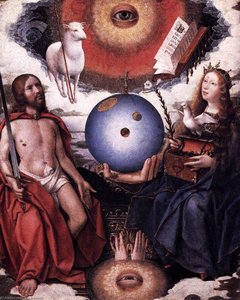
Utover hans devosjonale verk er Provoosts evne til å navigere i komplekse allegoriske temaer tydelig i mesterverk som Kristendommens allegori. I dette verket benytter kunstneren et sofistikert vokabular av symboler—bøker, esker og himmelske sfærer—for å kommunisere troens intrikate doktriner. Hans ferdighet lå i evnen til å balansere disse tette intellektuelle lagene med en harmonisk fargepalett og en klarhet i form som forble tilgjengelig for betrakteren. Enten han fremstilte alvoret i Den siste dom eller den intime ømheten i en Madonna med ammende barn, besatt Provoost en unik evne til å fange det guddommelige i den menneskelige erfaring.

Den varige innflytelsen fra Provoost-verkstedet

Den sanne betydningen av Jan Provoosts bidrag ligger ikke bare i hans individuelle hånd, men i den vedvarende vitaliteten til hans verksted. Hans studio fungerte som en livsviktig inkubator for talent, og fostret en stil som ville påvirke generasjoner av nederlandske malere. Produksjonen fra Jan Provoosts verksted var preget av en sømløs blanding av gotisk fromhet og fremvoksende renessanse-estetikk, noe som sikret at tradisjonene til de flamske primitivene utviklet seg snarere enn å forsvinne. Gjennom hans samarbeidsvilje og hans evne til å tiltrekke seg både elever og mestere, bidro han til å opprettholde den kunstneriske prestisjen i Brugge og Antwerpen i en periode med enorme kulturelle omveltninger.

Når vi reflekterer over hans liv, ser vi en kunstner som var like mye en vitenskapsmann som en skaper. Hans møter med lysende skikkelser som Albrecht Dürer i Antwerpen antyder en mann som var dypt engasjert i Europas skiftende intellektuelle tidevann. Provoosts arv finnes i den stille styrken i hans portretter, den arkitektoniske presisjonen i hans design og den lysende dybden i hans religiøse ikoner. Han forblir en sentral skikkelse hvis arbeid fungerer som et vindu inn i et transformativt øyeblikk i menneskets historie, der den gamle verdens hengivenhet møtte den nye verdens utforskende ånd.