


1


Oppdatert November 2026 · rangert etter vår popularitetsscore (søk, besøk og bestillinger for hvert verk) · 25 verk av Frederick Walker i vår katalog
Kort fortalt
Etter galleriets vurdering er Frederick Walkers mest kjente maleri The Old Gate (1868), hvis original henger i Birmingham Museum and Art Gallery, Birmingham. The Gondola (1868) og Mother with a baby and a nursemaid (1866) fullfører trioen som alle kjenner igjen. Av de 25 verkene til Frederick Walker i vår katalog, presenterer galleriet de 25 mest kjente nedenfor; hvert originalverk med årstall, museum og hva som gjør det unikt.


Frederick Walker’s depiction, "The Old Farm Garden," invites us into a scene steeped in the quiet poetry of everyday life. It is more than just a garden; it is a carefully curated moment where human activity intersects with natural beauty. The composition centers around an elegant woman, whose gentle focus—perhaps on her knitting or simply observing the bloom before her—creates an immediate sense of peaceful contemplation for the viewer. Walker…
De fire motivene som går igjen hyppigst i disse originalverkene, hver med sitt fremste eksempel.
De 5 museene som innehar flest av maleriene på denne siden.
| Museum | By | Verker av Frederick Walker | Malerier fra denne listen |
|---|---|---|---|
 Birmingham Museum and Art Gallery |
Birmingham | 2 | The Old Gate, The Gondola |
 Fitzwilliam Museum |
1 | Mother with a baby and a nursemaid | |
 Tate Britain |
London | 1 | The Vagrants |
 National Gallery of Victoria |
Melbourne | 1 | The right of way |
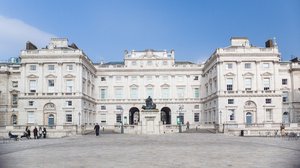 Courtauld Gallery |
London | 1 | The Old Farm Garden |
Noen ti år, fra 1866 til 1875, var nok for Frederick Walker: galleriet går gjennom dem år for år, ett berømt originalverk etter det andre.
Velg et år for å se originalverkene.
Frederick Walker’s depiction, "The Old Farm Garden," invites us into a scene steeped in the quiet poetry of everyday life. It is more than just a garden; it is a carefully curated moment where human activity intersects with natural beauty. The composition centers around an elegant woman, whose gentle focus—perhaps on her knitting or simply observing the bloom before her—creates an immediate sense of peaceful contemplation for the viewer. Walker…
The Old Gate (1868), Birmingham Museum and Art Gallery, Birmingham. Deretter følger The Gondola (1868) og Mother with a baby and a nursemaid (1866).
28 år gammel: The Old Gate er fra 1868, og Frederick Walker ble født i 1840.
The Old Gate, The Gondola, Mother with a baby and a nursemaid, The Old Gate, The Vagrants, The Harbour of Refuge, The right of way, Spring, Autumn og The Old Farm Garden. Rangeringen ovenfor viser årstall og museum for hvert verk.
Vår katalog inneholder 25 verk av Frederick Walker, datert fra 1866 til 1875.
Hovedsakelig i Birmingham Museum and Art Gallery (Birmingham), Fitzwilliam Museum og Tate Britain (London). Museumslisten ovenfor viser alle.
I 1868: 3 av de 25 verkene på denne siden ble laget da, The Old Gate av dem.
På denne siden er det eldste Mother with a baby and a nursemaid (1866) og det nyeste The right of way (1875).
Victorian era (3), Autumn (2) og Harbour (2), fordelt på 25 verk på denne siden.
Realism, basert på originalene på denne siden.
The Old Gate og The Gondola: Birmingham Museum and Art Gallery, Birmingham har 2 av verkene på denne siden.
In the vibrant, often turbulent landscape of mid-Victorian England, few artists captured the quiet dignity and poignant struggles of the common person as masterfully as Frederick Walker. A central figure in the social realist movement, Walker possessed a rare ability to transform the mundane details of everyday life into profound narratives of human emotion. Born in London in 1840, the son of a jeweler, Walker’s journey was one of self-driven passion and disciplined craftsmanship. His early years were marked by a precocious talent for mimicry, as he taught himself the intricacies of pen and ink by copying prints, often finding solace and inspiration within the halls of the British Museum. This foundational period of intense observation would later become the hallmark of his mature style, allowing him to render the textures of rural life and urban hardship with an almost tactile intimacy.
Walker’s professional ascent was characterized by a seamless blend of fine art and commercial illustration, a duality that defined much of the nineteenth-century British art scene. After brief forays into architecture and formal training at the Royal Academy and James Mathews Leigh's art school, he entered an apprenticeship as a wood engraver under Josiah Wood Whymper. It was within this rigorous environment of printmaking that Walker forged lasting bonds with contemporaries like George Pinwell and J.W. North, creating a creative circle that would influence the direction of British genre painting. His rise to prominence was accelerated by his prolific work for popular periodicals such as Cornhill Magazine and Once a Week. Through these much-read journals, Walker’s illustrations reached a vast audience, earning him the admiration of literary giants like William Thackeray, for whom he provided evocative drawings that breathed life into serialized fiction.
The brilliance of Walker’s work lies in his ability to weave complex emotional layers into seemingly simple scenes. Whether working in the delicate medium of watercolor or the robust depth of oils, his technique was always at the service of the story. He moved beyond mere illustration, elevating the status of "genre painting"—the depiction of everyday life—to a level of high art. His compositions often utilized a soft, atmospheric light that lent a sense of nostalgia and tenderness to his subjects, even when depicting scenes of poverty or loss. This mastery earned him the profound respect of his peers; indeed, Sir John Everett Millais famously described him as "the greatest artist of the century."
His thematic repertoire was vast, ranging from:
Though his life was tragically short, ending in 1875 at the age of only thirty-five, Frederick Walker left an indelible mark on the trajectory of British art. He bridged the gap between the meticulous detail of the Pre-Raphaelites and a more modern, emotive realism that focused on the social fabric of the era. His influence can be seen in the way subsequent generations of artists approached the dignity of the subject matter, moving away from idealized romanticism toward a more honest engagement with the human condition.
Today, Walker is remembered not merely as an illustrator for popular magazines, but as a profound chronicler of his age. His ability to find beauty in the humble and tragedy in the ordinary ensures that his work remains deeply resonant. To view a Walker painting is to step into a world where every shadow holds a secret and every face tells a story of endurance, making him a true master of the Victorian soul.


