
 Forhåndsvisning
 Send
Send Del
Del
 Vis detaljer
 Utskriftsvennlig guide

 Last ned bilde
 Liknende objekter
 Røntgenundersøkelse
 Lysbildefremvisning
 Spørsmål og svar
 Statistikk
Work

- 130.0 x 130.0 cm


 Vis hele teksten
Få en utskriftsklar fil som går langt utover forhåndsvisningen på nett. Hvert digitale bilde vi selger er hentet fra en høyoppløselig master i vår database – vanligvis mellom 5 000 og 15 000 piksler bred – slik at du kan trykke stort, beskjære tett eller gjenskape fine detaljer med full trygghet.
Ingen filer forlater studioet vårt uten å bli bearbeidet. En digital ekspert kontrollerer fargene mot det originale maleriet og korrigerer dem ved behov, for deretter å forbedre klarhet og detaljrikdom med profesjonelle retusjeringsverktøy — alltid tro mot kunstnerens penselstrøk og stil. Resultatet er et bilde som fremstår som selve maleriet, ikke som en skann med filter.
Du godkjenner før ferdigstilling: vår ekspert sender bildet på e-post til din vurdering innen 72 timer. Ikke fornøyd? Be om forbedringer eller korrigeringer, eller be om refusjon dersom kvaliteten ikke svarer til forventningene.
Dette er kvaliteten forlag, designstudioer, gallerier og trykkerier stoler på.
Digitalt bilde
Last ned en høyoppløselig fil til personlig bruk, utskrift og kreative prosjekter. ( Bytt til trykk Kjøp håndmalt maleri)
Inkludert i alle bestillinger av digitale bilder
Ekspert på digital levering, garantert
Når du velger OriginalUniqueArt.com, får du ikke bare et bilde – du mottar et profesjonelt etterbehandlet digitalt kunstverk, skapt med presisjon og med en garantert tilfredshetsgaranti. Her er alt som automatisk følger med din bestilling:

Rask levering på e-post
Din høyoppløselige digitale bildefil sendes til din e-post innen 72 timer etter bestilling – klar til umiddelbar bruk.

KI-forbedret digital fil
Ditt kunstverk blir profesjonelt optimalisert ved hjelp av avanserte AI-verktøy og manuell redigering, noe som sikrer maksimal detaljrikdom, klarhet og fargegjengivelse.

Gratis livslang nyutlevering
Har du ved et uhell slettet eller mistet filen din? Ingen bekymring – vi sender den på nytt når som helst, helt gratis.

Ingen importavgifter – noen gang
Nyt ditt kunstverk umiddelbart uten toll, avgifter eller leveringskostnader – digitale nedlastinger er alltid avgiftsfrie.

Garantert fargenøyaktighet
Vi sikrer at det digitale bildet gjenspeiler de originale fargene så nøyaktig som mulig ved hjelp av profesjonelle verktøy og fargehåndtering.

100 dagers fornøydhetsgaranti
Hvis du ikke er fornøyd med ditt digitale bilde, vil vi revidere det eller refundere 100% innen 100 dager – uten spørsmål.

100% Penggaranti
Ikke fornøyd? Få full refusjon innen 100 dager etter at du har mottatt din digitale fil – uten spørsmål.

Rabatt ved storkjøp
Kjøp 3 bilder, spar 10% - Kjøp 5, spar 15% - Kjøp 10+, spar 20%. Ideelt for kreative prosjekter, gallerier og byråer.
A Symphony of Geometry and Light
In this mesmerizing 1967 masterpiece, the legendary Korean pioneer Yoo Youngkuk invites us into a realm where the boundaries between landscape and pure abstraction dissolve. At first glance, the eye is immediately captured by a commanding, luminous yellow triangle that anchors the composition with an almost celestial intensity. This central form, bathed in a glow that suggests a light source from below, acts as a beacon of stability amidst a sea of shifting colors. The artwork does not merely depict a shape; it orchestrates a visual drama where the weight of geometry meets the ethereal quality of light. As the eye wanders across the canvas, one discovers a sophisticated interplay of horizontal bands in deep greens and tranquil blues, creating a rhythmic depth that evokes the layered horizons of a mountain range or the stratified layers of memory itself.
The technique employed here is a testament to Yoo’s mastery of texture and emotional resonance. Moving beyond simple flat shapes, the artist utilizes an impasto-like application of oil paint, lending a tactile, sculptural quality to the surface. These thick, gestural strokes allow the light to catch on the ridges of the pigment, adding a physical dimension to the abstract forms. The bold, expressive lines that define the edges of each shape are not merely boundaries but energetic pulses that contribute to the painting's dynamic vitality. This rugged texture contrasts beautifully with the precision of the geometric arrangement, creating a tension between controlled structure and spontaneous, painterly movement that keeps the viewer perpetually engaged.
The Soul of Korean Abstraction
To understand this work is to understand the profound historical context of Yoo Youngkuk’s journey. Emerging from a period of immense social transformation in South Korea, Yoo sought to forge a new visual language—one that moved away from literal representation toward a distilled essence of nature. While his compositions are undeniably abstract, they remain deeply rooted in the spirit of the Korean landscape. The upward orientation of the central triangle can be interpreted as a symbol of enlightenment, strength, or the enduring majesty of the mountains that inspired his early life. There is a quiet, meditative power within this piece; it captures the feeling of standing before a vast horizon, where the physical world is stripped away to reveal its underlying structural truth.
For the discerning collector or interior designer, this artwork offers much more than mere decoration; it provides a focal point of intellectual and emotional depth. The striking contrast between the warm, sun-drenched yellows and the cool, receding blues makes it an extraordinary addition to a modern space, capable of commanding attention in a minimalist gallery setting or adding a sophisticated layer of complexity to a contemporary living room. It is a piece that invites contemplation, offering a sense of balance and structural harmony that can ground a room while simultaneously inspiring the imagination through its vibrant, energetic spirit.
Spørsmål og svar
Hvor gammel var Yoo Youngkuk da "Work" ble skapt?
Yoo Youngkuk laget "Work" i en alder av 51. Kunstneren ble født i 1916, og verket er datert 1967.
Hvordan er fargekomposisjonen i "Work" av Yoo Youngkuk bygget opp?
Fargekomposisjonen i "Work" av Yoo Youngkuk forener en Statement kontrast med en Discordant Palette harmoni.
Er en høyoppløselig nedlasting av "Work" tilgjengelig?
"Work" er tilgjengelig som nedlasting av et digitalt bilde i høy oppløsning, og kan kjøpes direkte på siden for Digitalt kunstverk.
Om kunstneren
A Pioneer of Korean Abstraction: The Life and Art of Yoo Youngkuk
Yoo Youngkuk, a name now inextricably linked to the birth of abstract art in Korea, stands as a pivotal figure during a period defined by profound social and political upheaval. Born in 1916 in the serene coastal town of Uljin, nestled within the majestic Taebaek Mountains, his artistic journey was one of relentless exploration—a quest to forge a new visual language for a nation grappling with its identity and embracing modernity. From his earliest years, immersed in the breathtaking beauty of the Korean landscape – particularly those towering mountains that would become a recurring motif throughout his career – Yoo developed an intimate connection to nature, a sentiment subtly woven into even his most rigorously geometric compositions. This formative experience instilled within him a deep-seated desire not merely to represent the external world but to distill its very essence into pure form and color. Yoo’s path toward abstraction began with formal training at Bunka Gakuin University in Tokyo, where he graduated from the oil painting department in 1938. It was here that he encountered the burgeoning currents of Western abstract movements and engaged in stimulating dialogues with pioneering Japanese artists like Murai Masanari and Hasegawa Saburo—figures who profoundly shaped his early experimentation and solidified his commitment to non-representational art.Forging a New Path: Sinsasil-pa and Early Experimentation
Returning to Korea in 1943 amidst the turmoil of World War II, Yoo faced formidable challenges in pursuing his artistic vision. The war years were marked by hardship and disruption, forcing him to sustain himself through various means while maintaining an unwavering dedication to his art. Despite these difficulties, with the liberation of Korea and the subsequent establishment of the Republic of Korea, a new era dawned for the nation’s artistic community. In 1948, Yoo Youngkuk joined forces with Kim Whanki and Lee Kyusang to form *Sinsasil-pa* (New Realism Group)—a watershed moment in Korean art history. This collective represented the first organized attempt to break free from traditional representational styles and embrace the possibilities of modern abstraction—a bold move that challenged conventional artistic norms and ignited debate within the Korean art world. The group’s manifesto called for an art that reflected the realities of post-war Korea, interpreted through a lens of abstraction—a truly innovative approach. Yoo's early works during this period are characterized by a dynamic interplay between color fields and emerging geometric forms, hinting at the direction his style would take in later years. He also briefly shared his expertise as a professor at Seoul National University for two years, nurturing the next generation of artists and shaping the future of Korean art.The Mountain Within: Evolution of Style and Symbolic Resonance
Throughout the 1950s and early 60s, Yoo Youngkuk’s artistic style underwent a significant transformation. While his earlier works explored color field painting, he gradually began to incorporate more defined geometric shapes, influenced by his ongoing engagement with nature and his personal experiences. This period witnessed the emergence of what would become his signature motif: the mountain. Often referred to as “the painter of mountains,” Yoo didn’t depict these majestic peaks in a literal sense; rather, he abstracted their essence—their solidity, their grandeur, their spiritual resonance—into powerful compositions of color and form. The mountain became a potent symbol of Korea itself, representing resilience, endurance, and the enduring spirit of the nation. He sought to capture not just the visual appearance of the mountains but also the feeling they evoked – a sense of stability amidst chaos, a connection to something larger than oneself. This symbolic depth is what elevates his work beyond mere landscape painting. Following his participation in the São Paulo Biennial in 1963, Yoo experienced a period of artistic consolidation, withdrawing from group activities to focus on solo exhibitions held every other year for two decades. This allowed him to refine his unique style, pushing the boundaries of geometric abstraction and exploring increasingly complex relationships between color, line, and space.A Legacy of Innovation: Recognition and Enduring Influence
Yoo Youngkuk’s contributions to Korean modern art were widely recognized during his lifetime, culminating in a survey by *Monthly Art* magazine that hailed him as the most outstanding artist among over a hundred of his contemporaries. His work has been exhibited extensively both domestically and internationally, solidifying his position as a leading figure in the global abstract art scene. His legacy extends beyond his paintings; he paved the way for subsequent generations of Korean artists to explore abstraction and experiment with new forms of expression. Yoo’s unwavering commitment to artistic innovation, coupled with his deep connection to Korean culture and landscape, continues to inspire artists today. His ability to translate the emotional and spiritual qualities of nature into a purely abstract visual language remains a testament to his profound artistry and enduring influence. Exploring Yoo Youngkuk's masterpieces – such as “Mountain” or “Work”– at platforms like OriginalUniqueArt.com offers a glimpse into the mind of a true pioneer, an artist who dared to break with tradition and forge a new path for Korean art. His work stands as a powerful reminder of the transformative power of abstraction and its ability to capture the essence of both the external world and the inner self.Key Facts
* **Artistic Movement/Style:** Abstract Painting * **Influenced by:** Kim Whanki * **Influenced by:** Murai Masanari, Hasegawa Saburo * **Date of Birth:** 1916 * **Date of Death:** 2002 * **Full Name:** Yoo Youngkuk * **Nationality:** Korean * **Notable Works:** Mountain, Work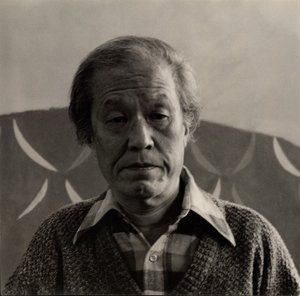
Yoo Youngkuk
1916 - 2002 , Korea
Kort om kunstneren
- Artistic Movement Or Style: Geometric abstraksjon
- Artists Or Movements Influenced By This Artist:
- Russian Constructivism
- Suprematism
- Artists Who Influenced This Artist:
- Murai Masanari
- Hasegawa Saburo
- Date Of Birth: 1916
- Full Name: Yoo Youngkuk
- Nationality: Korean
- Notable Artworks:
- Mountain
- Work
- Place Of Birth: Uljin-gun, Korea