

 Se i rommet
 Del som digitalt kort
 Del
Del
 Detaljer
 Studentguide

 Last ned
 Liknende objekter
 Røntgen
 Lysbildefremvisning
 Besøksstatistikk
Watermelon
 Acrylic On Canvas
- WallArt
- American Romanticism
 36.0cm x 46.0cm
 Les mer
Kjøp et høyoppløselig, forbedret digitalt bilde med langt høyere kvalitet enn forhåndsvisningen på nettet.
Hver fil er omhyggelig klargjort av våre egne spesialister ved hjelp av avanserte verktøy og profesjonell manuell retusjering. Vi sørger for at hvert bilde har eksepsjonell klarhet, presis fargegjengivelse og fine detaljer.
Den endelige filen leveres via e-post innen 72 timer, optimalisert for umiddelbar bruk i profesjonelle, redaksjonelle og trykte miljøer. Dette er den samme kvaliteten som benyttes av ledende designstudioer, utgivere og gallerier.
Digitalt bilde
Last ned en høyoppløselig fil til personlig bruk, utskrift og kreative prosjekter. ( Bytt til trykkversjon Bestill håndmalt reproduksjon)
Inkludert i alle bestillinger av digitale bilder
Profesjonell digital levering, garantert
Når du velger OriginalUniqueArt.com, får du ikke bare et bilde – du mottar et profesjonelt etterbehandlet digitalt kunstverk, skapt med presisjon og med en garantert tilfredshetsgaranti. Her er alt som automatisk følger med din bestilling:

Rask levering på e-post
Din høyoppløselige digitale bildefil sendes til din e-post innen 72 timer etter bestilling – klar til umiddelbar bruk.

KI-forbedret digital fil
Ditt kunstverk blir profesjonelt optimalisert ved hjelp av avanserte AI-verktøy og manuell redigering, noe som sikrer maksimal detaljrikdom, klarhet og fargegjengivelse.

Gratis livslang nybestilling
Har du ved et uhell slettet eller mistet filen din? Ingen bekymring – vi sender den på nytt når som helst, helt gratis.

Ingen importavgifter – noen gang
Nyt ditt kunstverk umiddelbart uten toll, avgifter eller leveringskostnader – digitale nedlastinger er alltid avgiftsfrie.

Garantert fargenøyaktighet
Vi sikrer at det digitale bildet gjenspeiler de originale fargene så nøyaktig som mulig ved hjelp av profesjonelle verktøy og fargehåndtering.

100 dagers tilfredshetsgaranti
Hvis du ikke er fornøyd med ditt digitale bilde, vil vi revidere det eller refundere 100% innen 100 dager – uten spørsmål.

100% Penggaranti
Ikke fornøyd? Få full refusjon innen 100 dager etter at du har mottatt din digitale fil – uten spørsmål.

Rabatt ved storkjøp
Kjøp 3 bilder, spar 10% - Kjøp 5, spar 15% - Kjøp 10+, spar 20%. Ideelt for kreative prosjekter, gallerier og byråer.
A Brush with the American Spirit: Winslow Homer’s Watermelon
Winslow Homer (1836 – 1910), an artist who defied convention and embraced the raw beauty of the American landscape, offers us a deceptively simple yet profoundly resonant image: “Watermelon.” Unlike many of his peers who sought acclaim in European ateliers, Homer cultivated his artistic vision through direct engagement with the natural world and the realities of everyday life – experiences that would inform his distinctive style and enduring legacy.
Style and Technique: Watercolor Precision
Homer’s masterful use of watercolor is immediately apparent. The painting eschews dramatic chiaroscuro, favoring instead a luminous palette dominated by greens and reds—colors deliberately chosen to capture the vibrancy of summer produce. Homer meticulously layered washes of pigment, achieving remarkable textural detail without resorting to heavy brushstrokes. This technique allows for subtle gradations of color and tone, conveying an impression of freshness and immediacy that is characteristic of his oeuvre.
Historical Context: Harper’s Weekly Roots
Homer's artistic journey began in 1854 when he secured a position as illustrator for Harper’s Weekly, a pioneering American periodical devoted to journalism and visual storytelling. This early association instilled in him an unwavering commitment to capturing authentic scenes—often depicting rural America—with unflinching honesty. The Civil War profoundly impacted Homer's artistic sensibilities, prompting him to confront themes of loss, resilience, and the human condition with sensitivity and compassion.
Symbolism: Beyond Fruit
While ostensibly a depiction of watermelon slices, “Watermelon” transcends its literal subject matter. The fragmented composition—representing the four distinct colors of the fruit—can be interpreted as an emblem of unity amidst diversity. Homer’s careful attention to detail speaks to the importance of observation and appreciation for the beauty inherent in commonplace objects. Furthermore, the painting's serene atmosphere evokes a sense of nostalgia for simpler times – a sentiment that aligns with Homer’s broader artistic preoccupation with capturing the spirit of American identity.
Emotional Impact: Quiet Contemplation
"Watermelon" invites viewers into a moment of quiet contemplation. The artist’s skillful rendering captures not just the visual appearance of the fruit but also its essence—a symbol of summer's bounty and the enduring power of observation. Homer’s work continues to inspire artists and collectors alike, reminding us that profound artistic expression can emerge from humble beginnings and unwavering dedication to capturing the beauty of the human experience.
- Size: 35.5cm x 45.7cm
- Date: Unknown
Spørsmål og svar
Hvilken stil tilhører "Watermelon"?
"Watermelon" av Winslow Homer tilhører American Romanticism-retningen. Denne retningen gir det stilistiske kontekstet til verket.
Er "Watermelon" en god gaveidé?
"Watermelon" av Winslow Homer anbefales som en gave til Wedding. En reproduksjon av kunstverket kan gis som en gave.
Hvilken fargemetning har "Watermelon" av Winslow Homer?
Fargene i "Watermelon" av Winslow Homer har en Balanced Soft metning. Metning beskriver hvor levende eller dempede fargene er.
Kunstnerbiografi
A Brush with the American Spirit: The Life and Art of Winslow Homer
Winslow Homer, born in Boston in 1836, wasn’t sculpted by the traditional European art academies that shaped so many of his contemporaries. Instead, he emerged from a distinctly American experience, one rooted in practicality and observation. His journey began not with grand historical canvases, but as a commercial illustrator at the tender age of twelve for Harper's Weekly. This early apprenticeship was formative, honing an exceptional ability to capture scenes with clarity and detail – skills that would become hallmarks of his mature work. He wasn’t learning perspective in Paris; he was learning to *see* America, its people, and its unfolding story. The bustling streets of Boston, the quiet dignity of rural New England life, these were his first subjects, rendered with a precision born of necessity for the demands of print media. This foundation allowed him to transition into painting, initially in watercolor, before fully embracing the expressive potential of oil paints.From Pastoral Scenes to the Raw Power of Nature
Homer’s early paintings often depicted idyllic scenes – children playing, farmers tending their fields, quiet moments of domesticity. These works, while charming, hinted at a deeper artistic sensibility waiting to be unleashed. The catalyst for this transformation was undoubtedly the Civil War. As a war correspondent for Harper's Weekly, Homer witnessed firsthand the brutal realities of conflict. He didn’t focus on heroic battles or grand strategies; instead, he documented the everyday lives of soldiers and civilians, the quiet moments of grief and resilience amidst chaos. This experience profoundly altered his artistic vision. The pastoral scenes gave way to more challenging subjects: veterans grappling with trauma, freed slaves navigating a new world, and the stark beauty of landscapes touched by hardship. He began to explore themes of struggle, isolation, and humanity’s precar He wasn't interested in imitating European styles; he wanted to create an art that was uniquely American, reflecting its landscapes, its people, and its challenges. His style also evolved, becoming bolder and more direct, reflecting the raw emotional impact of what he had witnessed. Breezing Up (A Fair Wind), painted in 1876, exemplifies this skill – a quintessential depiction of American maritime life, brimming with energy and movement. The Gulf Stream, created decades later, is perhaps his most iconic work, a powerful and symbolic portrayal of a lone man battling the forces of nature, a metaphor for human struggle against overwhelming odds. He wasn’t simply painting what he saw; he was conveying a feeling, an emotional truth about the human condition.Mastering Light, Texture, and the American Landscape
Winslow Homer's artistic technique is immediately recognizable for its solidity and texture. He wasn’t interested in fleeting impressions; he wanted to build up a sense of tangible reality on the canvas. His oil paintings are characterized by a direct painting approach – layers of paint applied with confidence, creating depth and luminosity. He possessed an extraordinary ability to capture light, whether it was the dazzling glare of the sun on the ocean or the soft glow of twilight over a rural landscape. This mastery extended to his watercolors, where he achieved remarkable atmospheric effects through vibrant colors and delicate washes. He admired European artists like those of the Barbizon school – known for their realistic depictions of rural life – and acknowledged influences from Courbet and Millet, but he ultimately forged his own distinctly American path.A Legacy Forged in American Realism
Winslow Homer's art offers a profound window into 19th-century America, providing invaluable insights into the social, political, and cultural landscape of his time. His paintings are not merely beautiful representations; they are powerful statements about human resilience, the beauty and power of nature, and the complexities of the American experience. He died in 1910, leaving behind a prolific body of work that continues to resonate with audiences today. His ability to depict America with honesty and authenticity – without romanticizing or idealizing it – ensures his place as one of America’s most important and enduring artists. His influence can be seen in the work of later American painters who sought to depict their own country with similar directness and emotional depth.- His work continues to inspire contemporary artists.
- Homer remains a pivotal figure in the development of American Realism.
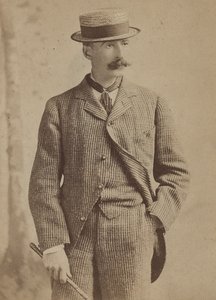
Winslow Homer
1836 - 1910 , USA
Kort om kunstneren
- Artistic Movement Or Style: Amerikansk Realisme
- Artists Or Movements Influenced By This Artist: ['Amerikanske malere']
- Artists Who Influenced This Artist:
- Barbizon skole
- Courbet
- Millet
- Date Of Birth: 24. februar 1836
- Date Of Death: 29. september 1910
- Full Name: Winslow Homer
- Nationality: Amerikaner
- Notable Artworks:
- Breezing Up
- Gulfstrømmen
- Usinn
- Vitenskapsmann
- Place Of Birth: Boston, USA