
 Forhåndsvisning
 Send
Send Del med andre
 Vis detaljer

 Last ned bildet
 Liknende objekter
 Røntgenundersøkelse
 Lysbildefremvisning
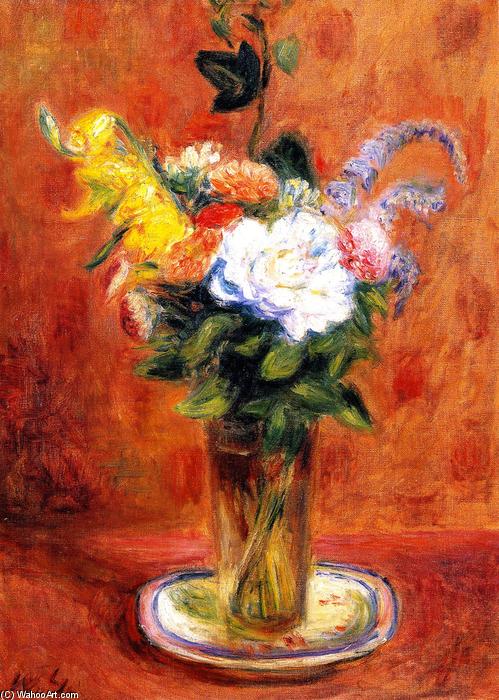
Hvit Rose og Andre Blomster


 Vis hele teksten
Håndlaget oljereproduksjon
Håndmalt olje på lerret i din valgte størrelse og ramme, laget på bestilling av våre kunstnere. ( Kjøp trykk Kjøp bilde)




P118B $10

P118H $10

P118W $10

P438Z $10

P508JH $12

P508YH $12

P805H $10

P805Z $10

P919BZ $10

P919G $10

P919XJ $10

P959ZH $10

P968JZ $12

W106C $8

W218G $10

W218JH $8

W218Y $10

W307PJ $10

W316G $10

W316PJ $8

W316Y $10

W398PJ $8

W4111J $10

W500HY $15

W500JH $15

W692G $12

W849H $8

W940BG $15

W953PJ $8




Velg mellom våre forhåndsdefinerte størrelser som bevarer kunstverkets opprinnelige proporsjoner.

Du kan angi egne mål for å tilpasse en spesifikk ramme eller plass. Dersom den valgte størrelsen ikke samsvarer med originalbildets proporsjoner, vil vi enten beskjære kunstverket eller utvide maleriet med ytterligere håndmalte elementer. En digital mockup vil bli sendt til din godkjenning før produksjonen starter.
Vennligst merk at forhåndsvisningen på skjermen ikke gjenspeiler den faktiske beskjæringen eller utvidelsen. Kun mockuppen vil vise den endelige komposisjonen nøyaktig.
Selv om tilpassede størrelser er tilgjengelige, anbefaler vi å velge et mål fra den forhåndsdefinerte listen for å bevare de originale proporsjonene.
Etter bestilling vil OriginalUniqueArt.com-teamet sende e-post til kunden for instruksjoner og sende et utkast (mockup) som forhåndsvisning.
Verdensomspennende levering () på 3–4 uker i stedet for standard 5 uker. (20 August). Ingen kompromisser med kvaliteten.

Gratis ekspressfrakt over hele verden

Lerretsduk av høykvalitets lin

Full forsikring under transport

Garanti for refusjon av toll og importavgifter

Garantert korrekt fargegjengivelse

60 dagers returrett (kun ved feil)

100% pengene tilbake-garanti

Rabatt ved flere kjøp
 Glassalternativet er kun tilgjengelig i størrelser under 110 cm

Hvit Rose og Andre Blomster
Teknikk for reproduksjon
Størrelse på reproduksjon
-


Endelig pris
$ 300
Beskrivelse av kunstverket
Claude Monet’s Legacy: Capturing Fleeting Beauty in “White Rose and Other Flowers”
William James Glackens' "White Rose & Other Flowers," painted in 1937, stands as a poignant testament to the Impressionist movement’s core ethos – an unwavering dedication to portraying the ephemeral nature of light and color. More than just a depiction of floral arrangement, it embodies a profound appreciation for sensory experience and a subtle exploration of tranquility. Glackens, deeply influenced by artists like Pierre Auguste Renoir and Thomas Anshutz, skillfully captured the spirit of his time—a burgeoning urban landscape grappling with modernity while retaining an enduring connection to the natural world.- Composition & Style: The artwork’s vertical orientation immediately draws the eye upwards, emphasizing the dominant floral bouquet against a hazy orange-red backdrop reminiscent of Monet's landscapes. Glackens’ loose brushstrokes—a hallmark of the Ashcan School—reject academic precision in favor of conveying movement and texture, mirroring the dynamism inherent in the blossoms themselves.
- Technique: Employing oil paints on canvas, Glackens utilized layering techniques to achieve a shimmering effect, meticulously capturing the subtle nuances of light diffusion. Short, broken strokes create an intricate tapestry of color and form, prioritizing visual sensation over strict geometric representation—a deliberate departure from prevailing artistic conventions.
- Color Palette: The artwork’s palette centers around vibrant hues of white, pink, yellow, and orange-red, skillfully blended to evoke a sense of warmth and luminosity. These colors aren't merely descriptive; they contribute to the overall mood—a serene contemplation of beauty amidst urban life.
- Historical Context: Created during the Great Depression, “White Rose & Other Flowers” reflects the anxieties and aspirations of its era. Yet, despite its socio-historical significance, Glackens’ focus remains firmly on capturing a moment of pure aesthetic pleasure—a celebration of nature's grace.
- Symbolism: The white rose itself symbolizes purity and innocence, juxtaposed against the rich colors of the other flowers – representing vitality and abundance. Together, they convey an unspoken message of hope and resilience amidst challenging circumstances.
Exploring Glackens’ Artistic Influences
Glackens' artistic vision was undeniably shaped by luminaries like Renoir and Anshutz. Renoir’s Impressionistic style—characterized by dappled light and soft brushstrokes—provided a crucial framework for Glackens’ approach to portraying natural scenes. Similarly, Anshutz instilled in him the conviction that art should reflect the realities of everyday life, mirroring the Ashcan School's commitment to social realism.A Reproduction Worth Admiring: Bringing “White Rose & Other Flowers” into Your Home
OriginalUniqueArt.com offers exceptional reproductions of William James Glackens’ masterpiece—allowing you to experience its beauty firsthand. Printed on premium canvas using archival inks, these giclée prints guarantee vibrant colors and unparalleled detail, faithfully preserving the original artwork's essence. Consider commissioning a custom size that complements your interior décor—transforming your space into an ode to Impressionistic art and Glackens’ enduring legacy.Discover More About William James Glackens
To delve deeper into Glackens’ artistic journey, explore his other celebrated works—including “The Shoppers” housed in the Chrysler Museum of Art—and immerse yourself in the vibrant tapestry of New Realism. Visit OriginalUniqueArt.com to uncover more captivating pieces and artists inspired by Impressionism.Om kunstneren
A Pioneer of Ashcan Realism
William James Glackens (1870 – 1938) stands as a cornerstone figure in American art, indelibly shaping the landscape of realism during the early twentieth century. Born in Philadelphia on March 13th, 1870, to Elizabeth Finn Glackens and Samuel Glackens—a clerk for the Pennsylvania Railroad—his artistic journey began with an innate fascination for drawing, a passion nurtured by his formative years. This inclination propelled him towards enrollment at the Pennsylvania Academy of Fine Arts, where he honed his skills under the guidance of Thomas Anshutz, a celebrated realist who profoundly influenced Glackens’ stylistic approach.The Ashcan School and Its Vision
Glackens' artistic trajectory coincided with the emergence of the Ashcan School—a movement that fiercely rejected the prevailing aesthetic conventions of its time. Rejecting idealized beauty and grandeur, the Ashcan School championed a gritty portrayal of urban life in New York City, mirroring the realities faced by ordinary people. Alongside Louis Glackens, his brother, Glackens established this influential group, determined to depict the everyday struggles and triumphs of working-class communities with uncompromising honesty. This commitment to realism distinguished him from many of his contemporaries and cemented his place within art history.Glackens’ Artistic Style: Detail and Atmosphere
Glackens' paintings are characterized by their masterful execution—particularly in capturing atmosphere and detail. He favored dark hues, skillfully blending them to create immersive environments that conveyed the palpable energy of city streets. His technique involved meticulous observation and painstaking brushwork, resulting in canvases brimming with texture and nuance. Notably, Glackens’ artistic sensibilities were shaped by the Impressionist painter Pierre Auguste Renoir, whose influence can be discerned in his later works—characterized by a brighter palette and an emphasis on capturing fleeting moments of beauty amidst urban bustle.Illustrative Career and Patronage
Beyond his studio practice, Glackens cultivated a prolific career as an illustrator for newspapers and magazines based in Philadelphia and New York City. This engagement with journalistic illustration honed his visual storytelling abilities and broadened his artistic repertoire. Furthermore, Glackens played a crucial role in bolstering American art heritage by collaborating with Albert C. Barnes—a wealthy philanthropist—to acquire European paintings for the Barnes Foundation in Philadelphia. This ambitious undertaking significantly enriched the foundation’s collection and solidified Glackens' reputation as an advocate for artistic excellence.Notable Works and Legacy
Glackens’ artistic legacy extends beyond his individual creations. His masterpiece, “The Shoppers,” exemplifies his ability to distill complex urban narratives into evocative visual representations—now housed in the New Realism Collection at OriginalUniqueArt.com. Similarly, “View of Haarlem with Bleaching Grounds,” a painting by Jacob Isaakszoon van Ruysdael (ruysdael), showcases Glackens’ dedication to replicating the meticulous detail and craftsmanship of Dutch masters. His enduring influence continues to inspire artists today, securing his place as one of America's foremost realist painters—a testament to his unwavering commitment to portraying the human experience with profound sensitivity and artistic integrity.
William James Glackens
1870 - 1938 , USA
Kort om kunstneren
- Artistic Movement Or Style: Ashcan School
- Artists Or Movements Influenced By This Artist: ['Pierre Auguste Renoir']
- Artists Who Influenced This Artist: ['Thomas Anshutz']
- Date Of Birth: Philadelphia, USA (1870)
- Date Of Death: Westport, CT (1938)
- Full Name: William James Glackens
- Nationality: Amerikaner
- Notable Artworks:
- The Shoppers
- View of Haarlem
- Place Of Birth: Philadelphia
Relaterte artikler
William Michael Harnett: Still Life, Realism & the American Pursuit of Materiality
Explore the captivating still lifes of William Michael Harnett, a master of American realism and trompe l'oeil painting. Discover his technique, legacy & the cultural context behind his iconic works.
William Glackens: Capturing Modern American Life with Ashcan Realism
Explore the life & art of William Glackens, a pioneer of American Realism and founding member of the Ashcan School. Discover his vibrant depictions of early 20th-century New York & Paris. Learn about his influences & lasting legacy.
Severin Roesen: Evoking National Identity Through American Still Life Painting
Explore the captivating world of Severin Roesen, a major American still life painter influenced by Dutch masters. Discover his lush compositions and the symbolism within his art – a window into 19th-century America.
Capturing a Nation's Light: Exploring the American Impressionist Movement
Explore the captivating world of American Impressionism! Discover key artists, techniques & its lasting impact on art history. Find museum-quality reproductions and expert guidance at OriginalUniqueArt.

Grant Wood & American Regionalism: Identity, Myth & the Rural Landscape
Explore the world of Grant Wood & American Regionalism with OriginalUniqueArt. Discover the symbolism behind 'American Gothic', recurring themes, and the movement's lasting impact on art history. High-quality reproductions available.



