

 Se i rommet
 Del som digitalt kort
 Del
Del
 Detaljer
 Studentguide

 Last ned
 Liknende objekter
 Røntgen
 Lysbildefremvisning
 Besøksstatistikk
The Rookery


 Les mer
Giclée / Kunsttrykk
Giclée- eller lerretsprint av museumskvalitet med rask produksjon og fleksible valgmuligheter for etterbehandling. ( Bestill håndmalt reproduksjon Gå til digitalt bilde)




P118B Nkr10

P118H Nkr10

P118W Nkr10

P438Z Nkr10

P508JH Nkr12

P508YH Nkr12

P805H Nkr10

P805Z Nkr10

P919BZ Nkr10

P919G Nkr10

P919XJ Nkr10

P959ZH Nkr10

P968JZ Nkr12

W106C Nkr8

W218G Nkr10

W218JH Nkr8

W218Y Nkr10

W307PJ Nkr10

W316G Nkr10

W316PJ Nkr8

W316Y Nkr10

W398PJ Nkr8

W4111J Nkr10

W500HY Nkr15

W500JH Nkr15

W692G Nkr12

W849H Nkr8

W940BG Nkr15

W953PJ Nkr8




Velg mellom våre forhåndsdefinerte størrelser som bevarer kunstverkets opprinnelige proporsjoner.

Du kan oppgi egne mål for å tilpasse en spesifikk ramme eller et bestemt område. Dersom den valgte størrelsen ikke samsvarer med det originale bildets proporsjoner, vil vi enten beskjære kunstverket eller utvide bildet med en speilet eller ensfarget kant. En digital mockup vil bli sendt til din godkjenning før produksjonen starter.
Vennligst merk at forhåndsvisningen på skjermen ikke gjenspeiler den faktiske beskjæringen eller utvidelsen. Kun mockuppen vil vise den endelige komposisjonen nøyaktig.
Selv om tilpassede størrelser er tilgjengelige, anbefaler vi å velge et mål fra den forhåndsdefinerte listen for å bevare de originale proporsjonene.
Verdensomspennende levering () på 2 uker i stedet for standard 4/5 uker. (12 October)

Gratis ekspressfrakt over hele verden

Lerretsduk av høykvalitets lin

Full transportforsikring

Garanti for refusjon av toll og importavgifter

Garantert fargeekthet

100 dagers returrett ved fabrikasjonsfeil

100% pengene tilbake-garanti

Mengderabatt
 Glassalternativet er kun tilgjengelig i størrelser under 110 cm

The Rookery
Giclée / Kunsttrykk
Format på reproduksjon
-


Totalpris
Nkr 743
The Artist and the Painting
William James Blacklock was a talented artist known for his landscapes and portraits. The Rookery is one of his notable works, featuring a peaceful scene of people strolling down a path in front of a large building with a castle-like appearance. The surrounding trees add to the tranquility of the atmosphere, while a horse in the background brings a sense of liveliness to the scene. Key Features of the painting include:- The use of oil on canvas, which allows for rich and vibrant colors
- The depiction of everyday life in a serene outdoor setting
- The attention to detail in the architecture and natural surroundings
For those interested in purchasing handmade oil painting reproductions, OriginalUniqueArt.com offers a wide range of options, including Walter Launt Palmer by Robert M. Pennie (1854-1888). With its rich colors and attention to detail, The Rookery is a beautiful addition to any art collection.
Spørsmål og svar
Hvordan finner jeg kunstverk som ligner på "The Rookery" av William James Blacklock?
Siden Lignende verk for "The Rookery" av William James Blacklock viser relaterte kunstverk.
Hvilken fargemetning har "The Rookery" av William James Blacklock?
Fargene i "The Rookery" av William James Blacklock har en Subtle Color metning. Metning beskriver hvor levende eller dempede fargene er.
Hvilken underliggende nyanse preger "The Rookery" av William James Blacklock?
En Ochre to Sepia nyanse preger "The Rookery" av William James Blacklock.
Viser "The Rookery" sterke lys-mørke-kontraster?
"The Rookery" av William James Blacklock viser en Statement kontrast mellom de lyse og mørke partiene.
Kan jeg se "The Rookery" som et lysbildefremvisning i fullskjerm?
Et lysbildefremvisning er tilgjengelig: siden Lysbildefremvisning for "The Rookery" av William James Blacklock.
Hvor harmoniske er fargene i "The Rookery" av William James Blacklock?
Fargene i "The Rookery" av William James Blacklock viser en Strong Color Unity harmoni. Harmoni beskriver hvordan fargene forholder seg til hverandre.
Hvor i William James Blacklock sin karriere befinner "The Rookery" seg, gitt datoen?
"The Rookery", skapt i 1854, tilhører Mature Period i William James Blacklock sin karriere.
Hva er produksjonsåret til "The Rookery" av William James Blacklock?
"The Rookery" av William James Blacklock ble skapt i 1854.
Kunstnerbiografi
A Life Immersed in Landscape: The Evocative World of William James Blacklock
William James Blacklock, born in the bustling heart of Shoreditch, London, in 1816, was an artist whose life became inextricably linked with the serene beauty of the British countryside. Though initially rooted in the urban landscape of his birth, a pivotal relocation as a young boy would forever shape his artistic vision. In 1818, his family returned to their ancestral Cumberland roots, settling in Cumwhitton near Carlisle, where they embraced farming and a quieter existence. This immersion into the natural world proved transformative for Blacklock, igniting within him a passion for landscape painting that would define his career. His early training began with an apprenticeship to a local bookseller, but his innate artistic talent soon led him to formal studies at the Carlisle Academy of Art under Matthew Ellis Nutter. Even in these formative years, Blacklock demonstrated a remarkable sensitivity to nature, earning recognition as a “rising artist” upon exhibiting his work locally in 1833 and subsequently at the prestigious Royal Academy from 1836 onwards.Bridging Romanticism and Pre-Raphaelite Sensibilities
Blacklock’s artistic development unfolded against a backdrop of shifting aesthetic currents. His time in London, beginning in 1836, exposed him to the influences of prominent artists such as William Mulready, J.M.W. Turner, David Roberts, and Thomas Creswick. While his style initially echoed the traditions of Romantic landscape painting—characterized by dramatic compositions and emotional intensity—Blacklock soon began to forge a unique path. He possessed an exceptional eye for detail and atmospheric light, qualities that set him apart. A crucial moment in this evolution came with the cleaning of old master paintings at the National Gallery in 1844-45. This experience provided Blacklock with invaluable insights into artistic techniques and the subtle nuances of color and form. It was during this period that he began experimenting with a groundbreaking “white ground” technique, applying luminous glazes over a white base layer to achieve an extraordinary sense of luminosity and depth in his paintings.The White Ground Technique and Artistic Innovation
This innovative approach did not go unnoticed. Blacklock’s "white ground" technique became the subject of intense study among artists associated with the burgeoning Pre-Raphaelite movement, including William Bell Scott and Dante Gabriel Rossetti. The Steps at Haddon Hall (1848), is considered a prime example of this technique, showcasing its ability to capture light and texture with remarkable fidelity. While Blacklock’s meticulous attention to detail often drew comparisons to the Pre-Raphaelites, he consciously rejected Ruskin's emphasis on strict naturalism. He believed that art should not merely replicate nature but rather express the artist’s inner thoughts and imagination. This distinction is crucial to understanding Blacklock’s unique position within 19th-century British art—he stood at a fascinating intersection between Romantic ideals, Pre-Raphaelite precision, and his own deeply personal vision. His notable paintings include Buit’s Castle, Bewcastle, Gilnockie Tower, Landscape with Bridge and Figures, and The Rookery (1854).Recognition, Decline, and Lasting Legacy
Blacklock’s talent garnered recognition from influential figures of his time. William Ewart Gladstone acquired his painting *Lanercost Abbey*, a testament to the artist's growing reputation. Further patronage came from Tyneside industrialists James Leathart and Lord Armstrong, facilitated by the support of William Bell Scott. However, Blacklock’s success was tragically cut short by declining health and eyesight. By 1850, he returned to Cumwhitton, continuing to work in his studio as long as possible. Sadly, he succumbed to mental health challenges, attributed to syphilis, and was admitted to the Crichton Royal Hospital in Dumfries in 1855. Despite his condition, he continued to draw until mid-1857, a poignant testament to his unwavering dedication to art. He passed away in 1858 at the age of 42. Though his life was relatively short, William James Blacklock left an indelible mark on British landscape painting. His work represents a pivotal moment between the early 19th-century landscape school and the innovative spirit of the Pre-Raphaelite movement. As Geoffrey Grigson observed, he belonged to a generation bridging Romanticism and Impressionism, deeply influenced by Italian Renaissance masters like Giorgione and Giovanni Bellini. Today, his paintings are treasured for their evocative beauty, technical mastery, and unique contribution to the rich tapestry of British art history.A Pioneer Remembered
- Early Influences: Turner, Creswick, Roberts, Mulready.
- Key Technique: The “white ground” technique – luminous glazes over a white base.
- Notable Works: *Lanercost Abbey*, *Gilnockie Tower*, *The Steps at Haddon Hall*.
- Patrons: William Ewart Gladstone, James Leathart, Lord Armstrong.
- Historical Significance: Bridged Romanticism and Pre-Raphaelitism; influenced by Italian Renaissance masters.

William James Blacklock
1816 - 1858 , United Kingdom
Kort om kunstneren
- Full Name: William James Blacklock
- Nationality: British
- Date Of Birth: 1816
- Date Of Death: 1858
- Place Of Birth: Shoreditch, United Kingdom
- Notable Artworks:
- Buit’s Castle, Bewcastle
- Gilnockie Tower
- Landscape with Bridge
- The Rookery (1854)
- Artistic Movement Or Style: Romanticism & Pre-Raphaelite
- Artists Who Influenced This Artist:
- Mulready
- Turner
- Roberts
- Creswick
- Artists Or Movements Influenced By This Artist:
- Pre-Raphaelites
- Scott
- Rossetti
Relaterte artikler

John Constable: Topp 25 Maler – Engelsk Landskapskunst i Ditt Hjem
Opplev John Constables 25 mest ikoniske malerier! Fordyp deg i engelsk romantikk, landskapskunst og atmosfæriske scener. Finn museumskvalitets reproduksjoner & interiørinspirasjon på OriginalUniqueArt.com. Utforsk samlingen online!

William James Müller: Navigating Victorian Sentiment & Realism in British Landscape Painting
Explore the captivating landscapes of William James Müller, the leading artist of the Bristol School. Discover his Victorian masterpieces, Egyptian travels & Lycian sketches – a journey through 19th-century art and technique.

Romantiske landskap: Topp 10 mesterverk for hjemmet – Kunst fra OriginalUniqueArt.com
Oppdag de 10 mest ikoniske romantiske landskapsmaleriene! Fra Caspar David Friedrich til Turner – utforsk kunsthistorien, stemningen og fargepalettene. Finn museumskvalitets reproduksjoner på OriginalUniqueArt.com.

Evocations of Place: A Historical Journey Through Landscape Art
Explore the rich history of landscape art with OriginalUniqueArt. Discover renowned artists, movements like Impressionism & Romanticism, and expert guidance for collecting timeless pieces. Find your perfect serene escape today!
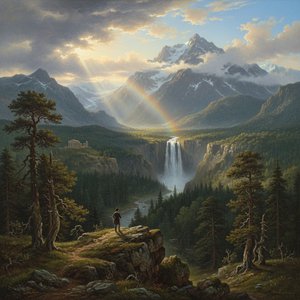
Evoking Nature's Sublime: A Comprehensive Exploration of 19th-Century Landscape Painting
Explore the captivating world of 19th-century landscape painting! Discover renowned artists like Friedrich & Monet, key movements, and find the perfect artwork to bring nature's serenity into your home. Expert insights at OriginalUniqueArt.