

 Forhåndsvisning
 Send
Send Del med andre
 Vis detaljer
 Veiledning

 Last ned bildet
 Liknende objekter
 Røntgenundersøkelse
 Lysbildefremvisning
 Statistikk
Isabella Appiani


 Vis hele teksten
Kjøp et høyoppløselig, forbedret digitalt bilde som er langt bedre enn forhåndsvisningen på nettet.
Hver fil er omhyggelig klargjort av våre egne spesialister ved hjelp av avanserte verktøy og profesjonell manuell retusjering. Vi sørger for at hvert bilde har eksepsjonell klarhet, presis fargegjengivelse og fine detaljer.
Den endelige filen leveres via e-post innen 72 timer, optimalisert for umiddelbar bruk i profesjonelle, redaksjonelle og trykte miljøer. Dette er den samme kvaliteten som benyttes av ledende designstudioer, utgivere og gallerier.
Digitalt bilde
Last ned en høyoppløselig fil for personlig bruk, utskrift og kreative prosjekter. ( Bytt til trykk Kjøp håndlaget maleri)
Inkludert i alle bestillinger av digitale bilder
Ekspert digital levering, garantert
Når du velger OriginalUniqueArt.com, får du ikke bare et bilde – du mottar et profesjonelt forbedret digitalt kunstverk, skapt med presisjon og med en garantert tilfredshetsgaranti. Her er alt som automatisk følger med din bestilling:

Rask digital levering
Din høyoppløselige digitale bildefil sendes til din e-post innen 72 timer etter bestilling – klar til umiddelbar bruk.

KI-forbedret digital fil
Ditt kunstverk blir profesjonelt optimalisert ved hjelp av avanserte AI-verktøy og manuell redigering, noe som sikrer maksimal detaljrikdom, klarhet og fargegjengivelse.

Gratis livslang nyutlevering
Har du ved et uhell slettet eller mistet filen din? Ingen bekymring – vi sender den på nytt når som helst, helt gratis.

Ingen importavgifter – noen gang
Nyt ditt kunstverk umiddelbart uten toll, avgifter eller leveringskostnader – digitale nedlastinger er alltid avgiftsfrie.

Garantert fargenøyaktighet
Vi sikrer at ditt digitale bilde gjenspeiler de originale fargene så nøyaktig som mulig ved hjelp av profesjonelle verktøy og fargehåndtering.

100 dagers tilfredshetsgaranti
Hvis du ikke er fornøyd med ditt digitale bilde, vil vi revidere det eller refundere 100% innen 100 dager – uten spørsmål.

100% Penggaranti
Ikke fornøyd? Få full refusjon innen 100 dager etter at du har mottatt din digitale fil – uten spørsmål.

Rabatt ved storkjøp
Kjøp 3 bilder, spar 10% - Kjøp 5, spar 15% - Kjøp 10+, spar 20%. Ideelt for kreative prosjekter, gallerier og byråer.
Om kunstneren
Pieter Bruegel the Elder: A Window into 16th-Century Life
Pieter Bruegel the Elder, a name synonymous with Flemish art of the 16th century, wasn’t merely a painter; he was a chronicler of his time, a keen observer of human nature, and a master storyteller rendered in oil on panel. Born around 1525 in Breda, a bustling city within the Duchy of Brabant (now part of Belgium), Bruegel’s life unfolded against a backdrop of political upheaval, religious reform, and burgeoning urban centers. While details about his early years remain somewhat elusive, it's believed he was apprenticed to Pieter Coecke van Aelst, a prominent Antwerp artist known for his versatility as a sculptor, architect, and tapestry designer – an experience that undoubtedly shaped the foundations of Bruegel’s artistic development.
Bruegel’s career blossomed in Brussels, a vibrant hub of commerce and culture. He quickly established himself as a respected painter, attracting commissions from wealthy patrons including Margaret of Austria, regent of the Netherlands, and various noble families. His early works often showcased a refined elegance, reflecting the influence of Italian Renaissance art – particularly the subtle color palettes and classical motifs prevalent in the work of artists like Raphael and Giovanni Bellini. However, it was his later paintings that truly cemented his legacy, marking a distinct shift towards a uniquely Bruegelian style characterized by earthy tones, dynamic compositions, and an unparalleled ability to capture the essence of everyday life.
The Landscapes and Scenes of Rural Life
Bruegel’s artistic trajectory is marked by a fascinating evolution. Initially, his landscapes were imbued with a delicate beauty reminiscent of Flemish tradition. But as he matured, he began to infuse them with a distinctly observational quality, depicting scenes of peasant life with remarkable realism and psychological depth. These weren't idealized depictions; instead, they presented a raw and often humorous portrayal of rural existence – harvests, festivals, hunts, and the simple routines of daily labor. His paintings aren’t simply records of events; they are imbued with social commentary, subtly critiquing human folly and celebrating the resilience of ordinary people.
Consider his iconic “Peasant Wedding” (1567), a masterpiece that captures the chaotic energy and boisterous joy of a rural celebration. The painting is not just visually arresting; it’s packed with symbolic details – the drunken farmer, the dancing couple, the discarded food – all contributing to a broader meditation on human behavior and societal values. Similarly, “The Goldsmith” (1564) offers a poignant glimpse into the solitary life of a craftsman, highlighting his dedication and the potential for both reward and disappointment in his profession.
Technique and Innovation
Bruegel’s artistic technique was as innovative as it was masterful. He employed a distinctive palette dominated by earthy browns, greens, and ochres, creating a sense of groundedness and realism. His brushwork is often loose and expressive, conveying movement and emotion with remarkable immediacy. Crucially, Bruegel was a pioneer in the use of perspective, particularly atmospheric perspective – employing variations in color and detail to create the illusion of depth and distance. This technique, combined with his meticulous attention to detail, allowed him to render landscapes with astonishing accuracy and realism.
Furthermore, Bruegel’s mastery of composition is evident in his ability to pack a great deal of information into each painting – figures, objects, and symbolic elements all vying for the viewer's attention. He frequently utilized crowded scenes, creating a sense of dynamism and immediacy that draws the eye across the canvas. His use of diagonals and overlapping forms further enhances this effect, contributing to the overall feeling of movement and energy.
Influence and Legacy
Pieter Bruegel the Elder’s influence on subsequent generations of artists is profound. His focus on everyday life, his realistic depictions of rural scenes, and his innovative use of perspective paved the way for later masters such as Jan Bruegel the Younger (his son), Lucas Cranach the Elder, and Pieter de Hooch. His work also resonated with the rise of Northern Mannerism, a style characterized by elongated figures, distorted perspectives, and an emphasis on psychological expression.
Beyond his direct influence on individual artists, Bruegel’s paintings offer invaluable insights into 16th-century society – its customs, beliefs, and values. His works serve as a powerful reminder of the enduring appeal of depicting the human condition in all its complexity and contradictions. Today, Bruegel's paintings are celebrated for their artistic merit, their historical significance, and their timeless ability to connect with viewers across centuries.
Key Works
- The Peasant Wedding (1567)
- The Goldsmith (1564)
- Landscape with the Fall of Icarus (c. 1560-1563)
- Hay Harvest (c. 1560-1563)
- Tower Scene (c. 1563)
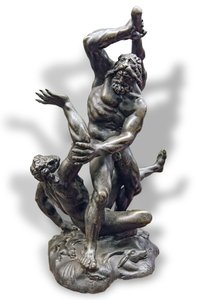
willem danielsz van tetrode
1525 - 1587 , Netherlands
Kort om kunstneren
- Artistic Movement Or Style: Flemish Renaissance
- Artists Or Movements Influenced By This Artist: ['His sons (Jan & Pieter)']
- Artists Who Influenced This Artist: ['Pieter Coecke van Aelst']
- Date Of Birth: c. 1525
- Date Of Death: 1569
- Full Name: Pieter Bruegel the Elder
- Nationality: Flemish
- Notable Artworks:
- Peasant Wedding
- Hunters in the New World
- The Goldsmith
- Fall of the Innocents
- Place Of Birth: Breda, Brabant