

 Forhåndsvisning
 Send
Send Del med andre
 Vis detaljer

 Last ned bildet
 Liknende objekter
 Røntgenundersøkelse
 Lysbildefremvisning
 Statistikk
St Stephen is Consecrated Deacon
 Acrylic On Canvas
- WallArt
- Venetian Renaissance
 1511
1511 148.0 x 231.0 cm
 Staatliche Museen zu Berlin
 Vis hele teksten
Håndlaget oljereproduksjon
Håndmalt olje på lerret i din valgte størrelse og ramme, laget på bestilling av våre kunstnere. ( Bytt til trykk Bytt til digitalt bilde)




P118B $10

P118H $10

P118W $10

P438Z $10

P508JH $12

P508YH $12

P805H $10

P805Z $10

P919BZ $10

P919G $10

P919XJ $10

P959ZH $10

P968JZ $12

W106C $8

W218G $10

W218JH $8

W218Y $10

W307PJ $10

W316G $10

W316PJ $8

W316Y $10

W398PJ $8

W4111J $10

W500HY $15

W500JH $15

W692G $12

W849H $8

W940BG $15

W953PJ $8




Velg mellom våre forhåndsdefinerte størrelser som bevarer kunstverkets opprinnelige proporsjoner.

Du kan angi egne mål for å tilpasse en spesifikk ramme eller plass. Dersom den valgte størrelsen ikke samsvarer med originalbildets proporsjoner, vil vi enten beskjære kunstverket eller utvide maleriet med ytterligere håndmalte elementer. En digital mockup vil bli sendt til din godkjenning før produksjonen starter.
Vennligst merk at forhåndsvisningen på skjermen ikke gjenspeiler den faktiske beskjæringen eller utvidelsen. Kun mockuppen vil vise den endelige komposisjonen nøyaktig.
Selv om tilpassede størrelser er tilgjengelige, anbefaler vi å velge et mål fra den forhåndsdefinerte listen for å bevare de originale proporsjonene.
Etter bestilling vil OriginalUniqueArt.com-teamet sende e-post til kunden for instruksjoner og sende et utkast (mockup) som forhåndsvisning.
Verdensomspennende levering () på 3–4 uker i stedet for standard 5 uker. (16 September). Ingen kompromisser med kvaliteten.

Gratis ekspressfrakt over hele verden

Lerretsduk av høykvalitets lin

Full forsikring under transport

Garanti for refusjon av toll og importavgifter

Garantert korrekt fargegjengivelse

100 dagers returrett (kun ved mangler)

100% pengene tilbake-garanti

Rabatt ved flere kjøp
 Glassalternativet er kun tilgjengelig i størrelser under 110 cm

St Stephen is Consecrated Deacon
Teknikk for reproduksjon
Størrelse på reproduksjon
-


Endelig pris
$ 300
The Sacred Narrative of Vittore Carpaccio’s “St Stephen is Consecrated Deacon”
Vittore Carpaccio's "St Stephen is Consecrated Deacon," painted in 1511, isn’t merely a depiction of a biblical event; it’s a vibrant tableau brimming with Venetian artistry and profound spiritual resonance. This tempera on panel masterpiece, now residing within the Staatliche Museen in Berlin, transports us to a bustling Roman street scene, meticulously rendered with an almost photographic realism that was revolutionary for its time. Carpaccio, deeply influenced by the early Italian Renaissance – particularly Antonello da Messina’s mastery of perspective and detail – eschewed the prevailing humanist trends, instead embracing a more conservative style rooted in Byzantine iconography and the meticulous observation of the world around him. The painting captures not just a moment in St Stephen's life, but also the very essence of Venetian civic pride and religious fervor.A Scene of Ceremony and Community
The heart of the composition is undoubtedly St. Stephen himself, kneeling before St. Peter, who bestows upon him the sacred mantle of deacon. Carpaccio masterfully orchestrates a complex arrangement of figures – at least fourteen individuals are visible within the frame – creating a dynamic sense of movement and engagement. The scene unfolds against a backdrop of an identifiable Roman street, complete with architectural details that hint at the grandeur of the city. A striking horse stands to the left, adding a touch of theatricality and emphasizing the importance of this momentous occasion. The crowd is diverse, reflecting the cosmopolitan nature of Venice itself – merchants in their finery mingle with ordinary citizens, all drawn together by the spectacle unfolding before them. Carpaccio’s skill lies not just in depicting individual faces but in conveying the collective energy of a community witnessing a pivotal religious event.Technique and Symbolism: A Venetian Masterpiece
Carpaccio's technique is characterized by its meticulous detail and rich, layered colors. The tempera medium allowed for incredible luminosity and depth, particularly evident in the rendering of fabrics, textures, and architectural elements. Notice the subtle gradations of color used to depict the folds of clothing, the sheen of metal, and the varied surfaces of the buildings. The painting’s composition is carefully balanced, drawing the eye from St. Stephen's kneeling posture towards St. Peter and then outwards to encompass the entire scene. The use of perspective, though not entirely groundbreaking for its time, is remarkably sophisticated, creating a convincing illusion of depth and space. Symbolically, the painting is rich with meaning. The presence of the horse could represent Christ’s sacrifice, while the diverse crowd symbolizes the universal appeal of St. Stephen's message. The act of consecration itself signifies a transition – from earthly concerns to divine service – a central theme in Christian theology.Historical Context and Artistic Legacy
“St Stephen is Consecrated Deacon” was created during a period of significant artistic innovation in Venice, where the influence of Northern European painting—particularly the meticulous detail and realism of Flemish artists—was increasingly felt. Carpaccio skillfully blended these influences with his own distinctive style, creating a unique and compelling visual language. The painting’s subject matter – a biblical narrative – was also highly popular during this period, reflecting the growing importance of religious imagery in Venetian society. It's fascinating to consider that Carpaccio painted this work shortly before the completion of his monumental “Legend of St. Ursula,” demonstrating his continued engagement with large-scale narrative cycles. The painting’s enduring appeal lies not only in its technical brilliance but also in its ability to evoke a sense of immediacy and emotional connection, transporting us back to a vibrant moment in Christian history.A Timeless Reflection on Faith and Community
Ultimately, “St Stephen is Consecrated Deacon” transcends the boundaries of mere historical documentation. It’s a powerful meditation on faith, community, and the transformative power of belief. The painting's enduring legacy lies in its ability to capture the spirit of a pivotal moment – the consecration of St. Stephen as a deacon – with remarkable clarity and emotional depth. Reproductions of this masterpiece offer an opportunity to bring this extraordinary work into any setting, allowing viewers to experience firsthand the artistry and spiritual resonance that have captivated audiences for centuries.Om kunstneren
Early Life and Training
Vittore Carpaccio, a prominent Italian painter, was born in Venice around 1465. He studied under the tutelage of Gentile Bellini, a renowned artist of the Venetian school. This apprenticeship laid the foundation for Carpaccio's future success—a formative experience that instilled within him the principles of balanced composition and masterful storytelling. His family’s involvement in shipbuilding provided him with an early understanding of craftsmanship and visual precision.Artistic Style and Influences
Carpaccio’s artistic style was characterized by its conservative nature, demonstrating minimal influence from the humanist trends that transformed Italian Renaissance painting during his lifetime. However, he possessed a singular vision—a blend of Venetian tradition and the expressive techniques pioneered by Antonello da Messina and early Netherlandish art. This distinctive approach resulted in paintings imbued with a palpable sense of atmosphere and emotion, reflecting the profound impact of Northern European artistic innovations on Venetian painters.Notable Works
Carpaccio’s most celebrated achievement was undoubtedly “The Legend of Saint Ursula,” a monumental cycle of nine paintings that now reside in the Gallerie dell'Accademia. This ambitious undertaking showcased his unparalleled skill in depicting biblical narratives with meticulous detail and dramatic flair—a testament to his dedication to capturing the essence of religious storytelling. Equally impressive was “Glory of St. Ursula Altarpiece” (1491), which brilliantly captured light and color, mirroring Giovanni Bellini’s masterful use of luminescence and creating a captivating visual experience for viewers. Furthermore, "Miracle of the Relic of the Cross at the Ponte di Rialto" (1494) exemplifies Carpaccio's ability to balance narrative complexity with compositional elegance—a hallmark of Venetian painting during his era.Career Highlights and Legacy
Between 1490 and 1519, Carpaccio cemented his position as one of the earliest masters of the Venetian Renaissance, producing a prolific output that established him as a leading figure in artistic circles. His exploration of orientalist motifs—evident in “St. George Baptizing the Selenites”—represented a burgeoning fascination with the Levant and its cultural traditions. Despite being somewhat overshadowed by his contemporaries like Giovanni Bellini or Giorgione, Vittore Carpaccio’s enduring legacy continues to inspire artists and scholars alike—a testament to his unwavering commitment to artistic excellence and his contribution to the rich tapestry of Venetian art history.References and Further Reading
Discover more about Vittore Carpaccio and the Venetian School on OriginalUniqueArt.
Vittore Carpaccio
1465 - 1526 , Italia
Kort om kunstneren
- Artistic Movement Or Style: Early Venetian Renaissance
- Artists Who Influenced This Artist:
- Gentile Bellini
- Antonello da Messina
- Date Of Birth: Venice, Italy (c. 1465)
- Date Of Death: Koper, Slovenia (1526)
- Full Name: Vittore Carpaccio
- Nationality: Italian
- Notable Artworks:
- The Legend of Saint Ursula
- Glory of St. Ursula Altarpiece
- Miracle of the Relic of the Cross at the Ponte di Rialto
- Place Of Birth: Venice
Relaterte artikler

El Grecos 25 Mesterverk: Kunst, Historie og Inspirasjon for Ditt Hjem
Utforsk El Grecos 25 mest ikoniske malerier! Oppdag historien bak spansk renessanses mesterverk, fra 'Gravleggelsen av grev Orgaz' til dramatiske portretter. Finn kunsttrykk og reproduksjoner for ditt hjem på OriginalUniqueArt.com.
Illuminating Surfaces: A Comprehensive Exploration of Tempera on Panel Painting Techniques & Historical Significance
Explore the rich history & techniques of tempera painting! Discover Renaissance masters like Botticelli & Fra Angelico, conservation insights, and the enduring legacy of this captivating art form. Learn more now!
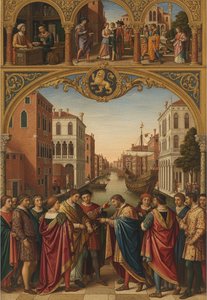
Vittore Carpaccio: Venetian Renaissance Narrative & the Poetics of Detail
Explore the captivating world of Vittore Carpaccio, a master storyteller of the Venetian Renaissance. Discover his intricate details, narrative cycles like 'The Legend of St. Ursula,' and unique artistic style.
Illuminating History: A Comprehensive Exploration of Tempera Painting Techniques & Artistic Legacy
Explore the rich history & techniques of tempera painting! Discover Renaissance masters like Botticelli & Fra Angelico, conservation insights, and the enduring legacy of this captivating art form.
Giotto di Bondone: Topp 25 Kunstverk – Mesterverk for Ditt Hjem | OriginalUniqueArt
Utforsk Giotto di Bondones 25 mest ikoniske kunstverk! Oppdag renessansens fresker, bibelske scener og Arena Chapel's skjønnhet. Finn reproduksjoner av høy kvalitet for ditt hjem på OriginalUniqueArt.com.


