

 Se i rommet
 Del som digitalt kort
 Del
Del
 Detaljer
 Studentguide

 Last ned
 Liknende objekter
 Røntgen
 Lysbildefremvisning
 Besøksstatistikk
Holy Conversation
 High Renaissance
 1505
1505- Renessansen
 92.0 x 126.0 cm
 Musée du Petit Palais
 Les mer
Giclée / Kunsttrykk
Giclée- eller lerretsprint av museumskvalitet med rask produksjon og fleksible valgmuligheter for etterbehandling. ( Bestill håndmalt reproduksjon Gå til digitalt bilde)




P118B Nkr10

P118H Nkr10

P118W Nkr10

P438Z Nkr10

P508JH Nkr12

P508YH Nkr12

P805H Nkr10

P805Z Nkr10

P919BZ Nkr10

P919G Nkr10

P919XJ Nkr10

P959ZH Nkr10

P968JZ Nkr12

W106C Nkr8

W218G Nkr10

W218JH Nkr8

W218Y Nkr10

W307PJ Nkr10

W316G Nkr10

W316PJ Nkr8

W316Y Nkr10

W398PJ Nkr8

W4111J Nkr10

W500HY Nkr15

W500JH Nkr15

W692G Nkr12

W849H Nkr8

W940BG Nkr15

W953PJ Nkr8




Velg mellom våre forhåndsdefinerte størrelser som bevarer kunstverkets opprinnelige proporsjoner.

Skriv inn bredden og høyden du trenger, slik at den passer til din ramme eller vegg. Et trykk kan kun beskjæres, aldri gjøres større enn bildet, så et format med en annen form vil miste en del av motivet. Vi sender deg en digital mockup for godkjenning før vi trykker noe som helst. Bildet som vises på denne siden viser ikke den faktiske beskjæringen — det er kun mockuppen som gjør det.
Verdensomspennende levering () på 2 uker i stedet for standard 4/5 uker. (26 October)

Gratis ekspressfrakt over hele verden

Lerretsduk av høykvalitets lin

Full transportforsikring

Garanti for refusjon av toll og importavgifter

Garantert fargeekthet

100 dagers returrett ved fabrikasjonsfeil

100% pengene tilbake-garanti

Mengderabatt
 Glassalternativet er kun tilgjengelig i størrelser under 110 cm

Holy Conversation
Giclée / Kunsttrykk
Format på reproduksjon
-


Totalpris
Nkr 760
Holy Conversation – Vittore Carpaccio’s Venetian Masterpiece
Vittore Carpaccio’s “Holy Conversation,” completed around 1505 in Venice, stands as a testament to the enduring power of narrative painting within the High Renaissance. More than just a depiction of religious iconography—the serene tableau featuring Jesus and Mary Magdalene—it embodies a profound exploration of faith, contemplation, and the delicate balance between divine grace and human vulnerability.
A Synthesis of Styles: Early Netherlandish Influence
Carpaccio’s artistic vision wasn't solely rooted in the humanist ideals sweeping across Italy at the time. Instead, he skillfully blended influences from early Netherlandish art, particularly Antonello da Messina’s groundbreaking realism and meticulous attention to detail. This fusion resulted in a Venetian style characterized by luminous color palettes—primarily dominated by blues and golds—and an unprecedented level of naturalistic representation. Unlike many contemporary artists prioritizing idealized forms, Carpaccio prioritized capturing the palpable atmosphere of his subject matter.
The Legend of Saint Ursula: A Narrative Cycle Elevated
“Holy Conversation” is arguably Carpaccio’s magnum opus, serving as a pivotal piece within his monumental cycle depicting the legend of Saint Ursula and her seventy companions. This narrative masterpiece meticulously recreates the pilgrimage to Cologne Cathedral, capturing not only the physical setting but also the emotional resonance of the event—the pilgrims' devotion, their apprehension about encountering God, and ultimately, their profound spiritual experience. Carpaccio’s masterful use of perspective creates a convincing illusion of depth, immersing viewers in the scene’s environment.
Symbolism Embedded in Detail
Carpaccio’s meticulous technique extends beyond mere visual accuracy; it's infused with symbolic meaning. The prominent crucifix held by Jesus serves as a constant reminder of sacrifice and redemption—a central theme within Christian theology. Mary Magdalene’s gaze, directed towards Jesus, conveys humility and reverence. Furthermore, the architectural elements of Cologne Cathedral—represented with remarkable precision—symbolize spiritual aspiration and divine majesty. Carpaccio's careful rendering of textures—the rough stone of the cathedral walls, the folds of Mary Magdalene’s robe—adds to the painting’s tactile quality and reinforces its emotional impact.
A Legacy of Venetian Realism
"Holy Conversation" remains a cornerstone of Venetian Renaissance art. Its enduring appeal lies in Carpaccio's ability to convey complex theological ideas through evocative imagery and masterful execution. It exemplifies the High Renaissance commitment to naturalistic observation combined with artistic innovation—a legacy that continues to inspire artists and collectors alike.
Spørsmål og svar
Hvem selger håndmalte kopier av "Holy Conversation" av Vittore Carpaccio?
"Holy Conversation" er tilgjengelig som en håndmalt oljereproduksjon på linlerret. Bestilling kan gjøres på siden Håndmalt reproduksjon, med valgmuligheter for ulike størrelser.
Hvilken kunstretning tilhører "Holy Conversation" av Vittore Carpaccio?
"Holy Conversation" av Vittore Carpaccio tilhører High Renaissance-retningen. Denne retningen gir det stilistiske kontekstet til verket.
Hvilke proporsjoner har "Holy Conversation" av Vittore Carpaccio, og hva er målene?
Formatet på "Holy Conversation" er Liggende format, og originalen måler 92 x 126 cm. Begge deler er nyttige når man planlegger en reproduksjon.
Kunstnerbiografi
Early Life and Training
Vittore Carpaccio, a prominent Italian painter, was born in Venice around 1465. He studied under the tutelage of Gentile Bellini, a renowned artist of the Venetian school. This apprenticeship laid the foundation for Carpaccio's future success—a formative experience that instilled within him the principles of balanced composition and masterful storytelling. His family’s involvement in shipbuilding provided him with an early understanding of craftsmanship and visual precision.Artistic Style and Influences
Carpaccio’s artistic style was characterized by its conservative nature, demonstrating minimal influence from the humanist trends that transformed Italian Renaissance painting during his lifetime. However, he possessed a singular vision—a blend of Venetian tradition and the expressive techniques pioneered by Antonello da Messina and early Netherlandish art. This distinctive approach resulted in paintings imbued with a palpable sense of atmosphere and emotion, reflecting the profound impact of Northern European artistic innovations on Venetian painters.Notable Works
Carpaccio’s most celebrated achievement was undoubtedly “The Legend of Saint Ursula,” a monumental cycle of nine paintings that now reside in the Gallerie dell'Accademia. This ambitious undertaking showcased his unparalleled skill in depicting biblical narratives with meticulous detail and dramatic flair—a testament to his dedication to capturing the essence of religious storytelling. Equally impressive was “Glory of St. Ursula Altarpiece” (1491), which brilliantly captured light and color, mirroring Giovanni Bellini’s masterful use of luminescence and creating a captivating visual experience for viewers. Furthermore, "Miracle of the Relic of the Cross at the Ponte di Rialto" (1494) exemplifies Carpaccio's ability to balance narrative complexity with compositional elegance—a hallmark of Venetian painting during his era.Career Highlights and Legacy
Between 1490 and 1519, Carpaccio cemented his position as one of the earliest masters of the Venetian Renaissance, producing a prolific output that established him as a leading figure in artistic circles. His exploration of orientalist motifs—evident in “St. George Baptizing the Selenites”—represented a burgeoning fascination with the Levant and its cultural traditions. Despite being somewhat overshadowed by his contemporaries like Giovanni Bellini or Giorgione, Vittore Carpaccio’s enduring legacy continues to inspire artists and scholars alike—a testament to his unwavering commitment to artistic excellence and his contribution to the rich tapestry of Venetian art history.References and Further Reading
Discover more about Vittore Carpaccio and the Venetian School on OriginalUniqueArt.
Vittore Carpaccio
1465 - 1526 , Italia
Kort om kunstneren
- Artistic Movement Or Style: Early Venetian Renaissance
- Artists Who Influenced This Artist:
- Gentile Bellini
- Antonello da Messina
- Date Of Birth: Venice, Italy (c. 1465)
- Date Of Death: Koper, Slovenia (1526)
- Full Name: Vittore Carpaccio
- Nationality: Italian
- Notable Artworks:
- The Legend of Saint Ursula
- Glory of St. Ursula Altarpiece
- Miracle of the Relic of the Cross at the Ponte di Rialto
- Place Of Birth: Venice
Relaterte artikler
The Venetian Renaissance: A Masterclass in Colorito, Light, and the Birth of Atmospheric Brilliance
Explore the breathtaking mastery of the Venetian Renaissance. Discover how legends like Titian revolutionized art through Colorito, capturing the luminous light and vibrant pigments of the Venetian lagoon in a visual journey of unparalleled color and texture.
Venetian Renaissance: The Golden Age of Color, Light, and Luminous Artistry
Embark on a journey through the Venetian Renaissance. Discover how masters like Giorgione and Titian revolutionized art through luminous color and light. Explore the profound legacy of the Venetian School and its enduring influence on the world of fine art.

Jacopo Tintorettos 25 Mesterverk: Drama, Lys og Renessanse Kunst | OriginalUniqueArt.no
Oppdag Jacopo Tintorettos 25 mest ikoniske malerier! Fordyp deg i renessansens drama, lys og farger. Eksklusive kunsttrykk & lerretstrykk på OriginalUniqueArt.no – finn din favoritt nå!
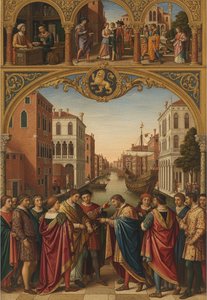
Vittore Carpaccio: Venetian Renaissance Narrative & the Poetics of Detail
Explore the captivating world of Vittore Carpaccio, a master storyteller of the Venetian Renaissance. Discover his intricate details, narrative cycles like 'The Legend of St. Ursula,' and unique artistic style.

Venetian Renaissance: The Mastery of Color, Light, and the Art of Colorito
Explore the luminous mastery of the Venetian Renaissance. Discover how masters like Titian and Giorgione revolutionized art through colorito, light, and atmosphere. An expert guide to the golden age of Italian painting for collectors and enthusiasts.


