 Bytt til trykk
 Vis hele teksten







































 For kunstverk eller reproduksjoner som er større enn 105 cm (ca. 41 tommer) på noen side, vil rammen bli sendt som et sett som må monteres. Denne metoden sikrer trygg levering og forhindrer skader under transport.


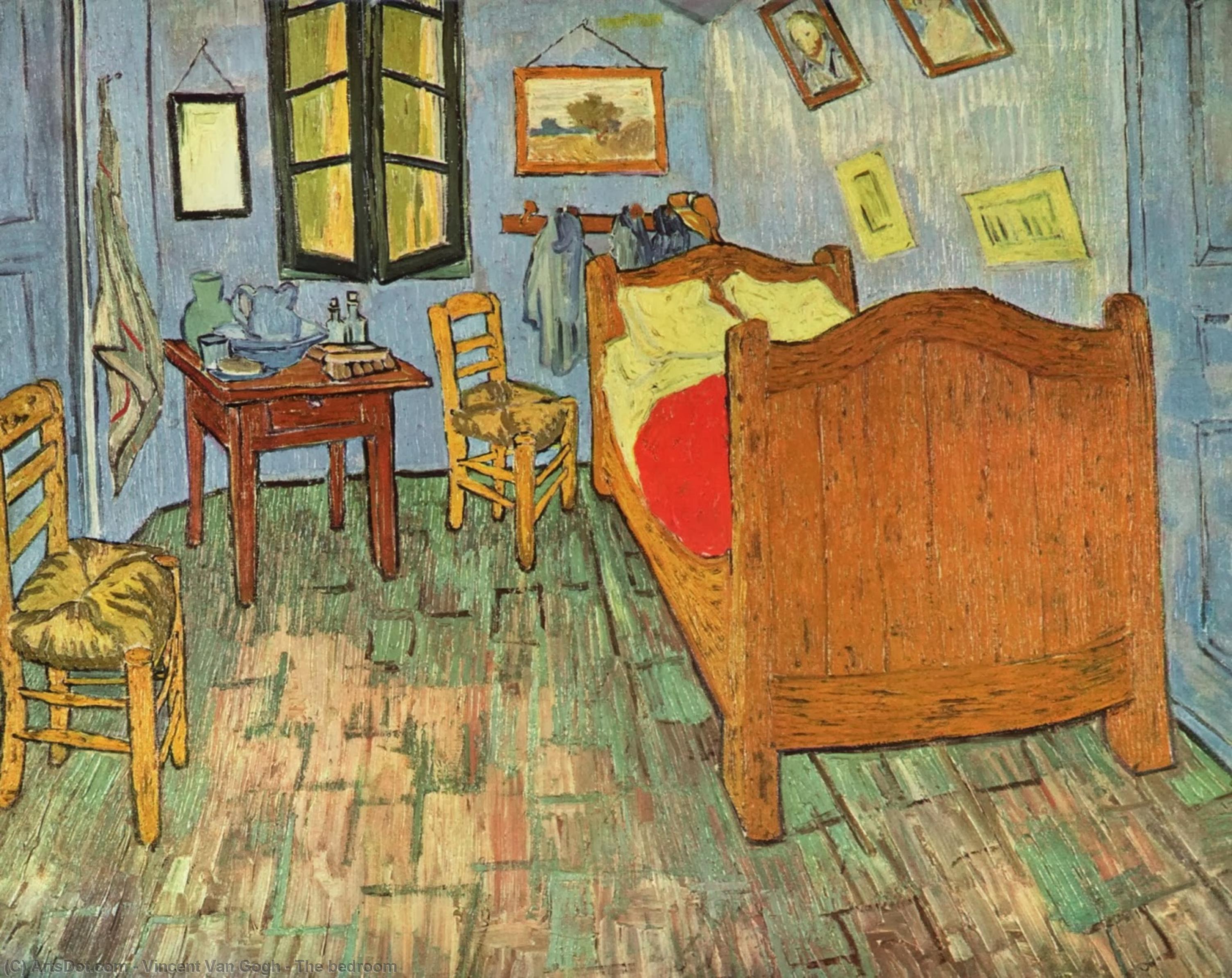
Vincent van Gogh’s ‘Bedroom in Arles’: A Sanctuary of Rest
Vincent van Gogh's “Bedroom in Arles” stands as an emblem of Post-Impressionist introspection and artistic innovation, capturing not merely a room but the profound emotional landscape of its inhabitant. Painted during his residency at Saint-Paul-de-Mausole asylum in 1889 – a period marked by intense psychological struggle – this artwork transcends mere representation; it’s an attempt to distill the essence of tranquility and refuge into visual form.
- Style: The painting embodies the Post-Impressionist movement's rejection of photographic realism, prioritizing subjective experience and expressive color. Van Gogh deliberately eschewed academic conventions, opting for a raw honesty that reflects his inner turmoil alongside his yearning for peace.
- Technique: Dominating the canvas is impasto – thick layers of paint applied with energetic brushstrokes—creating a tactile surface where textures become visible embodiments of emotion. This technique wasn’t merely decorative; it conveyed Van Gogh's state of mind, mirroring his restlessness and vulnerability.
- Color Palette: The predominant hues are cool blues and greens, establishing a melancholic atmosphere punctuated by splashes of vibrant yellows and reds. These colors aren’t random; they symbolize hope amidst despair and contribute to the painting’s overall emotional resonance.
Historical Context & Van Gogh's Intentions
Following a debilitating mental breakdown, Van Gogh voluntarily sought refuge in Saint-Paul-de-Mausole, driven by a fervent desire for solitude and creative rejuvenation. He described his bedroom as “a simplicity…to give calmness,” highlighting the significance of creating an environment conducive to contemplation. This painting was conceived as part of a larger project aimed at decorating his own room—a deliberate effort to foster a sense of comfort and welcome.
- Symbolism: The bed represents rest and spiritual renewal, while the closed door symbolizes isolation and vulnerability. The sparsely furnished space reflects Van Gogh’s internal struggles and underscores the artist's preoccupation with psychological well-being.
- Influence of Japanese Prints: Like many artists of his time, Van Gogh was captivated by Japonisme—the fascination with Japanese art and aesthetics—evident in the flattened perspective and simplified forms of the composition. He deliberately sought to emulate the aesthetic principles of Japanese prints, prioritizing mood and atmosphere over precise detail.
A Window into Emotion
The painting’s emotional impact stems from its masterful depiction of inner experience. The swirling lines and bold colors aren't merely aesthetically pleasing; they pulsate with energy and communicate Van Gogh’s profound sensitivity to the world around him. Consider the way the textured floorboards seem to breathe—a tangible reminder of the artist’s physical presence within this sanctuary of rest.
- Impasto Technique: The thick paint application is crucial to conveying emotion, mirroring Van Gogh's turbulent psychological state and capturing the immediacy of his artistic vision.
- Compositional Choices: The skewed perspective—a deliberate departure from academic conventions—creates a sense of depth while simultaneously emphasizing the painting’s emotional core.
“Bedroom in Arles” remains an enduring testament to Van Gogh's ability to transform personal experience into universal art—a poignant exploration of solitude, vulnerability, and the pursuit of inner peace.
Spørsmål og svar
Hvilket medium er "Slaapkamer" av Vincent Van Gogh utført i?
Vincent Van Gogh brukte Olje på lerret-teknikken i "Slaapkamer". Teknikken definerer det materielle uttrykket til det originale verket.
Hvem er "Slaapkamer" av Vincent Van Gogh en god gave til?
"Slaapkamer" anbefales som en gave til Jubileum, med Stemning i tankene.
Hvilken følelse formidler "Slaapkamer" av Vincent Van Gogh?
"Slaapkamer" av Vincent Van Gogh formidler en Melankolsk og ettertenksom følelse innenfor en overordnet Seren stemning.
 Forhåndsvisning
 Send
Send Del
Del
 Vis detaljer
 Utskriftsvennlig guide

 Last ned bilde
 Liknende objekter
 Røntgenundersøkelse
 Lysbildefremvisning
 Q&A
Q&A Statistikk