Se i rommet
 Del som digitalt kort
 Del
Del
 Detaljer
 Studentguide

 Last ned
 Liknende objekter
 Røntgen
 Lysbildefremvisning
 Besøksstatistikk
Olive Grove: Orange Sky
 Olje på lerret
- Veggkunst
- Post-Impressionism
 1889
1889- tallet
 74.0 x 93.0 cm
 Les mer
Håndlaget oljereproduksjon
Håndmalt olje på lerret i din valgte størrelse og ramme, laget på bestilling av våre kunstnere. ( Bytt til trykkversjon Gå til digitalt bilde)




P118B $10

P118H $10

P118W $10

P438Z $10

P508JH $12

P508YH $12

P805H $10

P805Z $10

P919BZ $10

P919G $10

P919XJ $10

P959ZH $10

P968JZ $12

W106C $8

W218G $10

W218JH $8

W218Y $10

W307PJ $10

W316G $10

W316PJ $8

W316Y $10

W398PJ $8

W4111J $10

W500HY $15

W500JH $15

W692G $12

W849H $8

W940BG $15

W953PJ $8




Velg mellom våre forhåndsdefinerte størrelser som bevarer kunstverkets opprinnelige proporsjoner.

Du kan angi egne mål for å tilpasse en spesifikk ramme eller plass. Dersom den valgte størrelsen ikke samsvarer med originalbildets proporsjoner, vil vi enten beskjære kunstverket eller utvide maleriet med ytterligere håndmalte elementer. En digital mockup vil bli sendt til din godkjenning før produksjonen starter.
Vennligst merk at forhåndsvisningen på skjermen ikke gjenspeiler den faktiske beskjæringen eller utvidelsen. Kun mockuppen vil vise den endelige komposisjonen nøyaktig.
Selv om tilpassede størrelser er tilgjengelige, anbefaler vi å velge et mål fra den forhåndsdefinerte listen for å bevare de originale proporsjonene.
Etter bestilling vil OriginalUniqueArt.com-teamet sende e-post til kunden for instruksjoner og sende et utkast (mockup) som forhåndsvisning.
Verdensomspennende levering () på 3–4 uker i stedet for standard 5 uker. (25 September). Ingen kompromisser med kvaliteten.

Gratis ekspressfrakt over hele verden

Lerretsduk av høykvalitets lin

Full transportforsikring

Garanti for refusjon av toll og importavgifter

Garantert fargeekthet

100 dagers returrett ved fabrikasjonsfeil

100% pengene tilbake-garanti

Mengderabatt
 Glassalternativet er kun tilgjengelig i størrelser under 110 cm

Olive Grove: Orange Sky
Reproduksjonsmetode
Format på reproduksjon
-


Totalpris
$ 300
Olive Grove: Orange Sky – A Window into Van Gogh’s Soul
Vincent van Gogh's *Olive Grove: Orange Sky*, painted in 1889, is more than just a depiction of an olive grove; it’s a raw and intensely personal expression of the artist’s connection to nature and his internal landscape. This oil on canvas masterpiece, measuring 74 x 93 cm, captures a moment of profound tranquility amidst the turmoil that defined Van Gogh's life. Housed at the Goteborgs Konstmuseum in Sweden, it offers a rare glimpse into the artist’s unique vision – one characterized by bold color, dynamic brushstrokes, and an almost palpable sense of emotion.
- Subject Matter: The painting focuses on a cluster of olive trees bathed in the warm glow of an orange sunset. These aren't merely botanical subjects; they represent resilience, peace, and the enduring beauty found in the simplest of things – themes that resonated deeply with Van Gogh’s own struggles.
- Composition & Atmosphere: The foreground is dominated by the sturdy forms of the olive trees, leading the viewer’s eye into the receding background where they blur into a hazy distance. This creates a powerful sense of depth and space, while the vibrant orange sky – achieved through thick impasto layering – evokes feelings of warmth, serenity, and perhaps even a touch of melancholy.
The Language of Color: Van Gogh’s Post-Impressionist Technique
Van Gogh's masterful use of color is central to the painting’s impact. He abandons traditional representational accuracy in favor of an expressive palette, employing intense oranges, yellows, and blues to convey not just what he saw, but how he *felt*. The thick application of paint – a hallmark of his technique – creates a textured surface that seems to vibrate with energy. This impasto technique wasn’t simply about applying color; it was about imbuing the canvas with movement and emotion.
- Oil on Canvas: The choice of oil on canvas allowed Van Gogh to build up layers of paint, creating depth and luminosity that would have been difficult to achieve with other mediums.
- Brushwork: Notice the swirling, directional brushstrokes – particularly evident in the sky – which contribute significantly to the painting’s dynamism and emotional intensity. These aren't delicate strokes; they are bold declarations of color and form.
A Portrait of a Troubled Genius
Painted during a period of intense personal struggle for Van Gogh, *Olive Grove: Orange Sky* offers a poignant reflection of his inner turmoil. The scene’s tranquility is juxtaposed with the knowledge that he was battling severe mental illness and grappling with feelings of isolation and despair. Yet, within this darkness, there's also a sense of hope – a yearning for beauty and connection to the natural world.
“His paintings often reflected his personal struggles and the beauty he found in nature,” a sentiment that underscores the profound emotional weight embedded within each brushstroke. The olive grove itself can be interpreted as a symbol of peace, fertility, and longevity – qualities Van Gogh desperately sought to find amidst his chaotic life. Considering this context, the painting transcends mere landscape; it becomes a powerful meditation on the human condition.Connections & Legacy
Van Gogh’s work was profoundly influenced by Post-Impressionism, rejecting the objective realism of earlier movements in favor of subjective expression. His legacy continues to inspire artists today, demonstrating the power of art to convey emotion and challenge conventional perceptions. Notably, this painting shares stylistic similarities with works by Paul Gauguin, particularly his exploration of color and landscape, as evidenced by pieces like *Young Breton Bathers* and *Brittany landscape with women carrying sack*. Furthermore, understanding Van Gogh’s journey through the lens of artists like Ella Lagerman-Heijl (a key figure in the development of modern art) provides a richer appreciation for the breadth of artistic influences shaping his distinctive style.
Kunstnerbiografi
A Life Painted in Emotion: The World of Vincent van Gogh
Vincent Willem van Gogh, a name synonymous with artistic passion and turbulent genius, remains one of the most recognizable and beloved figures in Western art history. Born on March 30, 1853, in Groot-Zundert, Netherlands, his journey was not one of immediate acclaim but rather a slow burn of dedication, struggle, and ultimately, profound influence. The eldest of six children born to a Protestant minister, Theodorus van Gogh, Vincent’s early life was steeped in religious contemplation, a sensibility that would subtly permeate much of his later work. Though he displayed an inclination towards drawing from a young age, his path wasn't immediately clear; he explored various vocations – art dealer, teacher, and missionary – before fully embracing the artist’s life. These experiences, though seemingly disparate, proved formative, instilling in him a deep empathy for the working class and a profound sense of spiritual seeking that would become hallmarks of his artistic vision. Early influences included the Dutch Masters like Rembrandt van Rijn and Frans Hals, whose masterful use of light and shadow resonated with young Vincent, as well as contemporary French painters Jean-François Millet and Camille Corot, who depicted scenes of rural life with a poignant realism.From Darkness to Light: Artistic Development and Style
Van Gogh’s serious engagement with painting began around 1880, largely self-taught, driven by an inner compulsion to express the world as he perceived it. His initial works reflected his compassion for the marginalized, focusing on the lives of peasants and laborers – exemplified in pieces like The Potato Eaters. These early paintings are characterized by dark, earthy tones and a raw, almost brutal honesty that sought to capture the hardship and dignity of rural existence. The figures in *The Potato Eaters* aren’t idealized; they're depicted with unflinching realism, their faces etched with weariness and toil. This wasn’t simply a documentary exercise, however; Van Gogh aimed to convey the profound respect he held for these individuals, highlighting their resilience and humanity. A pivotal moment arrived with his move to Paris in 1886, where he was exposed to the vibrant world of Impressionism and Post-Impressionism. This encounter proved transformative, injecting brighter colors into his palette and encouraging experimentation with new techniques. He absorbed the lessons of artists like Monet, Renoir, and Pissarro, but never fully adopted their style; instead, he forged a path uniquely his own. His distinctive style rapidly evolved, becoming instantly recognizable for its bold colors, expressive brushwork, and emotional intensity. Van Gogh didn’t merely *represent* reality; he sought to convey the feeling of being within it, utilizing impasto – thick layers of paint – to create texture and imbue his canvases with a palpable energy. This technique wasn't simply aesthetic; it was an integral part of his expressive language, allowing him to translate inner turmoil and ecstatic joy onto the canvas.Periods of Intensity: Key Works and Artistic Phases
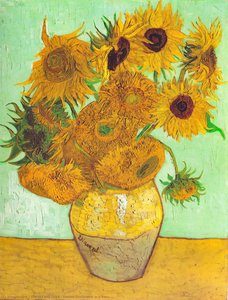
Van Gogh’s artistic journey can be broadly divided into distinct periods, each marked by unique characteristics and significant works. The Dutch Period (1880-1886), as mentioned, was defined by somber tones and depictions of peasant life – scenes of rural labor, often bathed in the muted light of dawn or dusk. These paintings, like *The Potato Eaters*, are imbued with a sense of quiet dignity and social commentary. The subsequent Parisian Period (1886-1888) saw a dramatic shift towards brighter colors and experimentation with Impressionist techniques. He was particularly drawn to the work of Toulouse-Lautrec, whose depictions of Parisian nightlife offered a stark contrast to the rural scenes he had previously painted. However, it was during the Arles Period (1888-1889), in the south of France, that Van Gogh reached a peak of creative intensity. Surrounded by the radiant light and vibrant landscapes of Provence, he produced some of his most iconic works: Sunflowers – bursting with golden hues and radiating an almost overwhelming energy; *The Night Café* – a claustrophobic interior rendered in jarring, unnatural colors; and *Starry Night Over the Rhône* – capturing the shimmering beauty of the night sky reflected in the river. These paintings are not merely depictions of scenes; they are emotional landscapes, pulsating with life and imbued with a sense of longing. His use of color became increasingly expressive, moving beyond mere representation to convey mood and feeling. The Saint-Rémy & Auvers-sur-Oise Period (1889-1890), marked by his time in an asylum after a mental breakdown, saw a shift towards introspection and a heightened sense of vulnerability. Despite his struggles, he continued to paint prolifically, producing works like *The Starry Night*, a swirling vortex of color and emotion that continues to captivate viewers today – a testament to the enduring power of the human spirit even in the face of profound suffering.A Legacy Forged in Suffering: Achievements and Historical Significance
Despite facing rejection and struggling with mental illness throughout his life, Van Gogh created over 2,100 artworks in just over a decade—approximately 860 oil paintings. This astonishing output is testament to his unwavering dedication and relentless creative drive. Remarkably, during his lifetime, only one painting – *The Red Vineyard* – was sold. Recognition came posthumously, slowly at first, then with increasing momentum in the early 20th century. His work profoundly influenced the development of modern art, particularly Expressionism and Fauvism, inspiring artists to prioritize emotional expression over realistic representation. His bold use of color, distorted forms, and expressive brushwork paved the way for new artistic possibilities. Today, Van Gogh’s paintings are among the most recognizable and valuable artworks in the world, commanding record prices at auction and drawing millions of visitors to museums worldwide. But his legacy extends far beyond monetary value; he remains a cultural icon, representing the archetype of the “tortured artist” – though this narrative often overshadows his skill, dedication, and artistic vision. The Van Gogh Museum in Amsterdam stands as a testament to his enduring influence, showcasing his work and celebrating his life for generations to come. His art continues to resonate with audiences because it speaks to universal human experiences—love, loss, hope, despair—with an honesty and vulnerability that transcends time and culture.- Major Influences: Dutch Masters (Rembrandt, Hals), Millet, Corot.
- Key Periods: Dutch, Parisian, Arles, Saint-Rémy/Auvers-sur-Oise.
- Notable Works: The Potato Eaters, Sunflowers, Starry Night, The Night Café.
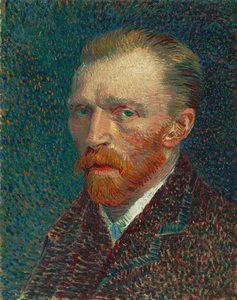
vincent willem van gogh
1853 - 1890 , Nederland
Kort om kunstneren
- Artistic Movement Or Style: Post-Impressionisme
- Artists Or Movements Influenced By This Artist:
- Expressionisme
- Fauvisme
- Artists Who Influenced This Artist:
- Rembrandt
- Millet
- Date Of Birth: 30 mars 1853
- Date Of Death: 29 juli 1890
- Full Name: Vincent Willem van Gogh
- Nationality: Nederlands
- Notable Artworks:
- Potetspiserne
- Solblomster
- Stjernekvelds nat
- Place Of Birth: Zundert, Nederland
Relaterte artikler

Rembrandts Mesterverk: Topp 25 Kunstverk for Din Vegg | OriginalUniqueArt.no
Utforsk Rembrandts 25 mest ikoniske kunstverk! Oppdag historiene bak mestermalerier, portretter og bibelske scener fra den nederlandske barokken. Finn museumskvalitets reproduksjoner & interiørinspirasjon på OriginalUniqueArt.com.

Postimpresjonismens 10 Mesterverk: Kunst som Forandret Verden – OriginalUniqueArt.no
Oppdag postimpresjonismens 10 mest ikoniske mesterverk! Van Gogh, Monet, Cézanne og Gauguin – lær historien bak disse fargerike maleriene. Finn museumskvalitets kunsttrykk & inspirasjon til ditt hjem på OriginalUniqueArt.com.
The Soul of the Brushstroke: Decoding Van Gogh's Emotional Impasto
Explore the profound emotional depth of Van Gogh's impasto technique. Discover how his sculptural brushstrokes and textured oil layers define Post-Impressionism through an expert art-historical lens, perfect for discerning collectors and fine art enthusiasts.

Decoding Impasto: The Emotional Power and Texture of Van Gogh's Brushstrokes
Explore the profound emotional depth of Van Gogh's impasto technique. Discover how his sculptural brushstrokes and textured oil layers define Post-Impressionism through an expert art-historical lens, perfect for discerning collectors and fine art enthusiasts.
Decoding Van Gogh's Turmoil: OriginalUniqueArt’s Masterful Reproductions of Emotional Depth
Discover exquisite Van Gogh reproductions from OriginalUniqueArt – expert art specialists offering museum-quality prints & custom paintings. Trust our authentic process and elevate your collection today.