

 Forhåndsvisning
 Send
Send Del med andre
 Vis detaljer
 Guide
Guide

 Last ned bildet
 Liknende objekter
 Røntgenundersøkelse
 Lysbildefremvisning
 Statistikk
Figures in a Park


 Vis hele teksten
Kjøp et høyoppløselig, forbedret digitalt bilde som er langt bedre enn forhåndsvisningen på nettet.
Hver fil er omhyggelig klargjort av våre egne spesialister ved hjelp av avanserte verktøy og profesjonell manuell retusjering. Vi sørger for at hvert bilde har eksepsjonell klarhet, presis fargegjengivelse og fine detaljer.
Den endelige filen leveres via e-post innen 72 timer, optimalisert for umiddelbar bruk i profesjonelle, redaksjonelle og trykte miljøer. Dette er den samme kvaliteten som benyttes av ledende designstudioer, utgivere og gallerier.
Digitalt bilde
Last ned en høyoppløselig fil for personlig bruk, utskrift og kreative prosjekter. ( Bytt til trykk Kjøp håndlaget maleri)
Inkludert i alle bestillinger av digitale bilder
Ekspert digital levering, garantert
Når du velger OriginalUniqueArt.com, får du ikke bare et bilde – du mottar et profesjonelt forbedret digitalt kunstverk, skapt med presisjon og med en garantert tilfredshetsgaranti. Her er alt som automatisk følger med din bestilling:

Rask digital levering
Din høyoppløselige digitale bildefil sendes til din e-post innen 72 timer etter bestilling – klar til umiddelbar bruk.

KI-forbedret digital fil
Ditt kunstverk blir profesjonelt optimalisert ved hjelp av avanserte AI-verktøy og manuell redigering, noe som sikrer maksimal detaljrikdom, klarhet og fargegjengivelse.

Gratis livslang nyutlevering
Har du ved et uhell slettet eller mistet filen din? Ingen bekymring – vi sender den på nytt når som helst, helt gratis.

Ingen importavgifter – noen gang
Nyt ditt kunstverk umiddelbart uten toll, avgifter eller leveringskostnader – digitale nedlastinger er alltid avgiftsfrie.

Garantert fargenøyaktighet
Vi sikrer at ditt digitale bilde gjenspeiler de originale fargene så nøyaktig som mulig ved hjelp av profesjonelle verktøy og fargehåndtering.

100 dagers tilfredshetsgaranti
Hvis du ikke er fornøyd med ditt digitale bilde, vil vi revidere det eller refundere 100% innen 100 dager – uten spørsmål.

100% Penggaranti
Ikke fornøyd? Få full refusjon innen 100 dager etter at du har mottatt din digitale fil – uten spørsmål.

Rabatt ved storkjøp
Kjøp 3 bilder, spar 10% - Kjøp 5, spar 15% - Kjøp 10+, spar 20%. Ideelt for kreative prosjekter, gallerier og byråer.
A Moment Frozen in Time: Van Gogh’s ‘Figures in a Park’
Vincent van Gogh's “Figures in a Park,” painted in 1886, offers a deceptively simple yet profoundly evocative glimpse into the artist’s evolving vision. This black and white drawing, depicting a bustling park scene near a body of water, transcends mere representation; it is a carefully constructed meditation on human connection and the transient beauty of everyday life. The image captures a moment of leisure – individuals scattered across benches and pathways, engaged in quiet contemplation or animated conversation – a theme frequently explored by Van Gogh during this period of his artistic development.
- Subject Matter: The scene is dominated by figures within a public park setting, showcasing the artist’s interest in portraying ordinary people amidst their natural surroundings.
- Composition: The arrangement of individuals creates a sense of movement and activity, while also suggesting an underlying stillness – a quiet observation of human behavior.
- Setting: The presence of boats and water adds to the idyllic atmosphere, evoking feelings of tranquility and escape.
The Dawn of Expressionism: Van Gogh’s Technique
Created in 1886, a pivotal year for Van Gogh's artistic journey, “Figures in a Park” exemplifies his developing style – a crucial step towards the expressive power that would define his later work. The drawing is executed with confident, deliberate lines, revealing a mastery of tonal shading and perspective. Unlike the vibrant colors he would later employ, this piece relies on the stark contrast between light and shadow to create depth and volume. Note the meticulous attention to detail in rendering the clothing, the textures of the benches, and the subtle nuances of facial expressions. This technique foreshadows his eventual embrace of impasto – thick layers of paint – as a means of conveying emotion directly onto the canvas.
Symbolism and Context: A Reflection of Van Gogh’s World
Painted during a period of intense personal struggle and artistic experimentation, “Figures in a Park” offers a window into Van Gogh's psychological state. The scene can be interpreted as a yearning for connection – the figures represent potential relationships and shared experiences. The umbrella, a small but significant detail, might symbolize protection from the anxieties of the world or perhaps a desire for shelter and solace. The drawing’s monochrome palette further amplifies its emotional weight, mirroring the somber mood often associated with Van Gogh's early years.
Emotional Resonance and Artistic Legacy
“Figures in a Park” is more than just a drawing; it’s a testament to Van Gogh’s unwavering belief in the power of art to capture human emotion. The scene’s quiet intensity invites viewers to contemplate themes of solitude, companionship, and the fleeting nature of time. This work represents an important transitional piece in Van Gogh's oeuvre, demonstrating his growing confidence as an artist and foreshadowing the revolutionary impact he would have on the course of modern art. A hand-painted reproduction offers a unique opportunity to experience this poignant artwork firsthand, bringing its timeless beauty into your home or office.
Om kunstneren
A Life Painted in Emotion: The World of Vincent van Gogh
Vincent Willem van Gogh, a name synonymous with artistic passion and turbulent genius, remains one of the most recognizable and beloved figures in Western art history. Born on March 30, 1853, in Groot-Zundert, Netherlands, his journey was not one of immediate acclaim but rather a slow burn of dedication, struggle, and ultimately, profound influence. The eldest of six children born to a Protestant minister, Theodorus van Gogh, Vincent’s early life was steeped in religious contemplation, a sensibility that would subtly permeate much of his later work. Though he displayed an inclination towards drawing from a young age, his path wasn't immediately clear; he explored various vocations – art dealer, teacher, and missionary – before fully embracing the artist’s life. These experiences, though seemingly disparate, proved formative, instilling in him a deep empathy for the working class and a profound sense of spiritual seeking that would become hallmarks of his artistic vision. Early influences included the Dutch Masters like Rembrandt van Rijn and Frans Hals, whose masterful use of light and shadow resonated with young Vincent, as well as contemporary French painters Jean-François Millet and Camille Corot, who depicted scenes of rural life with a poignant realism.From Darkness to Light: Artistic Development and Style
Van Gogh’s serious engagement with painting began around 1880, largely self-taught, driven by an inner compulsion to express the world as he perceived it. His initial works reflected his compassion for the marginalized, focusing on the lives of peasants and laborers – exemplified in pieces like The Potato Eaters. These early paintings are characterized by dark, earthy tones and a raw, almost brutal honesty that sought to capture the hardship and dignity of rural existence. The figures in *The Potato Eaters* aren’t idealized; they're depicted with unflinching realism, their faces etched with weariness and toil. This wasn’t simply a documentary exercise, however; Van Gogh aimed to convey the profound respect he held for these individuals, highlighting their resilience and humanity. A pivotal moment arrived with his move to Paris in 1886, where he was exposed to the vibrant world of Impressionism and Post-Impressionism. This encounter proved transformative, injecting brighter colors into his palette and encouraging experimentation with new techniques. He absorbed the lessons of artists like Monet, Renoir, and Pissarro, but never fully adopted their style; instead, he forged a path uniquely his own. His distinctive style rapidly evolved, becoming instantly recognizable for its bold colors, expressive brushwork, and emotional intensity. Van Gogh didn’t merely *represent* reality; he sought to convey the feeling of being within it, utilizing impasto – thick layers of paint – to create texture and imbue his canvases with a palpable energy. This technique wasn't simply aesthetic; it was an integral part of his expressive language, allowing him to translate inner turmoil and ecstatic joy onto the canvas.Periods of Intensity: Key Works and Artistic Phases
Van Gogh’s artistic journey can be broadly divided into distinct periods, each marked by unique characteristics and significant works. The Dutch Period (1880-1886), as mentioned, was defined by somber tones and depictions of peasant life – scenes of rural labor, often bathed in the muted light of dawn or dusk. These paintings, like *The Potato Eaters*, are imbued with a sense of quiet dignity and social commentary. The subsequent Parisian Period (1886-1888) saw a dramatic shift towards brighter colors and experimentation with Impressionist techniques. He was particularly drawn to the work of Toulouse-Lautrec, whose depictions of Parisian nightlife offered a stark contrast to the rural scenes he had previously painted. However, it was during the Arles Period (1888-1889), in the south of France, that Van Gogh reached a peak of creative intensity. Surrounded by the radiant light and vibrant landscapes of Provence, he produced some of his most iconic works: Sunflowers – bursting with golden hues and radiating an almost overwhelming energy; *The Night Café* – a claustrophobic interior rendered in jarring, unnatural colors; and *Starry Night Over the Rhône* – capturing the shimmering beauty of the night sky reflected in the river. These paintings are not merely depictions of scenes; they are emotional landscapes, pulsating with life and imbued with a sense of longing. His use of color became increasingly expressive, moving beyond mere representation to convey mood and feeling. The Saint-Rémy & Auvers-sur-Oise Period (1889-1890), marked by his time in an asylum after a mental breakdown, saw a shift towards introspection and a heightened sense of vulnerability. Despite his struggles, he continued to paint prolifically, producing works like *The Starry Night*, a swirling vortex of color and emotion that continues to captivate viewers today – a testament to the enduring power of the human spirit even in the face of profound suffering.A Legacy Forged in Suffering: Achievements and Historical Significance
Despite facing rejection and struggling with mental illness throughout his life, Van Gogh created over 2,100 artworks in just over a decade—approximately 860 oil paintings. This astonishing output is testament to his unwavering dedication and relentless creative drive. Remarkably, during his lifetime, only one painting – *The Red Vineyard* – was sold. Recognition came posthumously, slowly at first, then with increasing momentum in the early 20th century. His work profoundly influenced the development of modern art, particularly Expressionism and Fauvism, inspiring artists to prioritize emotional expression over realistic representation. His bold use of color, distorted forms, and expressive brushwork paved the way for new artistic possibilities. Today, Van Gogh’s paintings are among the most recognizable and valuable artworks in the world, commanding record prices at auction and drawing millions of visitors to museums worldwide. But his legacy extends far beyond monetary value; he remains a cultural icon, representing the archetype of the “tortured artist” – though this narrative often overshadows his skill, dedication, and artistic vision. The Van Gogh Museum in Amsterdam stands as a testament to his enduring influence, showcasing his work and celebrating his life for generations to come. His art continues to resonate with audiences because it speaks to universal human experiences—love, loss, hope, despair—with an honesty and vulnerability that transcends time and culture.- Major Influences: Dutch Masters (Rembrandt, Hals), Millet, Corot.
- Key Periods: Dutch, Parisian, Arles, Saint-Rémy/Auvers-sur-Oise.
- Notable Works: The Potato Eaters, Sunflowers, Starry Night, The Night Café.
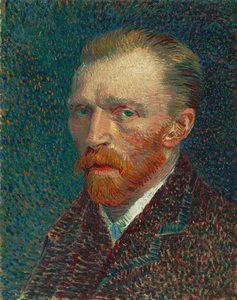
vincent willem van gogh
1853 - 1890 , Nederland
Kort om kunstneren
- Artistic Movement Or Style: Post-Impressionisme
- Artists Or Movements Influenced By This Artist:
- Expressionisme
- Fauvisme
- Artists Who Influenced This Artist:
- Rembrandt
- Millet
- Date Of Birth: 30 mars 1853
- Date Of Death: 29 juli 1890
- Full Name: Vincent Willem van Gogh
- Nationality: Nederlands
- Notable Artworks:
- Potetspiserne
- Solblomster
- Stjernekvelds nat
- Place Of Birth: Zundert, Nederland