Bytt til trykk
 Vis hele teksten







































 For kunstverk eller reproduksjoner som er større enn 105 cm (ca. 41 tommer) på noen side, vil rammen bli sendt som et sett som må monteres. Denne metoden sikrer trygg levering og forhindrer skader under transport.


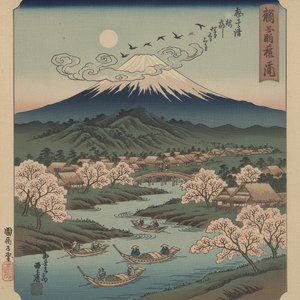
A Poetic Echo of Edo Japan: Exploring Hiroshige’s Station 23
Utagawa Hiroshige (1797-1858), a titan amongst *ukiyo-e* artists, didn't merely depict landscapes; he crafted visions imbued with the spirit of his era—a time of burgeoning commerce alongside profound cultural conservatism. “Station 23, Fujieda,” produced around 1847/52, exemplifies this masterful blend of observation and imagination. More than just a scenic portrayal of a coastal town nestled in Fuji Prefecture, it’s a window into the anxieties and aspirations of Edo society during its twilight years.
- Subject Matter: The print captures a bustling beach scene dominated by a horse-drawn carriage carrying passengers. Amidst this activity is a solitary dog, adding an element of quiet contemplation to the energetic tableau.
- Style & Technique: Hiroshige’s signature style—known as *tokaido* or “the journey”—is characterized by meticulous detail and atmospheric perspective. The artist skillfully employs woodblock printing techniques to achieve subtle gradations of color and texture, creating a sense of depth that transcends the flatness inherent in this medium.
- Historical Context: Produced during the reign of Emperor Tokugawa Minhō, Station 23 reflects the growing influence of Western ideas on Japan’s artistic sensibilities. However, Hiroshige retains a distinctly Japanese aesthetic, prioritizing harmony and conveying emotion through carefully considered composition and tonal variations.
Symbolism Within Tranquility: Interpreting Visual Elements
Beyond its immediate depiction of Fujieda Beach, Station 23 resonates with symbolic significance. The horse-drawn carriage represents the movement of commerce and societal progress—albeit tempered by the stillness of the sea. The dog, often interpreted as a symbol of loyalty and companionship, offers a counterpoint to the human activity surrounding it. Hiroshige’s masterful use of light and shadow enhances these interpretations, creating an emotional landscape that invites contemplation.
Hiroshige's Legacy: Influence Beyond Japan
Station 23 stands as testament to Hiroshige’s enduring impact on Western art history. Impressionists like Claude Monet and Vincent van Gogh were profoundly moved by his landscapes, recognizing in them a precursor to their own explorations of light and color. Hiroshige's ability to capture fleeting moments of beauty—a skill honed through years of painstaking observation—became a cornerstone of the Impressionist aesthetic.
Resources for Further Exploration
- Artwork Database: Station 23, Fujieda
- Artist Database: Hiroshige Utagawa II & Toyokuni Utagawa IV
- Artist Database: Hiroshige I, Utagawa Kiemon & Tsuruya
- Artist Database: Utagawa Hiroshige
- Museum Database: Nakagawa-machi Bato Hiroshige Museum of Art
Spørsmål og svar
Hva slags kunstverk er "Stasjon 23, Fujieda" av Utagawa Hiroshige?
I katalogen er "Stasjon 23, Fujieda" av Utagawa Hiroshige klassifisert som Veggkunst. Kategorien bidrar til å finne lignende verk.
Hvem selger håndmalte kopier av "Stasjon 23, Fujieda" av Utagawa Hiroshige?
"Stasjon 23, Fujieda" er tilgjengelig som en håndmalt oljereproduksjon på linlerret. Du kan bestille på siden Håndmalt oljereproduksjon, hvor du kan velge mellom ulike størrelser.
Hvem er kunstneren bak "Stasjon 23, Fujieda"?
"Stasjon 23, Fujieda" tilskrives Utagawa Hiroshige.
 Forhåndsvisning
 Send
Send Del
Del
 Vis detaljer
 Utskriftsvennlig guide

 Last ned bilde
 Liknende objekter
 Røntgenundersøkelse
 Lysbildefremvisning
 Q&A
Q&A Statistikk