Neoclassicism · 1839
The Student (Thomas Sully, 1839)
Thomas Sully (1783–1872) har laget The Student. Den er fra 1839. Det tilhører Neoclassicism-bevegelsen. Den er laget i Oil On Canvas. Verket er bevart ved Metropolitan Museum of Art i New York, USA. Mål: 60 × 50 cm
- 1839
- Oil On Canvas
- 60 × 50 cm
- Metropolitan Museum of Art, New York

 Forhåndsvisning

 Håndmalt oljemaleri
 Send
 Del
 Faktablad


 Last ned bilde
 Liknende objekter
 Røntgenundersøkelse
 Lysbildefremvisning
 Spørsmål og svar

 Statistikk
The Student, kort fortalt
- Tittel
- The Student
- Kunstner
- Thomas Sully (1783–1872)
- Kunstner født i
- Horncastle, Storbritannia
- Dato
- 1839
- Medium
- Oil On Canvas
- Dimensjoner
- 60 × 50 cm
- Hvor det kan ses
- Metropolitan Museum of Art, New York, USA
- Bevegelse
- Neoclassicism
- Periode
- 19th Century
- Motiv
- portrait, student, artist, sketchbook, reflection, introspection
Hva forestiller The Student?
A Portrait of Quiet Intensity: Thomas Sully’s “The Student”
Thomas Sully's "The Student," painted in 1839, is more than just a likeness; it’s a carefully constructed tableau of introspection and nascent artistic promise. This captivating portrait, rendered in rich oil on canvas, offers a glimpse into the mind of a young artist grappling with observation, creativity, and perhaps a touch of melancholy – emotions subtly conveyed through masterful technique and evocative symbolism. The painting immediately draws the viewer in with its dramatic lighting, casting deep shadows that emphasize the subject’s face and clothing while simultaneously creating an atmosphere of quiet contemplation. Sully's skill lies not merely in replicating appearance but in capturing the *essence* of his sitter, a young woman poised on the cusp of her artistic journey.
The neoclassical style evident in “The Student” is deeply rooted in the traditions of portraiture prevalent during Sully’s career. He skillfully employs lines to define the contours of the subject's face, hair, and clothing – a precision that speaks to his meticulous attention to detail. The shapes are predominantly organic: the flowing lines of her hair, the rounded forms of her face, and the rectangular structure of her hat and sketchbook all contribute to a sense of naturalism balanced with formal elegance. The visible brushstrokes, layered textures, and the deliberate use of dark browns, reds, and greens – a palette that evokes both seriousness and sophistication – further enhance the painting’s tactile quality and imbue it with a palpable sense of history.
Decoding Symbolism: The Language of Art
Beyond its technical brilliance, “The Student” is laden with symbolic elements. The most obvious is, of course, the sketchbook and pencil in her hand – potent emblems of artistic creation and the act of observation. These tools represent not just a means of recording visual information but also the process of translating that information into art. The hat itself can be interpreted as a symbol of identity, perhaps even protection from the outside world, suggesting a desire for solitude and focused creative work. Sully’s choice of attire – modest yet refined – hints at the young woman's aspirations and her position within the social hierarchy of the time.
The composition itself is carefully orchestrated to draw attention to the subject’s inner world. The shallow perspective, typical of portraiture, emphasizes her presence within the frame, creating a sense of intimacy and immediacy. Subtle variations in tone and shadow subtly create depth, preventing the image from feeling flat or static. Sully masterfully uses light and dark not just for aesthetic effect but to shape our understanding of the sitter’s mood – a quiet intensity that suggests both vulnerability and determination.
A Transatlantic Legacy: Thomas Sully's Artistic Journey
Understanding “The Student” requires acknowledging the broader context of Thomas Sully’s life and career. Born in Horncastle, Lincolnshire, England, in 1783, Sully’s journey was one of remarkable transatlantic passage – a testament to his adaptability and artistic ambition. His early exposure to theatrical performance, where he initially pursued a career as a tumbler, undoubtedly shaped his ability to capture fleeting expressions and embody character, skills that would prove invaluable in his portraiture work. His apprenticeship with an insurance broker honed his observational abilities and attention to detail, while his subsequent studies under Benjamin West in London solidified his technical training and introduced him to the conventions of neoclassical portraiture.
Sully’s arrival in America marked a pivotal moment in his career. He quickly established himself as one of the leading portrait painters of his time, capturing the likenesses of prominent figures – presidents, generals, and social elites alike. His work reflected both American ideals of civic virtue and European artistic traditions. “The Student,” therefore, can be seen as a microcosm of Sully’s broader artistic vision: a celebration of individual character, rendered with technical skill and imbued with symbolic meaning. It stands as a poignant reminder of the quiet dedication required to pursue a life devoted to art.
Bringing "The Student" Home: A Reproduction for Your Collection
OriginalUniqueArt is proud to offer meticulously crafted hand-painted reproductions of Thomas Sully’s “The Student.” Each reproduction captures the painting's original textures, colors, and emotional depth with unparalleled accuracy. Whether you are an art collector, interior designer seeking a sophisticated statement piece, or simply someone captivated by this evocative portrait, our reproductions provide a beautiful and authentic way to experience the artistry of Thomas Sully. Explore our range of sizes and canvas options to find the perfect addition to your home or office – a timeless work of art that speaks volumes about observation, creativity, and the enduring power of human expression.
Hvilket museum har The Student?
Metropolitan Museum of Art
New York, USA
Opprinnelsen og historien til Metropolitan Museum of Art Metropolitan Museum of Art sprang ut av en visjon delt av en gruppe forretningsmenn, finansfolk og fremstående kunstnere og tenkere. Etter stiftelsen i 1870 søkte institusjonen et permanent hjem for sine stadig voksende anskaffelser. Før museet slo seg ned på sin nåværende lokasjon, hadde det en kort periode i Douglas Mansion-eiendommen på West 14th Street.


Høyoppløselige bilder av The Student

Fritlig eiendom: kunstneren døde i 1872.
Andre størrelser, beskjæringer og sitering →Thomas Sully, The Student (1839), Metropolitan Museum of Art. Felleseie
Spørsmål om The Student, besvart
Hvor kan jeg se originalen av "The Student" av Thomas Sully?
"The Student" av Thomas Sully er utstilt på Metropolitan Museum of Art, New York, USA. Museumsoppføringen refererer til originalverket, ikke til reproduksjoner.
I hvilket år ble "The Student" av Thomas Sully skapt?
"The Student" av Thomas Sully ble skapt i 1839.
Hvilket medium er "The Student" av Thomas Sully utført i?
Thomas Sully brukte Oil On Canvas-teknikken i "The Student". Teknikken definerer det materielle uttrykket til det originale verket.
Hva er målene på det originale verket "The Student"?
Det originale verket "The Student" av Thomas Sully måler 60 x 50 cm.
Hva forestiller "The Student"?
Temaene i "The Student" av Thomas Sully inkluderer portrait, student, artist, sketchbook, reflection, introspection, neoclassical, victorian. Sammen oppsummerer de verkets motiv.
Er "The Student" av Thomas Sully i det frie domene?
Når det gjelder opphavsrett, er "The Student" fritt tilgjengelig – opphavsretten har utløpt.
Hvem har skapt "The Student"?
"The Student" ble skapt av Thomas Sully. Informasjonen på denne siden beskriver Thomas Sully sitt originale verk.
Hvilken stilart tilhører "The Student"?
"The Student" av Thomas Sully tilhører Neoclassicism-retningen. Denne retningen gir det stilistiske kontekstet til verket.
Hvilken periode i Thomas Sully sin karriere tilhører "The Student"?
"The Student" representerer Thomas Sully sin Mature Period.
Om kunstneren, Thomas Sully

1783–1872, Storbritannia
Thomas Sully
A Transatlantic Brushstroke: The Life and Art of Thomas Sully Thomas Sully’s journey is a remarkable tale – one that transcends mere geography, becoming a vibrant tapestry woven from artistic influences, cultural shifts, and the burgeoning spirit of America. Born in 1783 under the skies of Horncastle, Lincolnshire, England, his life wasn't simply defined by birth; it was shaped by an itinerant childhood, culminating in his arrival in Charleston, South Carolina, at the tender age of nine. This early exposure to a transient theatrical world—his parents were actors—instilled within him a keen understanding of capturing fleeting expressions and embodying character – skills that would prove invaluable as he transitioned from the stage to the canvas. Initially drawn to the allure of performance himself, briefly pursuing a career as a tumbler, Sully’s innate talent for observation and representation soon found its true expression in painting.
Også av Thomas Sully
 Queen Victoria1838
 Thomas Jefferson (1743-1826), LL.D. 17861823
 George Washington1840
 Dr. Edward Hudson1810

Essays om The Student
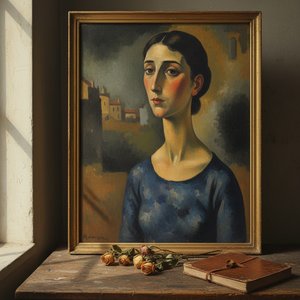 Capturing the Soul: An Exploration of Modigliani's Iconic Portraits and the Melancholy of ModernismDelve into the haunting beauty of Amedeo Modigliani's portraits. Explore the intersection of Expressionism and Modernism through an expert …
 Den Takile Dimensjonen: Hvordan Teksturert Lerret Forsterker Kunstnerisk ReproduksjonOpplev ekte kunstnerisk kvalitet med OriginalUniqueArt! Håndmalte oljemaleri-reproduksjoner og personlige portretter av høyeste standard. S…
 The Silent Vocabulary: A Connoisseur’s Guide to Decoding Iconography and Visual AllegoryMaster the art of decoding hidden symbols and visual allegories in historical masterpieces. Elevate your collection with expert insights.