

 Se i rommet
 Del som digitalt kort
 Del
Del
 Detaljer
 Studentguide

 Last ned
 Liknende objekter
 Røntgen
 Lysbildefremvisning
 Besøksstatistikk
Mother and Son
 Oil On Canvas
- WallArt
- Romanticism
 1840
1840 145.0 x 115.0 cm
 Metropolitan Museum of Art
 Les mer
Giclée / Kunsttrykk
Giclée- eller lerretsprint av museumskvalitet med rask produksjon og fleksible valgmuligheter for etterbehandling. ( Bestill håndmalt reproduksjon Gå til digitalt bilde)




P118B Nkr10

P118H Nkr10

P118W Nkr10

P438Z Nkr10

P508JH Nkr12

P508YH Nkr12

P805H Nkr10

P805Z Nkr10

P919BZ Nkr10

P919G Nkr10

P919XJ Nkr10

P959ZH Nkr10

P968JZ Nkr12

W106C Nkr8

W218G Nkr10

W218JH Nkr8

W218Y Nkr10

W307PJ Nkr10

W316G Nkr10

W316PJ Nkr8

W316Y Nkr10

W398PJ Nkr8

W4111J Nkr10

W500HY Nkr15

W500JH Nkr15

W692G Nkr12

W849H Nkr8

W940BG Nkr15

W953PJ Nkr8




Velg mellom våre forhåndsdefinerte størrelser som bevarer kunstverkets opprinnelige proporsjoner.

Du kan oppgi egne mål for å tilpasse en spesifikk ramme eller et bestemt område. Dersom den valgte størrelsen ikke samsvarer med det originale bildets proporsjoner, vil vi enten beskjære kunstverket eller utvide bildet med en speilet eller ensfarget kant. En digital mockup vil bli sendt til din godkjenning før produksjonen starter.
Vennligst merk at forhåndsvisningen på skjermen ikke gjenspeiler den faktiske beskjæringen eller utvidelsen. Kun mockuppen vil vise den endelige komposisjonen nøyaktig.
Selv om tilpassede størrelser er tilgjengelige, anbefaler vi å velge et mål fra den forhåndsdefinerte listen for å bevare de originale proporsjonene.
Verdensomspennende levering () på 2 uker i stedet for standard 4/5 uker. (3 October)

Gratis ekspressfrakt over hele verden

Lerretsduk av høykvalitets lin

Full transportforsikring

Garanti for refusjon av toll og importavgifter

Garantert fargeekthet

100 dagers returrett ved fabrikasjonsfeil

100% pengene tilbake-garanti

Mengderabatt
 Glassalternativet er kun tilgjengelig i størrelser under 110 cm

Mother and Son
Giclée / Kunsttrykk
Format på reproduksjon
-


Totalpris
Nkr 744
Mother and Son: An Allegory of Domestic Harmony
This magnificent portrait by Thomas Sully, completed in 1840, transcends mere representation; it embodies a profound meditation on familial bonds and idealized femininity. More than just capturing the likenesses of Jane Cooper Sully Darley and her son Francis Thomas Sully Darley—the artist’s daughter and heir—Sully meticulously crafted an image steeped in symbolism that speaks to the core values of Romantic art and Victorian sensibilities. The painting resides within The Metropolitan Museum of Art's collection (Accession Number JP1847), a testament to its enduring artistic merit and scholarly significance.A Symphony of Symbolism: Decoding the Composition
Sully’s genius lies in his masterful deployment of iconography—visual symbols designed to convey deeper meanings beyond the surface appearance. The central motif is undeniably Penelope, Odysseus's wife from Homer’s epic poem *The Odyssey*, considered the archetype of marital devotion and steadfastness. Alongside Penelope sits her son Telemachus, representing filial piety and unwavering loyalty – qualities Sully wished to elevate as cornerstones of domestic life. These figures are not merely present; they dominate the visual space, anchoring the scene in a narrative tradition that prioritized moral virtue and familial sanctity.Technique and Style: Romantic Idealism Embodied
Executed in oil on canvas with meticulous detail, *Mother and Son* exemplifies Sully’s signature Romantic style. He skillfully employs chiaroscuro—the dramatic interplay of light and shadow—to sculpt the figures' forms and imbue them with a palpable sense of warmth and tenderness. The artist’s attention to texture is equally impressive; the ivy clinging to the wall, a symbol of faithfulness and constancy, appears remarkably realistic, mirroring the natural world outside the window. Furthermore, the urn depicts Hermes bringing Dionysus—the god of fertility and revelry—to nurture Telemachus, reinforcing the theme of nurturing and protecting the next generation. This careful consideration of artistic conventions underscores Sully’s commitment to conveying emotion and intellectual depth through visual representation.Historical Context: Victorian Values Reflected
Painted during a period marked by burgeoning industrialization yet deeply rooted in traditional moral values, *Mother and Son* reflects the Victorian preoccupation with domesticity and idealized family life. Thomas Sully's work aligns itself with the broader artistic movement of Romanticism, which championed emotion, imagination, and individualism—characteristics that contrasted sharply with the Enlightenment’s emphasis on reason and objectivity. The portrait speaks to a cultural yearning for stability and beauty amidst rapid societal change, cementing Sully’s place as one of the foremost artists documenting his era.Emotional Resonance: A Portrait of Perfection
Ultimately, *Mother and Son* succeeds in capturing not just likenesses but also an intangible essence—the profound connection between mother and child. The serene expressions on their faces convey a quiet contentment, suggesting a harmonious relationship characterized by mutual affection and unwavering support. Sully’s masterful brushwork conveys this emotional depth with remarkable sensitivity, inviting viewers to contemplate the enduring power of familial love and the pursuit of idealized beauty. It remains an unforgettable testament to Romantic art's ability to elevate human experience into timeless grandeur.Spørsmål og svar
Hvor kan jeg se en forhåndsvisning av "Mother and Son"?
Siden Forhåndsvisning for "Mother and Son" lar deg forhåndsvise kunstverket før du bestiller.
Hvem er kunstneren bak "Mother and Son"?
Kunstneren bak "Mother and Son" er Thomas Sully. Verket er katalogisert under Thomas Sully sitt navn.
Hvor gammel var Thomas Sully da hen laget "Mother and Son"?
Da "Mother and Son" ble skapt i 1840, var Thomas Sully – født i 1783 – 57 år gammel.
Hvilket nasjonalt opphav ligger bak Romanticism-retningen i "Mother and Son"?
"Mother and Son" knytter Romanticism-bevegelsen til Storbritannia gjennom skaperens fødested.
Hvilket museum har det originale verket "Mother and Son"?
"Mother and Son" av Thomas Sully er utstilt på Metropolitan Museum of Art, New York, United States of America. Museumsoppføringen refererer til originalverket, ikke til reproduksjoner.
I hvilket år ble "Mother and Son" av Thomas Sully skapt?
"Mother and Son" dateres til 1840. Datoen plasserer verket innenfor Thomas Sully sin karriere og sin epoke.
Hvor plasserer "Mother and Son" seg i Thomas Sully sitt samlede kunstnerskap?
"Mother and Son" tilhører Thomas Sully sitt Romanticism-verk, der de dokumenterte temaene inkluderer lawrence influence, ideal family values, mythological symbolism, domestic fidelity, portrait legacy.
Kunstnerbiografi
A Transatlantic Brushstroke: The Life and Art of Thomas Sully
Thomas Sully’s journey is a remarkable tale – one that transcends mere geography, becoming a vibrant tapestry woven from artistic influences, cultural shifts, and the burgeoning spirit of America. Born in 1783 under the skies of Horncastle, Lincolnshire, England, his life wasn't simply defined by birth; it was shaped by an itinerant childhood, culminating in his arrival in Charleston, South Carolina, at the tender age of nine. This early exposure to a transient theatrical world—his parents were actors—instilled within him a keen understanding of capturing fleeting expressions and embodying character – skills that would prove invaluable as he transitioned from the stage to the canvas. Initially drawn to the allure of performance himself, briefly pursuing a career as a tumbler, Sully’s innate talent for observation and representation soon found its true expression in painting. An apprenticeship with an insurance broker provided him with a foundational understanding of detail and precision, but it was his subsequent mentorship by Charles Fraser and later Jean Belzons that ignited the flame of his artistic passion, particularly within the realm of miniature painting – a discipline he mastered before expanding his scope to larger, more ambitious works.From Miniature to Monumental: Forging an American Style
Sully’s artistic development wasn't confined by national borders; it was a dynamic process of assimilation and adaptation. A pivotal moment arrived in 1808 when he embarked on a period of study in London with Benjamin West, a celebrated figure in the British art world. While West’s influence undoubtedly shaped his early technique, it was the profound impact of Thomas Lawrence that truly resonated with Sully. Lawrence's elegant style – characterized by its masterful use of light and texture, and his remarkable ability to capture both likeness and character – became a cornerstone of Sully’s artistic philosophy. Upon returning to America in 1809, he carried this aesthetic with him, earning the moniker “the Sir Thomas Lawrence of America.” However, Sully didn't simply emulate; he skillfully adapted and refined these influences, forging a distinctly American style that blended European sophistication with a uniquely New World sensibility. His portraits weren’t merely photographic reproductions; they were imbued with a sense of warmth, dynamism, and psychological depth – reflecting the evolving identity of the nation itself. He possessed an extraordinary ability to capture not just outward appearances but also the inner lives of his subjects, imbuing each portrait with a palpable sense of personality.The Influence of London: A Refined Technique
Sully’s return to England in 1809 and again in 1837 proved crucial to his artistic evolution. These visits weren't merely nostalgic trips; they were deliberate opportunities for refinement and learning. His time with Benjamin West provided a solid grounding in traditional techniques, while his interactions with Thomas Lawrence exposed him to the latest innovations in portraiture – particularly the use of loose brushwork and atmospheric effects. He meticulously studied the works of other masters, absorbing their insights and incorporating them into his own practice. The experience broadened his technical skills and deepened his understanding of composition, color theory, and light. He returned to America with a renewed sense of confidence and a more sophisticated artistic vision, ready to tackle larger-scale projects and explore new avenues of expression.A Portrait of an Era: Notable Works and Subjects
Sully’s prolific output spanned over seven decades, during which he created an astonishing number of portraits – estimates range from 2,300 to over 3,000! His subjects reflected the diverse tapestry of American society at the time. He painted prominent figures such as Thomas Jefferson, John Quincy Adams, Andrew Jackson, and numerous members of the wealthy elite in Philadelphia and beyond. His most celebrated work, *The Passage of the Delaware* (1819), stands as a testament to his ability to capture dramatic historical events with both artistic flair and technical skill. The painting depicts George Washington leading his troops across the icy Delaware River on Christmas night – an iconic moment that embodies the spirit of American independence. Beyond these grand historical scenes, Sully’s portraits captured the essence of countless individuals, preserving their likenesses for posterity and offering a glimpse into the lives and personalities of those who shaped the nation's destiny.Legacy and Enduring Influence
Thomas Sully’s legacy extends far beyond his impressive body of work. He was not only a gifted painter but also a dedicated teacher, mentoring numerous aspiring artists and contributing to the development of American portraiture. His influence can be seen in the works of later generations of painters, who drew inspiration from his masterful technique and his ability to capture the human spirit. Furthermore, Sully’s commitment to cultural enrichment is evident in his involvement with the Musical Fund Society of Philadelphia – a testament to his belief that art should serve as a catalyst for social progress. His paintings continue to be exhibited in museums across the United States, captivating audiences with their beauty, elegance, and enduring power. Thomas Sully remains a pivotal figure in American art history—a painter who skillfully blended European sophistication with uniquely American sensibilities, leaving behind a rich legacy of portraits that capture the essence of an era.
Thomas Sully
1783 - 1872 , Storbritannia
Kort om kunstneren
- Artistic Movement Or Style: Romantikk, Neoklass.
- Artists Or Movements Influenced By This Artist: ['Amerikansk portrettkunst']
- Artists Who Influenced This Artist:
- Benjamin West
- Lawrence
- Date Of Birth: 1783
- Date Of Death: 1872
- Full Name: Thomas Sully
- Nationality: Britisk-Amerikansk
- Notable Artworks:
- Passasje Delaware
- Portretter Jefferson
- Place Of Birth: Horncastle, UK
Relaterte artikler

Grant Wood & American Regionalism: Identity, Myth & the Rural Landscape
Explore the world of Grant Wood & American Regionalism with OriginalUniqueArt. Discover the symbolism behind 'American Gothic', recurring themes, and the movement's lasting impact on art history. High-quality reproductions available.
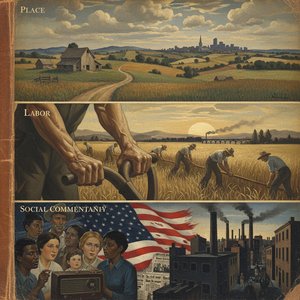
American Regionalism: A Crucible of Identity – Exploring Themes of Place, Labor & Social Commentary
Explore American Regionalism's powerful depiction of the American heartland during the Great Depression. Discover Grant Wood, Thomas Hart Benton & more. Expert analysis & high-quality art reproductions at OriginalUniqueArt.

American Romanticism: Capturing the Soul of the Wild Frontier through the Hudson River School
Explore the profound beauty of American Romanticism. Discover how the Hudson River School captured the wild frontier through masterful landscapes, exploring the legacy of legends like Thomas Cole and Asher Durand in this deep dive into art history.

Amerikansk Realisme: 10 Mesterverk som Formet Kunsten – OriginalUniqueArt.no
Utforsk 10 ikoniske mesterverk fra amerikansk realisme! Oppdag Edward Hopper, Andrew Wyeth og Grant Wood – historiene bak kunsten, teknikker & farger. Finn reproduksjoner av høy kvalitet for ditt hjem på OriginalUniqueArt.com. Utforsk samlingen online!
Echoes of Place: Regionalism & American Identity in Interwar Art
Explore the rise of American Regionalism in interwar art! Discover Grant Wood, Thomas Hart Benton & the movement's impact on American identity. Expert analysis & historical context.