

 Forhåndsvisning
 Send
Send Del med andre
 Vis detaljer
 Veiledning

 Last ned bildet
 Liknende objekter
 Røntgenundersøkelse
 Lysbildefremvisning
 Statistikk
Mary, Mrs John Vere


 Vis hele teksten
Håndlaget oljereproduksjon
Håndmalt olje på lerret i din valgte størrelse og ramme, laget på bestilling av våre kunstnere. ( Bytt til trykk Bytt til digitalt bilde)




P118B $10

P118H $10

P118W $10

P438Z $10

P508JH $12

P508YH $12

P805H $10

P805Z $10

P919BZ $10

P919G $10

P919XJ $10

P959ZH $10

P968JZ $12

W106C $8

W218G $10

W218JH $8

W218Y $10

W307PJ $10

W316G $10

W316PJ $8

W316Y $10

W398PJ $8

W4111J $10

W500HY $15

W500JH $15

W692G $12

W849H $8

W940BG $15

W953PJ $8




Velg mellom våre forhåndsdefinerte størrelser som bevarer kunstverkets opprinnelige proporsjoner.

Du kan angi egne mål for å tilpasse en spesifikk ramme eller plass. Dersom den valgte størrelsen ikke samsvarer med originalbildets proporsjoner, vil vi enten beskjære kunstverket eller utvide maleriet med ytterligere håndmalte elementer. En digital mockup vil bli sendt til din godkjenning før produksjonen starter.
Vennligst merk at forhåndsvisningen på skjermen ikke gjenspeiler den faktiske beskjæringen eller utvidelsen. Kun mockuppen vil vise den endelige komposisjonen nøyaktig.
Selv om tilpassede størrelser er tilgjengelige, anbefaler vi å velge et mål fra den forhåndsdefinerte listen for å bevare de originale proporsjonene.
Etter bestilling vil OriginalUniqueArt.com-teamet sende e-post til kunden for instruksjoner og sende et utkast (mockup) som forhåndsvisning.
Verdensomspennende levering () på 3–4 uker i stedet for standard 5 uker. (21 September). Ingen kompromisser med kvaliteten.

Gratis ekspressfrakt over hele verden

Lerretsduk av høykvalitets lin

Full forsikring under transport

Garanti for refusjon av toll og importavgifter

Garantert korrekt fargegjengivelse

100 dagers returrett (kun ved mangler)

100% pengene tilbake-garanti

Rabatt ved flere kjøp
 Glassalternativet er kun tilgjengelig i størrelser under 110 cm

Mary, Mrs John Vere
Teknikk for reproduksjon
Størrelse på reproduksjon
-


Endelig pris
$ 300
A Window into the 18th Century: Thomas Gainsborough’s “Mary, Mrs. John Vere”
Thomas Gainsborough's "Mary, Mrs. John Vere," painted in 1769, isn’t merely a portrait; it’s a meticulously crafted glimpse into the social and artistic landscape of Georgian England. More than just a likeness, this work embodies the Rococo sensibility – an embrace of elegance, delicacy, and a subtle celebration of naturalism that defined Gainsborough's most celebrated period. The painting immediately draws the viewer in with its restrained palette of creams, browns, and soft blues, colors that evoke both wealth and understated sophistication. It’s a testament to Gainsborough’s ability to capture not just physical appearance but also the quiet dignity and composure of his subject – a woman of considerable standing within her social circle.
The composition itself is masterfully balanced. Mary Vere, positioned slightly off-center yet commanding attention, gazes directly at the viewer with an expression that’s both inviting and subtly reserved. Her slight turn to the left creates a dynamic tension, preventing the portrait from feeling static while maintaining a sense of formal grace. The oval frame, a hallmark of the era, isolates her within its elegant boundaries, directing our focus entirely onto her face – a canvas where Gainsborough expertly renders the nuances of light and shadow, highlighting the delicate structure of her features.
The Brushstroke and the Rococo Spirit
Gainsborough’s technique is characterized by a remarkable fluidity. His loose brushstrokes, a hallmark of his style, create a sense of softness and movement that belies the formality of the subject matter. He avoids sharp outlines, instead favoring subtle gradations of color to define form and texture. The skin appears luminous, almost porcelain-like, achieved through layers of translucent paint – a technique that lends an incredible realism to the portrait. Notice particularly the way he captures the folds of her dress; they aren’t rendered with rigid precision but rather suggested through delicate shading and carefully placed brushstrokes, conveying both texture and movement.
The painting's execution speaks volumes about Gainsborough’s dedication to his craft. He wasn’t simply copying a model; he was actively shaping the image, imbuing it with personality and emotion. The floral adornment in her hair – delicate sprigs of foliage – isn’t merely decorative; it subtly reinforces the theme of beauty and innocence, common motifs within Rococo art. The overall effect is one of effortless elegance, a testament to Gainsborough's ability to capture the spirit of his age.
Symbolism and Social Context
“Mary, Mrs. John Vere” offers a fascinating window into the social conventions of 18th-century England. The subject’s attire – a delicate silk gown with lace details and a striking blue ribbon choker – clearly indicates her wealth and status. The inclusion of floral ornamentation is also significant; such embellishments were frequently used to signify beauty, virtue, and refinement within aristocratic circles. Furthermore, the direct gaze of Mary Vere suggests a certain self-assurance and confidence—qualities highly valued in women of her social standing.
Beyond its aesthetic qualities, the portrait reflects the changing role of women during this period. While constrained by societal expectations, women like Mary Vere wielded considerable influence through their connections and wealth. Gainsborough’s portrayal captures not only her physical beauty but also a sense of quiet dignity and intellectual engagement – a subtle acknowledgment of the complexities of female identity within a restrictive social framework.
A Timeless Masterpiece: Reproduction Possibilities
Gainsborough's "Mary, Mrs. John Vere" remains a captivating work of art, admired for its exquisite detail, masterful technique, and evocative portrayal of Georgian society. Today, high-quality reproductions offer an accessible way to experience the beauty and sophistication of this iconic portrait. Whether displayed in a grand salon or a smaller study, a carefully crafted reproduction will undoubtedly serve as a conversation piece—a testament to Gainsborough’s enduring legacy and his profound understanding of human character.
Om kunstneren
A Suffolk Beginning: The Early Life and Artistic Awakening
The story of Thomas Gainsborough, one of Britain’s most celebrated artists, unfolds not within the confines of a grand academy or bustling metropolis, but in the tranquil market town of Sudbury, Suffolk. Born in 1727, the youngest son of John Gainsborough, a weaver and wool merchant, young Thomas displayed an innate artistic sensibility from a remarkably early age. While his siblings pursued more conventional paths, Thomas’s world rapidly became consumed by drawing and painting – miniature self-portraits and delicate landscapes blossoming from his hand even before he reached ten years old. This precocious talent wasn't merely a childhood pastime; it was the burgeoning of a vision that would reshape British art. His father, recognizing this unique gift, encouraged its development, setting young Thomas on a path diverging sharply from the family trade. The Suffolk countryside itself became his first studio, imbuing his later works with a deep and abiding love for the natural world – a characteristic that would distinguish him throughout his career. This early immersion in landscape wasn’t simply about replicating what he saw; it was about *feeling* the essence of the English countryside, an emotional resonance that would permeate his canvases for decades to come.London and the Shaping of a Style: Influences and Early Commissions
In 1740, at the age of thirteen, Gainsborough journeyed to London, embarking on formal artistic training under Hubert Gravelot, a French engraver renowned for his elegant rococo style. This exposure proved pivotal, introducing him to refined techniques and fashionable aesthetics. However, it was his association with William Hogarth and the St Martin’s Lane Academy that truly began to mold his artistic identity. Initially influenced by Hogarth's narrative approach – often depicting moral tales through crowded scenes – Gainsborough soon charted his own course, developing a distinctive style characterized by its lightness of touch, fluid brushwork, and subtle color palettes. He absorbed lessons from various masters, including the Dutch landscape painters whose emphasis on light and atmosphere deeply resonated with him. Returning to Sudbury after marrying Margaret Burr in 1746, Gainsborough established himself as a portraitist for the local gentry and mercantile classes. This period honed his skills in capturing likenesses and character, but it was during his subsequent move to Ipswich, and later Bath, that he began attracting a more sophisticated clientele – individuals who appreciated not just accurate representation, but also artistic flair and emotional depth.Bath and Beyond: Portraiture, Landscape, and Royal Patronage
The years spent in Bath (1759-1774) marked a significant turning point in Gainsborough’s career. The city was a hub of fashionable society, providing him with ample opportunities to paint portraits of the wealthy and influential. He quickly gained renown for his ability to capture not only physical resemblance but also the personality and social standing of his sitters. His portraits weren't merely depictions; they were statements about identity and status. He experimented with new techniques, incorporating elements of Rococo and Neo-classical styles, while retaining his own unique sensibility. However, even amidst the demands of portraiture, Gainsborough never abandoned his passion for landscape painting. In fact, he often seamlessly integrated landscapes into his portraits, creating compositions that celebrated both human subjects and the beauty of the natural world. This innovative approach – a hallmark of his style – set him apart from many of his contemporaries. The culmination of his success came with his move to London in 1774, where he established a studio on Pall Mall and became a founding member of the Royal Academy. He also secured royal patronage, becoming a favourite painter of King George III and Queen Charlotte, further solidifying his position as one of Britain’s leading artists. *Mrs. Thomas Gainsborough*, painted in 1785, exemplifies this period – an elegant portrait showcasing rococo style and muted tones.A Legacy of Innovation: Enduring Appeal and Influence
Thomas Gainsborough died in 1788, leaving behind a body of work that continues to captivate audiences today. His influence on subsequent generations of British artists is undeniable. He liberated portraiture from rigid formality, infusing it with spontaneity and emotional resonance. His loose brushwork and atmospheric effects paved the way for the Impressionists, while his lyrical landscapes inspired artists like John Constable, who deeply admired Gainsborough’s ability to capture the spirit of the English countryside. Gainsborough's legacy extends beyond technique; it lies in his profound understanding of human character and his unwavering commitment to artistic expression. He wasn’t simply a painter of portraits or landscapes; he was a storyteller, a poet of light and color, and a visionary who transformed British art. His paintings are a testament to the power of observation, imagination, and the enduring allure of the English landscape.Exploring Gainsborough's World Today
Fortunately, the opportunity to experience Gainsborough’s genius firsthand remains readily available. Gainsborough’s House, in his birthplace of Sudbury, stands as a testament to his life and work, offering visitors an intimate glimpse into his early influences and artistic development. Christchurch Mansion in Ipswich houses a significant collection of Gainsborough paintings alongside works by Constable and other masters. Numerous museums across the United Kingdom and internationally display his masterpieces, including the National Gallery in London and the Metropolitan Museum of Art in New York. His work continues to be studied, analyzed, and celebrated, ensuring that his artistic vision will endure for generations to come. The enduring appeal of Gainsborough’s art lies not only in its technical brilliance but also in its timeless beauty and emotional depth – qualities that resonate with viewers across centuries.
Thomas Gainsborough
1727 - 1788 , Storbritannia
Kort om kunstneren
- Artistic Movement Or Style: Rococoske, Portretter
- Artists Or Movements Influenced By This Artist: ['Constable']
- Artists Who Influenced This Artist:
- Gravelot
- Hogarth
- Date Of Birth: 1727
- Date Of Death: 1788
- Full Name: Thomas Gainsborough
- Nationality: Britisk
- Notable Artworks:
- Mrs. Gainsborough
- Mr Andrews
- Place Of Birth (City And Country): Sudbury, Storbritannia
Relaterte artikler
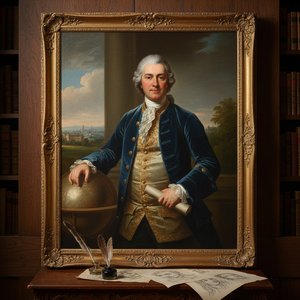
Thomas Hudson: A Study in 18th-Century Portraiture & British Artistic Identity
Explore the life & work of Thomas Hudson, a leading 18th-century British portraitist. Discover his mastery of the 'Grand Manner,' influential style, and lasting impact on British art. Learn about his notable portraits like Judge William Noel & Alexander Van Aken.
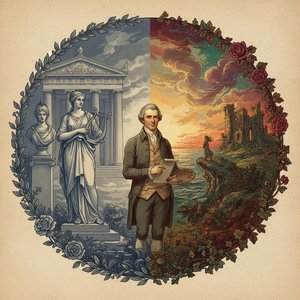
Thomas Stothard: Bridging Neoclassical Ideals with Romantic Sensibility – A Reassessment
Explore the life & art of Thomas Stothard (1755-1834), a pivotal figure bridging Neoclassicism and Romanticism. Discover his exquisite book illustrations, iconic paintings like 'The Canterbury Pilgrims,' and lasting influence on British art.
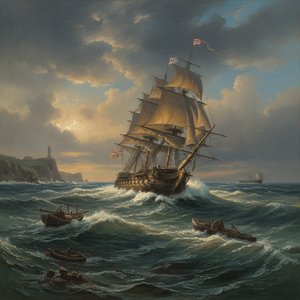
Thomas Luny (1759–1837): Maritime Mastery & the Evolution of British Marine Painting
Explore the captivating world of Thomas Luny (1759–1837), a celebrated British marine artist. Discover his dramatic naval scenes, detailed ship portraits & lasting legacy. Learn about his life, influences & artworks.
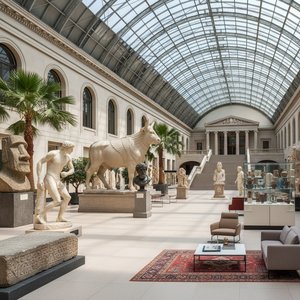
Britisk Museums 25 Mesterverk: Kunsthistorie for Ditt Hjem | OriginalUniqueArt.no
Utforsk de 25 mest ikoniske kunstverkene fra Britisk Museum i London! Oppdag historiene bak mesterverk, klassiske stiler og fargepaletter. Finn museumskvalitets reproduksjoner & interiørinspirasjon på OriginalUniqueArt.com – din kilde til tidløs skjønnhet.

1700-tallets Mesterverk: 10 Kunstverk som Definerer Epoken – OriginalUniqueArt.no
Oppdag 10 ikoniske kunstverk fra 1700-tallet! Fordyp deg i rokokko, klassisisme og barokkens mesterverk av Boucher, Gainsborough & David. Finn inspirasjon til interiørdesign og kjøp reproduksjoner av høy kvalitet på OriginalUniqueArt.com – din kilde for tidløs kunst.


