
 Forhåndsvisning
 Send
Send Del
Del
 Vis detaljer
 Utskriftsvennlig guide

 Last ned bilde
 Liknende objekter
 Røntgenundersøkelse
 Lysbildefremvisning
 Spørsmål og svar
 Statistikk
Self-Portrait

- 195.0 x 159.0 cm


 Vis hele teksten
Giclée / Kunsttrykk
Giclée- eller lerretsprint av museumskvalitet med rask produksjon og fleksible valgmuligheter for etterbehandling. ( Kjøp håndmalt maleri Bytt til digitalt bilde)




P118B Nkr10

P118H Nkr10

P118W Nkr10

P438Z Nkr10

P508JH Nkr12

P508YH Nkr12

P805H Nkr10

P805Z Nkr10

P919BZ Nkr10

P919G Nkr10

P919XJ Nkr10

P959ZH Nkr10

P968JZ Nkr12

W106C Nkr8

W218G Nkr10

W218JH Nkr8

W218Y Nkr10

W307PJ Nkr10

W316G Nkr10

W316PJ Nkr8

W316Y Nkr10

W398PJ Nkr8

W4111J Nkr10

W500HY Nkr15

W500JH Nkr15

W692G Nkr12

W849H Nkr8

W940BG Nkr15

W953PJ Nkr8




Velg mellom våre forhåndsdefinerte størrelser som bevarer kunstverkets opprinnelige proporsjoner.

Skriv inn ønsket bredde og høyde for å tilpasse trykket til din ramme eller vegg. Et trykk kan kun beskjæres, aldri skaleres opp utover motivets opprinnelige størrelse, noe som betyr at et format med andre proporsjoner vil føre til tap av deler av bildet. Vi sender deg en digital mockup for godkjenning før vi starter trykkeprosessen. Bildet som vises på denne siden viser ikke den faktiske beskjæringen — det er kun mockuppen som viser dette.
Verdensomspennende levering () på 2 uker i stedet for standard 4/5 uker. (7 November)

Gratis ekspressfrakt over hele verden

Lerretsduk av lin av høy kvalitet

Full transportforsikring

Garanti for refusjon av toll og importavgifter

Garantert fargegjengivelse

100 dagers returrett ved fabrikasjonsfeil

100% pengene tilbake-garanti

Rabatt ved flere kjøp
 Glassalternativet er kun tilgjengelig i størrelser under 110 cm

Self-Portrait
Giclée / Kunsttrykk
Størrelse på reproduksjon
-


Totalpris for valgte alternativer
Nkr 775
Self-Portrait: A Window into the Soul of a Romantic Artist
Theodor Markus Rehbenitz’s 1817 “Self-Portrait” is not merely a likeness; it's an intimate revelation, a carefully constructed tableau of introspection and quiet dignity. Executed in delicate pencil on paper, this work transcends its humble medium to offer a profound glimpse into the mind of a pivotal figure within the German Romantic movement. The image presents a young man, likely in his early twenties, seated before a plain white background – a deliberate choice that immediately draws attention to the subject’s face and posture, stripping away any distracting elements and forcing a direct engagement with his gaze.
Rehbenitz was deeply influenced by the Nazarene movement, a group of artists who sought to revive the artistic principles of the Renaissance masters. Rejecting the flamboyant styles of Neoclassicism, the Nazareners prioritized clarity, sobriety, and a profound sense of spiritual depth. This is evident in Rehbenitz’s meticulous attention to detail – from the subtle shading around his eyes to the carefully rendered texture of his hair. The composition itself is restrained yet powerfully expressive; he avoids dramatic gestures or elaborate settings, instead focusing on conveying an inner state through nuanced facial expressions and a subtly melancholic demeanor.
A Study in Light and Shadow: Technique and Style
The artist’s mastery lies in his command of light and shadow. Rehbenitz employs a technique reminiscent of Rembrandt, utilizing subtle gradations of tone to create a sense of volume and depth within the portrait. The soft lighting illuminates his face, highlighting the delicate features of his eyes and nose, while casting gentle shadows across his brow and cheekbones. This masterful manipulation of chiaroscuro not only enhances the realism of the portrait but also imbues it with an emotional resonance – suggesting both vulnerability and resilience.
The pencil strokes themselves are remarkably controlled and deliberate. There’s a sense of painstaking observation, as if Rehbenitz were meticulously translating his perception onto the paper. The lines are fine and precise, yet they possess a remarkable fluidity, conveying a subtle sense of movement and life. This meticulous approach speaks to the artist's commitment to capturing not just an image but also the essence of his subject – his personality, his thoughts, and perhaps even his soul.
Historical Context: Romanticism and Self-Representation
Created in 1817, during a period of significant social and political upheaval in Europe, Rehbenitz’s “Self-Portrait” reflects the broader themes explored by the Romantic movement. Romantic artists sought to challenge traditional artistic conventions and explore the complexities of human emotion – often focusing on themes of individualism, subjectivity, and the power of nature. The act of self-portraiture itself was a relatively new phenomenon at this time, and Rehbenitz’s work can be seen as an early example of the genre's potential to offer profound insights into the artist’s inner world.
Furthermore, the portrait speaks to the Romantic fascination with introspection. The act of looking inward, of confronting one’s own mortality and vulnerability, was a central theme in Romantic literature and philosophy. Rehbenitz’s self-portrait invites us to contemplate our own identities and to consider the complexities of human experience – mirroring the core tenets of this influential artistic movement.
Symbolism and Emotional Resonance
While seemingly simple, “Self-Portrait” is rich in subtle symbolism. The young man's direct gaze engages the viewer directly, creating a sense of intimacy and shared vulnerability. His slightly downturned mouth suggests a quiet sadness or perhaps a contemplative mood – inviting us to speculate about his thoughts and feelings. The plain background serves not as an absence but as a deliberate focus on the subject’s face, emphasizing his individuality and inner life.
Ultimately, Rehbenitz's "Self-Portrait" is a testament to the power of art to capture not just appearances but also the essence of human experience. It remains a poignant and evocative work – a timeless meditation on self-awareness, introspection, and the enduring mysteries of the human soul.
Spørsmål og svar
Hvilken fase av Theodor Markus Rehbenitz sin karriere tilhører "Self-Portrait", basert på datoen?
Med sin datering fra 1817, tilhører "Self-Portrait" Theodor Markus Rehbenitz sin Early Romantic Period.
Hvor lys eller mørk oppleves "Self-Portrait" av Theodor Markus Rehbenitz som?
Når det gjelder oppfattet lysstyrke, er "Self-Portrait" av Theodor Markus Rehbenitz brilliant.
Kan jeg se "Self-Portrait" av Theodor Markus Rehbenitz under ulike lysforhold?
Røntgenstråling-siden til "Self-Portrait" av Theodor Markus Rehbenitz er en interaktiv visning som lar deg bla gjennom elleve optiske lag av kunstverket, inkludert en visning i røntgenstil.
Relaterte artikler

Romantic Realism's Finest: 10 Masterpieces for Your Home | OriginalUniqueArt
Explore 10 defining masterpieces of Romantic Realism! Discover Courbet, Millet & Daumier's powerful paintings—capturing emotion and social realities. Find museum-quality reproductions for your home at OriginalUniqueArt.com.

Anselm Feuerbach: Romantic Idealism & the Search for Spiritual Harmony in 19th-Century Painting
Explore the life & work of Anselm Feuerbach, a leading German Neoclassical painter. Discover his Romantic idealism, mythological scenes, and stunning portraits. Learn about his influences & lasting legacy with OriginalUniqueArt.
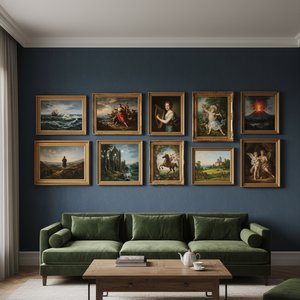
Romantikkens 10 Mesterverk: Kunst som berører sjelen – OriginalUniqueArt.no
Opplev romantikkens storhetstid! Utforsk 10 ikoniske malerier av Delacroix, Géricault og Caspar David Friedrich. Lær om kunsthistorien bak mesterverkene og finn din perfekte veggkunst på OriginalUniqueArt.no – museumskvalitet for ditt hjem.

Caspar David Friedrich: Romanticism's Master of Landscape & the Sublimity of Inner Experience
Explore the profound landscapes of Caspar David Friedrich, a master of German Romanticism. Discover the symbolism, themes & enduring influence of this iconic artist. A deep dive into his life and work.

1800-tallets Mesterverk: 10 Kunstverk som Definerer Epoken – OriginalUniqueArt.no
Opplev 1800-tallets kunst gjennom 10 ikoniske mesterverk! Fra romantikk til impresjonisme – lær om Munch, Van Gogh og Monet. Finn museumskvalitets reproduksjoner & interiørinspirasjon på OriginalUniqueArt.com. Utforsk samlingen online!