
 Forhåndsvisning
 Send
Send Del
Del
 Vis detaljer
 Utskriftsvennlig guide

 Last ned bilde
 Liknende objekter
 Røntgenundersøkelse
 Lysbildefremvisning
 Q&A
Q&A Statistikk
Gemini

- 61.0 x 54.0 cm


 Vis hele teksten
Få en utskriftsklar fil som går langt utover forhåndsvisningen på nett. Hvert digitale bilde vi selger er hentet fra en høyoppløselig master i vår database – vanligvis mellom 5 000 og 15 000 piksler bred – slik at du kan trykke stort, beskjære tett eller gjenskape fine detaljer med full trygghet.
Ingen filer forlater studioet vårt uten å bli bearbeidet. En digital ekspert kontrollerer fargene mot det originale maleriet og korrigerer dem ved behov, for deretter å forbedre klarhet og detaljrikdom med profesjonelle retusjeringsverktøy — alltid tro mot kunstnerens penselstrøk og stil. Resultatet er et bilde som fremstår som selve maleriet, ikke som en skann med filter.
Du godkjenner før ferdigstilling: vår ekspert sender bildet på e-post til din vurdering innen 72 timer. Ikke fornøyd? Be om forbedringer eller korrigeringer, eller be om refusjon dersom kvaliteten ikke svarer til forventningene.
Dette er kvaliteten forlag, designstudioer, gallerier og trykkerier stoler på.
Digitalt bilde
Last ned en høyoppløselig fil til personlig bruk, utskrift og kreative prosjekter. ( Bytt til trykk Kjøp håndmalt maleri)
Inkludert i alle bestillinger av digitale bilder
Ekspert på digital levering, garantert
Når du velger OriginalUniqueArt.com, får du ikke bare et bilde – du mottar et profesjonelt etterbehandlet digitalt kunstverk, skapt med presisjon og med en garantert tilfredshetsgaranti. Her er alt som automatisk følger med din bestilling:

Rask levering på e-post
Din høyoppløselige digitale bildefil sendes til din e-post innen 72 timer etter bestilling – klar til umiddelbar bruk.

KI-forbedret digital fil
Ditt kunstverk blir profesjonelt optimalisert ved hjelp av avanserte AI-verktøy og manuell redigering, noe som sikrer maksimal detaljrikdom, klarhet og fargegjengivelse.

Gratis livslang nyutlevering
Har du ved et uhell slettet eller mistet filen din? Ingen bekymring – vi sender den på nytt når som helst, helt gratis.

Ingen importavgifter – noen gang
Nyt ditt kunstverk umiddelbart uten toll, avgifter eller leveringskostnader – digitale nedlastinger er alltid avgiftsfrie.

Garantert fargenøyaktighet
Vi sikrer at det digitale bildet gjenspeiler de originale fargene så nøyaktig som mulig ved hjelp av profesjonelle verktøy og fargehåndtering.

100 dagers fornøydhetsgaranti
Hvis du ikke er fornøyd med ditt digitale bilde, vil vi revidere det eller refundere 100% innen 100 dager – uten spørsmål.

100% Penggaranti
Ikke fornøyd? Få full refusjon innen 100 dager etter at du har mottatt din digitale fil – uten spørsmål.

Rabatt ved storkjøp
Kjøp 3 bilder, spar 10% - Kjøp 5, spar 15% - Kjøp 10+, spar 20%. Ideelt for kreative prosjekter, gallerier og byråer.
Spørsmål og svar
Hvor kan jeg finne kunstverk som ligner på "Gemini" av Sui Jianguo?
Siden Lignende verk for "Gemini" av Sui Jianguo viser relaterte kunstverk.
Hvordan er fargekomposisjonen i "Gemini" av Sui Jianguo bygget opp?
Fargekomposisjonen i "Gemini" av Sui Jianguo forener en Gentle kontrast med en Discordant Palette harmoni.
Er Sui Jianguo, skaperen av "Gemini", kjent under andre navn?
Sui Jianguo er også kjent som 隋建國.
Om kunstneren
Early Life and the Echoes of Maoist China
Sui Jianguo, born in Qingdao, China in 1956, is a figure deeply marked by the tumultuous history of his nation. His formative years unfolded under the long shadow of Mao Zedong’s rule, an era that profoundly shaped not only Chinese society but also the very fabric of its artistic expression. Growing up as the son of factory workers, Sui experienced firsthand the hardships and sacrifices demanded by the communist regime. The absence of his parents due to their demanding work schedules instilled a sense of early independence, but more significantly, it exposed him to the pervasive influence of Maoist ideology. During this period, art was largely confined within the strict parameters of socialist realism—a style that glorified the revolution and its leader in idealized terms. This official aesthetic, intended to cultivate a cult of personality around Mao, became the dominant visual language of the time.
However, beneath the surface of officially sanctioned imagery lay a simmering discontent. Sui’s early exposure to this controlled artistic landscape would later become a crucial point of departure for his own work. The rigid constraints and propagandistic nature of socialist realism sparked within him a desire to explore alternative forms of expression—a yearning that was initially suppressed but ultimately fueled his artistic evolution. His childhood, spent witnessing the realities of factory life and the omnipresent imagery of Mao, laid the foundation for a career dedicated to confronting and reinterpreting China’s complex past.
From Propaganda to Personal Expression
The Cultural Revolution brought further disruption to Sui Jianguo's early life. Schools were closed, and he was compelled to join his parents in factory work—a period he later described as being “transfixed in the age of Mao worship.” This experience wasn’t merely a matter of labor; it was an immersion into the very heart of the system he would eventually critique through his art. He began painting propaganda posters, dutifully replicating the idealized images of Mao that permeated society. Yet, even within these confines, a nascent artistic sensibility began to emerge.
A turning point arrived with a broken arm in 1976—an injury that unexpectedly liberated him from factory work and allowed him to pursue his burgeoning passion for art. This period of convalescence became a time of profound introspection, as Sui contemplated his “spiritual” life and the direction he wished to take. With his father’s encouragement, he secretly began studying painting at night, laying the groundwork for a future career that would challenge the established norms of Chinese art. His early works reflected this transition—a traditional landscape painting completed after Mao's death signaled a departure from the rigid constraints of socialist realism and a tentative exploration of personal expression.
Sculptural Innovations and the Use of Raw Materials
Sui Jianguo’s artistic journey took a decisive turn when he enrolled in the Central Academy of Fine Arts in Beijing, where he focused on sculpture. Inspired by his years in the factories—a place where physical labor and manual skill were paramount—he embraced the medium as a means of translating his experiences into tangible form. After earning his master’s degree, Sui embarked on a period of international travel, exhibiting his work in Japan, Australia, and other countries. These encounters broadened his artistic horizons and exposed him to diverse perspectives.
His early sculptures were characterized by the use of “naturalistic materials”—rocks, boulders, and steel—which he manipulated to create powerful forms that resonated with his perception of life and internal conflicts. He developed unique techniques of sealing, binding, tying, and hammering, forging a relationship between his materials that was both associative and confrontational. However, it was his exploration of Mao suits in 1997 that truly catapulted him to international prominence. These sculptures—imitations of Chairman Mao’s iconic jacket—became instantly recognizable symbols of China’s complex past.
The Mao Suit Series: Memory, Power, and Transformation
The Mao suit series represents a pivotal moment in Sui Jianguo’s career and a significant contribution to contemporary Chinese art. These sculptures are not merely replicas of a garment; they are potent symbols that evoke the era of Mao Zedong and its enduring legacy. By recreating these iconic jackets, Sui forces viewers to confront their own relationship with China’s history—a history marked by both revolutionary fervor and profound social upheaval.
The materials used in the series further amplify its symbolic weight. Often crafted from marble or other durable stones, the suits take on a monumental quality, suggesting the enduring power of Maoist ideology. The act of transforming this everyday object into a sculpture also speaks to the process of historical reinterpretation—a process that Sui actively engages with in his work. His sculptures have attracted the attention of prominent collectors like Uli Sigg, solidifying his position as a leading figure in the Chinese contemporary art scene.
Historical Significance and Contemporary Relevance
Sui Jianguo’s work is deeply rooted in the historical context of China, but its themes resonate far beyond national boundaries. His exploration of memory, power, and transformation speaks to universal human experiences—the struggle for identity, the weight of the past, and the search for meaning in a rapidly changing world.
As professor and ex-chairman of the Department of Sculpture at the Central Academy of Fine Arts in Beijing, Sui Jianguo has played a crucial role in shaping the next generation of Chinese artists. His work continues to challenge conventional notions of art and history, prompting viewers to question established narratives and engage with China’s complex past on a deeper level. He is not simply documenting history; he is actively reinterpreting it—a process that is essential for understanding the present and forging a path towards the future.
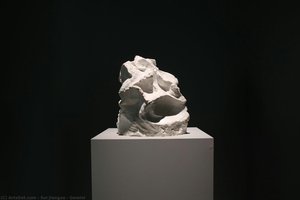
- Gemini (2009): A striking sculpture of stacked marble boulders, embodying power and resilience.
- The Mao Suit Series: Sculptures crafted from durable materials like marble, representing enduring ideology.
- Land Depression: Early sculptures utilizing rocks and steel to explore internal conflicts.
Sui Jianguo
China
Kort om kunstneren
- Full Name: Sui Jianguo
- Nationality: Chinese
- Place Of Birth: China
- Notable Artworks:
- Blind Portraits
- Legacy Mantle
- Made in China
- Artistic Movement Or Style: Contemporary Sculpture
- Artists Who Influenced This Artist:
- Richard Serra
- Heidegger
- Artists Or Movements Influenced By This Artist: ['Landform Sculpture']