

 Se i rommet
 Del som digitalt kort
 Del
Del
 Detaljer
 Studentguide

 Last ned
 Liknende objekter
 Røntgen
 Lysbildefremvisning
 Besøksstatistikk
Mrs Livesay


 Les mer
Håndlaget oljereproduksjon
Håndmalt olje på lerret i din valgte størrelse og ramme, laget på bestilling av våre kunstnere. ( Bytt til trykkversjon Gå til digitalt bilde)




P118B Nkr10

P118H Nkr10

P118W Nkr10

P438Z Nkr10

P508JH Nkr12

P508YH Nkr12

P805H Nkr10

P805Z Nkr10

P919BZ Nkr10

P919G Nkr10

P919XJ Nkr10

P959ZH Nkr10

P968JZ Nkr12

W106C Nkr8

W218G Nkr10

W218JH Nkr8

W218Y Nkr10

W307PJ Nkr10

W316G Nkr10

W316PJ Nkr8

W316Y Nkr10

W398PJ Nkr8

W4111J Nkr10

W500HY Nkr15

W500JH Nkr15

W692G Nkr12

W849H Nkr8

W940BG Nkr15

W953PJ Nkr8




Velg mellom våre forhåndsdefinerte størrelser som bevarer kunstverkets opprinnelige proporsjoner.

Skriv inn bredden og høyden du trenger, slik at den passer til din ramme eller vegg. Dette er håndmalt, så for en størrelse med en annen form kan kunstneren male litt mer rundt bildet, eller beskjære det noe — du velger selv. Vi sender deg en digital mockup for godkjenning før maleriet påbegynnes. Bildet som vises på denne siden viser ikke det faktiske resultatet — kun mockuppen gjør det.
Etter bestilling vil OriginalUniqueArt.com-teamet sende e-post til kunden for instruksjoner og sende et utkast (mockup) som forhåndsvisning.
Verdensomspennende levering () på 3–4 uker i stedet for standard 5 uker. (24 October). Ingen kompromisser med kvaliteten.

Gratis ekspressfrakt over hele verden

Lerretsduk av høykvalitets lin

Full transportforsikring

Garanti for refusjon av toll og importavgifter

Garantert fargeekthet

100 dagers returrett ved fabrikasjonsfeil

100% pengene tilbake-garanti

Mengderabatt
 Glassalternativet er kun tilgjengelig i størrelser under 110 cm

Mrs Livesay
Reproduksjonsmetode
Format på reproduksjon
-


Totalpris
Nkr 2852
A Portrait of Quiet Dignity
Sir Francis Grant’s 1851 masterpiece, “Mrs Livesay,” serves as a profound testament to the Victorian era's fascination with refined beauty and intellectual depth. In this exquisite oil on canvas, we encounter a woman of considerable social standing, captured in a moment of serene contemplation. Seated beneath the gentle canopy of a blossoming tree, Mrs. Livesay is not merely a subject of a likeness, but an embodiment of contemplative serenity. The painting invites the viewer into her private world, where the rustle of leaves and the turning of a page are the only sounds to break the stillness of a garden setting.
The composition employs a classic three-quarter pose that prioritizes intimacy, drawing the eye directly to the subject's downward gaze. As she holds an open book in her lap, the act of reading becomes a powerful symbol of knowledge, learning, and intellectual refinement. This focus on the internal life of the sitter is beautifully framed by the natural world; the soft, organic shapes of the tree branches overhead create a protective, almost sacred space around her. The subtle recession of the landscape background, rendered in hazy greens and browns, utilizes atmospheric perspective to create a shallow depth of field, ensuring that the viewer's emotional connection remains anchored to the subject herself.
Mastery of Light and Texture
Grant’s technical prowess is on full display through his masterful use of color and light. The palette is elegantly muted, dominated by sophisticated creams, soft blues, and whites in Mrs. Livesay’s attire, which provides a luminous contrast against the bold, rich red drapery upon which she rests. This interplay of tones is further enriched by the artist's ability to manipulate texture through delicate brushwork. One can almost feel the smooth, flowing surface of her dress juxtaposed against the more tactile, textured foliage of the surrounding garden.
The lighting within the piece is soft and diffused, acting as a gentle spotlight that illuminates the most expressive elements of the portrait: Mrs. Livesay's face and hands. This careful attention to light and shadow allows for subtle gradations in skin tone, lending a lifelike realism to her features. For collectors and interior designers alike, this painting offers more than just visual beauty; it provides an atmosphere of grace and tranquility. Whether placed in a sunlit study or a formal drawing room, a high-quality reproduction of “Mrs Livesay” brings with it a sense of historical prestige and a timeless, quiet elegance that resonates deeply within any sophisticated space.
Spørsmål og svar
Hvor kan jeg finne statistikk om "Mrs Livesay" av Sir Francis Grant?
Statistikk for "Mrs Livesay" av Sir Francis Grant finnes på verkets Statistikk-side: månedlige visninger av verket, visninger av kunstnerens andre verk, samt en oversikt over nylige besøkende fordelt på land og språk.
Hvordan balanserer "Mrs Livesay" lys og mørke?
"Mrs Livesay" har en samlet lysstyrke på shadow, og luminansen er Soft Shadow.
Hvor kan jeg kjøpe en håndmalt reproduksjon av "Mrs Livesay" av Sir Francis Grant?
Håndmalte kopier av "Mrs Livesay" av Sir Francis Grant selges på denne nettsiden: en håndmalt oljereproduksjon på linlerret, bestilt fra dens Håndmalt reproduksjon-side.
Kunstnerbiografi
A Life Dedicated to Portraiture and the Academy
Sir Francis Grant, a name synonymous with refined portraiture and dedicated service to the British art establishment, emerged as one of the most sought-after artists of his era. Born in 1803 into a landed family in Perthshire, Scotland, young Francis initially seemed destined for a career in law. However, the allure of artistic expression proved too irresistible to resist. Though largely self-taught, he briefly studied under Alexander Nasmyth in Edinburgh, laying an early foundation before forging his own distinctive path. This path wasn’t immediately apparent; Grant's initial successes came with sporting scenes, capturing the energy and vibrancy of rural life – subjects that would initially define his reputation. A pivotal moment arrived through his marriage, granting him access to the exclusive world of Melton Mowbray’s hunting set. There, he honed his skills under John Ferneley, a master of equestrian art, and began to specialize in depictions of horses and hounds – endeavors that showcased an exceptional eye for detail and composition.From Sporting Scenes to Aristocratic Likenesses
Grant's artistic evolution wasn’t merely a shift in subject matter; it was a refinement of style. His early sporting scenes, like the celebrated *Melton Breakfast* (1834), demonstrated an astute understanding of light and color, mirroring the Impressionists’ burgeoning fascination with capturing fleeting moments. Yet, it was his burgeoning talent for portraiture that truly propelled him to prominence. He possessed a remarkable ability to capture not just physical likeness but also the character and social standing of his sitters – a skill particularly valuable in an era obsessed with status and image. This dedication to portraying individuals authentically distinguished him from many contemporaries who prioritized mere representation over psychological insight. Commissions flowed in from the British aristocracy and political elite, including the ultimate accolade: portraits of Queen Victoria herself. His portrait of Lady Glenlyon (1842) served as a watershed moment, solidifying his position among the leading portraitists of the day; it exemplifies Grant’s masterful blending of Neoclassical elegance with subtle Romantic influences – a technique that subtly elevates the image beyond mere likeness. He skillfully employed chiaroscuro—the dramatic interplay of light and shadow—to convey emotion and depth, mirroring the stylistic innovations championed by artists like Rembrandt. His portraits captured not just appearances but also inner qualities, reflecting Victorian ideals of dignity and refinement.Influences and Artistic Development
Grant’s artistic journey was shaped profoundly by his mentors – Alexander Nasmyth, whose atmospheric landscapes instilled in him a sensitivity to tonal variation; and John Ferneley, who imparted invaluable expertise in equestrian art and compositional balance. Ferneley's influence is evident in Grant’s meticulous depictions of horses and hounds, reflecting the aristocratic fascination with horsemanship during Victorian Britain. These formative experiences cultivated Grant’s distinctive artistic voice – one characterized by precision, restraint, and a profound appreciation for beauty. He absorbed lessons from artists like Thomas Lawrence, whose opulent portraits established standards of grandeur and elegance, tempering Lawrence's flamboyant style with Grant’s own understated grace. This careful assimilation of stylistic elements contributed to his enduring legacy as a portraitist who elevated the genre beyond mere likeness.Presidency and Legacy: Shaping the Royal Academy
The pinnacle of Grant’s career arrived in 1866 with his election as President of the Royal Academy, following the death of Charles Eastlake – an honor that recognized not only his artistic achievements but also his respected standing within the art world. This prestigious position signaled a culmination of decades dedicated to honing his craft and championing artistic innovation. During his tenure, Grant instituted a groundbreaking practice: the holding of major loan exhibitions—a bold step that expanded the Academy’s reach and influence, attracting wider public engagement and fostering dialogue about art history and contemporary aesthetics. He wasn't merely preserving tradition; he actively sought to broaden its horizons – mirroring the spirit of reform prevalent in Victorian Britain. Grant’s leadership solidified the Royal Academy as a cornerstone of British cultural life, ensuring that his vision would continue to inspire generations of artists. His influence extended beyond his own work, impacting artists such as Martin Archer Shee and Solomon Alexander Hart.Notable Works
- Melton Breakfast (1834): An early triumph showcasing Grant’s mastery of tonal harmony and atmospheric perspective.
- The Meeting of His Majesty's Staghounds on Ascot Heath: A dynamic composition capturing the energy and excitement of a hunting event with remarkable accuracy.
- Portrait of Lady Glenlyon (1842): Considered Grant’s masterpiece, embodying Neoclassical elegance infused with Romantic sensitivity—a testament to his artistic skill.
- Equestrian Portraits of Queen Victoria and Prince Albert: Demonstrations of Grant's exceptional talent in portraying both regal dignity and noble steeds – capturing the grandeur of Victorian royalty.
- Portraits of the Marchioness of Waterford, the Marchioness of Bristol, and Mrs Markham (Daisy Grant): Acclaimed portraits reflecting Grant’s ability to convey character and social standing with subtlety and grace.

Sir Francis Grant
1803 - 1878 , Storbritannia
Kort om kunstneren
- Artistic Movement Or Style: Neoklassisisme og Romantikk
- Artists Or Movements Influenced By This Artist:
- Martin Archer Shee
- Solomon Hart
- Artists Who Influenced This Artist:
- Alexander Nasmyth
- John Ferneley
- Date Of Birth: 18 Januar 1803
- Date Of Death: 5 Oktober 1878
- Full Name: Sir Francis Grant
- Nationality: Skotsk
- Notable Artworks:
- Melton Frokost
- Lady Glenlyon
- Victoria Ride
- Place Of Birth: Edinburgh, Storbritannia
Relaterte artikler
Reflections of an Era: Identity & Social Commentary in 19th-Century Portraiture
Explore the captivating world of 19th-century portraiture! Discover key artists, movements like Realism & Impressionism, and the powerful social commentary embedded within these iconic artworks. Expert insights at OriginalUniqueArt.
Francis Bacons 25 Mesterverk: En Reise Inn i Sjelens Dyp – Kunst for Ditt Hjem | OriginalUniqueArt.com
Utforsk Francis Bacons 25 mest ikoniske malerier! Oppdag historiene bak ekspresjonistiske mesterverk, fra 'Scream' til 'Pope Innocent X'. Finn kunsttrykk og lerretstrykk av høy kvalitet for ditt hjem på OriginalUniqueArt.com – museumskvalitet & inspirasjon.
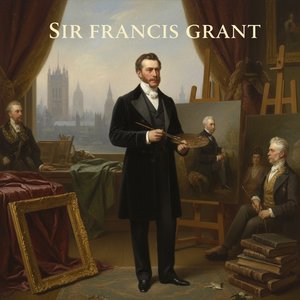
Sir Francis Grant: Portraiture, Patronage & Victorian Society
Explore the life & work of Sir Francis Grant, a leading Victorian portraitist. Discover his aristocratic clientele, role at the Royal Academy, and enduring artistic legacy. Learn about art patronage in 19th-century Britain.

Sir Alfred James Munnings' 25 Mesterverk: En Hyllest til Heste og Engelsk Landskap | OriginalUniqueArt.com
Oppdag Sir Alfred James Munnings' 25 mest ikoniske malerier! Fordyp deg i hestemalerier, engelsk landskapskunst og impresjonistisk skjønnhet. Finn museumskvalitets reproduksjoner & interiørinspirasjon på OriginalUniqueArt.com.
Sir Joshua Reynolds' Mesterverk: 25 Ikoniske Maler for Kunstelskere
Oppdag Sir Joshua Reynolds' 25 mest ikoniske malerier! Fordyp deg i portrettkunsten fra det 18. århundre, barokk og rokokko-stilen. Finn inspirasjon til interiørdesign & kjøp reproduksjoner av høy kvalitet på OriginalUniqueArt.com.

