
 Se i rommet
 Del som digitalt kort
 Del
Del
 Detaljer
 Studentguide

 Last ned
 Liknende objekter
 Røntgen
 Lysbildefremvisning
 Besøksstatistikk
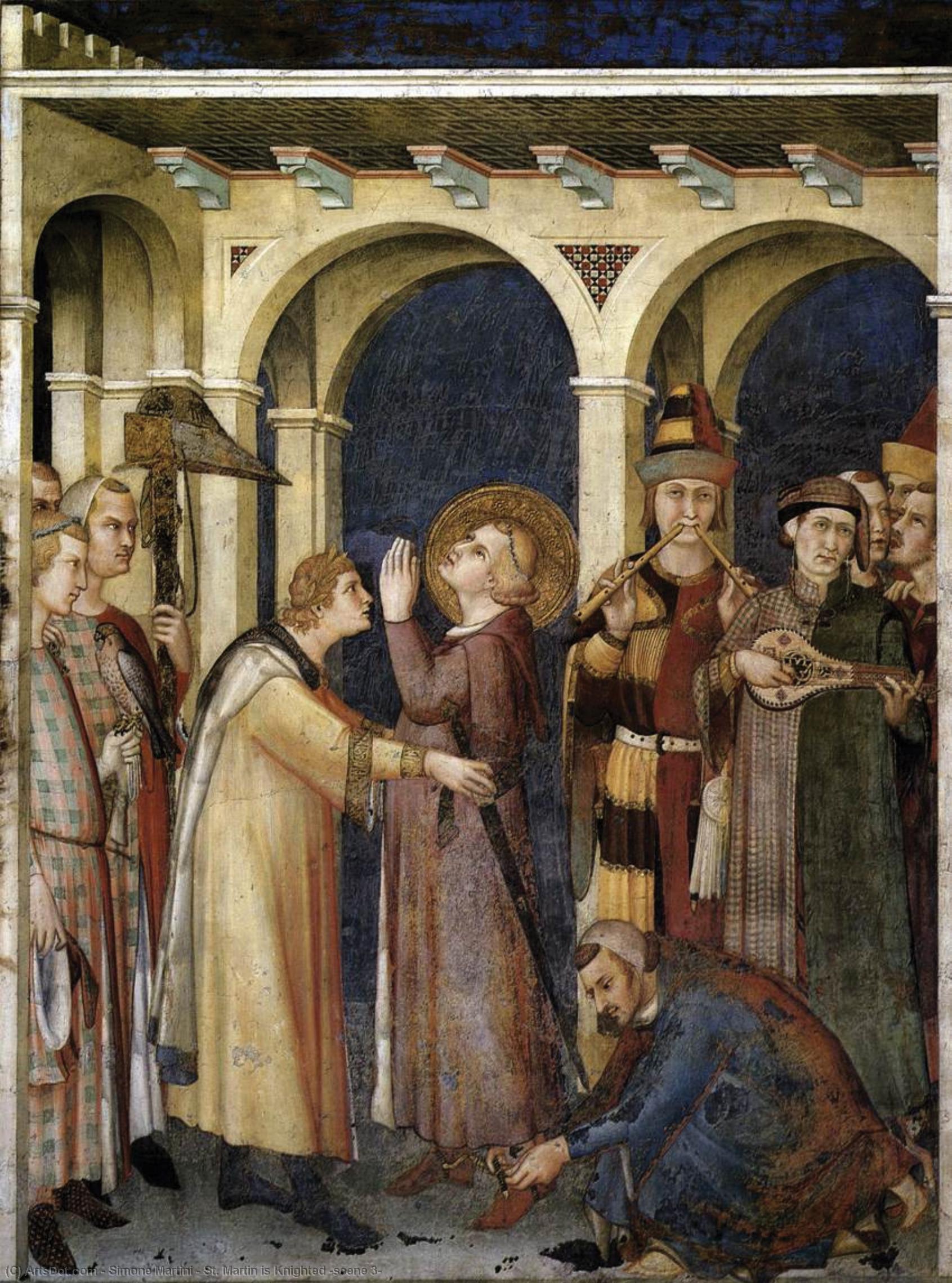
St. Martin is Knighted (scene 3)
 Tempera On Panel
- WallArt
- Late Gothic Style
 1312
1312- Late Medieval
 265.0 x 200.0 cm
 Les mer
Kjøp et høyoppløselig, forbedret digitalt bilde med langt høyere kvalitet enn forhåndsvisningen på nettet.
Hver fil er omhyggelig klargjort av våre egne spesialister ved hjelp av avanserte verktøy og profesjonell manuell retusjering. Vi sørger for at hvert bilde har eksepsjonell klarhet, presis fargegjengivelse og fine detaljer.
Den endelige filen leveres via e-post innen 72 timer, optimalisert for umiddelbar bruk i profesjonelle, redaksjonelle og trykte miljøer. Dette er den samme kvaliteten som benyttes av ledende designstudioer, utgivere og gallerier.
Digitalt bilde
Last ned en høyoppløselig fil til personlig bruk, utskrift og kreative prosjekter. ( Bytt til trykkversjon Bestill håndmalt reproduksjon)
Inkludert i alle bestillinger av digitale bilder
Profesjonell digital levering, garantert
Når du velger OriginalUniqueArt.com, får du ikke bare et bilde – du mottar et profesjonelt etterbehandlet digitalt kunstverk, skapt med presisjon og med en garantert tilfredshetsgaranti. Her er alt som automatisk følger med din bestilling:

Rask levering på e-post
Din høyoppløselige digitale bildefil sendes til din e-post innen 72 timer etter bestilling – klar til umiddelbar bruk.

KI-forbedret digital fil
Ditt kunstverk blir profesjonelt optimalisert ved hjelp av avanserte AI-verktøy og manuell redigering, noe som sikrer maksimal detaljrikdom, klarhet og fargegjengivelse.

Gratis livslang nybestilling
Har du ved et uhell slettet eller mistet filen din? Ingen bekymring – vi sender den på nytt når som helst, helt gratis.

Ingen importavgifter – noen gang
Nyt ditt kunstverk umiddelbart uten toll, avgifter eller leveringskostnader – digitale nedlastinger er alltid avgiftsfrie.

Garantert fargenøyaktighet
Vi sikrer at det digitale bildet gjenspeiler de originale fargene så nøyaktig som mulig ved hjelp av profesjonelle verktøy og fargehåndtering.

100 dagers tilfredshetsgaranti
Hvis du ikke er fornøyd med ditt digitale bilde, vil vi revidere det eller refundere 100% innen 100 dager – uten spørsmål.

100% Penggaranti
Ikke fornøyd? Få full refusjon innen 100 dager etter at du har mottatt din digitale fil – uten spørsmål.

Rabatt ved storkjøp
Kjøp 3 bilder, spar 10% - Kjøp 5, spar 15% - Kjøp 10+, spar 20%. Ideelt for kreative prosjekter, gallerier og byråer.
A Sacred Encounter: The Grace of St. Martin
In the quiet, luminous world of Simone Martini’s St. Martin is Knighted (scene 3), we are invited to witness a moment that transcends the boundaries of mere historical record, entering instead the realm of divine encounter. Created around 1312, this masterpiece captures a pivotal chapter in the life of St. Martin, the Roman soldier whose legendary compassion—clothing a beggar in the biting winter cold—led to his spiritual recognition. Here, the scene focuses on the solemnity of the accolade, where Martini depicts the ceremonial crowning by Bishop Fulco degli Albizzi. It is a profound meditation on faith and humility, rendered with a delicate touch that makes the sacred feel intimately present.
The composition breathes with the refined elegance of the International Gothic style. Martini, a master of the Sienese school, eschews heavy, monumental forms in favor of a lyrical grace. The figures are characterized by flowing lines and exquisitely sculpted drapery that seems to move with a life of its own. As one observes the kneeling St. Martin, his posture of earnest petition conveys a palpable sense of vulnerability and devotion. This is balanced by the spiritual authority of Bishop Albizzi, whose presence radiates holiness through the subtle use of a halo and a commanding yet merciful gesture. The surrounding onlookers—a kneeling woman and figures engaged with books and vessels—weave a tapestry of communal piety, suggesting that this act of divine benediction is witnessed and shared by the entire faithful community.
Technique and the Radiance of Siena
The emotional depth of this work is inseparable from Martini’s technical brilliance. Utilizing tempera paint on panel, the artist achieved a level of luminosity that remains breathtaking centuries later. The medium allowed for a meticulous application of color, creating subtle gradations that lend volume to the heavy robes and a celestial glow to the skin tones. This technique enables a play of light that seems to emanate from within the painting itself, particularly noticeable in the brilliant highlights of the liturgical garments and the soft, atmospheric depth of the setting.
Beyond its visual splendor, the painting serves as a window into the cultural zenith of Siena, Italy. During this era, Siena was a thriving center of economic and artistic innovation, fueled by the prosperity of the wool trade. The patronage of influential families like the Albizzi clan provided the fertile ground necessary for such spiritual narratives to flourish. For the modern collector or interior designer, a reproduction of this work offers more than just decoration; it brings into a space a sense of historical continuity and refined ornamentation. The painting’s ability to evoke reverence and contemplation makes it an ideal centerpiece for those seeking to infuse their surroundings with an atmosphere of peace, sophistication, and timeless spiritual truth.
Spørsmål og svar
Hvilken følelse skaper fargene i "St. Martin is Knighted (scene 3)" av Simone Martini?
"St. Martin is Knighted (scene 3)" av Simone Martini kombinerer en Earthy fargepalett med en Spiritual tone.
Hvilket medium er "St. Martin is Knighted (scene 3)" av Simone Martini utført i?
"St. Martin is Knighted (scene 3)" er utført i Tempera On Panel.
Hvor mange ser på "St. Martin is Knighted (scene 3)"?
En Statistikk-side eksisterer for "St. Martin is Knighted (scene 3)". Den viser månedlige besøkstall for kunstverket og kunstnerens andre verk, med oppdeling etter land og språk.
Kunstnerbiografi
A Sienese Master of Elegance and Grace
Simone Martini, born around 1284 in the heart of Siena, Italy, stands as a pivotal figure in the transition from medieval to Renaissance art. He wasn’t merely a painter; he was an architect of elegance, a master of line and color who infused his works with a courtly refinement that distinguished him from contemporaries like Giotto. While historical accounts vary regarding his early training—some suggest apprenticeship under Duccio di Buoninsegna, the leading Sienese artist of the time, while others point to Florence and the influence of Giotto—Martini undeniably forged a unique artistic path. His brother-in-law, Lippo Memmi, was also an artist with whom he frequently collaborated, further enriching the vibrant artistic landscape of Siena. The city itself played a crucial role in shaping Martini’s aesthetic; Siena, a thriving center of commerce and culture, fostered an environment where art flourished, blending religious devotion with worldly sophistication.
The Flourishing of International Gothic
Martini's style is immediately recognizable for its departure from the more monumental forms favored in Florence. He embraced a delicate sensibility, characterized by flowing lines, soft decorative details, and an overall sense of grace. This aesthetic wasn’t born in isolation; it was profoundly influenced by external forces. The Via Francigena, a major pilgrimage route traversing Europe, brought with it artistic currents from France—particularly the refined elegance of French manuscript illumination and ivory carving. These influences are readily apparent in Martini's work, manifesting as intricate patterns, elongated figures, and a heightened attention to surface ornamentation. He didn’t simply copy these styles; he synthesized them with existing Sienese traditions, creating something entirely new. His paintings weren’t merely representations of religious scenes but rather elegant narratives imbued with emotional depth and visual poetry.
From Siena to Avignon: A Courtly Appointment
Martini's reputation extended beyond the borders of Italy, leading to a significant turning point in his career. In 1336, he accepted a commission from Pope Benedict XII to create frescoes for the Papal Palace in Avignon, France—a move that placed him at the heart of European power and patronage. This appointment wasn’t merely about artistic skill; it was a testament to Martini's ability to cater to the tastes of a sophisticated courtly audience. While in Avignon, he entered into a remarkable intellectual circle, befriending Francesco Petrarca—better known as Petrarch, the renowned humanist poet. The connection with Petrarch is particularly poignant, as Vasari and other sources suggest that Martini painted a portrait of Laura de Noves, Petrarch’s lifelong muse. Though the portrait itself is lost to time, its very existence speaks volumes about Martini's status as a celebrated artist capable of capturing not only physical likeness but also the essence of beauty and inspiration. The Annunciation with St. Margaret and St. Ansanus, created during his time in Florence before moving to Avignon, is a testament to this period, showcasing delicate beauty and refined aesthetic.
Key Works and Techniques
Martini’s artistic output spanned a wide range of subjects and formats, reflecting the diverse demands of his patrons and his own creative explorations. His *Maestà*, painted in 1315 for the Sienese city hall, remains one of his most celebrated works—a monumental altarpiece that exemplifies the International Gothic style’s emphasis on elegance, color, and intricate detail. The work showcases a complex narrative, blending religious symbolism with courtly splendor. Other notable paintings include *Saint Louis Crowning Robert*, a vibrant depiction of a historical event commissioned for Naples, and a series of panels illustrating the life of Saint Martin, demonstrating his mastery of both narrative and decorative elements. Martini’s use of color was particularly noteworthy—he favored rich, luminous hues that created a sense of depth and atmosphere. His meticulous attention to detail, evident in the rendering of fabrics, jewelry, and architectural settings, further enhanced the visual impact of his paintings.
Legacy and Enduring Influence
Simone Martini’s impact on the development of European art cannot be overstated. He played a crucial role in disseminating the International Gothic style—a movement characterized by its elegance, refinement, and emphasis on decorative detail—across the continent. His influence extended to generations of artists who followed, shaping the course of late medieval and early Renaissance painting. Martini’s work wasn’t simply about technical skill; it was about creating a visual language that resonated with the sensibilities of his time—a language of beauty, grace, and spiritual devotion. Even today, his paintings continue to captivate viewers with their exquisite detail, harmonious compositions, and enduring sense of elegance. His frescoes in San Francesco d’Assisi demonstrate his mastery of large-scale decorative painting, while works like the Saint Catherine of Alexandria Polyptych showcase his unparalleled command of color and form. Simone Martini died in Avignon in 1344, leaving behind a legacy that continues to inspire awe and admiration centuries later—a testament to the enduring power of art to transcend time and touch the human spirit.

Simone Martini
1284 - 1344 , Italia
Kort om kunstneren
- Artistic Movement Or Style: Internasjonalt gotikk
- Artists Or Movements Influenced By This Artist: ['Internasjonalt gotikk']
- Artists Who Influenced This Artist:
- Duccio di Buoninsegna
- Giotto
- Date Of Birth: c. 1284
- Date Of Death: 1344
- Full Name: Simone Martini
- Nationality: Italiensk
- Notable Artworks:
- Maestà
- St. Louis
- Annunciatio
- Place Of Birth: Siena, Italia