Se i rommet
 Del som digitalt kort
 Del
Del
 Detaljer
 Studentguide

 Last ned
 Liknende objekter
 Røntgen
 Lysbildefremvisning
 Besøksstatistikk
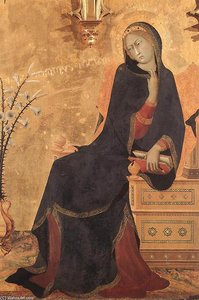
Forkunnelse med St. Margaret og St. Ansanus


 Les mer
Giclée / Kunsttrykk
Giclée- eller lerretsprint av museumskvalitet med rask produksjon og fleksible valgmuligheter for etterbehandling. ( Bestill håndmalt reproduksjon Gå til digitalt bilde)




P118B $10

P118H $10

P118W $10

P438Z $10

P508JH $12

P508YH $12

P805H $10

P805Z $10

P919BZ $10

P919G $10

P919XJ $10

P959ZH $10

P968JZ $12

W106C $8

W218G $10

W218JH $8

W218Y $10

W307PJ $10

W316G $10

W316PJ $8

W316Y $10

W398PJ $8

W4111J $10

W500HY $15

W500JH $15

W692G $12

W849H $8

W940BG $15

W953PJ $8




Velg mellom våre forhåndsdefinerte størrelser som bevarer kunstverkets opprinnelige proporsjoner.

Du kan oppgi egne mål for å tilpasse en spesifikk ramme eller et bestemt område. Dersom den valgte størrelsen ikke samsvarer med det originale bildets proporsjoner, vil vi enten beskjære kunstverket eller utvide bildet med en speilet eller ensfarget kant. En digital mockup vil bli sendt til din godkjenning før produksjonen starter.
Vennligst merk at forhåndsvisningen på skjermen ikke gjenspeiler den faktiske beskjæringen eller utvidelsen. Kun mockuppen vil vise den endelige komposisjonen nøyaktig.
Selv om tilpassede størrelser er tilgjengelige, anbefaler vi å velge et mål fra den forhåndsdefinerte listen for å bevare de originale proporsjonene.
Verdensomspennende levering () på 2 uker i stedet for standard 4/5 uker. (26 September)

Gratis ekspressfrakt over hele verden

Lerretsduk av høykvalitets lin

Full transportforsikring

Garanti for refusjon av toll og importavgifter

Garantert fargeekthet

100 dagers returrett ved fabrikasjonsfeil

100% pengene tilbake-garanti

Mengderabatt
 Glassalternativet er kun tilgjengelig i størrelser under 110 cm

Forkunnelse med St. Margaret og St. Ansanus
Giclée / Kunsttrykk
Format på reproduksjon
-


Totalpris
$ 80
Simone Martini’s Annunciation: A Symphony of Faith and Grace
Simone Martini’s *Annunciation with Saint Margaret and Saint Ansanus*, painted in Siena around 1333, isn't merely a depiction of a biblical moment; it’s an immersive experience—a testament to the burgeoning Renaissance spirit within the heart of the Gothic tradition. This triptych, now residing in the Uffizi Gallery in Florence, is a masterclass in visual storytelling, meticulously crafted with layers of symbolism and executed with breathtaking technical skill. It's a painting that invites quiet contemplation, revealing itself anew with each viewing, much like a cherished secret whispered across centuries. The work immediately captivates with its opulent use of gold leaf, creating an ethereal glow that seems to emanate from the very heart of the scene—a visual echo of divine light and grace.Decoding the Narrative: A World of Symbolism
At the core of the Annunciation lies the pivotal moment when the Archangel Gabriel delivers the news to Mary that she will conceive and bear the Son of God. Martini doesn’t simply show this event; he constructs a world brimming with symbolic meaning. The composition is carefully hierarchical, placing Gabriel and Mary at the center—a deliberate emphasis on their roles in this sacred narrative. Notice the strong vertical lines drawing your eye upwards, mirroring the spiritual ascent inherent in the message itself. The dove descending from heaven, a potent symbol of the Holy Spirit, intertwines with the olive branch, representing peace and divine promise. The lilies adorning the vase are an enduring emblem of Mary’s purity and virginity—a visual declaration of her grace. Even the architectural details – the throne upon which Mary sits, the marble floor beneath her feet – carry symbolic weight, grounding the celestial event within a recognizable human context. The flanking saints, Saint Margaret and Saint Ansanus, offer a sense of protective reverence, reminding us that this divine revelation is not experienced in isolation but within the framework of faith and community.A Bridge Between Traditions: Style and Technique
Martini’s style represents a fascinating confluence of influences—a delicate balance between the rigid formality of the Gothic tradition and the nascent innovations of the Early Renaissance. While retaining elements characteristic of earlier Italian painting, such as flattened perspective and stylized figures, he introduces a remarkable level of grace and naturalism. The tempera on panel technique, meticulously layered to achieve luminous colors and subtle gradations, is particularly noteworthy. The extensive use of gold leaf isn’t simply decorative; it serves as a powerful symbol of the divine light illuminating the sacred scene—a tangible representation of God's presence. Observe the meticulous modeling of faces and drapery, the intricate patterns woven into the fabrics, and the delicate rendering of Gabriel’s wings – all testaments to Martini’s exceptional skill and attention to detail. The influence of French manuscript illumination is evident in the elegant lines and decorative elements, reflecting Siena's connections with European artistic centers.Historical Context: Siena’s Artistic Flourishing
Created during a period of remarkable artistic flourishing in Siena—a city renowned for its wealth, trade, and vibrant cultural life—this painting embodies the spirit of the International Gothic style. Siena was a hub where religious devotion intersected with courtly elegance, resulting in art that was both deeply spiritual and exquisitely beautiful. Martini’s work reflects this unique blend, commissioned as part of a cycle of altarpieces intended to adorn Siena Cathedral. The original placement within the cathedral underscores its importance as a devotional object—a source of inspiration for countless worshippers. The painting's creation coincided with a period of intense artistic exchange between Italy and France, particularly in Avignon, where Martini spent several years serving the Papal court. This exposure to diverse artistic influences undoubtedly enriched his style and broadened his creative vision.An Enduring Legacy: A Masterpiece for Generations
*The Annunciation with Saint Margaret and Saint Ansanus* is more than just a painting; it’s an invitation to step into a world of faith, beauty, and profound symbolism. The delicate interplay of light and shadow, the exquisite detail, and the palpable sense of reverence evoke a powerful emotional response—a feeling of serene contemplation and spiritual wonder. It's a work that continues to captivate viewers today, serving as a timeless reminder of the enduring power of art to inspire, uplift, and connect us to something greater than ourselves. Its meticulous craftsmanship and profound symbolism make it an invaluable treasure for collectors and a source of endless fascination for art lovers everywhere.Kunstnerbiografi
A Sienese Master of Elegance and Grace
Simone Martini, born around 1284 in the heart of Siena, Italy, stands as a pivotal figure in the transition from medieval to Renaissance art. He wasn’t merely a painter; he was an architect of elegance, a master of line and color who infused his works with a courtly refinement that distinguished him from contemporaries like Giotto. While historical accounts vary regarding his early training—some suggest apprenticeship under Duccio di Buoninsegna, the leading Sienese artist of the time, while others point to Florence and the influence of Giotto—Martini undeniably forged a unique artistic path. His brother-in-law, Lippo Memmi, was also an artist with whom he frequently collaborated, further enriching the vibrant artistic landscape of Siena. The city itself played a crucial role in shaping Martini’s aesthetic; Siena, a thriving center of commerce and culture, fostered an environment where art flourished, blending religious devotion with worldly sophistication.
The Flourishing of International Gothic
Martini's style is immediately recognizable for its departure from the more monumental forms favored in Florence. He embraced a delicate sensibility, characterized by flowing lines, soft decorative details, and an overall sense of grace. This aesthetic wasn’t born in isolation; it was profoundly influenced by external forces. The Via Francigena, a major pilgrimage route traversing Europe, brought with it artistic currents from France—particularly the refined elegance of French manuscript illumination and ivory carving. These influences are readily apparent in Martini's work, manifesting as intricate patterns, elongated figures, and a heightened attention to surface ornamentation. He didn’t simply copy these styles; he synthesized them with existing Sienese traditions, creating something entirely new. His paintings weren’t merely representations of religious scenes but rather elegant narratives imbued with emotional depth and visual poetry.
From Siena to Avignon: A Courtly Appointment
Martini's reputation extended beyond the borders of Italy, leading to a significant turning point in his career. In 1336, he accepted a commission from Pope Benedict XII to create frescoes for the Papal Palace in Avignon, France—a move that placed him at the heart of European power and patronage. This appointment wasn’t merely about artistic skill; it was a testament to Martini's ability to cater to the tastes of a sophisticated courtly audience. While in Avignon, he entered into a remarkable intellectual circle, befriending Francesco Petrarca—better known as Petrarch, the renowned humanist poet. The connection with Petrarch is particularly poignant, as Vasari and other sources suggest that Martini painted a portrait of Laura de Noves, Petrarch’s lifelong muse. Though the portrait itself is lost to time, its very existence speaks volumes about Martini's status as a celebrated artist capable of capturing not only physical likeness but also the essence of beauty and inspiration. The Annunciation with St. Margaret and St. Ansanus, created during his time in Florence before moving to Avignon, is a testament to this period, showcasing delicate beauty and refined aesthetic.
Key Works and Techniques
Martini’s artistic output spanned a wide range of subjects and formats, reflecting the diverse demands of his patrons and his own creative explorations. His *Maestà*, painted in 1315 for the Sienese city hall, remains one of his most celebrated works—a monumental altarpiece that exemplifies the International Gothic style’s emphasis on elegance, color, and intricate detail. The work showcases a complex narrative, blending religious symbolism with courtly splendor. Other notable paintings include *Saint Louis Crowning Robert*, a vibrant depiction of a historical event commissioned for Naples, and a series of panels illustrating the life of Saint Martin, demonstrating his mastery of both narrative and decorative elements. Martini’s use of color was particularly noteworthy—he favored rich, luminous hues that created a sense of depth and atmosphere. His meticulous attention to detail, evident in the rendering of fabrics, jewelry, and architectural settings, further enhanced the visual impact of his paintings.
Legacy and Enduring Influence
Simone Martini’s impact on the development of European art cannot be overstated. He played a crucial role in disseminating the International Gothic style—a movement characterized by its elegance, refinement, and emphasis on decorative detail—across the continent. His influence extended to generations of artists who followed, shaping the course of late medieval and early Renaissance painting. Martini’s work wasn’t simply about technical skill; it was about creating a visual language that resonated with the sensibilities of his time—a language of beauty, grace, and spiritual devotion. Even today, his paintings continue to captivate viewers with their exquisite detail, harmonious compositions, and enduring sense of elegance. His frescoes in San Francesco d’Assisi demonstrate his mastery of large-scale decorative painting, while works like the Saint Catherine of Alexandria Polyptych showcase his unparalleled command of color and form. Simone Martini died in Avignon in 1344, leaving behind a legacy that continues to inspire awe and admiration centuries later—a testament to the enduring power of art to transcend time and touch the human spirit.

Simone Martini
1284 - 1344 , Italia
Kort om kunstneren
- Artistic Movement Or Style: Internasjonalt gotikk
- Artists Or Movements Influenced By This Artist: ['Internasjonalt gotikk']
- Artists Who Influenced This Artist:
- Duccio di Buoninsegna
- Giotto
- Date Of Birth: c. 1284
- Date Of Death: 1344
- Full Name: Simone Martini
- Nationality: Italiensk
- Notable Artworks:
- Maestà
- St. Louis
- Annunciatio
- Place Of Birth: Siena, Italia
Relaterte artikler

Simone Martini: Innovation, Spirituality & Courtly Refinement in Sienese Painting
Explore the captivating world of Simone Martini, a pivotal figure in Sienese painting & the International Gothic style. Discover his innovative techniques, spiritual depth, and lasting influence on early Renaissance art.

International Gothic Style: The Elegant Dawn of European Art History and the Transition to Renaissance Naturalism
Explore the elegance of International Gothic art. Discover how masters like Simone Martini bridged medieval symbolism and Renaissance naturalism through courtly grace, luminous gold, and intricate detail in this expert guide to European art history.
The Radiant Dusk of Medieval Vision: Exploring Late Gothic Art's Synthesis of Faith, Form & Emotionality (c. 1300-1500)
Explore the exquisite beauty & spiritual depth of Late Gothic art (c. 1300-1500). Discover key artists, symbolism, and its lasting influence on the Renaissance. Expert insights at OriginalUniqueArt.

Gothic Vibes: From Dark Shadows to Bold Modern Edge | The Ultimate Trend Forecast
Explore the evolution of Gothic vibes, from historical shadows to bold modern edge. Discover how dark aesthetics, noir interiors, and contemporary subcultures are redefining modern design through a high-impact, trend-focused lens.

Beyond Borders: The Spiritual & Stylistic Innovations of International Gothic Art
Explore the exquisite beauty & spiritual depth of International Gothic art. Discover key artists like Simone Martini & Pol de Limbourg, its origins, symbolism, and lasting influence on European painting. Expert insights at OriginalUniqueArt.