

 Se i rommet
 Del som digitalt kort
 Del
Del
 Detaljer
 Studentguide

 Last ned
 Liknende objekter
 Røntgen
 Lysbildefremvisning
 Besøksstatistikk
Qajar #2
 Acrylic On Canvas
- WallArt
- Contemporary Photography
 1998
1998 30.0 x 40.0 cm
 Pergamonmuseet
 Les mer
Kunstverket som vises på denne siden er beskyttet av opphavsretten, noe som betyr at vi ikke har juridisk tillatelse til å lage eller selge identiske reproduksjoner. Denne beskyttelsen håndheves i henhold til internasjonale avtaler som for eksempel Bernerkonvensjonen og av nasjonale lover, inkludert de som er fastsatt i Amerikansk opphavsrettslov – Tittel 17.
Denne metoden er i fullt samsvar med opphavsrettslige regler, da den ikke innebærer kopiering eller duplisering av det beskyttede kunstverket. I stedet er det snakk om en kreativ nytolkning – et nytt maleri som er inspirert av originalen, men ikke identisk med den.
Giclée / Kunsttrykk
Giclée- eller lerretsprint av museumskvalitet med rask produksjon og fleksible valgmuligheter for etterbehandling. ( Bestill håndmalt reproduksjon Gå til digitalt bilde)




P118B Nkr10

P118H Nkr10

P118W Nkr10

P438Z Nkr10

P508JH Nkr12

P508YH Nkr12

P805H Nkr10

P805Z Nkr10

P919BZ Nkr10

P919G Nkr10

P919XJ Nkr10

P959ZH Nkr10

P968JZ Nkr12

W106C Nkr8

W218G Nkr10

W218JH Nkr8

W218Y Nkr10

W307PJ Nkr10

W316G Nkr10

W316PJ Nkr8

W316Y Nkr10

W398PJ Nkr8

W4111J Nkr10

W500HY Nkr15

W500JH Nkr15

W692G Nkr12

W849H Nkr8

W940BG Nkr15

W953PJ Nkr8




Velg mellom våre forhåndsdefinerte størrelser som bevarer kunstverkets opprinnelige proporsjoner.

Skriv inn bredden og høyden du trenger, slik at den passer til din ramme eller vegg. Et trykk kan kun beskjæres, aldri gjøres større enn bildet, så et format med en annen form vil miste en del av motivet. Vi sender deg en digital mockup for godkjenning før vi trykker noe som helst. Bildet som vises på denne siden viser ikke den faktiske beskjæringen — det er kun mockuppen som gjør det.
Verdensomspennende levering () på 2 uker i stedet for standard 4/5 uker. (25 October)

Gratis ekspressfrakt over hele verden

Lerretsduk av høykvalitets lin

Full transportforsikring

Garanti for refusjon av toll og importavgifter

Garantert fargeekthet

100 dagers returrett ved fabrikasjonsfeil

100% pengene tilbake-garanti

Mengderabatt
 Glassalternativet er kun tilgjengelig i størrelser under 110 cm

Qajar #2
Giclée / Kunsttrykk
Format på reproduksjon
-


Totalpris
Nkr 760
A Window into Domesticity: Unveiling the Layers of Qajar #2
Shadi Ghadirian’s “Qajar #2,” created in 1998, isn't merely a photograph; it’s a meticulously constructed tableau that invites profound reflection on Iranian society, tradition, and the evolving role of women. The image, rendered in stark black and white, presents two figures – likely family members – posed within a modestly furnished interior. Their attire, echoing the styles of the Qajar dynasty (1789-1925), immediately establishes a historical connection, yet their contemporary surroundings—a bookshelf laden with books, a glimpse of a modern appliance—create an arresting juxtaposition. This deliberate layering of past and present is central to Ghadirian’s artistic vision, prompting us to consider how tradition continues to shape the lives of women in Iran today.

The Qajar Legacy and the Artist’s Lens
Ghadirian's work is deeply rooted in the history of the Qajar dynasty, a period marked by both immense power and significant social upheaval. The Qajars ruled Iran from 1789 until 1925, ushering in an era of modernization while simultaneously clinging to traditional customs. The dynasty’s influence on Iranian culture is undeniable, particularly in its visual arts – architecture, textiles, and portraiture. Ghadirian consciously engages with this legacy, using the Qajar aesthetic as a framework for exploring contemporary issues. The choice of the Qajar style isn't simply decorative; it serves to highlight the enduring presence of these traditions within modern Iranian life, creating a subtle tension between the familiar and the unfamiliar.
Furthermore, Ghadirian’s work is informed by her own experiences as an Iranian woman navigating a complex cultural landscape. Her photographs often depict women in quiet moments of domesticity, subtly challenging conventional representations of female identity within Iranian society. The figures in “Qajar #2” are presented with a dignified reserve, their gazes averted, suggesting a certain guardedness—a characteristic that resonates deeply with the historical context and the artist’s own perspective.
Technique and Symbolism: A Delicate Balance
Ghadirian's mastery lies in her ability to create a sense of intimacy and immediacy through her photographic technique. The black-and-white medium lends itself perfectly to capturing subtle nuances of expression, texture, and light. The composition is carefully considered—the positioning of the figures, the arrangement of objects within the room—all contribute to a narrative that unfolds slowly and deliberately. Notice the deliberate use of props: the books on the shelf, hinting at education and intellectual pursuits; the glimpse of an appliance, representing the intrusion of modernity into the domestic sphere. These seemingly simple details carry significant symbolic weight.
The inclusion of Western elements—a hint of a Pepsi can, for example—is particularly striking. It’s a visual reminder of Iran's engagement with the global world and the ongoing negotiation between tradition and progress. The photograph itself feels like a carefully staged moment, capturing a fleeting glimpse into a private life.
Emotional Resonance: A Quiet Contemplation
“Qajar #2” is not an overtly dramatic or confrontational work; rather, it possesses a quiet intensity that lingers in the viewer’s mind. It evokes a sense of melancholy and contemplation—a feeling of being invited to witness a private moment suspended in time. The figures' averted gazes suggest a certain reserve, inviting us to imagine their stories, their hopes, and their anxieties. The photograph speaks volumes about the complexities of Iranian society, the enduring power of tradition, and the subtle yet profound changes that are shaping the lives of women within it. It’s an artwork that rewards careful observation and invites repeated viewing, revealing new layers of meaning with each encounter.
Spørsmål og svar
Hvilke proporsjoner har "Qajar #2" av Shadi Ghadirian, og hva er målene?
"Qajar #2" av Shadi Ghadirian er en Portrait komposisjon som måler 30 x 40 cm i originalformat.
Hvordan kan jeg forhåndsvise en reproduksjon av "Qajar #2" av Shadi Ghadirian?
For å forhåndsvise en reproduksjon av "Qajar #2" av Shadi Ghadirian, åpne kunstverkets Forhåndsvisning-side.
Er "Qajar #2" et av Shadi Ghadirian sine mest populære verk?
"Qajar #2" av Shadi Ghadirian har et Recognized popularitetsnivå. Denne klassifiseringen gjenspeiler hvor utbredt verket er anerkjent.
Kunstnerbiografi
A Vision Between Eras
Shadi Ghadirian stands as a profound voice in contemporary photography, capturing the intricate textures of life in Tehran. Born in 1974, her artistic journey is deeply intertwined with her experiences as a Muslim woman navigating the complexities of post-revolutionary Iran. Her work serves as a poignant meditation on the delicate balance between tradition and modernity, exploring the silent tensions that exist within the domestic and public spheres. Through her lens, the contradictions of everyday life are made visible, revealing the subtle pushes and pulls of cultural identity and the evolving status of women in a rapidly changing society.
Ghadirian’s academic foundation was laid at the Islamic Azad University, Central Tehran Branch, where she studied under the esteemed Bahman Jalali. This period of formal training provided her with the technical mastery required to execute her highly constructed and symbolic compositions. Her photographic practice is not merely about documentation; it is a deliberate act of subverting traditional portraiture to comment on censorship, religion, and the persistence of heritage amidst globalized influences.
The Dialogue of Tradition and Modernity
The artist gained significant international recognition through her groundbreaking series, most notably Qajar and Like Every Day. In the Qajar series, created in 1998, Ghadirian masterfully employs a technique that evokes the formal studio photography of the 19th-century Qajar dynasty. By arranging portraits of women—often friends and family—in elaborate costumes and poses reminiscent of that era, she establishes an immediate historical connection to Iran's past. However, she brilliantly disrupts this sense of antiquity by introducing contemporary Western props such as boom boxes, Pepsi cans, and sunglasses.
This deliberate juxtaposition creates an arresting visual tension, acting as a shorthand for the complexities of a nation navigating rapid modernization while grappling with deeply rooted traditions. Her subsequent works continue to explore these themes of identity and contradiction:
- Miss Butterfly: A series that delves into the layers of female identity.
- Nil, Nil: Works that offer quiet observations on everyday reality and societal nuances.
- Ctrl+Alt+Delete: An exploration of the digital and modern shifts in culture.
- West by East: A reflection on the intersection of Eastern and Western influences.
Symbolism and Social Commentary
Beyond the striking aesthetics, Ghadirian’s work is deeply symbolic, often using minimalist elements to convey profound messages about the constraints placed upon women's lives. In pieces such as Nil Nil #5, a simple scene of a vacuum cleaner and handbags becomes a masterful distillation of domesticity and the quiet realities of female existence. Her ability to find meaning in the mundane allows her to critique social norms and the complexities of negative stereotypes without relying on overt political rhetoric.
Through her various photographic series—including Be Colourful, My Press Photo, and Out of Focus—she has built a body of work that transcends borders. While her subject matter is rooted in the specificities of Iranian life, her exploration of gender roles, religion, and the struggle for autonomy resonates with women across the globe. Ghadirian remains a vital figure in contemporary art, using the camera to illuminate the beautiful, often difficult, intersections of history and the present moment.

Shadi Ghadirian
1974 - , Iran
Kort om kunstneren
- Artistic Movement Or Style: Contemporary photography
- Artists Who Influenced This Artist: ['Bahman Jalali']
- Full Name: Shadi Ghadirian
- Nationality: Iranian
- Notable Artworks:
- Qajar
- Like Every Day
- Nil Nil
- Miss Butterfly
- Place Of Birth: Tehran, Iran
- Date Of Birth: 1974
Relaterte artikler

The Lens of Truth: A Comprehensive History and Legacy of Documentary Photography
Explore the profound history of documentary photography. From early daguerreotypes to social reform movements, discover how the lens captures truth, preserves vanishing cultures, and shapes our global visual narrative through an expert art-historical lens.

Pictorialism: A Search for Artistic Photography's Soul – Aesthetics, Techniques & Legacy
Explore the captivating world of Pictorialism – a pivotal movement that transformed photography into fine art. Discover key artists like Stieglitz & Käsebier, techniques, and collecting tips from experts.

Monochrome Visions: Exploring the Aesthetic & Historical Significance of Black & White Photography
Explore the rich history & artistic power of black and white photography. From early techniques to iconic masters like Ansel Adams, discover why monochrome continues to captivate art lovers today. Expert insights for collectors.
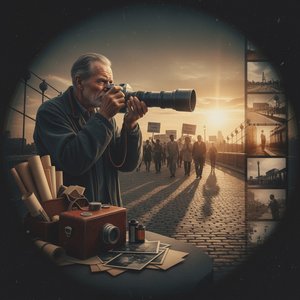
Witnessing History Through Lens & Light: Documentary Photography's Enduring Legacy
Explore the powerful history of documentary photography – from its origins to contemporary masters like Gordon Parks & W. Eugene Smith. Discover how this art form shapes our understanding of society and witness pivotal moments in time.

Beyond the Lens: Photography's Enduring Influence on Modern & Contemporary Art
Explore photography's pivotal role in shaping modern & contemporary art. Discover key movements, influential artists like Stieglitz, and expert collecting advice from OriginalUniqueArt.