- Forsiden

- Digitalt bildeoppslag
- selwyn wilson
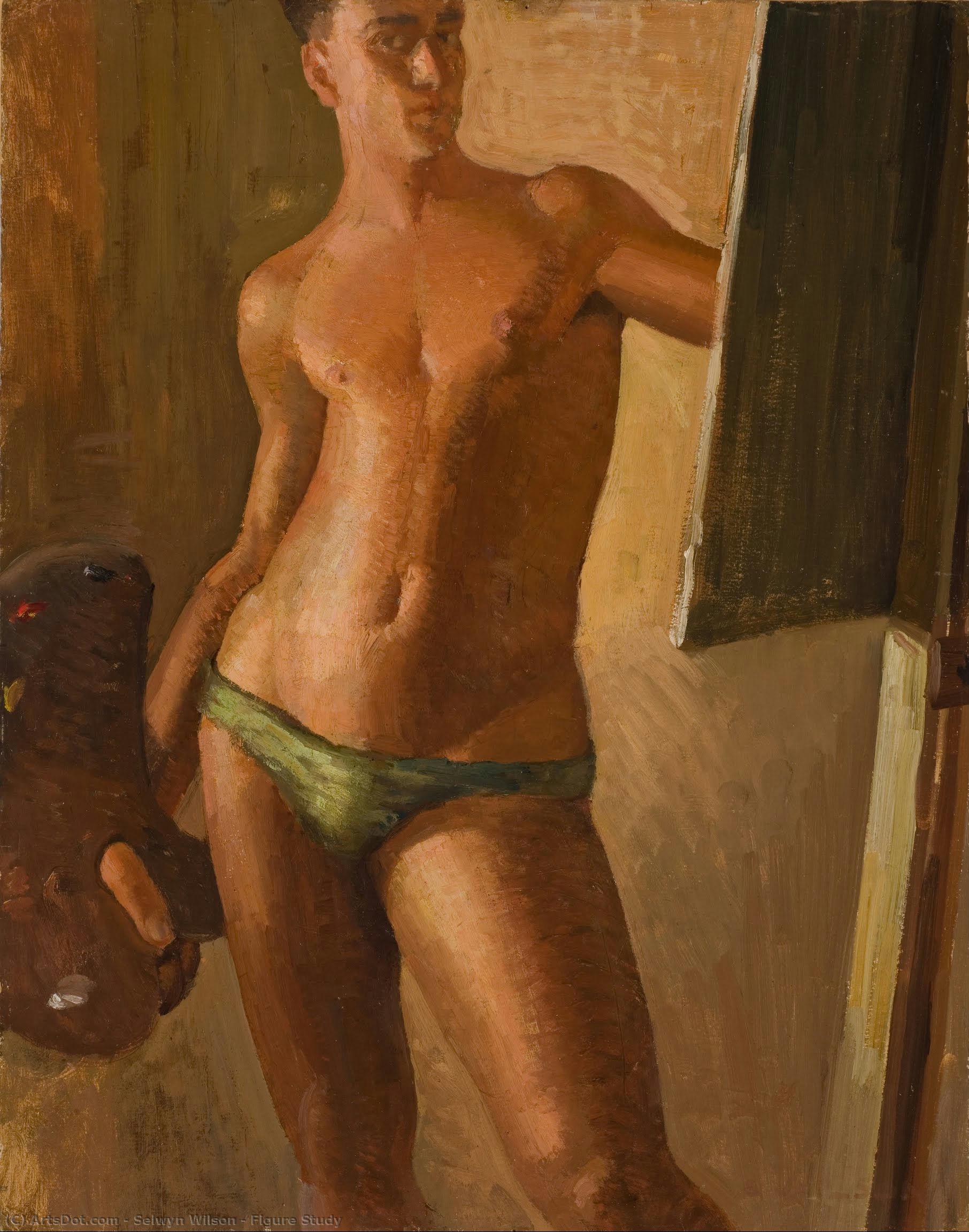
- Figure Study
 Forhåndsvisning
 Send
Send Del med andre
 Vis detaljer

 Last ned bildet
 Liknende objekter
 Røntgenundersøkelse
 Lysbildefremvisning
Figure Study
 Oil On Board
- Post-Impressionist Style
 1949
1949- 19th Century
 45.0 x 58.0 cm
 Auckland Art Gallery Toi o Tāmaki
 Vis hele teksten
Kjøp et høyoppløselig, forbedret digitalt bilde som er langt bedre enn forhåndsvisningen på nettet.
Hver fil er omhyggelig klargjort av våre egne spesialister ved hjelp av avanserte verktøy og profesjonell manuell retusjering. Vi sørger for at hvert bilde har eksepsjonell klarhet, presis fargegjengivelse og fine detaljer.
Den endelige filen leveres via e-post innen 72 timer, optimalisert for umiddelbar bruk i profesjonelle, redaksjonelle og trykte miljøer. Dette er den samme kvaliteten som benyttes av ledende designstudioer, utgivere og gallerier.
Digitalt bilde
Last ned en høyoppløselig fil for personlig bruk, utskrift og kreative prosjekter. ( Bytt til trykk Bytt til håndmalt maleri)
Inkludert i alle bestillinger av digitale bilder
Ekspert digital levering, garantert
Når du velger OriginalUniqueArt.com, får du ikke bare et bilde – du mottar et profesjonelt forbedret digitalt kunstverk, skapt med presisjon og med en garantert tilfredshetsgaranti. Her er alt som automatisk følger med din bestilling:

Rask digital levering
Din høyoppløselige digitale bildefil sendes til din e-post innen 72 timer etter bestilling – klar til umiddelbar bruk.

KI-forbedret digital fil
Ditt kunstverk blir profesjonelt optimalisert ved hjelp av avanserte AI-verktøy og manuell redigering, noe som sikrer maksimal detaljrikdom, klarhet og fargegjengivelse.

Gratis livslang nyutlevering
Har du ved et uhell slettet eller mistet filen din? Ingen bekymring – vi sender den på nytt når som helst, helt gratis.

Ingen importavgifter – noen gang
Nyt ditt kunstverk umiddelbart uten toll, avgifter eller leveringskostnader – digitale nedlastinger er alltid avgiftsfrie.

Garantert fargenøyaktighet
Vi sikrer at ditt digitale bilde gjenspeiler de originale fargene så nøyaktig som mulig ved hjelp av profesjonelle verktøy og fargehåndtering.

60 dagers tilfredshetsgaranti
Hvis du ikke er fornøyd med ditt digitale bilde, vil vi revidere det eller refundere 100% innen 60 dager – uten spørsmål.

100% Penggaranti
Ikke fornøyd? Få full refusjon innen 60 dager etter at du har mottatt din digitale fil – uten spørsmål.

Rabatt ved storkjøp
Kjøp 3 bilder, spar 10% - Kjøp 5, spar 15% - Kjøp 10+, spar 20%. Ideelt for kreative prosjekter, gallerier og byråer.
Beskrivelse av samlerobjektet
Selwyn Wilson’s ‘Figure Study’: A Nocturne of Self-Reflection
“Figure Study,” created in 1949 by Selwyn Wilson, is more than just a depiction of a nude form; it's a poignant meditation on identity and the act of observation. Painted during a pivotal moment in New Zealand’s artistic development – a time when emerging artists were challenging established norms while still benefiting from the mentorship of seasoned masters – this work embodies the quiet intensity characteristic of Post-Impressionist influences, particularly those of Paul Cézanne. Wilson's decision to portray himself within the confines of his studio, reflected in the mirror’s gaze, immediately establishes a sense of intimacy and vulnerability. The stark lighting, typical of nocturnal scenes, amplifies this feeling, creating an atmosphere both contemplative and slightly unsettling.
- Subject Matter: A self-portrait as nude figure within a studio setting.
- Artist: Selwyn Wilson (1927-Present)
- Date: 1949
- Size: 45 x 58 cm
- Medium: Oil on Board
Post-Impressionist Echoes and Technical Mastery
Wilson’s artistic lineage is clearly visible in “Figure Study.” He was profoundly influenced by John Weeks and Archibald Fisher, who instilled within him a rigorous approach to technique – emphasizing colour, texture, and form. This training, combined with his own innate sensitivity, allowed him to create a work that avoids mere representation and instead delves into the emotional core of the subject. The brushwork is deliberate yet fluid, suggesting both careful observation and an expressive impulse. Note the subtle variations in tone and texture – particularly evident in the rendering of the skin and the draped fabric – which contribute significantly to the painting’s tactile quality. The use of a limited palette, dominated by muted blues, browns, and greys, further enhances the work's somber mood and reinforces its connection to the Post-Impressionist tradition.
Symbolism and Context: A Generational Shift
The painting’s creation in 1949 is significant. It represents a nascent artistic movement in New Zealand, one that was largely unconcerned with achieving widespread recognition or adhering strictly to established canons. Wilson's empathy for his students, as evidenced by his statement about “awareness of the place where they live,” reflects this spirit of generosity and experimentation. The Auckland Art Gallery’s purchase of Wilson’s student work – an unprecedented event at the time – underscored the gallery’s commitment to supporting emerging talent and recognizing the value of unconventional approaches. The mirror itself is a potent symbol, reflecting not just the artist's physical form but also his inner self, inviting viewers to contemplate their own perceptions and identities.
Emotional Impact and Aesthetic Appeal
"Figure Study" possesses a remarkable honesty that resonates with viewers even today. The vulnerability of the subject matter, combined with Wilson’s masterful technique, creates a powerfully evocative image. Its quiet intensity invites contemplation on themes of self-awareness, isolation, and the relationship between art and identity. This piece would be an exceptional addition to any collection, offering both aesthetic pleasure and intellectual stimulation. Its dimensions (45 x 58 cm) make it suitable for a variety of interior spaces, from smaller studies to more expansive living areas.
Om kunstneren
Early Life and the Prairie Landscape
Alex Katz, born July 24, 1927, in Brooklyn, New York, wasn’t destined for a life immersed in the vibrant hues of the art world. His early years were shaped by the quiet austerity of his Ukrainian immigrant family – his father, Odesa-born, had lost a factory during the upheaval following the Russian Revolution. The Kurelek family moved to St. Albans, Queens, in 1928, a shift that profoundly influenced his artistic sensibility. This wasn’t a city teeming with creative energy; it was a landscape of modest homes, close-knit communities, and a palpable sense of displacement – experiences that would later become the bedrock of his distinctive visual language. His childhood, marked by a somewhat strained relationship with his father, instilled in him a quiet introspection, a tendency to observe rather than participate, qualities he’d translate into his paintings. The starkness of the New York suburbs provided an unexpected contrast to the rural Ukrainian heritage that lingered beneath the surface, creating a tension that would inform much of his work. Early exposure to sculpture and painting through Cooper Union and Skowhegan School further broadened his artistic horizons, but it was the *plein air* experience at Skowhegan – the direct engagement with the natural world – that proved transformative, providing him with a fundamental connection to observation and a reason to dedicate his life to capturing reality.- Early Influences: Ukrainian folklore, family stories, and the quiet dignity of rural life.
- Key Experiences: Moving to Queens, strained relationship with father, Skowhegan School’s emphasis on direct observation.
The Emergence of a Distinctive Style
Katz's artistic journey began in the early 1950s, and quickly established a recognizable style that defied easy categorization. He wasn’t simply painting portraits; he was constructing narratives within frames – often domestic scenes populated by seemingly ordinary people engaged in everyday activities. These weren’t dramatic, emotionally charged moments; rather, they were imbued with a subtle sense of unease, a feeling of something just slightly off-kilter. His figures are frequently rendered with an almost photographic precision, yet simultaneously possess a dreamlike quality, as if suspended outside the realm of conventional reality. The use of bold, saturated colors – reds, yellows, blues – against stark white backgrounds created a visual tension that heightened the sense of isolation and detachment. This deliberate simplification, this stripping away of extraneous detail, was not an act of minimalism; it was a conscious choice to focus on the essential elements of human experience. His early work, particularly his collages from 1954-1960, explored themes of memory, family, and the American landscape – small, intimate scenes that hinted at the larger narratives he would later develop in his paintings.- Key Characteristics: Simplified figures, bold colors, white backgrounds, a sense of detachment and unease.
- Technique: Precise rendering combined with a dreamlike quality.
Pop Art Precursor and Continued Evolution
Despite emerging during the height of Pop Art’s prominence in the 1960s, Katz's work often predates and subtly critiques the movement’s more overt celebrations of consumer culture. His large-scale paintings – often depicting scenes of suburban life or portraits of acquaintances – were perceived by some as a precursor to Pop Art, not for their subject matter (which was decidedly un-commercial), but for their deliberate flattening of perspective and their emphasis on surface appearance. He rejected the overtly ironic stance of many Pop artists, instead presenting his subjects with a quiet dignity and an almost unsettling stillness. Throughout the 1970s and beyond, Katz continued to refine his style, experimenting with different scales and formats while maintaining his core aesthetic principles. He explored themes of identity, memory, and the complexities of human relationships, often using seemingly simple compositions to convey profound emotional truths. His work became increasingly introspective, reflecting a lifetime spent observing the world around him – and perhaps, more importantly, observing himself.- Relationship to Pop Art: A precursor through stylistic choices (flattened perspective, emphasis on surface) rather than subject matter.
- Later Developments: Continued exploration of themes of identity and memory; increased introspection in his work.
Legacy and Recognition
Alex Katz’s impact on contemporary art is undeniable. His distinctive style – characterized by its bold simplicity, saturated colors, and subtle sense of unease – has influenced generations of artists. He has exhibited extensively throughout the world, including solo shows at major museums such as the Museum of Modern Art in New York and the Tate Gallery in London. His work is held in numerous collections worldwide, and he remains a highly sought-after artist. Beyond his artistic achievements, Katz’s life story – marked by personal struggles and a profound connection to his Ukrainian heritage – adds another layer of complexity to his oeuvre. His paintings are not merely representations of reality; they are reflections on the human condition, imbued with a quiet dignity and an enduring sense of mystery. He is remembered as one of America's most distinctive and influential artists, a master of understatement who transformed the seemingly mundane into something profoundly meaningful.- Notable Achievements: Over 200 solo exhibitions, nearly 500 group exhibitions worldwide.
- Critical Recognition: Held in numerous collections; influence on contemporary art.

selwyn wilson
1927 -

