

 Forhåndsvisning
 Send
Send Del med andre
 Vis detaljer

 Last ned bildet
 Liknende objekter
 Røntgenundersøkelse
 Lysbildefremvisning
Little Drummer Boy


 Vis hele teksten
Håndlaget oljereproduksjon
Håndmalt olje på lerret i din valgte størrelse og ramme, laget på bestilling av våre kunstnere. ( Kjøp trykk Kjøp bilde)




































Velg mellom våre forhåndsdefinerte størrelser som bevarer kunstverkets opprinnelige proporsjoner.

Du kan angi egne mål for å tilpasse en spesifikk ramme eller plass. Dersom den valgte størrelsen ikke samsvarer med originalbildets proporsjoner, vil vi enten beskjære kunstverket eller utvide maleriet med ytterligere håndmalte elementer. En digital mockup vil bli sendt til din godkjenning før produksjonen starter.
Vennligst merk at forhåndsvisningen på skjermen ikke gjenspeiler den faktiske beskjæringen eller utvidelsen. Kun mockuppen vil vise den endelige komposisjonen nøyaktig.
Selv om tilpassede størrelser er tilgjengelige, anbefaler vi å velge et mål fra den forhåndsdefinerte listen for å bevare de originale proporsjonene.
Etter bestilling vil OriginalUniqueArt.com-teamet sende e-post til kunden for instruksjoner og sende et utkast (mockup) som forhåndsvisning.
Verdensomspennende levering () på 3–4 uker i stedet for standard 5 uker. (28 August). Ingen kompromisser med kvaliteten.

Gratis ekspressfrakt over hele verden

Lerretsduk av høykvalitets lin

Full forsikring under transport

Garanti for refusjon av toll og importavgifter

Garantert korrekt fargegjengivelse

60 dagers returrett (kun ved feil)

100% pengene tilbake-garanti

Rabatt ved flere kjøp
 Glassalternativet er kun tilgjengelig i størrelser under 110 cm

Little Drummer Boy
Teknikk for reproduksjon
Størrelse på reproduksjon
-


Endelig pris
$ 325
A Nostalgic Glimpse of Childhood: Samuel S. Carr's "Little Drummer Boy"
Step into a heartwarming scene of youthful exuberance with Samuel S. Carr’s “Little Drummer Boy.” This captivating oil painting, created in 1889, transports viewers to a tranquil suburban setting where the simple joys of childhood are celebrated. The artwork evokes a sense of gentle recollection and timeless charm, making it an ideal addition for those seeking a touch of nostalgic beauty in their space.
Style & Technique: Realism with Romantic Undertones
Carr’s style leans towards Realism, evident in the meticulous depiction of figures, objects, and the surrounding environment. He masterfully captures the textures of clothing, wood, and foliage with visible brushwork that adds depth and character to the scene. However, a subtle layer of Romanticism permeates the work through its emotional tone – the warm color palette, the focus on innocence, and the overall feeling of peaceful contentment. The perspective is slightly flattened, lending a snapshot-like quality reminiscent of early photography, which was gaining popularity during Carr’s time.
Subject & Symbolism: Innocence, Companionship, and Leisure
The central subject revolves around a young boy engrossed in playing his drum, accompanied by his loyal dog. This seemingly simple scene is rich with symbolic meaning:
- The Drum: Represents youthful exuberance, energy, and the uninhibited joy of play.
- The Dog: Symbolizes companionship, loyalty, and unconditional love – a constant friend in childhood adventures.
- The Wooden Fence: Acts as a visual barrier, subtly separating the children’s playful world from the more structured environment beyond, highlighting the protected nature of childhood.
The setting itself—a typical suburban landscape—speaks to the burgeoning middle-class lifestyle and increased leisure time enjoyed by families in late 19th-century America.
Historical Context & The Artist's Vision
Samuel S. Carr (1837-1908) was an American pastoral and landscape painter who honed his skills initially at the Royal School of Design in Chester, England before relocating to New York City around 1862. He later developed a distinctive style characterized by repeated and rotated shapes within lifelike depictions – a unique approach that set him apart. “Little Drummer Boy” exemplifies Carr’s ability to capture everyday moments with remarkable detail and emotional resonance. His work often reflected the values of family, community, and the beauty of rural life, themes that continue to resonate with audiences today.
Emotional Impact & Decorative Appeal
“Little Drummer Boy” evokes a sense of warmth, nostalgia, and gentle happiness. The soft lighting, muted colors, and charming subject matter create an atmosphere of peaceful contentment. This painting is not only visually appealing but also emotionally engaging, making it a perfect choice for adding a touch of heartwarming charm to any home or office space. Its realistic style and timeless theme ensure that it will remain a cherished piece for years to come.
Om kunstneren
Samuel S. Carr: Weaver of Eerie Landscapes
Samuel S. Carr (1837–1908) emerged from the bustling, rapidly changing landscape of late 19th-century America as a singular and somewhat enigmatic figure in the realm of pastoral and landscape painting. Born in England, his artistic journey led him to New York City around 1862, where he eventually settled in Brooklyn, forging a distinctive style deeply rooted in observation yet imbued with an unsettling, almost dreamlike quality. Carr’s work isn't easily categorized; it exists at the intersection of realism and abstraction, drawing inspiration from both the burgeoning American Impressionist movement and his own unique visual sensibilities. He was a man of quiet industry, meticulously crafting scenes that invite prolonged contemplation, prompting viewers to question the nature of perception itself.Early Life and Artistic Training
Carr’s early artistic education took place at the Royal School of Design in Chester, England – an institution renowned for its rigorous training in traditional techniques. However, it was during his time in New York City that he truly began to develop his distinctive approach. He initially pursued studies in mechanical drawing, a skill that likely informed his later fascination with repetition and geometric patterns within his compositions. This early exposure to technical precision seems to have subtly influenced the underlying structure of his paintings, providing a foundation upon which he built his more surreal visual language. He was described as a man who lived quietly alongside his sister and brother-in-law, Annie and John Bond, fostering an atmosphere of contemplative solitude that undoubtedly shaped his artistic perspective.A Style Defined by Repetition and Distortion
Carr’s most recognizable characteristic is the deliberate repetition and subtle distortion of shapes within his landscapes. He wasn't simply depicting scenes; he was constructing visual puzzles, layering images upon themselves in a manner that creates an unsettling sense of familiarity and disorientation. Figures – often children playing, families gathering, or rural laborers engaged in their daily routines – appear to be caught in loops, endlessly repeating actions or gestures. Buildings seem to warp and shift, while fields stretch into infinite horizons. This technique wasn’t intended as mere trickery; rather, it served to explore the limitations of human perception and the subjective nature of reality. Critics often described his work as “eerie,” a perfectly apt descriptor for the unsettling yet captivating effect he achieved. He frequently signed his pieces "S.S. Carr," a simple signature that belies the complexity of his artistic vision.Brooklyn Scenes and Coney Island Visions
While Carr’s oeuvre encompasses a variety of subjects – rural landscapes, portraits, and even some maritime scenes – he is perhaps most celebrated for his depictions of Brooklyn life and, particularly, his vibrant portrayals of Coney Island during the late 19th century. These paintings capture the burgeoning excitement and chaotic energy of this seaside resort town, filled with crowds, amusements, and a sense of boundless possibility. The repetition and distortion techniques were particularly evident in these works, mirroring the dizzying spectacle of Coney Island itself – a place where reality seemed to bend and shift under the influence of entertainment and novelty. These scenes offer a fascinating glimpse into the social fabric of late Victorian America, revealing both its charm and its underlying anxieties.Critical Reception and Legacy
Despite his talent and distinctive style, Carr’s work received relatively little attention during his lifetime. He primarily exhibited at local Brooklyn art clubs and academies, and his paintings rarely achieved widespread recognition. However, in recent decades, there has been a growing appreciation for his unique vision. Several of his works have sold at auction for significant sums – exceeding $70,000 – demonstrating the enduring value of his artistic contributions. Today, Samuel S. Carr is recognized as a pivotal figure in American art, a quietly innovative painter who challenged conventional notions of representation and invited viewers to engage with their own perceptions of reality. His legacy lies not only in his captivating imagery but also in his willingness to explore the unsettling beauty that can be found at the edges of our understanding.
samuel s carr
1837 - 1908 , United Kingdom
Kort om kunstneren
- Artistic Movement Or Style: Repetitive landscapes
- Artists Or Movements Influenced By This Artist: ['']
- Artists Who Influenced This Artist: ['']
- Date Of Birth: 1837
- Date Of Death: 1908
- Full Name: Samuel S. Carr
- Nationality: American
- Notable Artworks:
- Children on the Beach
- Coney Island scenes
- Place Of Birth: England
Relaterte artikler

Idyllic Visions: Exploring the Pastoral Scene in Art History – From Arcadia to Modern Interpretations
Explore the captivating history of pastoral art from classical Arcadia to modern masterpieces. Discover key artists like Millet & Cole at OriginalUniqueArt. Find serene landscape paintings for your home.
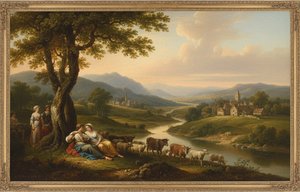
Idyllic Visions: Exploring the Pastoral Tradition in Western Art – Themes, Techniques & Enduring Appeal
Explore the rich history of pastoral art from classical Arcadia to contemporary interpretations. Discover key artists, themes & collecting tips at OriginalUniqueArt.

John Constable: Topp 25 Maler – Engelsk Landskapskunst i Ditt Hjem
Opplev John Constables 25 mest ikoniske malerier! Fordyp deg i engelsk romantikk, landskapskunst og atmosfæriske scener. Finn museumskvalitets reproduksjoner & interiørinspirasjon på OriginalUniqueArt.com. Utforsk samlingen online!

Romantiske landskap: Topp 10 mesterverk for hjemmet – Kunst fra OriginalUniqueArt.com
Oppdag de 10 mest ikoniske romantiske landskapsmaleriene! Fra Caspar David Friedrich til Turner – utforsk kunsthistorien, stemningen og fargepalettene. Finn museumskvalitets reproduksjoner på OriginalUniqueArt.com.
Romantic Realism's Finest: 10 Masterpieces for Your Home | OriginalUniqueArt
Explore 10 defining masterpieces of Romantic Realism! Discover Courbet, Millet & Daumier's powerful paintings—capturing emotion and social realities. Find museum-quality reproductions for your home at OriginalUniqueArt.com.

