
 Forhåndsvisning
 Send
Send Del
Del
 Vis detaljer
 Utskriftsvennlig guide

 Last ned bilde
 Liknende objekter
 Røntgenundersøkelse
 Lysbildefremvisning
 Q&A
Q&A Statistikk
Self-Portrait

- 99.0 x 79.0 cm


 Vis hele teksten
Giclée / Kunsttrykk
Giclée- eller lerretsprint av museumskvalitet med rask produksjon og fleksible valgmuligheter for etterbehandling. ( Kjøp håndmalt maleri Bytt til digitalt bilde)




P118B Nkr10

P118H Nkr10

P118W Nkr10

P438Z Nkr10

P508JH Nkr12

P508YH Nkr12

P805H Nkr10

P805Z Nkr10

P919BZ Nkr10

P919G Nkr10

P919XJ Nkr10

P959ZH Nkr10

P968JZ Nkr12

W106C Nkr8

W218G Nkr10

W218JH Nkr8

W218Y Nkr10

W307PJ Nkr10

W316G Nkr10

W316PJ Nkr8

W316Y Nkr10

W398PJ Nkr8

W4111J Nkr10

W500HY Nkr15

W500JH Nkr15

W692G Nkr12

W849H Nkr8

W940BG Nkr15

W953PJ Nkr8




Velg mellom våre forhåndsdefinerte størrelser som bevarer kunstverkets opprinnelige proporsjoner.

Skriv inn ønsket bredde og høyde for å tilpasse trykket til din ramme eller vegg. Et trykk kan kun beskjæres, aldri skaleres opp utover motivets opprinnelige størrelse, noe som betyr at et format med andre proporsjoner vil føre til tap av deler av bildet. Vi sender deg en digital mockup for godkjenning før vi starter trykkeprosessen. Bildet som vises på denne siden viser ikke den faktiske beskjæringen — det er kun mockuppen som viser dette.
Verdensomspennende levering () på 2 uker i stedet for standard 4/5 uker. (1 November)

Gratis ekspressfrakt over hele verden

Lerretsduk av lin av høy kvalitet

Full transportforsikring

Garanti for refusjon av toll og importavgifter

Garantert fargegjengivelse

100 dagers returrett ved fabrikasjonsfeil

100% pengene tilbake-garanti

Rabatt ved flere kjøp
 Glassalternativet er kun tilgjengelig i størrelser under 110 cm

Self-Portrait
Giclée / Kunsttrykk
Størrelse på reproduksjon
-


Totalpris for valgte alternativer
Nkr 770
Salvator Rosa’s Self-Portrait: A Window into Baroque Thought
Salvator Rosa’s “Self-Portrait,” painted circa 1645, stands as a testament to the burgeoning spirit of philosophical inquiry within the Baroque period. More than just a likeness of the artist himself—Francesco Maria Rosa—the painting delves into themes of contemplation and intellectual pursuit, reflecting Rosa's profound engagement with humanist ideals prevalent during his time.
- Subject Matter: The central figure is depicted in a studio setting, meticulously engaged in sketching or writing on a spherical object – likely a globe. This deliberate choice isn’t merely decorative; it symbolizes Rosa’s ambition to map out the universe of knowledge and understanding, mirroring the broader intellectual currents of the era.
- Style & Technique: Executed in oil paint on canvas, Rosa employs a masterful blend of chiaroscuro—the dramatic interplay of light and shadow—characteristic of Baroque art. This technique amplifies the emotional impact of the portrait, highlighting Rosa’s face and hand as points of focus against a dark, indistinct background.
- Historical Context: Painted during Rosa’s formative years, “Self-Portrait” aligns with the philosophical debates surrounding Pythagoras—the Greek mathematician and philosopher who championed harmony and proportion. Rosa's inclusion of this figure underscores his fascination with rational thought and its role in shaping human experience – a core concern for artists and intellectuals alike.
A Study in Baroque Composition & Texture
Rosa’s brushwork is visible throughout the portrait, particularly in the depiction of Rosa's hair and clothing. This meticulous attention to detail lends texture and realism to the image, conveying a sense of immediacy and capturing the physicality of the artist. The composition itself directs the viewer’s gaze downwards towards Rosa’s work, emphasizing his concentration and embodying the humanist ideal of active engagement with intellectual pursuits.
- Color Palette: Primarily muted earth tones—browns, ochres, and grays—create a subdued yet dignified atmosphere. These colors contribute to the overall mood of introspection and seriousness, aligning perfectly with Rosa’s philosophical interests.
- Lighting & Shadow: The dramatic lighting emphasizes Rosa's face and hand, casting deep shadows that heighten the sense of depth and drama – a hallmark of Baroque painting techniques designed to evoke emotion and convey spiritual significance.
Symbolism Beyond Appearance
"Self-Portrait" transcends mere visual representation; it speaks to the artist’s inner life and intellectual convictions. The globe serves as a powerful symbol of Rosa's desire to comprehend the cosmos—both literally and metaphorically—reflecting the humanist preoccupation with understanding humanity’s place in the universe. Furthermore, Rosa’s posture conveys a quiet dignity and unwavering commitment to his craft, embodying the Renaissance artist’s belief in the transformative power of art.
- Emotional Impact: The portrait invites contemplation and encourages viewers to consider the role of reason and observation in shaping human understanding. It captures not only Rosa's physical likeness but also hints at his personality and profession through the act of creation he undertakes – a gesture that resonates with the humanist spirit of the Baroque era.
A reproduction of Salvator Rosa’s “Self-Portrait” offers an exceptional opportunity to bring this seminal artwork into your home or studio. Its masterful technique, evocative symbolism, and profound philosophical undercurrents continue to inspire admiration and provide insight into the intellectual landscape of seventeenth-century Italy.
Spørsmål og svar
Hva er den dominerende fargetonen i "Self-Portrait" av Salvator Rosa?
Den dominerende fargen i "Self-Portrait" av Salvator Rosa er Golden Yellow Range. Denne fargen utgjør den underliggende tonen i paletten.
Kan jeg se en forhåndsvisning av "Self-Portrait" av Salvator Rosa før jeg bestiller?
På Se kunstverket i et rom-siden for "Self-Portrait" kan du forhåndsvise kunstverket før du bestiller.
Hvor kan jeg kjøpe et trykk av "Self-Portrait" av Salvator Rosa?
"Self-Portrait" er tilgjengelig som et kunsttrykk på bomullslerret eller arkivbestandig lerretspapir. Du kan bestille i ønsket størrelse på siden for Kunsttrykk i høy kvalitet.
Om kunstneren
Tidlig liv og opplæring
Salvator Rosa, en italiensk barokkmaler, poet og trykkemakker, ble født i Arenella, Napoli, enten 20. juni eller 21. juli 1615. Hans mor, Giulia Greca Rosa, tilhørte en av de greske familiene på Sicilia. Til tross for farens ønske om at han skulle bli advokat eller prest, viste Salvator en forkjærlighet for kunsten fra tidlig alder.Kunstnerisk karriere
Salvator Rosas kunstneriske karriere var preget av hans uortodokse og ekstravagante stil, noe som skilte ham fra hans samtidige. Han var aktiv i Napoli, Roma og Firenze, og hans arbeid var påvirket av Riberas naturalisme og Poussins klassisisme. Likevel nektet han å la seg bilde til noen bestemt stil eller retning.- Pythagoras fremmanet fra underverdenen (Kimbell Art Museum, Fort Worth, USA), et av hans mest berømte verk, viser hans unike blanding av filosofiske og kunstneriske temaer.
- Hans Dåpen av eunukken (Chrysler Museum of Art, Norfolk, USA) demonstrerer hans evne til å tilføre høydramatisk nerve selv i mindre bibelske fortellinger.
Innflytelse og ettermæle
Salvator Rosas arbeid hadde en betydelig innvirkning på utviklingen av barokk kunst. Hans innflytelse kan ses i verkene til senere kunstnere, som Luca Giordano, som fortsatte å tøye grensene for kunstnerisk uttrykk. Viktige lenker: Salvator Rosas profil på OriginalUniqueArt Wikipedia: Salvator Rosa Pythagoras fremmanet fra underverdenen på OriginalUniqueArtKonklusjon
Salvator Rosa sitt liv og virke fortsetter å fascinere både kunstelskere og historikere. Hans uortodokse stil og evige opprør mot sin tids normer har sikret hans plass i barokkkunstens annaler. Som maler, poet og trykkemakker forblir han en gåtefull skikkelse, og hans verk fortsetter å inspirere nye generasjoner av kunstnere og kunstentusiaster.
Salvator Rosa
1615 - 1673 , Italia
Kort om kunstneren
- Artistic Movement Or Style: Barokk
- Artists Or Movements Influenced By This Artist: ['Luca Giordano']
- Artists Who Influenced This Artist: ['José de Ribera']
- Date Of Birth: Juni 20 eller juli 21, 1615
- Date Of Death: Mars 15, 1673
- Full Name: Salvator Rosa
- Nationality: Italian
- Notable Artworks:
- Syn av Golfen Salerno
- Studie for 'Il Genio di Rosa
- Place Of Birth: Arenella, Sicilia
Relaterte artikler

Barokkens Mesterverk: Topp 10 Kunstverk som Definerte en Epoke | OriginalUniqueArt.no
Opplev barokkens prakt! Utforsk Rembrandts, Caravaggios og Rubenses mest ikoniske verk. Lær om historien bak disse mesterverkene og finn inspirasjon til din interiørdekor på OriginalUniqueArt.com. Museums kvalitet kunsttrykk.

Chiaroscuro & Emotion: Capturing the Dramatic Soul of Baroque Art
Explore the profound drama of Baroque art. Discover how masters used chiaroscuro and intense emotion to capture the soul of the 17th century through light, shadow, and spiritual grandeur in this expert art history guide.

Baroque Classicism: The Grandeur of Order and Drama in 17th-Century Art History
Explore the profound elegance of Baroque Classicism. Discover how 17th-century masters synthesized dramatic emotion with classical order through the lens of the Counter-Reformation and the works of legends like Carlo Maratta and Andrea Sacchi.

Barokkens storhet: En autoritativ guide til drama, lys og emosjonell dybde i 1600-tallets kunst
Lær om barokkens drama, lys og mestre som Caravaggio i denne autoritative guiden. Oppdag 1600-tallets emosjonelle kraft her.
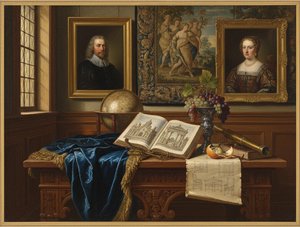
1600-tallets Mesterverk: Topp 10 Kunstverk som Definerer Epoken | OriginalUniqueArt
Oppdag 1600-tallets største kunstmesterverk! Rembrandt, Vermeer & Caravaggio – lær historiene bak ikoniske barokkmalerier. Finn inspirasjon til interiørdesign og kjøp museumskvalitets reproduksjoner på OriginalUniqueArt.com. Utforsk samlingen online!


