Se i rommet
 Del som digitalt kort
 Del
Del
 Detaljer
 Studentguide

 Last ned
 Liknende objekter
 Røntgen
 Lysbildefremvisning
 Besøksstatistikk
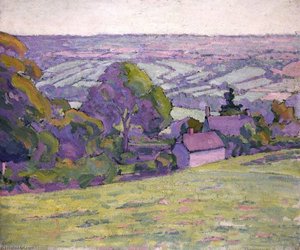
Two Bridges
 Oil On Canvas
- WallArt
- Fauvism
 1912
1912- Modern
 51.0 x 61.0 cm
 Les mer
Giclée / Kunsttrykk
Giclée- eller lerretsprint av museumskvalitet med rask produksjon og fleksible valgmuligheter for etterbehandling. ( Bestill håndmalt reproduksjon Gå til digitalt bilde)




P118B Nkr10

P118H Nkr10

P118W Nkr10

P438Z Nkr10

P508JH Nkr12

P508YH Nkr12

P805H Nkr10

P805Z Nkr10

P919BZ Nkr10

P919G Nkr10

P919XJ Nkr10

P959ZH Nkr10

P968JZ Nkr12

W106C Nkr8

W218G Nkr10

W218JH Nkr8

W218Y Nkr10

W307PJ Nkr10

W316G Nkr10

W316PJ Nkr8

W316Y Nkr10

W398PJ Nkr8

W4111J Nkr10

W500HY Nkr15

W500JH Nkr15

W692G Nkr12

W849H Nkr8

W940BG Nkr15

W953PJ Nkr8




Velg mellom våre forhåndsdefinerte størrelser som bevarer kunstverkets opprinnelige proporsjoner.

Du kan oppgi egne mål for å tilpasse en spesifikk ramme eller et bestemt område. Dersom den valgte størrelsen ikke samsvarer med det originale bildets proporsjoner, vil vi enten beskjære kunstverket eller utvide bildet med en speilet eller ensfarget kant. En digital mockup vil bli sendt til din godkjenning før produksjonen starter.
Vennligst merk at forhåndsvisningen på skjermen ikke gjenspeiler den faktiske beskjæringen eller utvidelsen. Kun mockuppen vil vise den endelige komposisjonen nøyaktig.
Selv om tilpassede størrelser er tilgjengelige, anbefaler vi å velge et mål fra den forhåndsdefinerte listen for å bevare de originale proporsjonene.
Verdensomspennende levering () på 2 uker i stedet for standard 4/5 uker. (13 October)

Gratis ekspressfrakt over hele verden

Lerretsduk av høykvalitets lin

Full transportforsikring

Garanti for refusjon av toll og importavgifter

Garantert fargeekthet

100 dagers returrett ved fabrikasjonsfeil

100% pengene tilbake-garanti

Mengderabatt
 Glassalternativet er kun tilgjengelig i størrelser under 110 cm

Two Bridges
Giclée / Kunsttrykk
Format på reproduksjon
-


Totalpris
Nkr 744
A Symphony of Urban Motion: Rediscovering Two Bridges
In the heart of the early twentieth century, as the gears of modernity began to turn with an unstoppable rhythm, Robert Polhill Bevan captured a fleeting moment of metropolitan vitality in his 1912 masterpiece, Two Bridges. This oil on canvas is far more than a mere depiction of a city street; it is a vibrant pulse of life frozen in time. The scene unfolds with a captivating energy, where the heavy presence of architecture meets the fluid movement of the streets. Two iconic red buses, rendered in bold, unapologetic hues, slice through the intersection, acting as anchors of color amidst the bustling crowd. As one gazes into the composition, the eye is drawn through a labyrinth of pedestrians and vehicles, even catching the subtle, nostalgic presence of a horse—a lingering ghost of a bygone era coexisting with the burgeoning mechanical age.
The technique employed by Bevan in Two Bridges reveals a painter deeply enamored with the transformative power of color and form. Moving away from the delicate, light-dappled nuances of Impressionism, Bevan embraces a style that leans toward the expressive intensity of Fauvism. He utilizes simplified, almost geometric shapes to define the urban landscape, where buildings rise in angular, sturdy blocks and vehicles are rendered with rounded, rhythmic outlines. The paint application is smooth yet possesses a subtle impasto that lends a tactile quality to the surfaces of the structures. By flattening the perspective and utilizing a deliberate distortion of space, Bevan creates an illusion of depth through the clever overlapping of forms rather than traditional linear perspective. This approach prioritizes visual impact and emotional resonance over photographic accuracy, inviting the viewer to experience the city's energy rather than just observe it.
Historically, this work serves as a profound testament to the transition of British Modernism. As a founding member of the Camden Town Group, Bevan was at the forefront of a movement that sought to find beauty in the everyday, unglamorous realities of urban existence. Two Bridges encapsulates this spirit perfectly, blending the traditional mastery of oil painting with a radical, modern sensibility. The painting evokes a sense of organized chaos—a feeling of being swept up in the momentum of progress. For the collector or the interior designer, this piece offers a sophisticated balance of bold color and structural stability. It is an artwork that commands attention, providing a focal point that breathes life, history, and a touch of avant-garde elegance into any curated space.
Spørsmål og svar
Hvem skapte "Two Bridges" og i hvilket år?
Robert Polhill Bevan laget "Two Bridges" i 1912.
Hvor bør en reproduksjon av "Two Bridges" av Robert Polhill Bevan henges opp?
Landscape-formatet til "Two Bridges" av Robert Polhill Bevan anbefales for et Coworking. Format og romfølelse fungerer sammen som en veiledning for plassering av en reproduksjon.
Hvilken kunstner kan "Two Bridges" tilskrives?
Kunstneren bak "Two Bridges" er Robert Polhill Bevan. Verket er katalogisert under Robert Polhill Bevan sitt navn.
Hvilket kontrastnivå viser "Two Bridges" av Robert Polhill Bevan?
Lys-mørke-kontrasten i "Two Bridges" er registrert som Statement. Kontrast beskriver hvor sterkt lyse og mørke områder skiller seg fra hverandre.
Hvor intense er fargene i "Two Bridges" av Robert Polhill Bevan?
Fargene i "Two Bridges" av Robert Polhill Bevan har en Balanced intensitet.
Hva handler "Two Bridges" om?
Motivene i "Two Bridges" er urban landscape, city transportation, early 20th century, british art scene, red buses painting, street life details, modern cityscape.
Hva er dateringen og stilen til "Two Bridges" av Robert Polhill Bevan?
"Two Bridges" ble skapt i 1912 som et verk innenfor Fauvism-retningen. Datoen og kunstretningen forankrer verket i kunsthistorien.
Hvilken størrelse bør jeg velge for trykk av "Two Bridges" til rommet mitt?
Anbefalt kombinasjon for "Two Bridges" av Robert Polhill Bevan: et trykk i størrelsen Small til et Coworking.
Kunstnerbiografi
A Pioneer of British Modernism: The Life and Art of Robert Polhill Bevan
Robert Polhill Bevan, born in Hove in 1865, occupies a pivotal yet often understated position within the narrative of early 20th-century British art. Emerging from a Quaker background steeped in banking connections – his parents were Richard Alexander Bevan and Laura Maria Polhill – he defied conventional expectations to become a daring innovator, a key figure in the transition from Impressionism towards more radical explorations of color and form. His journey was one of constant experimentation, absorbing influences from across Europe while forging a distinctly personal artistic vision that would profoundly impact the development of modern art in Britain. Bevan’s early education at Westminster School of Art under Fred Brown provided a solid foundation, but it was his subsequent studies at the Académie Julian in Paris that truly ignited his creative spark. There, he encountered a constellation of rising stars – Paul Sérusier, Pierre Bonnard, Édouard Vuillard, and Maurice Denis – artists who were challenging academic conventions and embracing new approaches to painting. These encounters proved formative, exposing Bevan to the principles of synthetism and laying the groundwork for his future explorations.Brittany, Fauvism, and the Search for Pure Color
The impact of Brittany on Bevan’s artistic development cannot be overstated. Two significant journeys in 1890 and 1891 immersed him in the atmosphere of Pont-Aven, a small coastal town that had become a magnet for artists seeking an alternative to Parisian salon culture. The bold colors and simplified forms championed by artists like Gauguin resonated deeply with Bevan, influencing his early drawings and prints. He was particularly drawn to the luminous landscapes of Breton Brittany, where he spent considerable time studying the works of Paul Gauguin and Vincent van Gogh. This fascination fueled his experimentation with pure color – a technique that would foreshadow the emergence of Fauvism on the continent – as evidenced by paintings like “The Chestnut Tree” and “Landscape in the Blackdown Hills.” Bevan’s approach wasn't merely decorative; it was driven by a desire to capture the emotional intensity of the natural world, mirroring the expressive fervor characteristic of Impressionist painters. The influence of Cézanne is also discernible in his compositions, particularly in his use of geometric forms and flattened perspectives – elements that would contribute to the development of Cubism alongside Picasso and Braque.Collective Visions: The Camden Town Group and Beyond
Bevan was not an artist who worked in isolation. He actively sought connection with like-minded individuals, playing a crucial role in the formation of several influential art groups. As a founding member of the Camden Town Group – alongside artists such as Spencer Gore and Joseph Crawhall – he joined forces with fellow painters determined to depict modern urban life and challenge established artistic norms. This collective spirit extended to his involvement with the London Group and the Cumberland Market Group, furthering his commitment to progressive artistic movements. The group’s aim was to break away from academic traditions and explore new visual languages—a bold undertaking that reflected the broader intellectual currents of the era. Bevan's engagement with these groups fostered a dynamic exchange of ideas, shaping his artistic trajectory and contributing to the evolution of British art. He collaborated closely with fellow Camden Town Group members on projects exploring themes of social realism and psychological introspection – demonstrating a willingness to engage with pressing societal concerns through artistic expression.Landscapes, Urban Scenes, and Lasting Legacy
Bevan’s oeuvre is characterized by a remarkable range of subjects—portraits capturing the dignity of individuals—and urban scenes documenting the realities of modern life (“The Cab Horse”). However, he is perhaps best remembered for his landscapes – particularly those depicting the Blackdown Hills near Hove. His paintings embody a profound appreciation for the beauty and tranquility of rural England, rendered with meticulous detail and infused with vibrant color palettes. Works like “In the Downs Near Lewes” and “The Rosemary Canvas” exemplify this mastery, showcasing Bevan’s ability to convey both the physical grandeur and emotional resonance of the natural world. His distinctive style—characterized by bold brushstrokes and a masterful use of light—established him as a leading British painter of the early years of the 20th Century. Bevan's influence extended beyond his own artistic output, inspiring subsequent generations of painters to embrace experimentation and explore new visual vocabularies. He remains a vital figure for understanding the complex evolution of British art during this transformative period – securing his place as one of the most important artists of his time.- Notable artworks: “The Farmhouse”, “Ploughing on the Downs”, “Queen’s Grove”, “The Cab Horse”
- Places of Residence: Hove, Sussex; Marlpitts Cottage, Luppitt
- Artistic Influences: Paul Gauguin, Cézanne, Vincent van Gogh

Robert Polhill Bevan
1865 - 1925 , Storbritannia
Kort om kunstneren
- Artistic Movement Or Style: Fauvism, Divisionism
- Artists Who Influenced This Artist:
- Paul Gauguin
- Velázquez
- Goya
- Renoir
- Date Of Birth: 1865
- Date Of Death: 1925
- Full Name: Robert Polhill Bevan
- Nationality: Britisk
- Notable Artworks:
- The Farmhouse
- Ploughing on the Downs
- Queen’s Grove
- The Cab Horse
- Place Of Birth: Hove, United Kingdom
Relaterte artikler
Britisk Museums 25 Mesterverk: Kunsthistorie for Ditt Hjem | OriginalUniqueArt.no
Utforsk de 25 mest ikoniske kunstverkene fra Britisk Museum i London! Oppdag historiene bak mesterverk, klassiske stiler og fargepaletter. Finn museumskvalitets reproduksjoner & interiørinspirasjon på OriginalUniqueArt.com – din kilde til tidløs skjønnhet.
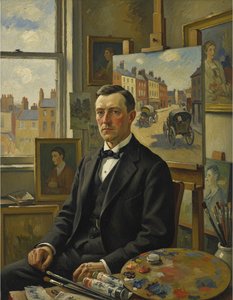
Robert Bevan: Pioneering British Post-Impressionism & the Camden Town Group's Intimate Vision
Explore the life & work of Robert Bevan, a pioneer of British Post-Impressionism and founding member of the Camden Town Group. Discover his vibrant landscapes and lasting impact on early 20th-century art.

Hubert Robert: Picturing Ruins, Preserving Memory – A Study of Romantic Antiquarianism & Artistic Innovation
Explore the captivating world of Hubert Robert, master of Romantic landscape painting & 'capriccio' ruins. Discover his historical context, artistic innovations, and collecting insights with OriginalUniqueArt.

David Roberts: A Scottish Pioneer of Topographical Art & Orientalist Vision
Explore the captivating world of David Roberts, a pioneering Scottish painter renowned for his detailed Orientalist scenes & stunning Egyptian landscapes. Discover his legacy and find museum-quality reproductions at OriginalUniqueArt.
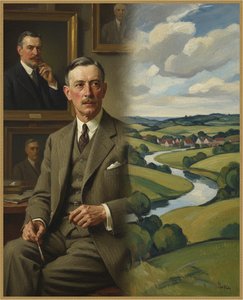
Reginald Grenville Eves: Bridging Portraiture & Modern British Landscape Painting
Explore the life & work of Reginald Grenville Eves, a leading British portraitist who transitioned to captivating landscape painting. Discover his legacy and prominent works at OriginalUniqueArt.