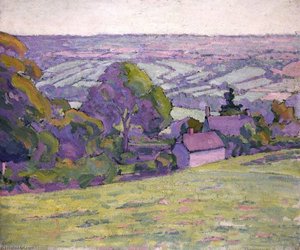
Se i rommet
 Del som digitalt kort
 Del
Del
 Detaljer
 Studentguide

 Last ned
 Liknende objekter
 Røntgen
 Lysbildefremvisning
 Besøksstatistikk
Showing at Tattersalls
 Acrylic On Canvas
- WallArt
- Camden Town Group
 1919
1919- 19th Century
 58.0 x 71.0 cm
 The Ashmolean Museum
 Les mer
Giclée / Kunsttrykk
Giclée- eller lerretsprint av museumskvalitet med rask produksjon og fleksible valgmuligheter for etterbehandling. ( Bestill håndmalt reproduksjon Gå til digitalt bilde)




P118B Nkr10

P118H Nkr10

P118W Nkr10

P438Z Nkr10

P508JH Nkr12

P508YH Nkr12

P805H Nkr10

P805Z Nkr10

P919BZ Nkr10

P919G Nkr10

P919XJ Nkr10

P959ZH Nkr10

P968JZ Nkr12

W106C Nkr8

W218G Nkr10

W218JH Nkr8

W218Y Nkr10

W307PJ Nkr10

W316G Nkr10

W316PJ Nkr8

W316Y Nkr10

W398PJ Nkr8

W4111J Nkr10

W500HY Nkr15

W500JH Nkr15

W692G Nkr12

W849H Nkr8

W940BG Nkr15

W953PJ Nkr8




Velg mellom våre forhåndsdefinerte størrelser som bevarer kunstverkets opprinnelige proporsjoner.

Skriv inn bredden og høyden du trenger, slik at den passer til din ramme eller vegg. Et trykk kan kun beskjæres, aldri gjøres større enn bildet, så et format med en annen form vil miste en del av motivet. Vi sender deg en digital mockup for godkjenning før vi trykker noe som helst. Bildet som vises på denne siden viser ikke den faktiske beskjæringen — det er kun mockuppen som gjør det.
Verdensomspennende levering () på 2 uker i stedet for standard 4/5 uker. (24 October)

Gratis ekspressfrakt over hele verden

Lerretsduk av høykvalitets lin

Full transportforsikring

Garanti for refusjon av toll og importavgifter

Garantert fargeekthet

100 dagers returrett ved fabrikasjonsfeil

100% pengene tilbake-garanti

Mengderabatt
 Glassalternativet er kun tilgjengelig i størrelser under 110 cm

Showing at Tattersalls
Giclée / Kunsttrykk
Format på reproduksjon
-


Totalpris
Nkr 760
The Scene Unfolds: Robert Polhill Bevan’s Capturing of a Moment
Robert Polhill Bevan's "Showing at Tattersalls" isn’t merely a depiction of a horse race; it’s a meticulously crafted tableau vivant, a frozen moment brimming with the energy and social significance of Victorian England’s most prestigious racing event. Painted in 1919, during a period of significant artistic transition – moving away from the rigid formality of academic art towards the vibrant expressiveness of early modernism – the canvas offers a surprisingly intimate view of an elite world. The painting transports us to Tattersalls, not just as a venue for horse trading, but as a microcosm of Victorian society, a place where wealth, status, and tradition converged.
Bevan’s masterful use of light and shadow immediately draws the eye. A diffused daylight filters through the windows, casting long, dramatic shadows across the brick flooring, creating an atmospheric depth that anchors the scene. The figures are rendered with a remarkable degree of realism, yet imbued with a subtle sense of abstraction – their faces often obscured by hats or coats, suggesting a detachment and emphasizing the spectacle itself rather than individual personalities. This deliberate ambiguity invites the viewer to become part of the scene, observing from a slightly removed perspective.
A Camden Town Pioneer: Style and Technique
Bevan was a key figure in the Camden Town Group, a collective of artists who sought to capture the gritty realities of London life with bold colors and expressive brushstrokes. “Showing at Tattersalls” exemplifies this approach, though it’s arguably more restrained than some of his later works. The painting showcases Bevan's distinctive style – characterized by smooth planes of color, sharp outlines, and a deliberate flattening of perspective. He employs a technique reminiscent of Impressionism but pushes beyond mere representation, prioritizing the emotional impact of color and form.
- Color Palette: A muted palette dominated by browns, grays, and ochres creates a sense of understated elegance and reflects the somber atmosphere of the scene.
- Brushwork: Short, broken brushstrokes contribute to the painting’s dynamic energy, particularly in the depiction of the horses' musculature.
- Composition: The carefully arranged figures and the receding perspective create a sense of depth and movement, guiding the viewer’s eye through the scene.
Historical Context & Symbolism
Tattersalls, established in 1763, held immense importance within British society. It was more than just a horse sales venue; it represented the pinnacle of equestrian achievement and a significant indicator of wealth and social standing. The presence of numerous spectators – gentlemen in top hats and coats, ladies elegantly dressed – underscores this status. The clock visible in the upper left corner subtly reinforces the importance of time and schedule within this world of racing and commerce.
Beyond the immediate depiction of a horse race, “Showing at Tattersalls” offers a glimpse into Victorian values: the emphasis on tradition, social hierarchy, and the pursuit of excellence. The meticulous detail given to the horses themselves – their powerful legs, flowing manes – speaks volumes about the value placed on these animals as symbols of status and prestige.
A Legacy of Modernism
Robert Polhill Bevan’s “Showing at Tattersalls” stands as a pivotal work in British art history. It represents a crucial bridge between Impressionism and modernism, demonstrating Bevan's willingness to experiment with color and form while retaining a strong sense of realism. His ability to capture the energy and atmosphere of a specific moment in time – a bustling scene within a world of privilege – solidifies his place as a pioneering figure in the development of British art at the turn of the 20th century. Reproductions of this painting offer a captivating window into a bygone era, inviting viewers to contemplate the enduring appeal of spectacle and social observation.
Spørsmål og svar
Hva er dateringen og stilen til "Showing at Tattersalls" av Robert Polhill Bevan?
"Showing at Tattersalls" av Robert Polhill Bevan er datert 1919 og tilhører Camden Town Group.
Hvordan relaterer motivet i "Showing at Tattersalls" seg til Robert Polhill Bevan sine vanlige temaer?
"Showing at Tattersalls" skildrer horse race, victorian era, spectators, urban scene, black and white, competition, social event, mens de dokumenterte temaene til Robert Polhill Bevan er impressionism, camden town group, british modernism, urban life, social commentary, leisure class, bevan’s experimentation, fauvism”. En sammenligning av disse viser hvordan verket relaterer seg til kunstnerens vanlige motiver.
Hvilken teknikk og størrelse har originalen av "Showing at Tattersalls" av Robert Polhill Bevan?
Teknikken i "Showing at Tattersalls" av Robert Polhill Bevan er Acrylic On Canvas, og de oppgitte målene er 58 x 71 cm.
Kunstnerbiografi
A Pioneer of British Modernism: The Life and Art of Robert Polhill Bevan
Robert Polhill Bevan, born in Hove in 1865, occupies a pivotal yet often understated position within the narrative of early 20th-century British art. Emerging from a Quaker background steeped in banking connections – his parents were Richard Alexander Bevan and Laura Maria Polhill – he defied conventional expectations to become a daring innovator, a key figure in the transition from Impressionism towards more radical explorations of color and form. His journey was one of constant experimentation, absorbing influences from across Europe while forging a distinctly personal artistic vision that would profoundly impact the development of modern art in Britain. Bevan’s early education at Westminster School of Art under Fred Brown provided a solid foundation, but it was his subsequent studies at the Académie Julian in Paris that truly ignited his creative spark. There, he encountered a constellation of rising stars – Paul Sérusier, Pierre Bonnard, Édouard Vuillard, and Maurice Denis – artists who were challenging academic conventions and embracing new approaches to painting. These encounters proved formative, exposing Bevan to the principles of synthetism and laying the groundwork for his future explorations.Brittany, Fauvism, and the Search for Pure Color
The impact of Brittany on Bevan’s artistic development cannot be overstated. Two significant journeys in 1890 and 1891 immersed him in the atmosphere of Pont-Aven, a small coastal town that had become a magnet for artists seeking an alternative to Parisian salon culture. The bold colors and simplified forms championed by artists like Gauguin resonated deeply with Bevan, influencing his early drawings and prints. He was particularly drawn to the luminous landscapes of Breton Brittany, where he spent considerable time studying the works of Paul Gauguin and Vincent van Gogh. This fascination fueled his experimentation with pure color – a technique that would foreshadow the emergence of Fauvism on the continent – as evidenced by paintings like “The Chestnut Tree” and “Landscape in the Blackdown Hills.” Bevan’s approach wasn't merely decorative; it was driven by a desire to capture the emotional intensity of the natural world, mirroring the expressive fervor characteristic of Impressionist painters. The influence of Cézanne is also discernible in his compositions, particularly in his use of geometric forms and flattened perspectives – elements that would contribute to the development of Cubism alongside Picasso and Braque.Collective Visions: The Camden Town Group and Beyond
Bevan was not an artist who worked in isolation. He actively sought connection with like-minded individuals, playing a crucial role in the formation of several influential art groups. As a founding member of the Camden Town Group – alongside artists such as Spencer Gore and Joseph Crawhall – he joined forces with fellow painters determined to depict modern urban life and challenge established artistic norms. This collective spirit extended to his involvement with the London Group and the Cumberland Market Group, furthering his commitment to progressive artistic movements. The group’s aim was to break away from academic traditions and explore new visual languages—a bold undertaking that reflected the broader intellectual currents of the era. Bevan's engagement with these groups fostered a dynamic exchange of ideas, shaping his artistic trajectory and contributing to the evolution of British art. He collaborated closely with fellow Camden Town Group members on projects exploring themes of social realism and psychological introspection – demonstrating a willingness to engage with pressing societal concerns through artistic expression.Landscapes, Urban Scenes, and Lasting Legacy
Bevan’s oeuvre is characterized by a remarkable range of subjects—portraits capturing the dignity of individuals—and urban scenes documenting the realities of modern life (“The Cab Horse”). However, he is perhaps best remembered for his landscapes – particularly those depicting the Blackdown Hills near Hove. His paintings embody a profound appreciation for the beauty and tranquility of rural England, rendered with meticulous detail and infused with vibrant color palettes. Works like “In the Downs Near Lewes” and “The Rosemary Canvas” exemplify this mastery, showcasing Bevan’s ability to convey both the physical grandeur and emotional resonance of the natural world. His distinctive style—characterized by bold brushstrokes and a masterful use of light—established him as a leading British painter of the early years of the 20th Century. Bevan's influence extended beyond his own artistic output, inspiring subsequent generations of painters to embrace experimentation and explore new visual vocabularies. He remains a vital figure for understanding the complex evolution of British art during this transformative period – securing his place as one of the most important artists of his time.- Notable artworks: “The Farmhouse”, “Ploughing on the Downs”, “Queen’s Grove”, “The Cab Horse”
- Places of Residence: Hove, Sussex; Marlpitts Cottage, Luppitt
- Artistic Influences: Paul Gauguin, Cézanne, Vincent van Gogh

Robert Polhill Bevan
1865 - 1925 , Storbritannia
Kort om kunstneren
- Artistic Movement Or Style: Fauvism, Divisionism
- Artists Who Influenced This Artist:
- Paul Gauguin
- Velázquez
- Goya
- Renoir
- Date Of Birth: 1865
- Date Of Death: 1925
- Full Name: Robert Polhill Bevan
- Nationality: Britisk
- Notable Artworks:
- The Farmhouse
- Ploughing on the Downs
- Queen’s Grove
- The Cab Horse
- Place Of Birth: Hove, United Kingdom
Relaterte artikler
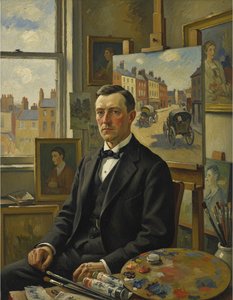
Robert Bevan: Pioneering British Post-Impressionism & the Camden Town Group's Intimate Vision
Explore the life & work of Robert Bevan, a pioneer of British Post-Impressionism and founding member of the Camden Town Group. Discover his vibrant landscapes and lasting impact on early 20th-century art.

The Equine Muse: A Historical & Artistic Exploration of Horses in Painting
Explore the captivating history of horses in painting! Discover Renaissance masterpieces, Baroque grandeur & expert insights for collecting equestrian art. Learn about symbolism, techniques & lasting value with OriginalUniqueArt.

Hubert Robert: Picturing Ruins, Preserving Memory – A Study of Romantic Antiquarianism & Artistic Innovation
Explore the captivating world of Hubert Robert, master of Romantic landscape painting & 'capriccio' ruins. Discover his historical context, artistic innovations, and collecting insights with OriginalUniqueArt.
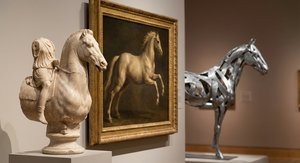
The Noble Steed: A Historical and Artistic Exploration of Horses in Fine Art
Explore the rich history of horses in fine art! From ancient depictions to Renaissance masterpieces & beyond, discover iconic artworks and artists. Learn about symbolism, techniques, and find museum-quality reproductions at OriginalUniqueArt.
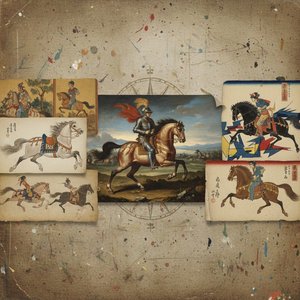
The Noble Steed on Canvas: A Historical & Artistic Exploration of Horse Painting Across Cultures
Explore the rich history of horse painting! Discover masterpieces from Stubbs to Munnings & learn about symbolism, techniques & artists. Find museum-quality reproductions at OriginalUniqueArt.