Se i rommet
 Del som digitalt kort
 Del
Del
 Detaljer
 Studentguide

 Last ned
 Liknende objekter
 Røntgen
 Lysbildefremvisning
 Besøksstatistikk
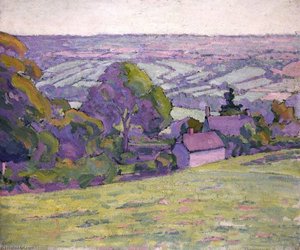
Evening in the Culme Valley
 Oil On Canvas
- WallArt
- Post-Impressionism
 1912
1912- Modern
 51.0 x 61.0 cm
 Les mer
Giclée / Kunsttrykk
Giclée- eller lerretsprint av museumskvalitet med rask produksjon og fleksible valgmuligheter for etterbehandling. ( Bestill håndmalt reproduksjon Gå til digitalt bilde)




P118B $10

P118H $10

P118W $10

P438Z $10

P508JH $12

P508YH $12

P805H $10

P805Z $10

P919BZ $10

P919G $10

P919XJ $10

P959ZH $10

P968JZ $12

W106C $8

W218G $10

W218JH $8

W218Y $10

W307PJ $10

W316G $10

W316PJ $8

W316Y $10

W398PJ $8

W4111J $10

W500HY $15

W500JH $15

W692G $12

W849H $8

W940BG $15

W953PJ $8




Velg mellom våre forhåndsdefinerte størrelser som bevarer kunstverkets opprinnelige proporsjoner.

Du kan oppgi egne mål for å tilpasse en spesifikk ramme eller et bestemt område. Dersom den valgte størrelsen ikke samsvarer med det originale bildets proporsjoner, vil vi enten beskjære kunstverket eller utvide bildet med en speilet eller ensfarget kant. En digital mockup vil bli sendt til din godkjenning før produksjonen starter.
Vennligst merk at forhåndsvisningen på skjermen ikke gjenspeiler den faktiske beskjæringen eller utvidelsen. Kun mockuppen vil vise den endelige komposisjonen nøyaktig.
Selv om tilpassede størrelser er tilgjengelige, anbefaler vi å velge et mål fra den forhåndsdefinerte listen for å bevare de originale proporsjonene.
Verdensomspennende levering () på 2 uker i stedet for standard 4/5 uker. (26 September)

Gratis ekspressfrakt over hele verden

Lerretsduk av høykvalitets lin

Full transportforsikring

Garanti for refusjon av toll og importavgifter

Garantert fargeekthet

100 dagers returrett ved fabrikasjonsfeil

100% pengene tilbake-garanti

Mengderabatt
 Glassalternativet er kun tilgjengelig i størrelser under 110 cm

Evening in the Culme Valley
Giclée / Kunsttrykk
Format på reproduksjon
-


Totalpris
$ 80
A Serene Encounter with the English Countryside
In the quietude of Evening in the Culme Valley, created in 1912 by the master of British Modernism, Robert Polhill Bevan, we are invited to step into a world where time seems to decelerate. This exquisite oil on canvas is far more than a mere depiction of a landscape; it is a profound meditation on the harmony between humanity and the natural world. As the sun begins its descent, casting a soft, transformative light across the valley, the viewer is greeted by a lush tapestry of verdant greens and deep, earthy tones. The composition is masterfully balanced, guiding the eye through a rolling terrain where the gentle undulations of the hills meet a sky of tranquil blue, punctuated by wisps of drifting clouds.
The painting captures a specific, fleeting moment of pastoral peace. Within this sprawling landscape, two solitary figures are nestled—one perched upon a hillside and another positioned toward the right periphery. Their presence does not disrupt the solitude of the scene but rather provides a vital sense of scale and human connection to the vastness of the Culme Valley. This subtle inclusion of life evokes a sense of Romanticism, reminiscent of the legendary John Constable, yet infused with the burgeoning modern sensibilities that Bevan championed throughout his career.
Technique, Color, and the Modernist Touch
What distinguishes this work is Bevan’s sophisticated command of color and light. Moving beyond the purely observational techniques of Impressionism, Bevan utilizes a palette that feels both grounded in reality and heightened by artistic emotion. The interplay between the vibrant green foliage and the occasional striking accents of red leaves creates a rhythmic visual melody, preventing the eye from resting too long in one place and instead encouraging a continuous journey across the canvas. His brushwork, while maintaining the structural integrity of the trees and hills, possesses a fluid quality that captures the atmospheric haze of an approaching evening.
For the discerning collector or interior designer, this piece offers a unique versatility. The painting’s ability to evoke tranquility makes it an ideal centerpiece for spaces designed for reflection and repose. Whether placed in a sun-drenched morning room or a sophisticated study, the work brings with it an air of historical prestige and organic warmth. The subtle textures of the oil on canvas, when rendered in a high-quality reproduction, allow the light to dance across the surface, mimicking the original's ability to transform the mood of a room.
A Legacy of Light and Landscape
To understand Evening in the Culme Valley is to understand the evolution of British art at the dawn of the twentieth century. Bevan, a pioneer who bridged the gap between traditional landscape painting and the radical experiments of modernism, imbues this work with a sense of enduring stability. There is a profound emotional resonance found in the way he captures the "essence" of the English countryside—not just as a physical location, but as a psychological sanctuary.
Owning or displaying a reproduction of this masterpiece allows one to invite the timeless beauty of the 1912 landscape into the modern home. It serves as a constant reminder of the beauty found in stillness and the enduring power of nature to soothe the human spirit. As an investment in atmosphere and art history, this painting stands as a testament to Bevan's ability to find the extraordinary within the ordinary, making it a captivating choice for anyone looking to enrich their environment with depth, color, and soul.
Kunstnerbiografi
A Pioneer of British Modernism: The Life and Art of Robert Polhill Bevan
Robert Polhill Bevan, born in Hove in 1865, occupies a pivotal yet often understated position within the narrative of early 20th-century British art. Emerging from a Quaker background steeped in banking connections – his parents were Richard Alexander Bevan and Laura Maria Polhill – he defied conventional expectations to become a daring innovator, a key figure in the transition from Impressionism towards more radical explorations of color and form. His journey was one of constant experimentation, absorbing influences from across Europe while forging a distinctly personal artistic vision that would profoundly impact the development of modern art in Britain. Bevan’s early education at Westminster School of Art under Fred Brown provided a solid foundation, but it was his subsequent studies at the Académie Julian in Paris that truly ignited his creative spark. There, he encountered a constellation of rising stars – Paul Sérusier, Pierre Bonnard, Édouard Vuillard, and Maurice Denis – artists who were challenging academic conventions and embracing new approaches to painting. These encounters proved formative, exposing Bevan to the principles of synthetism and laying the groundwork for his future explorations.Brittany, Fauvism, and the Search for Pure Color
The impact of Brittany on Bevan’s artistic development cannot be overstated. Two significant journeys in 1890 and 1891 immersed him in the atmosphere of Pont-Aven, a small coastal town that had become a magnet for artists seeking an alternative to Parisian salon culture. The bold colors and simplified forms championed by artists like Gauguin resonated deeply with Bevan, influencing his early drawings and prints. He was particularly drawn to the luminous landscapes of Breton Brittany, where he spent considerable time studying the works of Paul Gauguin and Vincent van Gogh. This fascination fueled his experimentation with pure color – a technique that would foreshadow the emergence of Fauvism on the continent – as evidenced by paintings like “The Chestnut Tree” and “Landscape in the Blackdown Hills.” Bevan’s approach wasn't merely decorative; it was driven by a desire to capture the emotional intensity of the natural world, mirroring the expressive fervor characteristic of Impressionist painters. The influence of Cézanne is also discernible in his compositions, particularly in his use of geometric forms and flattened perspectives – elements that would contribute to the development of Cubism alongside Picasso and Braque.Collective Visions: The Camden Town Group and Beyond
Bevan was not an artist who worked in isolation. He actively sought connection with like-minded individuals, playing a crucial role in the formation of several influential art groups. As a founding member of the Camden Town Group – alongside artists such as Spencer Gore and Joseph Crawhall – he joined forces with fellow painters determined to depict modern urban life and challenge established artistic norms. This collective spirit extended to his involvement with the London Group and the Cumberland Market Group, furthering his commitment to progressive artistic movements. The group’s aim was to break away from academic traditions and explore new visual languages—a bold undertaking that reflected the broader intellectual currents of the era. Bevan's engagement with these groups fostered a dynamic exchange of ideas, shaping his artistic trajectory and contributing to the evolution of British art. He collaborated closely with fellow Camden Town Group members on projects exploring themes of social realism and psychological introspection – demonstrating a willingness to engage with pressing societal concerns through artistic expression.Landscapes, Urban Scenes, and Lasting Legacy
Bevan’s oeuvre is characterized by a remarkable range of subjects—portraits capturing the dignity of individuals—and urban scenes documenting the realities of modern life (“The Cab Horse”). However, he is perhaps best remembered for his landscapes – particularly those depicting the Blackdown Hills near Hove. His paintings embody a profound appreciation for the beauty and tranquility of rural England, rendered with meticulous detail and infused with vibrant color palettes. Works like “In the Downs Near Lewes” and “The Rosemary Canvas” exemplify this mastery, showcasing Bevan’s ability to convey both the physical grandeur and emotional resonance of the natural world. His distinctive style—characterized by bold brushstrokes and a masterful use of light—established him as a leading British painter of the early years of the 20th Century. Bevan's influence extended beyond his own artistic output, inspiring subsequent generations of painters to embrace experimentation and explore new visual vocabularies. He remains a vital figure for understanding the complex evolution of British art during this transformative period – securing his place as one of the most important artists of his time.- Notable artworks: “The Farmhouse”, “Ploughing on the Downs”, “Queen’s Grove”, “The Cab Horse”
- Places of Residence: Hove, Sussex; Marlpitts Cottage, Luppitt
- Artistic Influences: Paul Gauguin, Cézanne, Vincent van Gogh

Robert Polhill Bevan
1865 - 1925 , Storbritannia
Kort om kunstneren
- Artistic Movement Or Style: Fauvism, Divisionism
- Artists Who Influenced This Artist:
- Paul Gauguin
- Velázquez
- Goya
- Renoir
- Date Of Birth: 1865
- Date Of Death: 1925
- Full Name: Robert Polhill Bevan
- Nationality: Britisk
- Notable Artworks:
- The Farmhouse
- Ploughing on the Downs
- Queen’s Grove
- The Cab Horse
- Place Of Birth: Hove, United Kingdom
Relaterte artikler
Claude Monet: Topp 25 Maler – Impressionisme for Ditt Hjem | OriginalUniqueArt.no
Oppdag Claude Monets 25 mest ikoniske malerier! Fordyp deg i impressionismens verden, fra vannliljer til soleiloppgang. Historien bak kunsten & eksklusive reproduksjoner på OriginalUniqueArt.no – for et kunstfullt hjem.

John Constable: Topp 25 Maler – Engelsk Landskapskunst i Ditt Hjem
Opplev John Constables 25 mest ikoniske malerier! Fordyp deg i engelsk romantikk, landskapskunst og atmosfæriske scener. Finn museumskvalitets reproduksjoner & interiørinspirasjon på OriginalUniqueArt.com. Utforsk samlingen online!
Serene Visions: Exploring Themes of Tranquility in Art History & Contemporary Practice
Explore the history of serene landscape art & discover artists who evoke tranquility. Find the perfect calming artwork for your home with expert guidance from OriginalUniqueArt.

De 10 mest ikoniske malerier dominert av slåttegrå – Kunsthistorie og interiørinspirasjon
Oppdag de 10 mest ikoniske malerier dominert av slåttegrå – fra Monet til Van Gogh. Lær om kunsthistorien, fargetoner og teknikker bak disse mesterverkene. Finn din perfekte veggkunst og interiørinspirasjon på OriginalUniqueArt.com! Utforsk samlingen online.
Verdant Visions: Exploring the Symbolism & Aesthetic Impact of Green in Art History
Explore the rich history & symbolism of green in art! Discover iconic paintings, techniques, and how to bring verdant harmony into your home with OriginalUniqueArt's expert guide.