

 Del som digitalt kort
 Del
Del
 Detaljer
 Studentguide

 Last ned
 Liknende objekter
 Lysbildefremvisning
 Besøksstatistikk
Inkpot Mirabeau


 Les mer
Giclée / Kunsttrykk
Giclée- eller lerretsprint av museumskvalitet med rask produksjon og fleksible valgmuligheter for etterbehandling. ( Bestill håndmalt reproduksjon Gå til digitalt bilde)




































Velg mellom våre forhåndsdefinerte størrelser som bevarer kunstverkets opprinnelige proporsjoner.

Du kan oppgi egne mål for å tilpasse en spesifikk ramme eller et bestemt område. Dersom den valgte størrelsen ikke samsvarer med det originale bildets proporsjoner, vil vi enten beskjære kunstverket eller utvide bildet med en speilet eller ensfarget kant. En digital mockup vil bli sendt til din godkjenning før produksjonen starter.
Vennligst merk at forhåndsvisningen på skjermen ikke gjenspeiler den faktiske beskjæringen eller utvidelsen. Kun mockuppen vil vise den endelige komposisjonen nøyaktig.
Selv om tilpassede størrelser er tilgjengelige, anbefaler vi å velge et mål fra den forhåndsdefinerte listen for å bevare de originale proporsjonene.
Verdensomspennende levering () på 2 uker i stedet for standard 4/5 uker. (27 September)

Gratis ekspressfrakt over hele verden

Lerretsduk av høykvalitets lin

Full transportforsikring

Garanti for refusjon av toll og importavgifter

Garantert fargeekthet

100 dagers returrett ved fabrikasjonsfeil

100% pengene tilbake-garanti

Mengderabatt
 Glassalternativet er kun tilgjengelig i størrelser under 110 cm

Inkpot Mirabeau
Giclée / Kunsttrykk
Format på reproduksjon
-


Totalpris
$ 80
The Luminous Poetry of Lalique's Inkpot Mirabeau
To gaze upon René Jules Lalique’s Inkpot Mirabeau is to encounter a moment suspended in crystalline time—a delicate dialogue between utility and pure artistry. This exquisite glass sculpture, dating from 1927, transcends the mere function of an inkwell; it stands as a testament to human ingenuity channeled through the ethereal medium of blown and carved glass. The piece immediately captivates with its vertical ascent, a carefully orchestrated stacking of forms that draws the eye upward, mimicking both the graceful curve of a natural form and the stately rhythm of classical design.
The composition itself is a masterclass in controlled elegance. Lalique has assembled three distinct elements: a grounding rectangular base, the central vessel suggestive of an inkpot, and crowning it all, a smaller, more spirited piece adorned with avian motifs. This layered arrangement creates a palpable sense of depth, inviting the viewer to trace the interplay between solid geometry and fluid organic curves. The entire structure seems to breathe light, its translucent nature allowing reflections to dance across its surfaces.
Art Deco Grace Meets Natural Reverence
Stylistically, Inkpot Mirabeau sits perfectly at the confluence of two monumental artistic movements: the lingering romance of Art Nouveau and the streamlined sophistication of Art Deco. While the geometric precision inherent in the base speaks to the machine-age optimism of the 1920s, the incorporation of the bird and floral reliefs anchors it firmly in Lalique’s lifelong devotion to nature. His work never allowed pure structure to dominate; instead, the natural world—the curve of a wing, the unfurling petal—is always given precedence. This synthesis is what makes the piece so enduringly beautiful.
The material itself, clear glass, becomes an active participant in the artwork. Lalique’s mastery allowed him to manipulate this seemingly simple substance into something that appears almost liquid, catching and refracting light with subtle whispers of blue and gray. It is a monochromatic celebration where variation is achieved not through color, but through the sheer brilliance of light passing through expertly carved planes.
Symbolism in Glass: Intellect and Spirit
The subject matter—an inkpot combined with natural ornamentation—carries a rich symbolic weight. The inkpot speaks to the intellectual life, to the written word, to history being recorded. Yet, this function is softened, almost uplifted, by the presence of the bird motif. In art, birds are perennial symbols of freedom, the spirit ascending, and communication. Together, they suggest a beautiful harmony: the marriage of disciplined thought with untamed artistic inspiration. Owning such a piece is to curate an atmosphere that honors both deep contemplation and soaring creativity.
A Touch of Timeless Luxury for Your Interior
For the collector or designer seeking an object that speaks volumes without uttering a word, Inkpot Mirabeau offers unparalleled depth. It possesses the quiet authority of true craftsmanship. Whether placed atop a mahogany mantelpiece, nestled within a curated gallery wall, or serving as a singular focal point in a sophisticated study, its presence elevates any space. Reproducing this piece allows one to bring home not just glass, but a tangible echo of Lalique’s poetic vision—a luminous reminder that the most functional objects can also be profound works of art.
Kunstnerbiografi
A Life Forged in Beauty: The World of René Lalique
René Jules Lalique, a name synonymous with the ethereal beauty of Art Nouveau and the sleek elegance of Art Deco, was more than just a jeweller or glass designer—he was an innovator, a poet of materials, and a true artist who redefined luxury for his time. Born in Aÿ, France, on April 6th, 1860, Lalique’s journey began amidst the rolling hills of Champagne, a landscape that would forever imprint itself upon his artistic sensibility. Early summers spent with his maternal grandparents instilled within him a deep reverence for nature, a theme that would become utterly central to his creations. This idyllic upbringing was disrupted by a move to the Parisian suburbs, yet the memory of Aÿ remained potent, fueling his later naturalistic glasswork and imbuing it with an organic grace. The untimely death of his father propelled young René into apprenticeship with goldsmith Louis Aucoc, setting him on a path that would ultimately revolutionize both jewellery and glass artistry. He further honed his skills at the École des Arts Décoratifs in Paris and even ventured to London for studies at the Crystal Palace School of Art, absorbing diverse influences that shaped his unique aesthetic vision.From Jewellery to Glass: A Revolutionary Aesthetic
Lalique’s early career blossomed as a freelance designer for prominent French jewelry houses like Cartier and Boucheron during the 1880s. However, it was in 1890, with the opening of his own boutique in Paris' Opéra district, that Lalique truly began to forge his distinctive style. He swiftly became known for rejecting the prevailing opulent aesthetic, favoring instead a more organic and imaginative approach. He wasn’t interested merely in showcasing precious stones; he sought to elevate materials often considered secondary – horn, ivory, enamel, and crucially, glass – to equal status with diamonds and rubies. This was revolutionary. His jewelry became miniature sculptures, teeming with life: dragonflies with iridescent wings crafted from plique-à-jour enamel, orchids rendered in delicate gold filigree, peacocks displaying their plumage in vibrant gemstones. These weren’t simply adornments; they were wearable works of art, imbued with a sense of movement and naturalism rarely seen before. His designs resonated deeply with the spirit of Art Nouveau, embracing flowing lines, organic forms, and a celebration of the feminine form. He quickly garnered a devoted clientele, including celebrated actress Sarah Bernhardt, who commissioned numerous pieces that reflected her own dramatic persona. The use of unusual materials like horn and enamel alongside precious stones was a bold statement against the traditional, heavy styles of the time.The Allure of Glass: A New Artistic Horizon
While Lalique’s jewelry established his reputation, it was his exploration of glass that cemented his legacy. His collaboration with perfumer François Coty in 1907 proved pivotal. Coty commissioned Lalique to design bottles for his perfumes, recognizing the potential to elevate fragrance presentation beyond simple functionality. This partnership marked a turning point, leading Lalique to dedicate himself increasingly to glassmaking. He acquired the Verrerie d'Alsace in 1921, allowing him to experiment with mass production techniques while maintaining artistic control. This wasn’t about creating cheap imitations; it was about making beauty accessible. The Art Deco era saw Lalique’s glasswork reach new heights of sophistication. He moved away from the flowing curves of Art Nouveau towards more geometric forms and streamlined designs, reflecting the modern spirit of the age. Vases, bowls, chandeliers, and even automobile hood ornaments—each piece bore the hallmark of his exquisite craftsmanship and innovative techniques like cire perdue (lost-wax casting) and frosted glass finishes. His work became synonymous with luxury and elegance, adorning the homes of discerning collectors worldwide, including Calouste Sarkis Gulbenkian, who amassed an impressive collection of over 140 Lalique pieces. The incorporation of new techniques like sandblasting and enameling allowed for a wider range of textures and colors, further expanding his creative possibilities.Influences and Techniques
Lalique’s artistic vision was deeply rooted in several key influences. His early exposure to nature, particularly the landscapes of Champagne, profoundly shaped his naturalistic style. He drew inspiration from Japanese art, incorporating its delicate lines and asymmetrical compositions into his designs. The works of William Morris, a leading figure in the Arts and Crafts movement, also influenced Lalique’s emphasis on craftsmanship and the integration of decorative elements. Technically, Lalique mastered a remarkable range of techniques, including plique-à-jour (a technique for creating translucent stained glass), cire perdue (lost-wax casting), enamel work, and sandblasting. He was also a pioneer in using new materials like colored glass and crystal to achieve unprecedented levels of brilliance and depth. His meticulous attention to detail and his willingness to experiment with innovative techniques set him apart from his contemporaries.A Lasting Legacy: Family, Influence, and Remembrance
René Lalique’s influence extends far beyond his own creations. He not only transformed the fields of jewelry and glass but also inspired generations of artists and designers. His daughter, Suzanne Lalique, continued the family artistic tradition as a painter and set designer for the Comédie-Française. His granddaughter, Marie Claude-Lalique, carried on the legacy of glassmaking until her death in 2003. The Maison Lalique continues to thrive today, upholding the standards of quality and artistry established by its founder. René Lalique passed away in Paris on May 1st or 5th, 1945, and was laid to rest in Père Lachaise Cemetery, a fitting final resting place for an artist whose work embodies both beauty and enduring spirit. His creations can be found in prestigious museums around the world, including the Musée d'Orsay, serving as a testament to his profound impact on art history. René Lalique wasn’t simply creating objects; he was crafting dreams, capturing the ephemeral beauty of nature, and leaving an indelible mark on the aesthetic landscape of the 20th century. His work remains a powerful reminder that true artistry lies in the ability to transform ordinary materials into extraordinary expressions of human creativity.
René Jules Lalique
1860 - 1945 , Frankrike
Kort om kunstneren
- Artistic Movement Or Style: Art Nouveau, Art Deco
- Artists Or Movements Influenced By This Artist: ['Art Nouveau']
- Artists Who Influenced This Artist:
- Gustav Klimt
- Edgar Degas
- Date Of Birth: 6. april 1860
- Date Of Death: 1. mai 1945
- Full Name: René Jules Lalique
- Nationality: Fransk
- Notable Artworks:
- St. Albert Vase
- Pendant med kjede
- Place Of Birth: Aÿ, Frankrike
Relaterte artikler

The Enduring Form: Sculpture Across History, Technique & Emotional Resonance
Explore the rich history of sculpture with OriginalUniqueArt. Discover key techniques, influential artists & investment potential for discerning collectors. Expert insights into valuing and collecting timeless masterpieces.

The Enduring Form: Exploring Themes & Techniques in Sculpture Across Historical Periods
Explore the rich history of sculpture from ancient masterpieces to contemporary innovations. Discover key techniques, influential artists & investment potential for discerning art collectors.

Bronzens Mesterverk: 10 Skulpturer Som Forandret Kunsthistorien | OriginalUniqueArt
Oppdag 10 legendariske bronse skulpturer som revolusjonerte kunsthistorien! Fra Michelangelo til Rodin – lær om teknikker, historier og tidløs skjønnhet. Finn museumskvalitets reproduksjoner & interiørinspirasjon på OriginalUniqueArt.com.

Bronseklassikere: 10 skulpturer som revolusjonerte kunsten | OriginalUniqueArt
Utforsk 10 legendariske bronseskulpturer som formet kunsthistorien! Fra Rodin til Michelangelo – oppdag historiene, teknikkene og skjønnheten bak tidløse mesterverk. Finn din perfekte veggkunst eller interiørdekor på OriginalUniqueArt.com.
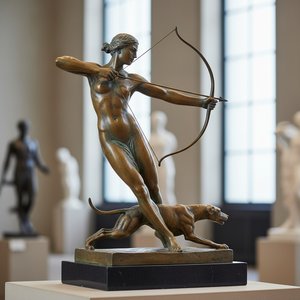
Paul Manship: Reassessing the Master of American Art Deco Sculpture
Explore the captivating world of Paul Manship, a leading figure in American Art Deco sculpture. Discover his iconic works like Prometheus, influence on modernism, and investment potential. Expert insights for collectors.

