High Renaissance · 1520
The Transfiguration (detail) (Rafael, 1520)
Rafael (1483–1520) har laget The Transfiguration (detail). Den er fra 1520. Det tilhører High Renaissance-bevegelsen. Den er laget i Oil On Panel.
- 1520
- Oil On Panel

 Forhåndsvisning

 Håndmalt oljemaleri
 Send
 Del
 Faktablad


 Last ned bilde
 Liknende objekter
 Røntgenundersøkelse
 Lysbildefremvisning
 Spørsmål og svar

 Statistikk
The Transfiguration (detail), kort fortalt
- Tittel
- The Transfiguration (detail)
- Kunstner
- Rafael (1483–1520)
- Kunstner født i
- Urbino, Italia
- Dato
- 1520
- Medium
- Oil On Panel
- Bevegelse
- High Renaissance
- Periode
- Renaissance
- Motiv
- biblical narrative, religious symbolism, divine light, renaissance art, christ figure, mount tabor
Hva forestiller The Transfiguration (detail)?
A Divine Revelation Captured in Light and Color
The Raphael (Raffaello Sanzio Da Urbino)’s *The Transfiguration*, completed in 1520, stands as an unparalleled achievement of High Renaissance artistry—a testament to Raphael’s mastery of perspective, color theory, and humanist ideals. Currently residing within the Pinacoteca Vaticana, this monumental painting transcends mere representation; it embodies a profound spiritual narrative rooted in Christian theology. Commissioned by Cardinal Giulio de' Medici (later Pope Clement VII), *The Transfiguration* exemplifies the artistic fervor that characterized Rome during its papal ascendancy.- Subject Matter: The artwork depicts the biblical episode recounted in Matthew, Mark, and Luke—Jesus’ ascension to Mount Tabor alongside Moses and Elijah. This dramatic scene portrays Christ transforming before his disciples' eyes into a radiant figure bathed in heavenly light, symbolizing divine glory and spiritual transcendence.
- Style & Technique: Raphael skillfully employs pyramidal composition—a hallmark of Renaissance art—to create stability and grandeur. The meticulous attention to detail is evident throughout the painting, from the folds of Christ’s robe to the expressions on the faces of Moses and Elijah, demonstrating Raphael's dedication to anatomical accuracy and realistic portrayal. Fresco technique was utilized, ensuring durability and preserving the vibrancy of color for centuries.
Historical Context: The Renaissance Spirit Embodied
Painted at the apex of the Italian Renaissance—a period marked by intellectual curiosity, artistic innovation, and humanist revival—*The Transfiguration* reflects the broader cultural landscape of its time. Raphael’s work aligns seamlessly with the prevailing fascination for classical ideals and biblical narratives, demonstrating a desire to elevate human experience through contemplation of divine beauty. The painting's placement within the cathedral of S. Giusto in Narbonne underscores its significance as a devotional artwork intended to inspire awe and reverence.
Symbolism: Light, Revelation, and Heavenly Grace
The pervasive luminescence dominating *The Transfiguration* serves as a central symbol—representing divine illumination and spiritual enlightenment. Moses and Elijah, figures revered for their prophetic roles in Jewish tradition, stand alongside Christ, symbolizing law and prophecy respectively – representing the Old Testament and New Testament faiths united. The birds perched atop Mount Tabor are interpreted as emblems of freedom and divine grace, furthering the painting’s overarching message of redemption and spiritual ascension.
Emotional Impact: A Moment Frozen in Time
*The Transfiguration* continues to captivate viewers with its breathtaking beauty and profound emotional resonance. Raphael's masterful manipulation of color—particularly the golden hues illuminating Christ—evokes feelings of serenity, majesty, and spiritual contemplation. The painting’s enduring appeal lies in its ability to convey a timeless narrative of faith, hope, and divine revelation—a masterpiece that secures Raphael’s place among the greatest artists of all time.
Discover More About This Iconic Artwork
For a deeper understanding of *The Transfiguration* and its artistic legacy, explore resources such as Wikipedia (
Høyoppløselige bilder av The Transfiguration (detail)

Fritlig eiendom: kunstneren døde i 1520.
Andre størrelser, beskjæringer og sitering →Rafael, The Transfiguration (detail) (1520). Felleseie
Spørsmål om The Transfiguration (detail), besvart
I hvilket år ble "The Transfiguration (detail)" av Rafael skapt?
"The Transfiguration (detail)" av Rafael ble skapt i 1520.
Hvilken teknikk er "The Transfiguration (detail)" laget med?
Rafael brukte Oil On Panel-teknikken i "The Transfiguration (detail)". Teknikken definerer det materielle uttrykket til det originale verket.
Hva forestiller "The Transfiguration (detail)"?
"The Transfiguration (detail)" av Rafael avbilder: biblical narrative, religious symbolism, divine light, renaissance art, christ figure, mount tabor, holy trinity.
Er "The Transfiguration (detail)" av Rafael i det frie domene?
"The Transfiguration (detail)" av Rafael er fritt tilgjengelig – opphavsretten har utløpt. Denne statusen avgjør hvordan bildet av verket kan reproduseres.
Hvem er kunstneren bak "The Transfiguration (detail)"?
"The Transfiguration (detail)" tilskrives Rafael.
Hvilken stilart tilhører "The Transfiguration (detail)"?
Kunstretningen knyttet til "The Transfiguration (detail)" av Rafael er High Renaissance. Denne klassifiseringen plasserer verket sammen med relaterte kunstnere og kunstverk.
Hvilken periode i Rafael sin karriere tilhører "The Transfiguration (detail)"?
I Rafael sin karriere tilhører "The Transfiguration (detail)" Mature Period. Denne perioden gjør det mulig å sammenligne verket med kunstnerens øvrige arbeider.
Hvor gammel var Rafael da "The Transfiguration (detail)" ble skapt?
Rafael laget "The Transfiguration (detail)" i en alder av 37. Kunstneren ble født i 1483, og verket er datert 1520.
Hva er årsaken til opphavsrettssituasjonen for "The Transfiguration (detail)" av Rafael?
"The Transfiguration (detail)" av Rafael er fritt tilgjengelig – opphavsretten har utløpt. Opphavsretten beregnes fra kunstnerens dødsår, og Rafael døde i 1520.
Om kunstneren, Rafael

1483–1520, Italia
Rafael
Livet og identiteten til Rafael Rafael, som historien kjenner under flere navn, inkludert Raffaello Sanzio, Raffaello Santi og Raffaello Sanzio da Urbino, var en sentral skikkelse i den italienske høyrenessansen. Hans liv ble definert av en dualistisk mestring av både malerkunst og arkitektur, en allsidighet som gjorde det mulig for ham å bevege seg sømløst mellom det intime formatet i et portrett og de monumentale kravene i pavekirkens byggeprosjekter. Han ble født i Urbino i Italia den 6. april 1483, inn i en verden preget av intens intellektuell og kunstnerisk aktivitet.
Også av Rafael
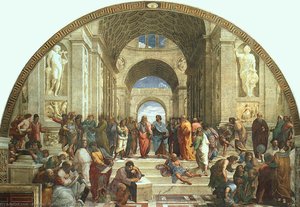 Skolen i Athen1511
 Sistinske Madonna1513
 Transfigurasjonen1520
 Bryllupet av jungfru Maria1504
Essays om The Transfiguration (detail)
 Who Made The Transfiguration? The Story of Raphael's Final MasterpieceDiscover the artist behind The Transfiguration and the dramatic shift in style that defines this High Renaissance masterpiece
 Masterpieces of Perfection: The Top 25 Greatest Artworks by RaphaelJourney through the sublime beauty of the High Renaissance with our curated list of Raphael's top 25 masterpieces. From iconic Madonnas to …
 16th century Italian paintersMasterpieces by Titian, Michelangelo, and Raphael define the Italian Renaissance. Explore the full collection online at OriginalUniqueArt.c…