

 Se i rommet
 Del som digitalt kort
 Del
Del
 Detaljer
 Studentguide

 Last ned
 Liknende objekter
 Røntgen
 Lysbildefremvisning
 Besøksstatistikk
There Comes Papa
 Oil On Canvas
- WallArt
- Academic Romanticism
 1893
1893- 19th Century
 125.0 x 81.0 cm
 The Ganesh Shivaswamy Foundation
 Les mer
Håndlaget oljereproduksjon
Håndmalt olje på lerret i din valgte størrelse og ramme, laget på bestilling av våre kunstnere. ( Bytt til trykkversjon Gå til digitalt bilde)




P118B Nkr10

P118H Nkr10

P118W Nkr10

P438Z Nkr10

P508JH Nkr12

P508YH Nkr12

P805H Nkr10

P805Z Nkr10

P919BZ Nkr10

P919G Nkr10

P919XJ Nkr10

P959ZH Nkr10

P968JZ Nkr12

W106C Nkr8

W218G Nkr10

W218JH Nkr8

W218Y Nkr10

W307PJ Nkr10

W316G Nkr10

W316PJ Nkr8

W316Y Nkr10

W398PJ Nkr8

W4111J Nkr10

W500HY Nkr15

W500JH Nkr15

W692G Nkr12

W849H Nkr8

W940BG Nkr15

W953PJ Nkr8




Velg mellom våre forhåndsdefinerte størrelser som bevarer kunstverkets opprinnelige proporsjoner.

Du kan angi egne mål for å tilpasse en spesifikk ramme eller plass. Dersom den valgte størrelsen ikke samsvarer med originalbildets proporsjoner, vil vi enten beskjære kunstverket eller utvide maleriet med ytterligere håndmalte elementer. En digital mockup vil bli sendt til din godkjenning før produksjonen starter.
Vennligst merk at forhåndsvisningen på skjermen ikke gjenspeiler den faktiske beskjæringen eller utvidelsen. Kun mockuppen vil vise den endelige komposisjonen nøyaktig.
Selv om tilpassede størrelser er tilgjengelige, anbefaler vi å velge et mål fra den forhåndsdefinerte listen for å bevare de originale proporsjonene.
Etter bestilling vil OriginalUniqueArt.com-teamet sende e-post til kunden for instruksjoner og sende et utkast (mockup) som forhåndsvisning.
Verdensomspennende levering () på 3–4 uker i stedet for standard 5 uker. (30 September). Ingen kompromisser med kvaliteten.

Gratis ekspressfrakt over hele verden

Lerretsduk av høykvalitets lin

Full transportforsikring

Garanti for refusjon av toll og importavgifter

Garantert fargeekthet

100 dagers returrett ved fabrikasjonsfeil

100% pengene tilbake-garanti

Mengderabatt
 Glassalternativet er kun tilgjengelig i størrelser under 110 cm

There Comes Papa
Reproduksjonsmetode
Format på reproduksjon
-


Totalpris
Nkr 2803
A Moment of Joyful Anticipation: Raja Ravi Varma’s “There Comes Papa”
Raja Ravi Varma's "There Comes Papa," painted in 1893, is more than just a portrait; it’s a poignant snapshot of domestic bliss rendered with the meticulous detail and evocative storytelling characteristic of the artist. Measuring 125 x 81 cm, this work transports us to a refined Indian household at the cusp of a significant event – the reunion of a family. The scene unfolds with an aristocratic lady, likely from the Malabar region, holding her infant son while gesturing towards the arrival of his father. A loyal dog, brimming with excitement, mirrors the anticipation, adding a layer of warmth and domesticity to the composition.
A Fusion of Styles: Ravi Varma’s Technique
Raja Ravi Varma was a pivotal figure in the transition from traditional Indian painting styles to a more modern approach. Born in 1848, he skillfully combined European academic techniques – particularly those influenced by French Orientalism – with deeply rooted Indian mythological and aesthetic traditions. This synthesis is strikingly evident in "There Comes Papa." The woman’s attire, a pristine white gown adorned with a delicate gold necklace, speaks to the wealth and status of her family, while the precise rendering of fabrics and textures demonstrates Ravi Varma's mastery of European academic training. Yet, the subject matter – a scene of familial joy rooted in Indian culture – firmly anchors the painting within its historical context.
Symbolism and Narrative
The painting’s narrative is rich with symbolism. The arrival of the father represents not just a reunion but also the establishment of lineage, tradition, and social order. The child's excited gaze embodies innocence and hope, while the dog’s eagerness symbolizes loyalty and companionship. Ravi Varma was renowned for his ability to imbue his paintings with narrative depth, often drawing upon Hindu mythology and folklore. While this particular work doesn't explicitly depict a mythological story, it captures a universal human experience – the joy of family connection – with remarkable sensitivity.
Historical Context and Artistic Significance
"There Comes Papa" was created during a period of significant change in India. The late 19th century witnessed the rise of Indian nationalism alongside increasing contact with Western cultures. Ravi Varma’s work played a crucial role in shaping modern Indian painting, establishing him as one of the most important artists of his time. His paintings were commissioned by royal families and wealthy patrons, reflecting the opulent lifestyles and cultural values of the era. The inclusion of a golden frame further elevates the artwork, emphasizing its elegance and reinforcing its status as a significant piece of art history. This reproduction offers a unique opportunity to own a piece of this pivotal moment in Indian artistic heritage.
Kunstnerbiografi
The Princely Brush: Raja Ravi Varma and the Dawn of Modern Indian Painting
Raja Ravi Varma, a name that echoes through the halls of Indian art history, emerged from the opulent world of the Kilimanoor Palace in Kerala during the mid-19th century. More than just a painter, he was a cultural architect, skillfully weaving together European academic techniques with the vibrant threads of Indian mythology and aesthetics – a true synthesis of East and West. His lineage, tracing back to the royal family of Travancore, provided him not only privilege but also an intimate understanding of Indian courtly life, profoundly shaping his artistic vision. From a young age, Ravi Varma displayed an extraordinary talent for drawing, nurtured by his uncle, Raja Raja Varma, who introduced him to the rich traditions of the Tanjore School. Yet, Ravi Varma’s ambition extended far beyond mere imitation; he sought mastery – the ability to capture not just likeness but also emotion and narrative depth, a desire that would define his entire career.A Fusion of Worlds: Technique and Inspiration
Ravi Varma's artistic journey took a dramatic turn when he encountered the works of European masters during his travels and through interactions with British officials stationed in India. He was utterly captivated by the realism and technical precision of academic painting, diligently studying its principles – perspective, anatomy, light, and shadow. However, unlike many of his contemporaries who simply adopted these styles wholesale, Varma ingeniously adapted them to suit distinctly Indian subjects. His canvases became vibrant stages for scenes from the Ramayana, the Mahabharata, and the Puranas, populated by gods and goddesses rendered with a newfound naturalism – a departure from the often stylized depictions prevalent at the time. He didn’t merely illustrate religious stories; he imbued them with human emotion and psychological complexity, breathing life into ancient narratives in a way that resonated deeply with audiences. This was revolutionary. Before Varma, deities were frequently represented in rigid, symbolic forms. He dared to portray them as relatable figures – beautiful, powerful, and profoundly human, accessible to the common viewer. His mastery of oil painting, a relatively new medium in India at the time, allowed him to achieve an unprecedented level of detail and luminosity, further enhancing the emotional impact of his work. Consider, for example, *Hansa Damayanthi*, where the heroine’s longing gaze and delicate posture convey a depth of feeling previously unseen in Indian art. *The Maharani of Travancore*, with its regal composure and intricate detailing, exemplifies Varma's ability to capture both outward appearance and inner character – a testament to his profound understanding of human psychology.Democratizing Art: Lithographs and Public Appeal
Recognizing that original paintings were largely inaccessible to the vast majority of Indians, Raja Ravi Varma took a bold step: he established the Raja Ravi Varma Fine Arts Lithographic Press in 1894. This groundbreaking venture allowed for the mass production of affordable lithographs based on his paintings – a truly revolutionary concept at the time. Suddenly, images of Hindu deities and mythological scenes were no longer confined to temples or palaces; they adorned homes across India, becoming objects of worship and cultural pride. These lithographs weren’t simply reproductions; they were carefully crafted interpretations that captured the essence of Varma's originals, often incorporating subtle details and nuances that enhanced their visual appeal. The act of “democratizing art” had a profound impact on Indian society, fostering a wider appreciation for visual culture and shaping popular perceptions of religious iconography. It also established Ravi Varma as a true public figure, his images becoming ubiquitous symbols of Indian identity – instantly recognizable across the nation.Royal Patronage and Artistic Evolution
Ravi Varma’s artistic journey was further shaped by royal patronage. He served in several courts throughout India, including those of Mewar, Baroda, and Mysore, each offering unique opportunities for growth and experimentation. These experiences exposed him to diverse artistic traditions and influenced his style, allowing him to refine his techniques and broaden his subject matter. His time at the Travancore court, particularly under the guidance of Ayilyam Thirunal, provided him with a stable base from which to develop his career, while his interactions with British officials facilitated access to European art and technology. He was also deeply influenced by Edgar Thurston, a British Superintendent at the Madras Government Museum, who championed his work and helped to promote it within the artistic community. His ability to seamlessly blend Indian tradition with Western techniques – a hallmark of his style – cemented his position as a leading figure in the development of modern Indian art.Legacy and Enduring Influence
Raja Ravi Varma passed away in 1906, leaving behind a legacy that continues to resonate today. His work not only transformed the landscape of Indian painting but also laid the foundation for subsequent generations of artists. He challenged conventional norms, embraced innovation, and skillfully blended tradition with modernity – a rare combination that defined his artistic approach. His influence can be seen in the works of artists who followed, seeking to create a distinctly national artistic identity rooted in both ancient traditions and contemporary sensibilities. Museums like The Raja Ravi Varma Heritage Foundation and The Ganesh Shivaswamy Foundation diligently preserve and celebrate his art, ensuring that his vision endures for future generations. His paintings remain powerful testaments to his genius – masterpieces that capture the beauty, spirituality, and cultural richness of India, reminding us of a pivotal moment in the nation’s artistic history.Exploring Varma’s World Today
For those seeking to delve deeper into the world of Raja Ravi Varma, numerous resources are available. The Kiran Nadar Museum of Art in New Delhi houses a significant collection of his works alongside other modern and contemporary Indian artists. Online platforms like OriginalUniqueArt offer high-quality reproductions of his iconic paintings, allowing art enthusiasts worldwide to experience his artistry firsthand. Furthermore, scholarly articles and books continue to shed light on his life, techniques, and lasting impact – ensuring that the legacy of this remarkable artist continues to inspire and inform.- Explore artworks: Discover masterpieces like “Portrait of a Gentleman,” “Hansa Damayanthi,” and “The Maharani of Travancore” through online databases.
- Visit museums: Immerse yourself in Varma’s legacy at The Raja Ravi Varma Heritage Foundation, The Ganesh Shivaswamy Foundation, and the Kiran Nadar Museum of Art.
- Further research: Consult Wikipedia and Google Arts & Culture for detailed biographical information and scholarly insights.
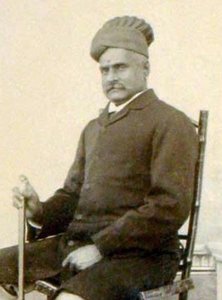
Raja Ravi Varma
1848 - 1906 , India
Kort om kunstneren
- Artistic Movement Or Style: Akademisk og indisk fusjon
- Artists Or Movements Influenced By This Artist: ['Moderne indisk kunst']
- Artists Who Influenced This Artist: ['Europeiske mestere']
- Date Of Birth: 29. april 1848
- Date Of Death: 2. oktober 1906
- Full Name: Raja Ravi Varma
- Nationality: Indisk
- Notable Artworks:
- Hansa Damayanthi
- Maharani av Travancore
- Place Of Birth: Kilimanoor, India
Relaterte artikler

Raja Ravi Varma: Bridging Tradition & Modernity in 19th-Century Indian Art
Explore the life & art of Raja Ravi Varma, a pioneer who fused European techniques with Indian iconography. Discover his iconic paintings, lasting legacy, and influence on modern Indian art at OriginalUniqueArt.

The Enduring Legacy of Family Portraiture: A Historical & Artistic Exploration
Explore the rich history of family portraiture with OriginalUniqueArt. Discover artistic styles, symbolism & collecting insights. Commission a custom oil painting or appraise your existing artwork today!
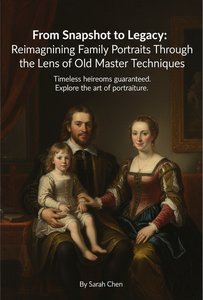
From Snapshot to Legacy: Reimagining Family Portraits Through the Lens of Old Master Techniques
Transform cherished memories into lasting heirlooms with custom family portraits inspired by Old Master techniques. Expert artists, museum-quality craftsmanship & a timeless legacy guaranteed. Explore the art of portraiture.

Evolving Portraits: Personalized Art as a Chronicle of Family Life Across Generations
Create a timeless family legacy with custom portraits! OriginalUniqueArt connects you with skilled artists for heirloom-quality paintings & prints. Explore styles, commission your unique artwork today.
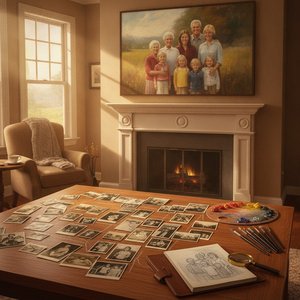
From Scattered Memories to Timeless Legacy: The Art of Creating Your Custom Family Masterpiece with OriginalUniqueArt
Turn scattered family photos into a breathtaking hand-painted oil masterpiece. OriginalUniqueArt specializes in merging multiple images into one cohesive, museum-quality heirloom. Experience professional artistry, digital mockups, and a 100% satisfaction guarantee for your family's legacy.

