
 Forhåndsvisning
 Send
Send Del
Del
 Vis detaljer
 Utskriftsvennlig guide

 Last ned bilde
 Liknende objekter
 Røntgenundersøkelse
 Lysbildefremvisning
 Spørsmål og svar
 Statistikk
Lady Making A Garland


 Vis hele teksten
Giclée / Kunsttrykk
Giclée- eller lerretsprint av museumskvalitet med rask produksjon og fleksible valgmuligheter for etterbehandling. ( Kjøp håndmalt maleri Bytt til digitalt bilde)




P118B Nkr10

P118H Nkr10

P118W Nkr10

P438Z Nkr10

P508JH Nkr12

P508YH Nkr12

P805H Nkr10

P805Z Nkr10

P919BZ Nkr10

P919G Nkr10

P919XJ Nkr10

P959ZH Nkr10

P968JZ Nkr12

W106C Nkr8

W218G Nkr10

W218JH Nkr8

W218Y Nkr10

W307PJ Nkr10

W316G Nkr10

W316PJ Nkr8

W316Y Nkr10

W398PJ Nkr8

W4111J Nkr10

W500HY Nkr15

W500JH Nkr15

W692G Nkr12

W849H Nkr8

W940BG Nkr15

W953PJ Nkr8




Velg mellom våre forhåndsdefinerte størrelser som bevarer kunstverkets opprinnelige proporsjoner.

Skriv inn ønsket bredde og høyde for å tilpasse trykket til din ramme eller vegg. Et trykk kan kun beskjæres, aldri skaleres opp utover motivets opprinnelige størrelse, noe som betyr at et format med andre proporsjoner vil føre til tap av deler av bildet. Vi sender deg en digital mockup for godkjenning før vi starter trykkeprosessen. Bildet som vises på denne siden viser ikke den faktiske beskjæringen — det er kun mockuppen som viser dette.
Verdensomspennende levering () på 2 uker i stedet for standard 4/5 uker. (4 November)

Gratis ekspressfrakt over hele verden

Lerretsduk av lin av høy kvalitet

Full transportforsikring

Garanti for refusjon av toll og importavgifter

Garantert fargegjengivelse

100 dagers returrett ved fabrikasjonsfeil

100% pengene tilbake-garanti

Rabatt ved flere kjøp
 Glassalternativet er kun tilgjengelig i størrelser under 110 cm

Lady Making A Garland
Giclée / Kunsttrykk
Størrelse på reproduksjon
-


Totalpris for valgte alternativer
Nkr 774
A Vision of Grace: The Ethereal Allure of Raja Ravi Varma
In the quiet, luminous moments captured within Lady Making A Garland, we encounter the profound mastery of Raja Ravi Varma, a titan of Indian art who dared to marry the rigorous academic realism of Europe with the soulful, mythological essence of his homeland. Painted in 1895, this masterpiece serves as a window into a bygone era of aristocratic elegance and serene domesticity. The subject, a woman of striking poise, sits bathed in a soft, natural light that seems to emanate from within her very skin. As she meticulously weaves flowers into a garland, her gaze—steady and captivating—draws the viewer into a silent dialogue, bridging the gap between the canvas and the observer. Her white attire, draped with effortless sophistication, reflects a purity of spirit, while the delicate luster of her pearl necklace adds a touch of regal splendor that speaks to her high station in life.
The technique employed here is nothing short of breathtaking, showcasing Varma's ability to manipulate light and texture to create a sense of three-dimensional vitality. One can almost feel the weight of the silk, the coolness of the pearls, and the delicate, velvety petals of the blossoms resting upon the table. Through his expert use of chiaroscuro, Varma creates depth, allowing the background figures to recede into a soft, atmospheric blur, ensuring that our focus remains tethered to the central protagonist. This mastery of oil painting techniques allows for a level of detail that is both hyper-realistic and dreamlike, making the scene feel less like a static portrait and more like a captured breath in time.
Symbolism and Cultural Resonance
Beyond its technical brilliance, the painting is rich with symbolic resonance. The act of garland making is deeply embedded in Indian cultural traditions, representing the weaving together of beauty, devotion, and the cyclical nature of life. The abundance of flowers serves as a metaphor for fertility, prosperity, and the fleeting nature of beauty. In this composition, every element—from the pristine white of her garments to the carefully arranged blossoms—contributes to a narrative of tranquility and refinement. For the discerning collector or interior designer, this piece offers more than mere decoration; it provides a profound connection to the heritage of the Tanjore School tradition blended with Western realism.
To possess a reproduction of such a work is to invite an atmosphere of timeless sophistication into a space. Whether placed in a sunlit gallery or a curated living room, Lady Making A Garland acts as a focal point of calm and prestige. It evokes the grandeur of the Kilimanoor Palace lineage while remaining accessible through its universal themes of grace and introspection. This artwork is an invitation to slow down, to appreciate the meticulous beauty of the present moment, and to surround oneself with the enduring legacy of one of India's most transformative artistic voices.
Spørsmål og svar
Hvilken teknikk er brukt i "Lady Making A Garland" av Raja Ravi Varma?
"Lady Making A Garland" er utført i Oil.
Hvordan forenes medium og bevegelse i "Lady Making A Garland"?
"Lady Making A Garland" er utført i Oil, i Academic Realism-stil.
Hvor plasserer "Lady Making A Garland" seg i Raja Ravi Varma sitt samlede kunstnerskap?
"Lady Making A Garland" deler med Raja Ravi Varmas andre verk sin Academic Realism-stil og de gjentakende temaene: european academic techniques, indian mythology aesthetics, indian courtly life, blending east and west, modern indian painting dawn.
Om kunstneren
The Princely Brush: Raja Ravi Varma and the Dawn of Modern Indian Painting
Raja Ravi Varma, a name that echoes through the halls of Indian art history, emerged from the opulent world of the Kilimanoor Palace in Kerala during the mid-19th century. More than just a painter, he was a cultural architect, skillfully weaving together European academic techniques with the vibrant threads of Indian mythology and aesthetics – a true synthesis of East and West. His lineage, tracing back to the royal family of Travancore, provided him not only privilege but also an intimate understanding of Indian courtly life, profoundly shaping his artistic vision. From a young age, Ravi Varma displayed an extraordinary talent for drawing, nurtured by his uncle, Raja Raja Varma, who introduced him to the rich traditions of the Tanjore School. Yet, Ravi Varma’s ambition extended far beyond mere imitation; he sought mastery – the ability to capture not just likeness but also emotion and narrative depth, a desire that would define his entire career.A Fusion of Worlds: Technique and Inspiration
Ravi Varma's artistic journey took a dramatic turn when he encountered the works of European masters during his travels and through interactions with British officials stationed in India. He was utterly captivated by the realism and technical precision of academic painting, diligently studying its principles – perspective, anatomy, light, and shadow. However, unlike many of his contemporaries who simply adopted these styles wholesale, Varma ingeniously adapted them to suit distinctly Indian subjects. His canvases became vibrant stages for scenes from the Ramayana, the Mahabharata, and the Puranas, populated by gods and goddesses rendered with a newfound naturalism – a departure from the often stylized depictions prevalent at the time. He didn’t merely illustrate religious stories; he imbued them with human emotion and psychological complexity, breathing life into ancient narratives in a way that resonated deeply with audiences. This was revolutionary. Before Varma, deities were frequently represented in rigid, symbolic forms. He dared to portray them as relatable figures – beautiful, powerful, and profoundly human, accessible to the common viewer. His mastery of oil painting, a relatively new medium in India at the time, allowed him to achieve an unprecedented level of detail and luminosity, further enhancing the emotional impact of his work. Consider, for example, *Hansa Damayanthi*, where the heroine’s longing gaze and delicate posture convey a depth of feeling previously unseen in Indian art. *The Maharani of Travancore*, with its regal composure and intricate detailing, exemplifies Varma's ability to capture both outward appearance and inner character – a testament to his profound understanding of human psychology.Democratizing Art: Lithographs and Public Appeal
Recognizing that original paintings were largely inaccessible to the vast majority of Indians, Raja Ravi Varma took a bold step: he established the Raja Ravi Varma Fine Arts Lithographic Press in 1894. This groundbreaking venture allowed for the mass production of affordable lithographs based on his paintings – a truly revolutionary concept at the time. Suddenly, images of Hindu deities and mythological scenes were no longer confined to temples or palaces; they adorned homes across India, becoming objects of worship and cultural pride. These lithographs weren’t simply reproductions; they were carefully crafted interpretations that captured the essence of Varma's originals, often incorporating subtle details and nuances that enhanced their visual appeal. The act of “democratizing art” had a profound impact on Indian society, fostering a wider appreciation for visual culture and shaping popular perceptions of religious iconography. It also established Ravi Varma as a true public figure, his images becoming ubiquitous symbols of Indian identity – instantly recognizable across the nation.Royal Patronage and Artistic Evolution
Ravi Varma’s artistic journey was further shaped by royal patronage. He served in several courts throughout India, including those of Mewar, Baroda, and Mysore, each offering unique opportunities for growth and experimentation. These experiences exposed him to diverse artistic traditions and influenced his style, allowing him to refine his techniques and broaden his subject matter. His time at the Travancore court, particularly under the guidance of Ayilyam Thirunal, provided him with a stable base from which to develop his career, while his interactions with British officials facilitated access to European art and technology. He was also deeply influenced by Edgar Thurston, a British Superintendent at the Madras Government Museum, who championed his work and helped to promote it within the artistic community. His ability to seamlessly blend Indian tradition with Western techniques – a hallmark of his style – cemented his position as a leading figure in the development of modern Indian art.Legacy and Enduring Influence
Raja Ravi Varma passed away in 1906, leaving behind a legacy that continues to resonate today. His work not only transformed the landscape of Indian painting but also laid the foundation for subsequent generations of artists. He challenged conventional norms, embraced innovation, and skillfully blended tradition with modernity – a rare combination that defined his artistic approach. His influence can be seen in the works of artists who followed, seeking to create a distinctly national artistic identity rooted in both ancient traditions and contemporary sensibilities. Museums like The Raja Ravi Varma Heritage Foundation and The Ganesh Shivaswamy Foundation diligently preserve and celebrate his art, ensuring that his vision endures for future generations. His paintings remain powerful testaments to his genius – masterpieces that capture the beauty, spirituality, and cultural richness of India, reminding us of a pivotal moment in the nation’s artistic history.Exploring Varma’s World Today
For those seeking to delve deeper into the world of Raja Ravi Varma, numerous resources are available. The Kiran Nadar Museum of Art in New Delhi houses a significant collection of his works alongside other modern and contemporary Indian artists. Online platforms like OriginalUniqueArt offer high-quality reproductions of his iconic paintings, allowing art enthusiasts worldwide to experience his artistry firsthand. Furthermore, scholarly articles and books continue to shed light on his life, techniques, and lasting impact – ensuring that the legacy of this remarkable artist continues to inspire and inform.- Explore artworks: Discover masterpieces like “Portrait of a Gentleman,” “Hansa Damayanthi,” and “The Maharani of Travancore” through online databases.
- Visit museums: Immerse yourself in Varma’s legacy at The Raja Ravi Varma Heritage Foundation, The Ganesh Shivaswamy Foundation, and the Kiran Nadar Museum of Art.
- Further research: Consult Wikipedia and Google Arts & Culture for detailed biographical information and scholarly insights.
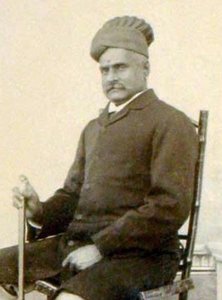
Raja Ravi Varma
1848 - 1906 , India
Kort om kunstneren
- Artistic Movement Or Style: Akademisk og indisk fusjon
- Artists Or Movements Influenced By This Artist: ['Moderne indisk kunst']
- Artists Who Influenced This Artist: ['Europeiske mestere']
- Date Of Birth: 29. april 1848
- Date Of Death: 2. oktober 1906
- Full Name: Raja Ravi Varma
- Nationality: Indisk
- Notable Artworks:
- Hansa Damayanthi
- Maharani av Travancore
- Place Of Birth: Kilimanoor, India
Relaterte artikler
The Subtleties of White: Exploring Absence, Light & Symbolism in Art History
Explore the profound symbolism & history of white in art! From ancient purity to modern abstraction, discover how artists have used absence & light. Expert insights from OriginalUniqueArt.

Monochrome Visions: Exploring the Aesthetic & Historical Significance of Black & White Photography
Explore the rich history & artistic power of black and white photography. From early techniques to iconic masters like Ansel Adams, discover why monochrome continues to captivate art lovers today. Expert insights for collectors.

Shadow & Soul: Why Black & White Photography Remains the Ultimate Power Move in Modern Art
Discover why black & white photography remains a powerful force in contemporary art. Explore the impact of light, shadow, and texture through a visual journey of monochrome mastery and learn how to elevate your space with timeless grayscale aesthetics.

Blossoms of Time: A Historical & Aesthetic Exploration of Floral Painting Across Cultures
Explore the rich history of floral painting! Discover symbolism, techniques & masterpieces from Van Huysum to O'Keeffe. Expert insights for art lovers & collectors at OriginalUniqueArt.

De 10 mest ikoniske malerier dominert av hvitt – Kunsthistorie og interiørinspirasjon
Utforsk de 10 mest ikoniske maleriene dominert av hvitt – fra Monet til Van Gogh. Lær historien bak disse mesterverkene og finn inspirasjon for ditt hjem. Museumskvalitet kunsttrykk på OriginalUniqueArt.com! Oppdag hele samlingen online.

