

 Se i rommet
 Del som digitalt kort
 Del
Del
 Detaljer
 Studentguide

 Last ned
 Liknende objekter
 Røntgen
 Lysbildefremvisning
 Besøksstatistikk
Krishna


 Les mer
Giclée / Kunsttrykk
Giclée- eller lerretsprint av museumskvalitet med rask produksjon og fleksible valgmuligheter for etterbehandling. ( Bestill håndmalt reproduksjon Gå til digitalt bilde)




P118B Nkr10

P118H Nkr10

P118W Nkr10

P438Z Nkr10

P508JH Nkr12

P508YH Nkr12

P805H Nkr10

P805Z Nkr10

P919BZ Nkr10

P919G Nkr10

P919XJ Nkr10

P959ZH Nkr10

P968JZ Nkr12

W106C Nkr8

W218G Nkr10

W218JH Nkr8

W218Y Nkr10

W307PJ Nkr10

W316G Nkr10

W316PJ Nkr8

W316Y Nkr10

W398PJ Nkr8

W4111J Nkr10

W500HY Nkr15

W500JH Nkr15

W692G Nkr12

W849H Nkr8

W940BG Nkr15

W953PJ Nkr8




Velg mellom våre forhåndsdefinerte størrelser som bevarer kunstverkets opprinnelige proporsjoner.

Skriv inn bredden og høyden du trenger, slik at den passer til din ramme eller vegg. Et trykk kan kun beskjæres, aldri gjøres større enn bildet, så et format med en annen form vil miste en del av motivet. Vi sender deg en digital mockup for godkjenning før vi trykker noe som helst. Bildet som vises på denne siden viser ikke den faktiske beskjæringen — det er kun mockuppen som gjør det.
Verdensomspennende levering () på 2 uker i stedet for standard 4/5 uker. (24 October)

Gratis ekspressfrakt over hele verden

Lerretsduk av høykvalitets lin

Full transportforsikring

Garanti for refusjon av toll og importavgifter

Garantert fargeekthet

100 dagers returrett ved fabrikasjonsfeil

100% pengene tilbake-garanti

Mengderabatt
 Glassalternativet er kun tilgjengelig i størrelser under 110 cm

Krishna
Giclée / Kunsttrykk
Format på reproduksjon
-


Totalpris
Nkr 760
A Divine Gathering: The Soul of Raja Ravi Varma’s Krishna
In the luminous realm of early 20th-century Indian art, few names command as much reverence as Raja Ravi Varma. His masterpiece, Krishna, dating from 1905, serves as a breathtaking window into a world where the celestial and the terrestrial intertwine. This painting is not merely a depiction of a deity; it is a profound narrative of community, devotion, and the shared spiritual pulse of a culture. As the eye wanders through the composition, one is immediately struck by the masterful way Varma captures the essence of a sacred moment. The central figure of Krishna, poised with a sense of divine purpose, holds a rope or string—a subtle yet powerful symbol of the threads of destiny that bind all living beings to the divine. Surrounded by a gathering of men in traditional Indian attire, the scene breathes with the warmth of human connection and the quiet dignity of religious ritual.
The technique employed in this work is a testament to Varma’s unique position as a cultural bridge. Having mastered European academic realism, he infused his subjects with a lifelike three-dimensionality that was revolutionary for his time. The textures of the turbans, the heavy folds of the traditional garments, and the subtle play of light on the skin of the figures all suggest a tactile reality that invites the viewer to step into the scene. There is a deliberate, rhythmic quality to the arrangement of the figures; some are lost in intimate conversation, while others gaze toward the center, creating a sense of movement that leads the eye across the canvas. The inclusion of humble objects—a simple bowl resting on the ground, a solitary chair tucked to the side—grounds this divine encounter in the tangible, everyday world, making the miraculous feel intimately accessible.
The Intersection of Tradition and Realism
Raja Ravi Varma’s legacy is defined by his ability to marry the grandeur of Indian mythology with the precision of Western oil painting techniques. In Krishna, this fusion creates a sense of presence that is almost palpable. The artist does not merely paint a legend; he breathes life into it, presenting the divine through a lens of human emotion and social reality. For the discerning collector or interior designer, this piece offers much more than mere aesthetic beauty; it provides an emotional anchor for any space. The painting’s ability to evoke a sense of peace and spiritual connection makes it a profound addition to a curated collection, offering a window into the heart of Indian heritage.
To possess a reproduction of such a significant work is to invite a piece of history into one's home. Whether placed in a grand salon or a quiet study, the painting’s rich palette and narrative depth serve as a conversation starter, reflecting a sophisticated appreciation for the evolution of modern Indian art. It stands as a tribute to an era where the boundaries between the sacred and the mundane were blurred by the stroke of a master's brush, leaving behind a legacy that continues to inspire awe and devotion across generations.
Spørsmål og svar
Kan jeg undersøke "Krishna" mer detaljert?
Røntgenvisningen av "Krishna" av Raja Ravi Varma finnes på verkets Røntgen-side: en interaktiv undersøkelse av bildet gjennom elleve optiske lag.
Er "Krishna" av Raja Ravi Varma et maleri, en tegning eller et trykk?
"Krishna" er et WallArt-verk.
Hvor lys er "Krishna" totalt sett?
Den oppfattede lysstyrken til "Krishna" av Raja Ravi Varma er balanced. Den kan tilpasses lysforholdene i det tiltenkte rommet.
Kunstnerbiografi
The Princely Brush: Raja Ravi Varma and the Dawn of Modern Indian Painting
Raja Ravi Varma, a name that echoes through the halls of Indian art history, emerged from the opulent world of the Kilimanoor Palace in Kerala during the mid-19th century. More than just a painter, he was a cultural architect, skillfully weaving together European academic techniques with the vibrant threads of Indian mythology and aesthetics – a true synthesis of East and West. His lineage, tracing back to the royal family of Travancore, provided him not only privilege but also an intimate understanding of Indian courtly life, profoundly shaping his artistic vision. From a young age, Ravi Varma displayed an extraordinary talent for drawing, nurtured by his uncle, Raja Raja Varma, who introduced him to the rich traditions of the Tanjore School. Yet, Ravi Varma’s ambition extended far beyond mere imitation; he sought mastery – the ability to capture not just likeness but also emotion and narrative depth, a desire that would define his entire career.A Fusion of Worlds: Technique and Inspiration
Ravi Varma's artistic journey took a dramatic turn when he encountered the works of European masters during his travels and through interactions with British officials stationed in India. He was utterly captivated by the realism and technical precision of academic painting, diligently studying its principles – perspective, anatomy, light, and shadow. However, unlike many of his contemporaries who simply adopted these styles wholesale, Varma ingeniously adapted them to suit distinctly Indian subjects. His canvases became vibrant stages for scenes from the Ramayana, the Mahabharata, and the Puranas, populated by gods and goddesses rendered with a newfound naturalism – a departure from the often stylized depictions prevalent at the time. He didn’t merely illustrate religious stories; he imbued them with human emotion and psychological complexity, breathing life into ancient narratives in a way that resonated deeply with audiences. This was revolutionary. Before Varma, deities were frequently represented in rigid, symbolic forms. He dared to portray them as relatable figures – beautiful, powerful, and profoundly human, accessible to the common viewer. His mastery of oil painting, a relatively new medium in India at the time, allowed him to achieve an unprecedented level of detail and luminosity, further enhancing the emotional impact of his work. Consider, for example, *Hansa Damayanthi*, where the heroine’s longing gaze and delicate posture convey a depth of feeling previously unseen in Indian art. *The Maharani of Travancore*, with its regal composure and intricate detailing, exemplifies Varma's ability to capture both outward appearance and inner character – a testament to his profound understanding of human psychology.Democratizing Art: Lithographs and Public Appeal
Recognizing that original paintings were largely inaccessible to the vast majority of Indians, Raja Ravi Varma took a bold step: he established the Raja Ravi Varma Fine Arts Lithographic Press in 1894. This groundbreaking venture allowed for the mass production of affordable lithographs based on his paintings – a truly revolutionary concept at the time. Suddenly, images of Hindu deities and mythological scenes were no longer confined to temples or palaces; they adorned homes across India, becoming objects of worship and cultural pride. These lithographs weren’t simply reproductions; they were carefully crafted interpretations that captured the essence of Varma's originals, often incorporating subtle details and nuances that enhanced their visual appeal. The act of “democratizing art” had a profound impact on Indian society, fostering a wider appreciation for visual culture and shaping popular perceptions of religious iconography. It also established Ravi Varma as a true public figure, his images becoming ubiquitous symbols of Indian identity – instantly recognizable across the nation.Royal Patronage and Artistic Evolution
Ravi Varma’s artistic journey was further shaped by royal patronage. He served in several courts throughout India, including those of Mewar, Baroda, and Mysore, each offering unique opportunities for growth and experimentation. These experiences exposed him to diverse artistic traditions and influenced his style, allowing him to refine his techniques and broaden his subject matter. His time at the Travancore court, particularly under the guidance of Ayilyam Thirunal, provided him with a stable base from which to develop his career, while his interactions with British officials facilitated access to European art and technology. He was also deeply influenced by Edgar Thurston, a British Superintendent at the Madras Government Museum, who championed his work and helped to promote it within the artistic community. His ability to seamlessly blend Indian tradition with Western techniques – a hallmark of his style – cemented his position as a leading figure in the development of modern Indian art.Legacy and Enduring Influence
Raja Ravi Varma passed away in 1906, leaving behind a legacy that continues to resonate today. His work not only transformed the landscape of Indian painting but also laid the foundation for subsequent generations of artists. He challenged conventional norms, embraced innovation, and skillfully blended tradition with modernity – a rare combination that defined his artistic approach. His influence can be seen in the works of artists who followed, seeking to create a distinctly national artistic identity rooted in both ancient traditions and contemporary sensibilities. Museums like The Raja Ravi Varma Heritage Foundation and The Ganesh Shivaswamy Foundation diligently preserve and celebrate his art, ensuring that his vision endures for future generations. His paintings remain powerful testaments to his genius – masterpieces that capture the beauty, spirituality, and cultural richness of India, reminding us of a pivotal moment in the nation’s artistic history.Exploring Varma’s World Today
For those seeking to delve deeper into the world of Raja Ravi Varma, numerous resources are available. The Kiran Nadar Museum of Art in New Delhi houses a significant collection of his works alongside other modern and contemporary Indian artists. Online platforms like OriginalUniqueArt offer high-quality reproductions of his iconic paintings, allowing art enthusiasts worldwide to experience his artistry firsthand. Furthermore, scholarly articles and books continue to shed light on his life, techniques, and lasting impact – ensuring that the legacy of this remarkable artist continues to inspire and inform.- Explore artworks: Discover masterpieces like “Portrait of a Gentleman,” “Hansa Damayanthi,” and “The Maharani of Travancore” through online databases.
- Visit museums: Immerse yourself in Varma’s legacy at The Raja Ravi Varma Heritage Foundation, The Ganesh Shivaswamy Foundation, and the Kiran Nadar Museum of Art.
- Further research: Consult Wikipedia and Google Arts & Culture for detailed biographical information and scholarly insights.
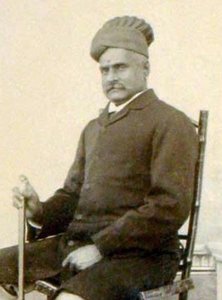
Raja Ravi Varma
1848 - 1906 , India
Kort om kunstneren
- Artistic Movement Or Style: Akademisk og indisk fusjon
- Artists Or Movements Influenced By This Artist: ['Moderne indisk kunst']
- Artists Who Influenced This Artist: ['Europeiske mestere']
- Date Of Birth: 29. april 1848
- Date Of Death: 2. oktober 1906
- Full Name: Raja Ravi Varma
- Nationality: Indisk
- Notable Artworks:
- Hansa Damayanthi
- Maharani av Travancore
- Place Of Birth: Kilimanoor, India
Relaterte artikler
Echoes of Olympus: Mythological Narratives in Western Art Through the Ages
Explore the captivating history of mythological narratives in Western art! From ancient Greece to modern masterpieces, discover iconic artworks & symbolism. Expert analysis and high-quality reproductions at OriginalUniqueArt.
Timeless Legends: A Curated Guide to the Eternal Allure of Mythological Masterpieces
Embark on a sophisticated journey through the eternal allure of mythological art. Discover how master painters breathe life into ancient legends, from Greek deities to Baroque masterpieces, and learn to curate these timeless narratives within your own exquisite art collection.
Personlige mytologier i oljemaleri: Å transformere livshistorier til symbolsk kunstnerisk uttrykk
Utforsk kunsten å skape personlige mytologier i oljemaleri! Lær hvordan du transformerer livshistorier til symbolsk kunst med ekspertråd og inspirasjon. Oppdag din unike stemme.

Raja Ravi Varma: Bridging Tradition & Modernity in 19th-Century Indian Art
Explore the life & art of Raja Ravi Varma, a pioneer who fused European techniques with Indian iconography. Discover his iconic paintings, lasting legacy, and influence on modern Indian art at OriginalUniqueArt.

Timeless Legends: The Eternal Allure of Mythological Figures in Masterpiece Art
Explore the profound beauty of mythological figures through the lens of art history. From Renaissance masterpieces to custom oil reproductions, discover how legendary tales of heroism and divinity are immortalized in fine art for discerning collectors.

