

 Se i rommet
 Del som digitalt kort
 Del
Del
 Detaljer
 Studentguide

 Last ned
 Liknende objekter
 Røntgen
 Lysbildefremvisning
 Besøksstatistikk
Galatea (?)
 1509
1509 63.0 x 100.0 cm
 Les mer
Kjøp et høyoppløselig, forbedret digitalt bilde med langt høyere kvalitet enn forhåndsvisningen på nettet.
Hver fil er omhyggelig klargjort av våre egne spesialister ved hjelp av avanserte verktøy og profesjonell manuell retusjering. Vi sørger for at hvert bilde har eksepsjonell klarhet, presis fargegjengivelse og fine detaljer.
Den endelige filen leveres via e-post innen 72 timer, optimalisert for umiddelbar bruk i profesjonelle, redaksjonelle og trykte miljøer. Dette er den samme kvaliteten som benyttes av ledende designstudioer, utgivere og gallerier.
Digitalt bilde
Last ned en høyoppløselig fil til personlig bruk, utskrift og kreative prosjekter. ( Bytt til trykkversjon Bestill håndmalt reproduksjon)
Inkludert i alle bestillinger av digitale bilder
Profesjonell digital levering, garantert
Når du velger OriginalUniqueArt.com, får du ikke bare et bilde – du mottar et profesjonelt etterbehandlet digitalt kunstverk, skapt med presisjon og med en garantert tilfredshetsgaranti. Her er alt som automatisk følger med din bestilling:

Rask levering på e-post
Din høyoppløselige digitale bildefil sendes til din e-post innen 72 timer etter bestilling – klar til umiddelbar bruk.

KI-forbedret digital fil
Ditt kunstverk blir profesjonelt optimalisert ved hjelp av avanserte AI-verktøy og manuell redigering, noe som sikrer maksimal detaljrikdom, klarhet og fargegjengivelse.

Gratis livslang nybestilling
Har du ved et uhell slettet eller mistet filen din? Ingen bekymring – vi sender den på nytt når som helst, helt gratis.

Ingen importavgifter – noen gang
Nyt ditt kunstverk umiddelbart uten toll, avgifter eller leveringskostnader – digitale nedlastinger er alltid avgiftsfrie.

Garantert fargenøyaktighet
Vi sikrer at det digitale bildet gjenspeiler de originale fargene så nøyaktig som mulig ved hjelp av profesjonelle verktøy og fargehåndtering.

100 dagers tilfredshetsgaranti
Hvis du ikke er fornøyd med ditt digitale bilde, vil vi revidere det eller refundere 100% innen 100 dager – uten spørsmål.

100% Penggaranti
Ikke fornøyd? Få full refusjon innen 100 dager etter at du har mottatt din digitale fil – uten spørsmål.

Rabatt ved storkjøp
Kjøp 3 bilder, spar 10% - Kjøp 5, spar 15% - Kjøp 10+, spar 20%. Ideelt for kreative prosjekter, gallerier og byråer.
Spørsmål og svar
Kan jeg undersøke "Galatea (?)" mer detaljert?
Røntgenvisningen av "Galatea (?)" av Pinturicchio finnes på verkets Røntgen-side: en interaktiv undersøkelse av bildet gjennom elleve optiske lag.
Hvor kan jeg kjøpe et trykk av "Galatea (?)" av Pinturicchio?
"Galatea (?)" er tilgjengelig som et kunsttrykk på bomullslerret eller arkivbestandig lerretspapir. Bestillinger legges inn på siden for Kunsttrykk i høy kvalitet, i den størrelsen du selv velger.
Hvordan finner jeg kunstverk som ligner på "Galatea (?)" av Pinturicchio?
Kunstverk som ligner på "Galatea (?)" av Pinturicchio er samlet på verkets Lignende verk-side.
Kunstnerbiografi
Bernardino di Betto, Known as Pinturicchio
Bernardino di Betto, known to the world as Pinturicchio – a nickname affectionately bestowed upon him for his diminutive stature – emerged from the artistic heartland of Perugia in 1454. His life unfolded during a period of immense cultural ferment, the High Renaissance blossoming across Italy, yet Pinturicchio carved out a unique path, one that blended the lingering elegance of Gothic traditions with the burgeoning innovations of the era. While giants like Leonardo da Vinci and Michelangelo strove for anatomical perfection and dramatic realism, Pinturicchio cultivated a style characterized by refined grace, intricate detail, and a vibrant, decorative sensibility. His journey wasn’t one of revolutionary upheaval, but rather of exquisite refinement – a testament to his skill in transforming established forms into something uniquely captivating.From Umbrian Workshops to Papal Commissions
Pinturicchio's early training remains somewhat shrouded in mystery, though it is believed he honed his skills under the guidance of lesser-known Perugian masters like Bonfigli and Fiorenzo di Lorenzo. A pivotal moment arrived when he entered the orbit of Pietro Perugino, a leading figure of the Umbrian school. According to Giorgio Vasari, Pinturicchio served as an assistant to Perugino, a collaboration that undoubtedly shaped his artistic development. This connection proved crucial in securing a commission for the Sistine Chapel in Rome during the early 16th century. Working alongside some of the most celebrated artists of the time – Botticelli, Ghirlandaio, and Signorelli among them – Pinturicchio contributed to this monumental project, though sadly his frescoes were later destroyed to make way for Michelangelo’s *Last Judgement*. This experience, however, served as a crucial stepping stone, exposing him to new influences and solidifying his reputation.A Prolific Period: Rome and the Borgia Apartments
The years between 1484 and 1492 marked a period of intense productivity for Pinturicchio, primarily centered in Rome. He received commissions from prominent families like the Della Rovere, adorning chapels within the church of Santa Maria del Popolo with his distinctive style. These works showcased his mastery of fresco technique, characterized by delicate figures, richly ornamented backgrounds, and a penchant for intricate decorative motifs. However, it was his work for Pope Alexander VI – Rodrigo Borgia – that truly cemented his place in art history. Commissioned to decorate the Borgia Apartments within the Vatican Palace between 1492 and 1494, Pinturicchio created a suite of rooms lavishly adorned with frescoes depicting mythological scenes, portraits, and allegorical representations. These apartments, though controversial due to their association with the infamous Borgia family, stand as a remarkable example of Renaissance decorative art, revealing Pinturicchio’s ability to blend classical motifs with his own unique aesthetic sensibility. The use of gold leaf, vibrant colors, and illusionistic techniques created an atmosphere of opulent splendor, reflecting the power and ambition of the papal court.Legacy and Enduring Influence
Pinturicchio's artistic legacy is one of refined elegance and meticulous craftsmanship. While he may not have possessed the same level of fame as some of his contemporaries, his influence on subsequent generations of artists is undeniable. His unique style – a harmonious blend of Gothic grace and Renaissance innovation – resonated with those who appreciated subtlety and detail. He demonstrated an exceptional ability to create visually stunning compositions that were both aesthetically pleasing and intellectually stimulating. His work in the Piccolomini Library in Siena, completed shortly before his death in 1513, stands as a testament to his enduring talent. The frescoes depicting scenes from the life of Pope Pius II showcase a clarity of form and color that foreshadows the High Renaissance style. Pinturicchio’s art continues to captivate viewers today, offering a glimpse into a world of beauty, refinement, and artistic mastery – a world where the delicate touch of a “little painter” left an indelible mark on the landscape of Italian Renaissance art.- Notable Works: Frescoes in the Sistine Chapel (destroyed), Borgia Apartments in the Vatican, Piccolomini Library in Siena.
- Influences: Perugino, Umbrian School of Painting, Gothic traditions.
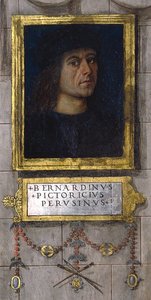
Pinturicchio
1454 - 1513 , Italia
Kort om kunstneren
- Artistic Movement Or Style: Renaissance
- Artists Or Movements Influenced By This Artist: ['Raphael']
- Artists Who Influenced This Artist:
- Perugino
- Bonfigli
- Fiorenzo di Lorenzo
- Date Of Birth: 1454 Perugia Italia
- Date Of Death: 1513 Siena Italia
- Full Name: Bernardino di Betto Biagio
- Nationality: Italian
- Notable Artworks:
- Sistine Chapel frescoes
- Borgia Apartments decor.
- Saint Augustine
- Place Of Birth: Perugia Italia