

 Forhåndsvisning
 Send
Send Del
Del
 Vis detaljer
 Utskriftsvennlig guide

 Last ned bilde
 Liknende objekter
 Røntgenundersøkelse
 Lysbildefremvisning
 Q&A
Q&A Statistikk
The Charlatan
 Oil On Canvas
- WallArt
- Rococo
 1757
1757- Early Modern
 62.0 x 50.0 cm
 Vis hele teksten
Giclée / Kunsttrykk
Giclée- eller lerretsprint av museumskvalitet med rask produksjon og fleksible valgmuligheter for etterbehandling. ( Kjøp håndmalt maleri Bytt til digitalt bilde)




P118B Nkr10

P118H Nkr10

P118W Nkr10

P438Z Nkr10

P508JH Nkr12

P508YH Nkr12

P805H Nkr10

P805Z Nkr10

P919BZ Nkr10

P919G Nkr10

P919XJ Nkr10

P959ZH Nkr10

P968JZ Nkr12

W106C Nkr8

W218G Nkr10

W218JH Nkr8

W218Y Nkr10

W307PJ Nkr10

W316G Nkr10

W316PJ Nkr8

W316Y Nkr10

W398PJ Nkr8

W4111J Nkr10

W500HY Nkr15

W500JH Nkr15

W692G Nkr12

W849H Nkr8

W940BG Nkr15

W953PJ Nkr8




Velg mellom våre forhåndsdefinerte størrelser som bevarer kunstverkets opprinnelige proporsjoner.

Skriv inn ønsket bredde og høyde for å tilpasse trykket til din ramme eller vegg. Et trykk kan kun beskjæres, aldri skaleres opp utover motivets opprinnelige størrelse, noe som betyr at et format med andre proporsjoner vil føre til tap av deler av bildet. Vi sender deg en digital mockup for godkjenning før vi starter trykkeprosessen. Bildet som vises på denne siden viser ikke den faktiske beskjæringen — det er kun mockuppen som viser dette.
Verdensomspennende levering () på 2 uker i stedet for standard 4/5 uker. (31 October)

Gratis ekspressfrakt over hele verden

Lerretsduk av lin av høy kvalitet

Full transportforsikring

Garanti for refusjon av toll og importavgifter

Garantert fargegjengivelse

100 dagers returrett ved fabrikasjonsfeil

100% pengene tilbake-garanti

Rabatt ved flere kjøp
 Glassalternativet er kun tilgjengelig i størrelser under 110 cm

The Charlatan
Giclée / Kunsttrykk
Størrelse på reproduksjon
-


Totalpris for valgte alternativer
Nkr 770
A Glimpse into Venetian Spectacle
In the heart of 1757, Pietro Longhi captured a moment of theatrical deception and social intrigue in his masterful oil on canvas, The Charlatan. This exquisite work serves as a window into the vibrant, often deceptive, pulse of 18th-century Venice. At the center of this Rococo drama stands the charlatan himself, a figure draped in flamboyant attire that commands the eye and signals his role as a purveyor of wonders and dubious remedies. Longhi does not merely paint a man; he paints a performance. The composition is a delicate dance of light and shadow, where the bright, spirited colors characteristic of the Rococo period illuminate the charlatan’s theatricality against the more subdued, observant presence of his audience.
The painting invites the viewer to step into a crowded Venetian street or a private salon, feeling the palpable energy of a crowd held in suspense. As the charlatan gestures with practiced flair, the surrounding onlookers—each rendered with meticulous detail—reveal a spectrum of human emotion. From skeptical glances to wide-eyed wonder, these characters provide a psychological depth that transforms a simple genre scene into a profound study of social dynamics. For the collector or interior designer, this piece offers more than just visual beauty; it provides a narrative anchor, a conversation starter that brings the sophisticated charm and historical weight of the Venetian Republic into any modern space.
Mastery of the Rococo Spirit
Technically, The Charlatan is a triumph of Longhi’s ability to blend intimacy with spectacle. His brushwork, though precise enough to capture the delicate textures of lace and the sheen of silk, maintains a fluid grace that prevents the scene from feeling static. The artist utilizes the Rococo emphasis on asymmetry and light to create a sense of movement, guiding the viewer's gaze from the central performer to the subtle reactions of the crowd. This rhythmic composition ensures that the eye never rests too long on one point, mirroring the restless curiosity of the spectators depicted within the frame.
Beyond its aesthetic brilliance, the painting carries significant historical weight. During this era, charlatans were ubiquitous figures in the Venetian landscape, weaving tales of magic and medicine to captivate the masses. Longhi, often regarded as a chronicler of daily life, uses this subject to explore the boundary between reality and illusion. The symbolism of the charlatan—a man whose very existence is built on a beautiful lie—resonates deeply with the themes of the Rococo era, an age defined by artifice, elegance, and the pursuit of pleasure. To possess a reproduction of this work is to hold a piece of history that celebrates the enduring human fascination with storytelling and the theatricality of life itself.
Spørsmål og svar
Hvilket nasjonalt opphav ligger bak Rococo i "The Charlatan"?
"The Charlatan" ble skapt av Pietro Longhi, som er født i Italia, innenfor Rococo-bevegelsen. Kunstnerens opprinnelse knytter verket til Rococo slik det utøves av kunstnere fra Italia.
Finnes det verk som ligner på "The Charlatan"?
Verker som ligner på "The Charlatan" er oppført på verkets Lignende verk-side.
Hvordan kan jeg forhåndsvise en reproduksjon av "The Charlatan" av Pietro Longhi?
På Se kunstverket i et rom-siden for "The Charlatan" kan du forhåndsvise kunstverket før du bestiller.
Om kunstneren
A Venetian Chronicler of Daily Life
Pietro Longhi, born Pietro Falca in Venice on November 5th, 1701, wasn’t painting grand historical narratives or mythological scenes; he was capturing the quiet dramas unfolding within the city's elegant homes and bustling streets. He became renowned for his witty genre paintings – intimate glimpses into the lives of 18th-century Venetians, a departure from the prevailing artistic trends of his time. The son of Alessandro Falca, a silversmith, Longhi’s early training began under the Veronese painter Antonio Balestra, who recognized and nurtured the young artist's talent. This foundation in traditional technique would later serve as a subtle counterpoint to the innovative spirit he brought to his chosen subject matter. He adopted the surname “Longhi” upon beginning his artistic career, a symbolic shedding of his father’s trade for the pursuit of painting.From Religious Scenes to Venetian Interiors
Longhi's initial works reflected the expectations of the era: altarpieces and religious themes dominated his early portfolio. His 1732 altarpiece for the church of San Pellegrino demonstrates a skillful command of traditional techniques, showcasing broken brushwork and vibrant color glazes characteristic of Venetian painting. These paintings hark back to the stylistic conventions of earlier Venetian masters like Giuseppe Maria Crespi, demonstrating Longhi’s respect for artistic heritage. However, it was in the late 1730s that Longhi truly found his voice, shifting towards the small-scale genre scenes that would define his legacy. This transition wasn't merely a change in subject matter; it represented a deliberate engagement with the burgeoning social and cultural shifts of the time. The 18th century witnessed a growing fascination with the private lives of the bourgeoisie, a focus on domesticity and everyday rituals. Longhi masterfully captured this shift, offering viewers a window into Venetian society that was both charming and subtly satirical. He married Caterina Maria Rizzi in 1732, and together they had eleven children, though only three survived to adulthood. This personal life, while not directly reflected in his art, undoubtedly shaped his understanding of the domestic sphere he so frequently depicted.The “Venetian Hogarth” and a Satirical Eye
Longhi quickly earned the moniker "the Venetian William Hogarth," a testament to his ability to infuse seemingly innocuous scenes with layers of social commentary. Like Hogarth, Longhi didn’t shy away from depicting human foibles and societal contradictions. However, while Hogarth's satire was often pointed and moralizing, Longhi’s tended to be more nuanced, imbued with a gentle irony. His paintings are populated with masked figures – a nod to the ubiquitous Carnival celebrations of Venice – engaged in various activities, from gambling and flirtation to clandestine meetings and dubious transactions. The Concert exemplifies this stylistic approach, presenting an interior scene brimming with social observation. Longhi’s canvases position sex work as generational: in the foreground a young girl appraises her doll, paralleling the older woman’s actions. He wasn't simply recording life as it was; he was offering a sly commentary on its complexities and contradictions. His ability to capture these subtleties is what sets him apart, elevating his genre scenes beyond mere documentation into insightful social observations.Technique, Influence, and Lasting Legacy
Longhi’s technique was as distinctive as his subject matter. He favored small canvases, meticulously rendered with a delicate touch and a keen eye for detail. His interiors are bathed in soft light, creating an atmosphere of intimacy and realism. He possessed a remarkable ability to depict textures – the sheen of silk, the roughness of wood, the delicate folds of fabric – adding depth and authenticity to his scenes. Longhi’s influence extended beyond his immediate contemporaries; he anticipated later developments in genre painting, paving the way for artists like François Boucher and Jean-Honoré Fragonard. He served as Director of the Academy of Drawing and Carving from 1763, furthering Venetian artistic tradition and fostering a new generation of painters. Longhi died peacefully in Venice on May 8th, 1785, leaving behind a legacy of approximately 200 paintings that continue to captivate audiences worldwide. He remains a vital figure in the history of Venetian art, celebrated for his unique blend of observation, wit, and technical skill – a true chronicler of 18th-century life.
Pietro Longhi
1701 - 1785 , Italia
Kort om kunstneren
- Artistic Movement Or Style: Venetian painting, Rococo
- Artists Or Movements Influenced By This Artist: ['William Hogarth']
- Artists Who Influenced This Artist:
- Antonio Balestra
- Giuseppe Maria Crespi
- Date Of Birth: November 5, 1701
- Date Of Death: May 8, 1785
- Full Name: Pietro Longhi
- Nationality: Italian
- Notable Artworks:
- The Tailor
- The Baptism
- Painter in his studio
- Place Of Birth: Venice, Italy
Relaterte artikler

25 Must-See Masterpieces at Venice's Gallerie dell'Accademia
Embark on a journey through Venice's soul with 25 iconic masterpieces from Gallerie dell'Accademia. From Titian to Tintoretto, explore the light and legacy of the Venetian Renaissance. Find museum-quality art inspiration and reproductions at OriginalUniqueArt.com. Explore the full collection online.

25 Must-See Masterpieces at Venice's Gallerie dell'Accademia
Journey through the soul of Venice with our curated guide to 25 iconic masterpieces at Gallerie dell'Accademia. From Titian’s vibrant colors to Tintoretto’s drama, explore the legends of the Venetian Renaissance. Find museum-quality art inspiration on OriginalUniqueArt.com.

25 Must-See Masterpieces at Venice's Gallerie dell'Accademia
Embark on a journey through Venice's soul with 25 iconic masterpieces from Gallerie dell'Accademia. From Titian to Tintoretto, explore the legends of Venetian Renaissance art and find inspiration for museum-quality decor. Discover all masterpieces on OriginalUniqueArt.com.

25 Must-See Masterpieces at Gallerie dell'Accademia, Venice
Embark on a journey through Venetian history with the 25 greatest masterpieces of Gallerie dell'Accademia. From Titian to Tintoretto, explore the soul of the Renaissance. Find museum-quality art reproductions and decor inspiration. Discover all masterpieces on OriginalUniqueArt.com.
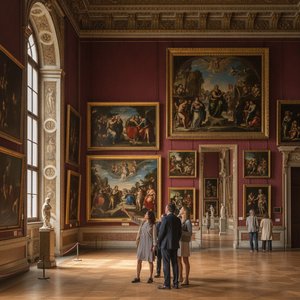
25 Must-See Masterpieces at Venice's Gallerie dell'Accademia
Embark on a journey through Venice's soul with 25 iconic masterpieces from Gallerie dell'Accademia. From Titian to Tintoretto, explore the luminous colors and timeless stories of the Venetian Renaissance. Find museum-quality inspiration for your decor. Discover all masterpieces on OriginalUniqueArt.com