

 Se i rommet
 Del som digitalt kort
 Del
Del
 Detaljer
 Studentguide

 Last ned
 Liknende objekter
 Røntgen
 Lysbildefremvisning
 Besøksstatistikk
Extreme Unction
 Etching
- Rococo
 1755
1755- Early Modern
 57.0 x 44.0 cm
 Los Angeles County Museum of Art
 Les mer
Håndlaget oljereproduksjon
Håndmalt olje på lerret i din valgte størrelse og ramme, laget på bestilling av våre kunstnere. ( Bytt til trykkversjon Gå til digitalt bilde)




P118B Nkr10

P118H Nkr10

P118W Nkr10

P438Z Nkr10

P508JH Nkr12

P508YH Nkr12

P805H Nkr10

P805Z Nkr10

P919BZ Nkr10

P919G Nkr10

P919XJ Nkr10

P959ZH Nkr10

P968JZ Nkr12

W106C Nkr8

W218G Nkr10

W218JH Nkr8

W218Y Nkr10

W307PJ Nkr10

W316G Nkr10

W316PJ Nkr8

W316Y Nkr10

W398PJ Nkr8

W4111J Nkr10

W500HY Nkr15

W500JH Nkr15

W692G Nkr12

W849H Nkr8

W940BG Nkr15

W953PJ Nkr8




Velg mellom våre forhåndsdefinerte størrelser som bevarer kunstverkets opprinnelige proporsjoner.

Skriv inn bredden og høyden du trenger, slik at den passer til din ramme eller vegg. Dette er håndmalt, så for en størrelse med en annen form kan kunstneren male litt mer rundt bildet, eller beskjære det noe — du velger selv. Vi sender deg en digital mockup for godkjenning før maleriet påbegynnes. Bildet som vises på denne siden viser ikke det faktiske resultatet — kun mockuppen gjør det.
Etter bestilling vil OriginalUniqueArt.com-teamet sende e-post til kunden for instruksjoner og sende et utkast (mockup) som forhåndsvisning.
Verdensomspennende levering () på 3–4 uker i stedet for standard 5 uker. (25 October). Ingen kompromisser med kvaliteten.

Gratis ekspressfrakt over hele verden

Lerretsduk av høykvalitets lin

Full transportforsikring

Garanti for refusjon av toll og importavgifter

Garantert fargeekthet

100 dagers returrett ved fabrikasjonsfeil

100% pengene tilbake-garanti

Mengderabatt
 Glassalternativet er kun tilgjengelig i størrelser under 110 cm

Extreme Unction
Reproduksjonsmetode
Format på reproduksjon
-


Totalpris
Nkr 2852
A Somber Glimpse into Venetian Devotion
In the quiet, shadowed corners of eighteenth-century Venice, life was often defined by its most profound transitions. Pietro Longhi’s 1755 etching, Extreme Unction, serves as a hauntingly beautiful window into these private moments of mortality and faith. Unlike the grand, sweeping canvases of his contemporaries that celebrated the triumphs of gods and heroes, Longhi turned his gaze toward the intimate, often heavy atmosphere of the Venetian domestic sphere. This particular work captures the solemnity of the Last Rites, a sacred ritual where a priest administers the final sacraments to the departing soul. Through the delicate medium of etching, Longhi masterfully orchestrates a scene that is as much about the presence of the divine as it is about the palpable weight of human grief.
The composition draws the viewer into a room thick with tension and reverence. At the heart of the narrative lies the bed, where the patient rests in a state of vulnerability, surrounded by the witnesses of their final journey. The priest, an elder figure draped in heavy, traditional robes, stands as the bridge between the earthly and the eternal. Longhi’s ability to render texture through fine, etched lines allows us to feel the weight of the liturgical garments and the stillness of the air. Scattered throughout the room are the humble artifacts of daily life—cups, bowls, and vases—which, in this context, take on a symbolic significance. These objects, mundane in any other setting, become silent participants in the ritual, grounding the spiritual event in the tangible reality of a Venetian household.
Mastery of Line and Emotional Resonance
Technically, this etching showcases Longhi’s profound command over light and shadow, a skill honed during his early training under Antonio Balestra. The monochromatic palette of the etching does not strip the scene of its depth; rather, it enhances the dramatic chiaroscuro effect, pulling focus to the central figures while allowing the periphery to recede into a mysterious, atmospheric gloom. The interplay of light hitting the surfaces of the ceramic bowls and the metallic glint of a cup creates a sense of three-dimensional space that invites the collector to step directly into the room. For the discerning eye, the precision of the linework reveals a master who understood that the smallest detail—the fold of a sleeve or the tilt of a head—could communicate the deepest complexities of human emotion.
For art lovers and interior designers alike, Extreme Unction offers more than just historical interest; it provides a profound emotional anchor for a curated space. The piece possesses a timeless, melancholic elegance that complements sophisticated, classical interiors. It is a work that demands contemplation, making it an ideal centerpiece for a study, a library, or a gallery wall dedicated to the mastery of printmaking. Owning a high-quality reproduction of this etching allows one to preserve the somber beauty of Longhi’s vision, bringing a sense of historical gravity and quiet, reflective grace into the modern home.
Spørsmål og svar
Hvilken fargeharmoni utviser "Extreme Unction" av Pietro Longhi?
Fargene i "Extreme Unction" av Pietro Longhi viser en Unified Palette harmoni. Harmoni beskriver hvordan fargene forholder seg til hverandre.
Hvilket kontrastnivå viser "Extreme Unction" av Pietro Longhi?
Lys-mørke-kontrasten i "Extreme Unction" er registrert som Bold. Kontrast beskriver hvor sterkt lyse og mørke områder skiller seg fra hverandre.
Hvem selger håndmalte kopier av "Extreme Unction" av Pietro Longhi?
Håndmalte kopier av "Extreme Unction" av Pietro Longhi selges på denne nettsiden: en håndmalt oljereproduksjon på linlerret, bestilt fra dens Håndmalt reproduksjon-side.
Kunstnerbiografi
A Venetian Chronicler of Daily Life
Pietro Longhi, born Pietro Falca in Venice on November 5th, 1701, wasn’t painting grand historical narratives or mythological scenes; he was capturing the quiet dramas unfolding within the city's elegant homes and bustling streets. He became renowned for his witty genre paintings – intimate glimpses into the lives of 18th-century Venetians, a departure from the prevailing artistic trends of his time. The son of Alessandro Falca, a silversmith, Longhi’s early training began under the Veronese painter Antonio Balestra, who recognized and nurtured the young artist's talent. This foundation in traditional technique would later serve as a subtle counterpoint to the innovative spirit he brought to his chosen subject matter. He adopted the surname “Longhi” upon beginning his artistic career, a symbolic shedding of his father’s trade for the pursuit of painting.From Religious Scenes to Venetian Interiors
Longhi's initial works reflected the expectations of the era: altarpieces and religious themes dominated his early portfolio. His 1732 altarpiece for the church of San Pellegrino demonstrates a skillful command of traditional techniques, showcasing broken brushwork and vibrant color glazes characteristic of Venetian painting. These paintings hark back to the stylistic conventions of earlier Venetian masters like Giuseppe Maria Crespi, demonstrating Longhi’s respect for artistic heritage. However, it was in the late 1730s that Longhi truly found his voice, shifting towards the small-scale genre scenes that would define his legacy. This transition wasn't merely a change in subject matter; it represented a deliberate engagement with the burgeoning social and cultural shifts of the time. The 18th century witnessed a growing fascination with the private lives of the bourgeoisie, a focus on domesticity and everyday rituals. Longhi masterfully captured this shift, offering viewers a window into Venetian society that was both charming and subtly satirical. He married Caterina Maria Rizzi in 1732, and together they had eleven children, though only three survived to adulthood. This personal life, while not directly reflected in his art, undoubtedly shaped his understanding of the domestic sphere he so frequently depicted.The “Venetian Hogarth” and a Satirical Eye
Longhi quickly earned the moniker "the Venetian William Hogarth," a testament to his ability to infuse seemingly innocuous scenes with layers of social commentary. Like Hogarth, Longhi didn’t shy away from depicting human foibles and societal contradictions. However, while Hogarth's satire was often pointed and moralizing, Longhi’s tended to be more nuanced, imbued with a gentle irony. His paintings are populated with masked figures – a nod to the ubiquitous Carnival celebrations of Venice – engaged in various activities, from gambling and flirtation to clandestine meetings and dubious transactions. The Concert exemplifies this stylistic approach, presenting an interior scene brimming with social observation. Longhi’s canvases position sex work as generational: in the foreground a young girl appraises her doll, paralleling the older woman’s actions. He wasn't simply recording life as it was; he was offering a sly commentary on its complexities and contradictions. His ability to capture these subtleties is what sets him apart, elevating his genre scenes beyond mere documentation into insightful social observations.Technique, Influence, and Lasting Legacy
Longhi’s technique was as distinctive as his subject matter. He favored small canvases, meticulously rendered with a delicate touch and a keen eye for detail. His interiors are bathed in soft light, creating an atmosphere of intimacy and realism. He possessed a remarkable ability to depict textures – the sheen of silk, the roughness of wood, the delicate folds of fabric – adding depth and authenticity to his scenes. Longhi’s influence extended beyond his immediate contemporaries; he anticipated later developments in genre painting, paving the way for artists like François Boucher and Jean-Honoré Fragonard. He served as Director of the Academy of Drawing and Carving from 1763, furthering Venetian artistic tradition and fostering a new generation of painters. Longhi died peacefully in Venice on May 8th, 1785, leaving behind a legacy of approximately 200 paintings that continue to captivate audiences worldwide. He remains a vital figure in the history of Venetian art, celebrated for his unique blend of observation, wit, and technical skill – a true chronicler of 18th-century life.
Pietro Longhi
1701 - 1785 , Italia
Kort om kunstneren
- Artistic Movement Or Style: Venetian painting, Rococo
- Artists Or Movements Influenced By This Artist: ['William Hogarth']
- Artists Who Influenced This Artist:
- Antonio Balestra
- Giuseppe Maria Crespi
- Date Of Birth: November 5, 1701
- Date Of Death: May 8, 1785
- Full Name: Pietro Longhi
- Nationality: Italian
- Notable Artworks:
- The Tailor
- The Baptism
- Painter in his studio
- Place Of Birth: Venice, Italy
Relaterte artikler

The Intricate World of Etching: A Historical Survey of Technique, Aesthetic Evolution, and Enduring Artistic Impact
Explore the rich history of etching, from its origins to modern practice. Discover techniques, key artists like Rembrandt, and insights for collectors. A comprehensive guide by OriginalUniqueArt.

Pietro Longhi's Venetian Scenes: A Study of Rococo Society & Domestic Life
Explore the captivating world of Pietro Longhi's Venetian scenes! Discover insightful analysis of his Rococo masterpieces & social commentary on 18th-century life. Learn about this 'Venetian Hogarth' and his lasting artistic legacy.

Etching: A Historical Survey of Technique, Aesthetic Qualities & Enduring Artistic Significance
Explore the rich history of etching, from its origins to Rembrandt's masterful innovations. Discover the technique, aesthetic qualities & enduring legacy of this captivating art form. Expert insights for collectors and enthusiasts.
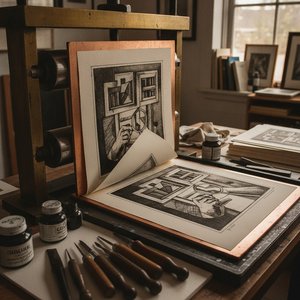
Etching Unlocked: The Sharp, High-Impact Art of Line and Shadow for the Modern Collector
Master the high-impact world of etching. Explore the transformative power of line and shadow through the intaglio tradition, from its armor-making origins to modern collecting strategies for the sophisticated art enthusiast.

Etsernes Mesterverk: 10 Verk Som Forandret Kunsthistorien – OriginalUniqueArt.no
Utforsk 10 legendariske etser av Rembrandt, Goya og Dürer som revolusjonerte kunsthistorien! Oppdag historiene bak mesterverkene og finn inspirasjon til din interiørdesign hos OriginalUniqueArt.no – museumskvalitet reproduksjoner.