

 Se i rommet
 Del som digitalt kort
 Del
Del
 Detaljer
 Studentguide

 Last ned
 Liknende objekter
 Røntgen
 Lysbildefremvisning
 Besøksstatistikk
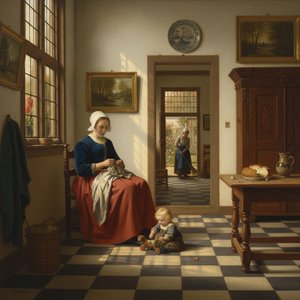
Interior with a Young Couple
 Oil On Panel
- WallArt
- Dutch Golden Age
 1662
1662- Early Modern
 55.0 x 63.0 cm
 Metropolitan Museum of Art
 Les mer
Giclée / Kunsttrykk
Giclée- eller lerretsprint av museumskvalitet med rask produksjon og fleksible valgmuligheter for etterbehandling. ( Bestill håndmalt reproduksjon Gå til digitalt bilde)




P118B Nkr10

P118H Nkr10

P118W Nkr10

P438Z Nkr10

P508JH Nkr12

P508YH Nkr12

P805H Nkr10

P805Z Nkr10

P919BZ Nkr10

P919G Nkr10

P919XJ Nkr10

P959ZH Nkr10

P968JZ Nkr12

W106C Nkr8

W218G Nkr10

W218JH Nkr8

W218Y Nkr10

W307PJ Nkr10

W316G Nkr10

W316PJ Nkr8

W316Y Nkr10

W398PJ Nkr8

W4111J Nkr10

W500HY Nkr15

W500JH Nkr15

W692G Nkr12

W849H Nkr8

W940BG Nkr15

W953PJ Nkr8




Velg mellom våre forhåndsdefinerte størrelser som bevarer kunstverkets opprinnelige proporsjoner.

Skriv inn bredden og høyden du trenger, slik at den passer til din ramme eller vegg. Et trykk kan kun beskjæres, aldri gjøres større enn bildet, så et format med en annen form vil miste en del av motivet. Vi sender deg en digital mockup for godkjenning før vi trykker noe som helst. Bildet som vises på denne siden viser ikke den faktiske beskjæringen — det er kun mockuppen som gjør det.
Verdensomspennende levering () på 2 uker i stedet for standard 4/5 uker. (25 October)

Gratis ekspressfrakt over hele verden

Lerretsduk av høykvalitets lin

Full transportforsikring

Garanti for refusjon av toll og importavgifter

Garantert fargeekthet

100 dagers returrett ved fabrikasjonsfeil

100% pengene tilbake-garanti

Mengderabatt
 Glassalternativet er kun tilgjengelig i størrelser under 110 cm

Interior with a Young Couple
Giclée / Kunsttrykk
Format på reproduksjon
-


Totalpris
Nkr 760
A Window into Dutch Domestic Tranquility
In the quiet corners of the seventeenth century, amidst the burgeoning prosperity of the Dutch Golden Age, Pieter de Hooch captured something far more profound than mere domesticity. His masterpiece, “Interior with a Young Couple,” painted in 1662, serves as an exquisite portal into a world defined by peace, intimacy, and the subtle dance of light. As one gazes upon this oil-on-panel treasure, currently held in the prestigious Metropolitan Museum of Art, there is an immediate sense of being invited into a private sanctuary. The scene is not merely a depiction of a room, but a carefully orchestrated meditation on the beauty found within the mundane rituals of middle-class life.
The composition draws the viewer inward through a masterful use of perspective and light. De Hooch, a luminary of his era, possessed an unparalleled ability to manipulate natural illumination to create depth and atmosphere. In this work, light pours through a window, casting soft glows upon the figures and highlighting the textures of the domestic setting. This technique does more than just illuminate the room; it breathes life into the very air, creating a palpable warmth that makes the space feel inhabited and eternally present. The interplay between sunlit surfaces and velvety shadows lends a rhythmic quality to the architecture, guiding the eye from the foreground figures toward the receding planes of the interior.
The Poetry of Human Connection
At the heart of this painting lies a tender narrative of companionship. The central figures—a young man and woman—are caught in a moment of quiet, shared existence. While the woman gazes thoughtfully, perhaps lost in reflection or observing her own image in a mirror, the man engages playfully with a canine companion. This interaction introduces a layer of gentle movement and warmth to the stillness of the room. The presence of the dog, a common motif in Dutch genre painting, often symbolizes fidelity and the comforts of a well-ordered home, reinforcing the themes of love and familial contentment that permeate the canvas.
Beyond the human subjects, the meticulous details of the room speak to the aspirations of the Dutch bourgeoisie. Every element, from the placement of the chairs to the soft light hitting the furniture, suggests a life of stability and refined taste. For the modern collector or interior designer, this painting offers more than just aesthetic beauty; it provides a blueprint for creating spaces that feel both sophisticated and deeply soulful. The artwork transcends its historical era, offering a timeless reminder that true luxury is often found in the quiet, luminous moments of togetherness and the serene atmosphere of a well-loved home.
To possess a high-quality reproduction of this work is to bring a piece of history’s most tranquil light into one's own environment. It serves as an anchor of calm, a conversation piece that invites contemplation, and a testament to the enduring power of the Dutch masters to find the extraordinary within the ordinary.
Spørsmål og svar
Hvilken atmosfære ville en reproduksjon av "Interior with a Young Couple" av Pieter de Hooch tilføre et rom?
Den Serene atmosfæren i "Interior with a Young Couple" av Pieter de Hooch passer perfekt til det anbefalte rommet: et Living Room.
Hvilken stil tilhører "Interior with a Young Couple"?
"Interior with a Young Couple" er et verk innenfor Dutch Golden Age. Retningen angir den kunstneriske tradisjonen verket er en del av.
Kan jeg se "Interior with a Young Couple" av Pieter de Hooch under ulike lysforhold?
"Interior with a Young Couple" kan undersøkes lag for lag på verkets Røntgen-side, en visning inspirert av en konservators lysbord med elleve optiske avlesninger av bildet.
Kunstnerbiografi
Early Life and Training
Pieter de Hooch, en prominent figur i den nederlandske gullalderen, ble født i Rotterdam den 20. desember 1629. Han var eldste barnet til Hendrick Hendricksz de Hooch, en murmester, og Annetje Pieters, en jordmor. Lite er kjent om hans barndom, men det antas at han arbeidet i Rotterdam, Delft og Amsterdam. De Hoochs kunstneriske utdannelse fant sted i Haarlem under landskapsmaleren Nicolaes Berchem, sammen med Jacob Ochtervelt. Denne perioden la grunnlaget for hans fremtidige suksess som maler av rolige hjemmemiljøer med et åpent vindu. Han ble sett på som en elev av Berchem, og det er antatt at han lærte mye av hans stil og teknikker.Artistic Style and Themes
De Hoochs kunst er preget av sin oppmerksomhet på detaljer, naturalisme og bruk av lys. Hans malerier skildret ofte hverdagsliv, og reflekterte verdiene og ambisjonene til den nye middelklassen. Et tydelig eksempel på denne stilen er "Courtyard of a House in Delft" (1658), som viser hans evne til å fange de vanlige detaljene i dagliglivet. Hans verk deler også temaer og komposisjoner med Emanuel de Witte, men fokuset hans på mennesker og deres relasjoner skiller ham ut. Dette er tydelig i "Woman Nursing" (1658) og "Woman with a Baby on Her Lap" (1658), som demonstrerer hans interesse for hjemmemiljøer. Han var spesielt interessert i å fange lysets spill og hvordan det påvirket overflater og rom, noe som er tydelig i mange av hans mest kjente arbeider.Notable Works and Legacy
Noen av De Hoochs mest kjente verk inkluderer:- "The Merry Drinker" (ca. 1650)
- "Cardplayers in a Sunlit Room" (1658)
- "A Woman Preparing Bread and Butter for a Boy" (1661)
Museums and Collections
De Hoochs verk kan finnes i flere museer, inkludert det kongelige kunstmuséet i Antwerpen, Belgia, som har en omfattende samling av europeisk kunst fra 1500-tallet til 1900-tallet. Hans malerier er verdifulle eksempler på den nederlandske gullalderens kunst og forteller historier om hverdags livet i det gamle Nederland.
Pieter de Hooch
1629 - 1694 , Nederland
Kort om kunstneren
- Artistic Movement Or Style: Dutch Gouden Eeuw
- Artists Or Movements Influenced By This Artist: ['Johannes Vermeer']
- Artists Who Influenced This Artist: ['Nicolaes Pieterszoon Berchem']
- Date Of Birth: 20. desember 1629
- Date Of Death: etter 1684
- Full Name: Pieter Hendricksz de Hooch
- Nationality: Nederlands
- Notable Artworks:
- The Empty Glass
- A Dutch Courtyard
- Woman and Child in a Courtyard
- Place Of Birth: Rotterdam, Nederland
Relaterte artikler

Golden Light & Dutch Skies: The Timeless Magic of Dutch Golden Age Landscapes
Discover the breathtaking beauty of Dutch Golden Age landscapes. Explore the mastery of light, chiaroscuro, and 17th-century realism through an expert art history lens, celebrating the enduring legacy of the Dutch Masters for discerning collectors and art lovers.
Pieter de Hooch: Illuminating Dutch Domestic Life & Golden Age Charm
Explore the captivating world of Pieter de Hooch, a master of Dutch Golden Age painting. Discover his innovative use of light, intimate domestic scenes, and lasting influence on art history. Learn more at OriginalUniqueArt.

Masterpieces of the Dutch Golden Age: How a Global Market Revolutionized Art History
Explore the profound impact of the Dutch Golden Age. Discover how a global trade revolution transformed art history through breathtaking realism, masterful light, and the elevation of everyday life into timeless masterpieces for the modern collector.

De 10 Mesterverkene som Definerte den Nederlandsk Gyldne Tidsalder – Kunst & Interiør
Oppdag de 10 ikoniske mesterverkene fra den nederlandske gullalderen! Lær om Rembrandt, Vermeer og andre store kunstnere. Finn inspirasjon til klassisk interiørdekorasjon og kjøp museumskvalitets reproduksjoner på OriginalUniqueArt.com.

Mastering Light & Shadow: A Journey Through the Dutch Golden Age's Luminous Legacy
Embark on a cultural journey through the Dutch Golden Age. Explore the masterful interplay of light and shadow in 17th-century masterpieces, from Rembrandt to Vermeer, and discover how this era of profound realism continues to inspire fine art collectors today.


