

 Se i rommet
 Del som digitalt kort
 Del
Del
 Detaljer
 Studentguide

 Last ned
 Liknende objekter
 Røntgen
 Lysbildefremvisning
 Besøksstatistikk
Teapot
 Modern Ceramics
 10.0 x 24.0 cm
 Jødisk museum Berlin
 Les mer
Kunstverket som vises på denne siden er beskyttet av opphavsretten, noe som betyr at vi ikke har juridisk tillatelse til å lage eller selge identiske reproduksjoner. Denne beskyttelsen håndheves i henhold til internasjonale avtaler som for eksempel Bernerkonvensjonen og av nasjonale lover, inkludert de som er fastsatt i Amerikansk opphavsrettslov – Tittel 17.
Denne metoden er i fullt samsvar med opphavsrettslige regler, da den ikke innebærer kopiering eller duplisering av det beskyttede kunstverket. I stedet er det snakk om en kreativ nytolkning – et nytt maleri som er inspirert av originalen, men ikke identisk med den.
Giclée / Kunsttrykk
Giclée- eller lerretsprint av museumskvalitet med rask produksjon og fleksible valgmuligheter for etterbehandling. ( Bestill håndmalt reproduksjon Gå til digitalt bilde)




































Velg mellom våre forhåndsdefinerte størrelser som bevarer kunstverkets opprinnelige proporsjoner.

Skriv inn bredden og høyden du trenger, slik at den passer til din ramme eller vegg. Et trykk kan kun beskjæres, aldri gjøres større enn bildet, så et format med en annen form vil miste en del av motivet. Vi sender deg en digital mockup for godkjenning før vi trykker noe som helst. Bildet som vises på denne siden viser ikke den faktiske beskjæringen — det er kun mockuppen som gjør det.
Verdensomspennende levering () på 2 uker i stedet for standard 4/5 uker. (28 October)

Gratis ekspressfrakt over hele verden

Lerretsduk av høykvalitets lin

Full transportforsikring

Garanti for refusjon av toll og importavgifter

Garantert fargeekthet

100 dagers returrett ved fabrikasjonsfeil

100% pengene tilbake-garanti

Mengderabatt
 Glassalternativet er kun tilgjengelig i størrelser under 110 cm

Teapot
Giclée / Kunsttrykk
Format på reproduksjon
-


Totalpris
Nkr 768
Spørsmål og svar
Hvor kommer de besøkende til "Teapot" av Paula Ahronson fra?
En Statistikk-side eksisterer for "Teapot". Den viser månedlige besøkstall for kunstverket og kunstnerens andre verk, med oppdeling etter land og språk.
Hvor lys er "Teapot" totalt sett?
Den oppfattede lysstyrken til "Teapot" av Paula Ahronson er brilliant. Den kan tilpasses lysforholdene i det tiltenkte rommet.
Fremstår fargene i "Teapot" som sterke eller duse?
Fargene i "Teapot" av Paula Ahronson har en Monochromatic intensitet.
Kunstnerbiografi
A Pioneer of Israeli Ceramics: The Life and Work of Paula Ahronson
Paula Ahronson (1908-1980) stands as a pivotal figure in the development of modern ceramics in Israel, though her story is one often overshadowed by the broader narratives of art history. Born in Hamburg, Germany, into a long-established Sephardic family, Ahronson’s early life was steeped in the artistic traditions of her region. She pursued studies in applied arts at the Landeskunst-Schule für Kunstgewerbe in Hamburg until 1928, under the guidance of Friedrich Adler, laying a foundation that would later be powerfully reshaped by new cultural contexts. This formal training instilled in her a Bauhaus sensibility – an appreciation for functional design and clean lines – which became a defining characteristic of her work, even as she moved away from its more rigid tenets. A pivotal moment arrived in 1932 when she first encountered Eva Samuel during a trip to Palestine; this meeting would forge a lifelong artistic partnership that fundamentally altered the course of ceramic art in the region.From Germany to Rishon le-Zion: Collaboration and Innovation
The rise of Nazism prompted Ahronson’s immigration to Palestine in June 1933, a decision driven not only by personal safety but also by a burgeoning Zionist commitment. She married Rudi Ahronson in 1934 and settled in Rishon le-Zion, where she joined forces with Eva Samuel to establish the “Kad ve-Sefel” workshop – meaning "Jug and Mug" in Hebrew. This collaboration was born of necessity as much as artistic vision; Palestine lacked a strong tradition of ceramic production, and the two women sought to introduce functional, everyday pottery that would meet the needs of the growing population. Their work deliberately eschewed elaborate ornamentation, favoring instead simple forms, earthy tones, and a focus on usability. The workshop quickly became a hub for innovation, experimenting with local materials and developing unique glazing techniques suited to the arid climate. This wasn’t merely about creating aesthetically pleasing objects; it was about building a new visual culture rooted in the realities of life in Palestine.A Distinctive Aesthetic: Blending Heritage and Environment
Ahronson's ceramics, often characterized by their textured surfaces and subtle turquoise glazes, reflect a fascinating interplay between her German artistic heritage and the landscapes of Palestine. While influenced by the Bauhaus emphasis on functionality, she infused her work with a distinctly Mediterranean sensibility – a warmth and earthiness that distinguished it from the more austere aesthetic of European modernism. The choice of materials was also significant; they actively sought out local clays and experimented with firing techniques to achieve unique effects. Her pieces weren’t simply vessels for practical use but rather embodiments of a new identity, blending tradition and innovation in a way that resonated deeply with the pioneering spirit of early Israeli society. She gave birth to three sons while continuing her artistic endeavors, balancing motherhood with her dedication to ceramics.Legacy and Influence: Teaching and Beyond
Ahronson’s commitment to fostering ceramic arts extended beyond her own workshop. From 1960, she dedicated herself to teaching at the WIZO vocational high school, nurturing a new generation of Israeli ceramicists. She ran her own studio from 1962 to 1971, continuing to refine her techniques and explore new forms. Her influence can be seen in the work of numerous artists who followed in her footsteps, establishing a tradition of functional yet aesthetically compelling ceramics that continues to thrive in Israel today. While she didn’t achieve widespread international recognition during her lifetime, Ahronson's contribution to Israeli art is now increasingly acknowledged as foundational. She passed away in Tel Aviv in 1984, leaving behind a legacy of artistic innovation and a body of work that beautifully captures the spirit of a nation in formation. Her pieces are not merely objects; they are tangible expressions of cultural identity, resilience, and the enduring power of collaboration.
Paula Ahronson
1908 - 1980 , Germany
Kort om kunstneren
- Full Name: Paula Ahronson
- Nationality: German-Israeli
- Date Of Birth: 1908
- Date Of Death: 1980
- Place Of Birth: Hamburg, Germany
- Notable Artworks: ['Teapot']
- Artistic Movement Or Style: Modern Ceramics
- Artists Who Influenced This Artist: ['Friedrich Adler']
Relaterte artikler
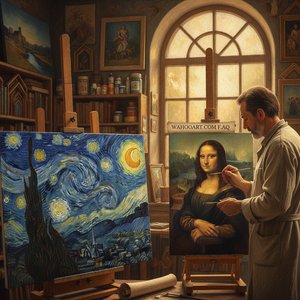
OriginalUniqueArt.com F.A.Q.: Why Our Handmade Oil Reproductions Are Museum-Quality Masterpieces
Discover why elite collectors trust OriginalUniqueArt.com for museum-quality, hand-painted oil reproductions. Explore our bespoke commissioning process, technical mastery of the Old Masters, and expert art consultation services designed to bring timeless beauty into your private collection.