

 Forhåndsvisning
 Send
Send Del med andre
 Vis detaljer

 Last ned bildet
 Liknende objekter
 Røntgenundersøkelse
 Lysbildefremvisning
Morphine Addicts
 Acrylic On Canvas
- WallArt
- Impressionism
 1887
1887 24.0 x 37.0 cm
 Metropolitan Museum of Art
 Vis hele teksten
Kjøp et høyoppløselig, forbedret digitalt bilde som er langt bedre enn forhåndsvisningen på nettet.
Hver fil er omhyggelig klargjort av våre egne spesialister ved hjelp av avanserte verktøy og profesjonell manuell retusjering. Vi sørger for at hvert bilde har eksepsjonell klarhet, presis fargegjengivelse og fine detaljer.
Den endelige filen leveres via e-post innen 72 timer, optimalisert for umiddelbar bruk i profesjonelle, redaksjonelle og trykte miljøer. Dette er den samme kvaliteten som benyttes av ledende designstudioer, utgivere og gallerier.
Digitalt bilde
Last ned en høyoppløselig fil for personlig bruk, utskrift og kreative prosjekter. ( Kjøp trykk Kjøp håndlaget maleri)
Inkludert i alle bestillinger av digitale bilder
Ekspert digital levering, garantert
Når du velger OriginalUniqueArt.com, får du ikke bare et bilde – du mottar et profesjonelt forbedret digitalt kunstverk, skapt med presisjon og med en garantert tilfredshetsgaranti. Her er alt som automatisk følger med din bestilling:

Rask digital levering
Din høyoppløselige digitale bildefil sendes til din e-post innen 72 timer etter bestilling – klar til umiddelbar bruk.

KI-forbedret digital fil
Ditt kunstverk blir profesjonelt optimalisert ved hjelp av avanserte AI-verktøy og manuell redigering, noe som sikrer maksimal detaljrikdom, klarhet og fargegjengivelse.

Gratis livslang nyutlevering
Har du ved et uhell slettet eller mistet filen din? Ingen bekymring – vi sender den på nytt når som helst, helt gratis.

Ingen importavgifter – noen gang
Nyt ditt kunstverk umiddelbart uten toll, avgifter eller leveringskostnader – digitale nedlastinger er alltid avgiftsfrie.

Garantert fargenøyaktighet
Vi sikrer at ditt digitale bilde gjenspeiler de originale fargene så nøyaktig som mulig ved hjelp av profesjonelle verktøy og fargehåndtering.

100 dagers tilfredshetsgaranti
Hvis du ikke er fornøyd med ditt digitale bilde, vil vi revidere det eller refundere 100% innen 100 dager – uten spørsmål.

100% Penggaranti
Ikke fornøyd? Få full refusjon innen 100 dager etter at du har mottatt din digitale fil – uten spørsmål.

Rabatt ved storkjøp
Kjøp 3 bilder, spar 10% - Kjøp 5, spar 15% - Kjøp 10+, spar 20%. Ideelt for kreative prosjekter, gallerier og byråer.
Paul Albert Besnard - Morphine Addicts
Paul Albert Besnard (1849-1934) stands as a singular figure in French art of the late nineteenth and early twentieth centuries—a painter who stubbornly resisted categorization while simultaneously achieving remarkable success across diverse artistic mediums. Born in Paris, he possessed an innate talent nurtured by formal training at the École des Beaux-Arts under Jean Bremond and profoundly shaped by the pioneering spirit of Alexandre Cabanel, whose meticulous realism served as a cornerstone for Besnard’s initial artistic explorations. His academic grounding provided a disciplined foundation upon which he would later forge his own distinctive path, one characterized by an unwavering fascination with color and light—concepts championed by the Impressionists. Despite eschewing the overtly dramatic aesthetic favored by his contemporaries, Besnard skillfully adapted Impressionistic techniques to monumental decorative pro Besnard’s oeuvre is marked by a profound sensitivity to human emotion and psychological nuance, particularly evident in his portraits of women – figures rendered with exquisite detail and imbued with an aura of melancholy. “Morphine Addicts,” completed in 1887, exemplifies this artistic approach, presenting two women presented in a starkly lit laboratory setting—a juxtaposition that immediately invites contemplation on themes of illness, addiction, and the complexities of human experience. The artist’s masterful command of etching technique contributes significantly to the artwork's expressive power, capturing subtle tonal variations and textural nuances with remarkable precision. The composition itself is deliberately restrained, focusing intently on the faces and upper bodies of the subjects—a stylistic choice that underscores Besnard’s commitment to realism while simultaneously conveying a sense of intimacy. The figures are positioned slightly off-center, creating visual balance and drawing the viewer's gaze towards their expressive eyes. A table laden with scientific glassware serves as a grounding element, anchoring the scene within its clinical context and subtly hinting at the underlying narrative. Besnard’s meticulous hatching and crosshatching techniques—inherited from Cabanel’s influence—are employed to build up areas of shadow, enhancing depth and creating an atmosphere of quiet contemplation. Color plays a crucial role in conveying emotion, though Besnard eschews vibrant hues characteristic of Impressionism, opting instead for a monochrome palette dominated by shades of grey and white. This tonal scheme amplifies the artwork’s melancholic mood, emphasizing the vulnerability of the subjects and fostering a connection with the viewer on an emotional level. The artist skillfully utilizes light and shadow to sculpt the forms of the women's faces, highlighting their expressions and conveying subtle nuances of emotion—a testament to Besnard’s artistic prowess. Ultimately, “Morphine Addicts” transcends mere visual representation; it functions as a poignant meditation on human suffering and resilience. Besnard’s stylistic blend of academic realism with Impressionistic sensibilities captures the essence of his era—a period marked by intellectual curiosity and an exploration of psychological states. The artwork's enduring appeal lies in its ability to provoke reflection on themes of addiction, vulnerability, and the profound beauty found within moments of quiet introspection. It remains a compelling example of Besnard’s artistic vision and a testament to the power of art to communicate complex emotions with grace and subtlety.Om kunstneren
Paul Albert Besnards lysende arv
Paul Albert Besnard (1849-1934) står som en enestående skikkelse i den franske kunstens vev, en maler som navigerte gjennom de skiftende tidevannene i det sene nittende og tidlige tjuende århundre med en unik og uklassifiserbar ynde. Han ble født i Paris, og hans kunstneriske reise begynte innenfor de strenge rammene av École des Beaux-Arts, hvor han studerte under Jean Bremond. Hans tidlige utvikling ble dypt preget av Alexandre Cabanels nitidige realisme, en innflytelse som ga Besnard et disiplinert akademisk fundament. Likevel slo hjertet til en modernisator under denne klassiske treningen, en kunstner som etter hvert ville bevege seg forbi tradisjonens rigide grenser for å omfavne den forgjengelige skjønnheten i lys og atmosfære.
Etter hvert som karrieren modnet, begynte Besnard å bygge bro mellom den strukturerte verdenen av akademisk maleri og de levende, sanselige utforskningene i impresjonismen. Selv om han ikke fullstendig forlot formen til fordel for ren abstraksjon, ble han en mester av farge, og benyttet en palett som føltes både lysende og dypt emosjonell. Hans arbeid kjennetegnes av en urokkelig fascinasjon for hvordan lyset samspiller med overflater, enten det er den delikate huden i et portrett eller de vidstrakte arkitektoniske flatene i hans største oppdrag. Denne evnen til å forene det monumentale med det intime gjorde det mulig for ham å transcendere sin tids merkelapper, og skape en stil som føltes både tidløs og slående moderne.
En mester av skala og sjel
Besnards sanne geni var kanskje mest synlig i hans evne til å oversette moderne sanselighet til en storslått, dekorativ skala. Han malte ikke bare bilder; han transformerte rom. Hans ambisiøse fresker, som pryder noen av Frankrikes mest prestisjetunge institusjoner, står som et vitnesbyrd om hans visjon om kunst som en offentlig, oppslukende opplevelse. Disse verkene kan finnes på steder som:
- Sorbonne, hvor hans penselstrøk puster liv inn i akademisk storhet.
- École de Pharmacie, som viser hans evne til å integrere kunst med funksjonell arkitektur.
- Comédie Françaises Salle des Sciences, en triumf innen dekorativ historiefortelling.
- Hôtel de Ville, som reflekterer Paris' borgerlige stolthet og estetiske sofistikasjon.
- Kapellet ved Berck sykehus, hvor hans korsvei gjenoppfant religiøs ikonografi gjennom en moderne, humanistisk linse.
I disse massive prosjektene unngikk Besnard den overdrevent dramatiske eller teatralske estetikken som mange av hans samtidige foretrakk. I stedet benyttet han en mer subtil, atmosfærisk tilnærming som lot lyset lede betrakterens øye, noe som sikret at selv de mest massive komposisjonene beholdt en følelse av poetisk intimitet og åndelig dybde.
Portrettkunst og formens intimitet
Utover freskenes vidstrakte utsyn, var Besnard en produktiv skaper av langt mer personlige verk. Han besatt en ekstraordinær evne til å fange det psykologiske vesenet i sine motiver gjennom olje, akvarell, pastell og etsing. Hans portretter hylles ikke bare for sin tekniske presisjon, men for sin dype emosjonelle resonans. I hans skildring av Madame Georges Rodenbach finner man en dristig utforskning av skjønnhet som utfordrer konvensjonelle normer, og som viser hans ferdighet i å gjengi tekstur og karakter med like stor lidenskap.
Hans allsidighet som grafiker og tegner lot ham eksperimentere med samspillet mellom skygge og lys på en mye mer delikat skala. Enten han fanget den kongelige tilstedeværelsen til Kongen og dronningen av Belgia eller stillheten i et landskap, forblir Besnards arbeid forankret i en innflytelse som minner om Thomas Gainsborough—en viss eleganse og rytmisk flyt som opphøyer motivet. Til syvende og sist ligger Paul Albert Besnards betydning i nettopp denne dualiteten: han var en kunstner som kunne herske over Frankrikes største saler, samtidig som han fanget de mest flyktige og delikate hvisk av lys.
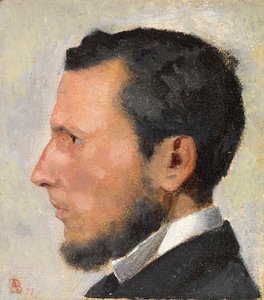
Paul Albert Besnard
1849 - 1934 , Frankrike
Kort om kunstneren
- Artistic Movement Or Style: Impresjonisme
- Artists Or Movements Influenced By This Artist: ['Akademisk maleri']
- Artists Who Influenced This Artist:
- Alexandre Cabanel
- Thomas Gainsborough
- Date Of Birth: Paris, Frankrike (1849)
- Date Of Death: 1934
- Full Name: Paul Albert Besnard
- Nationality: Fransk
- Notable Artworks:
- Døden til Timofanes
- Fred ved voldgift
- Portrett av Madame Georges Rodenbach
- Place Of Birth: Paris