

 Se i rommet
 Del som digitalt kort
 Del
Del
 Detaljer
 Studentguide

 Last ned
 Liknende objekter
 Røntgen
 Lysbildefremvisning
 Besøksstatistikk
Japanese Children


 Les mer
Kunstverket som vises på denne siden er beskyttet av opphavsretten, noe som betyr at vi ikke har juridisk tillatelse til å lage eller selge identiske reproduksjoner. Denne beskyttelsen håndheves i henhold til internasjonale avtaler som for eksempel Bernerkonvensjonen og av nasjonale lover, inkludert de som er fastsatt i Amerikansk opphavsrettslov – Tittel 17.
Som et respektfullt og lovlig alternativ tilbyr vi skreddersydde, håndmalte kunstverk inspirert av originalen. Våre dyktige og profesjonelle kunstnere studerer nøye originalens stil, stemning og kunstneriske essens for å skape et nytt og unikt verk som vekker den samme følelsen – samtidig som det forblir en original skapelse i seg selv.
Denne metoden er i fullt samsvar med opphavsrettslige regler, da den ikke innebærer kopiering eller duplisering av det beskyttede kunstverket. I stedet er det snakk om en kreativ nytolkning – et nytt maleri som er inspirert av originalen, men ikke identisk med den.
Håndlaget oljereproduksjon
Håndmalt olje på lerret i din valgte størrelse og ramme, laget på bestilling av våre kunstnere. ( Bytt til trykkversjon Gå til digitalt bilde)




P118B Nkr10

P118H Nkr10

P118W Nkr10

P438Z Nkr10

P508JH Nkr12

P508YH Nkr12

P805H Nkr10

P805Z Nkr10

P919BZ Nkr10

P919G Nkr10

P919XJ Nkr10

P959ZH Nkr10

P968JZ Nkr12

W106C Nkr8

W218G Nkr10

W218JH Nkr8

W218Y Nkr10

W307PJ Nkr10

W316G Nkr10

W316PJ Nkr8

W316Y Nkr10

W398PJ Nkr8

W4111J Nkr10

W500HY Nkr15

W500JH Nkr15

W692G Nkr12

W849H Nkr8

W940BG Nkr15

W953PJ Nkr8




Velg mellom våre forhåndsdefinerte størrelser som bevarer kunstverkets opprinnelige proporsjoner.

Du kan angi egne mål for å tilpasse en spesifikk ramme eller plass. Dersom den valgte størrelsen ikke samsvarer med originalbildets proporsjoner, vil vi enten beskjære kunstverket eller utvide maleriet med ytterligere håndmalte elementer. En digital mockup vil bli sendt til din godkjenning før produksjonen starter.
Vennligst merk at forhåndsvisningen på skjermen ikke gjenspeiler den faktiske beskjæringen eller utvidelsen. Kun mockuppen vil vise den endelige komposisjonen nøyaktig.
Selv om tilpassede størrelser er tilgjengelige, anbefaler vi å velge et mål fra den forhåndsdefinerte listen for å bevare de originale proporsjonene.
Etter bestilling vil OriginalUniqueArt.com-teamet sende e-post til kunden for instruksjoner og sende et utkast (mockup) som forhåndsvisning.
Verdensomspennende levering () på 3–4 uker i stedet for standard 5 uker. (8 October). Ingen kompromisser med kvaliteten.

Gratis ekspressfrakt over hele verden

Lerretsduk av høykvalitets lin

Full transportforsikring

Garanti for refusjon av toll og importavgifter

Garantert fargeekthet

100 dagers returrett ved fabrikasjonsfeil

100% pengene tilbake-garanti

Mengderabatt
 Glassalternativet er kun tilgjengelig i størrelser under 110 cm

Japanese Children
Reproduksjonsmetode
Format på reproduksjon
-


Totalpris
Nkr 2759
Kunstnerbiografi
A Lens Between Reality and Myth: The Life of Patrick Nagatani
The life of Patrick Nagatani began under the heavy, historical shadow of nuclear devastation. Born on August 19, 1945, in Chicago, his arrival occurred just ten days after the atomic bombing of Nagasaki, a temporal coincidence that would forever color his artistic consciousness. As a Sansei, Nagatani carried the profound legacy of the Japanese American experience, specifically the memories of forced relocation and internment camps that had reshaped his community. Moving to Los Angeles in 1955, he grew up in the vibrant Crenshaw District, an area that served as a cultural heartbeat for Japanese Americans. This upbringing, rooted in both the resilience of his heritage and the looming specter of nuclear history, provided the emotional foundation for a career defined by the tension between what is seen and what is imagined.
Nagatani’s journey from a disciplined student-athlete at Dorsey High School to a visionary photographer was paved by a rigorous academic pursuit of the arts. His formal training at Cal State L.A. and his subsequent Master of Fine Arts from UCLA placed him under the mentorship of influential figures such as Robert Heinecken and Judith Golden. These educators encouraged a departure from traditional photographic conventions, pushing him toward experimentation and a critical interrogation of the medium. Before fully immersing himself in the fine art world, Nagatani’s creative spirit found expression through filmmaking and special effects modeling, skills that would later become indispensable to his signature style of theatrical staging and meticulous composition.
The Art of Staged Truths
Nagatani’s photographic practice was far more than mere documentation; it was a deliberate, cinematic construction of reality. He possessed a singular ability to blend the precision of social documentary with the surrealism of mythic storytelling. His work often functioned as a bridge between the tangible struggles of identity and displacement and a fantastical, dreamlike realm. In pieces such as Japanese Children, he utilized surreal imagery—such as a large fish with a painted face reaching toward the sky—to explore profound themes of cultural identity through a lens of enchantment. This technique allowed him to confront uncomfortable historical truths, like the trauma of internment, by wrapping them in layers of metaphor and theatricality.
The technical mastery evident in his work often relied on a sophisticated use of light, shadow, and texture. Whether he was capturing the weathered, antique soul of a historical relic like the Star of Hope badge or constructing elaborate, staged scenes, Nagatani’s eye for detail was unparalleled. His ability to manipulate the viewer's perception through carefully curated environments turned every photograph into a window onto another time or a different dimension. This duality—the ability to be both a witness to history and an architect of imagination—is what defines his enduring contribution to contemporary photography.
Legacy and Historical Significance
Throughout his career, Nagatani’s work earned international recognition, with exhibitions spanning from the Netherlands to New York City. His solo shows, such as Nuclear Enchantment and the Chromatherapy series, showcased his evolving fascination with the intersection of light, color, and memory. Beyond the gallery walls, his influence extended into academia, where he shared his expertise as an educator at Loyola Marymount University and the University of New Mexico, mentoring a new generation of artists in the nuances of visual storytelling.
The significance of Patrick Nagatani lies in his refusal to separate the political from the poetic. He did not merely record the history of the Japanese American experience; he reimagined it, giving voice to the displaced and the forgotten through a medium that felt both ancient and avant-garde. His death in 2017 in Albuquerque marked the end of a profound creative journey, yet his work remains a vital testament to the power of photography to act as both a mirror to our darkest histories and a portal to our most beautiful dreams.

Patrick Nagatani
1945 - 2017 , United States of America
Kort om kunstneren
- Full Name: Patrick Nagatani
- Nationality: American
- Date Of Birth: 1945
- Date Of Death: 2017
- Place Of Birth: United States of America
- Notable Artworks:
- Japanese Children
- Fin de Siecle, Bat Flight Amphitheater
- Star of hope badge
- Artistic Movement Or Style: Staged Photography
- Artists Who Influenced This Artist: ['Robert Heinecken']
- Artists Or Movements Influenced By This Artist: ['Hiroshige']
Relaterte artikler
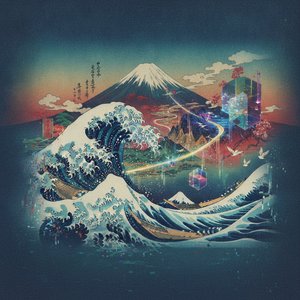
Beyond the Great Wave: The High-Impact Visual Revolution of Japanese Landscape Art
Go beyond Hokusai's Great Wave. Explore the high-impact, graphic world of Japanese Ukiyo-e landscapes and urban prints. Discover how these bold, vibrant woodblock masterpieces continue to shape modern pop culture and contemporary design aesthetics.
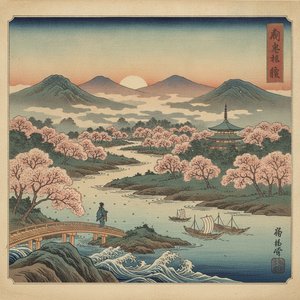
Zen on Canvas: The Timeless Artistry and Spiritual Depth of Japanese Landscape Painting
Explore the profound beauty of Japanese landscape painting. From Hokusai's iconic vistas to Zen-inspired compositions, discover the spiritual depth and historical mastery of Ukiyo-e art in this expert cultural retrospective.

Katsushika Hokusais 25 Mesterverk: Japansk Kunst for Ditt Hjem | OriginalUniqueArt.no
Utforsk Katsushika Hokusais 25 mest ikoniske kunstverk! Oppdag historiene bak The Great Wave, ukiyo-e tresnitt og japansk estetikk. Finn museumskvalitets reproduksjoner & interiørinspirasjon på OriginalUniqueArt.com.

Timeless Elegance: Capturing the Spirit of Japanese Culture Through the Lens of Ukiyo-e Fine Art
Explore the profound beauty of Japanese Ukiyo-e art. Discover the legacy of Hokusai and the Utagawa school through an expert exploration of Edo-period aesthetics, seasonal motifs, and the enduring global influence of Japan's 'Floating World' on fine art history.

Floating Worlds: The Captivating Magic and Timeless Legacy of Japanese Ukiyo-e Art
Explore the ephemeral beauty of Japanese Ukiyo-e art. From the dynamic warriors of Kuniyoshi to serene landscapes, discover the profound history, masterful techniques, and global influence of these iconic woodblock prints in our deep cultural retrospective.