
 Forhåndsvisning

 Send
 Del
 Vis detaljer
 Utskriftsvennlig guide


 Last ned bilde
 Liknende objekter
 Røntgenundersøkelse
 Lysbildefremvisning
 Spørsmål og svar
 Statistikk
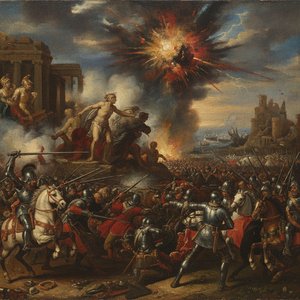
A Battle

 Vis hele teksten
Giclée / Kunsttrykk
Giclée- eller lerretsprint av museumskvalitet med rask produksjon og fleksible valgmuligheter for etterbehandling. ( Kjøp håndmalt maleri Bytt til digitalt bilde)




































Velg mellom våre forhåndsdefinerte størrelser som bevarer kunstverkets opprinnelige proporsjoner.

Skriv inn ønsket bredde og høyde for å tilpasse trykket til din ramme eller vegg. Et trykk kan kun beskjæres, aldri skaleres opp utover motivets opprinnelige størrelse, noe som betyr at et format med andre proporsjoner vil føre til tap av deler av bildet. Vi sender deg en digital mockup for godkjenning før vi starter trykkeprosessen. Bildet som vises på denne siden viser ikke den faktiske beskjæringen — det er kun mockuppen som viser dette.
Verdensomspennende levering () på 2 uker i stedet for standard 4/5 uker. (16 November)

Gratis ekspressfrakt over hele verden

Lerretsduk av lin av høy kvalitet

Full transportforsikring

Garanti for refusjon av toll og importavgifter

Garantert fargegjengivelse

100 dagers returrett ved fabrikasjonsfeil

100% pengene tilbake-garanti

Rabatt ved flere kjøp
 Glassalternativet er kun tilgjengelig i størrelser under 110 cm

A Battle
Giclée / Kunsttrykk
Størrelse på reproduksjon
-


Totalpris for valgte alternativer
Nkr 764
Om kunstneren
A Polish Master in Italian Baroque: The Life and Art of Pandolfo Reschi
Pandolfo Reschi, born in the bustling port city of Gdańsk (Danzig) in 1643, represents a fascinating intersection of Northern European origins and the vibrant artistic milieu of 17th-century Italy. While his beginnings lay within the Polish Commonwealth, Reschi’s true artistic flowering occurred after he sought opportunity and training on the Italian peninsula. He wasn't merely a traveler adopting a new style; he became an integral part of the Italian Baroque landscape, absorbing its influences while retaining a unique sensibility that distinguished his work. His relatively short life – he died in 1699 – belies a significant output marked by dynamic battle scenes, evocative landscapes, and a remarkable skill in *quadratura*, the illusionistic painting of architectural vistas.Early Training and the Influence of Giacomo Borgognone
Reschi’s decision to relocate to Italy as a young man proved pivotal. He quickly found himself under the tutelage of Giacomo Borgognone, a prominent painter known for his theatrical compositions and expertise in both history painting and decorative schemes. Borgognone instilled in Reschi a solid foundation in Baroque principles – dramatic lighting, energetic figures, and a sense of movement. However, Reschi didn’t simply replicate his master's style. He demonstrated an early inclination towards landscape, specifically drawn to the works of Salvator Rosa. Rosa’s rugged, often melancholic depictions of nature resonated with Reschi, who began to incorporate similar elements into his own compositions. This blend of Borgognone’s dynamism and Rosa’s atmospheric landscapes would become a defining characteristic of his oeuvre.Battle Scenes, Landscapes, and the Art of Illusion
Reschi's artistic production encompassed several key genres. He gained recognition for his compelling battle scenes, often depicting dramatic clashes with meticulous detail and a palpable sense of chaos. These works weren’t simply records of historical events; they were imbued with emotional intensity and a Baroque flair for spectacle. Yet, it was in his landscapes that Reschi truly excelled. Inspired by Salvator Rosa, he created vistas populated with towering trees, craggy mountains, and stormy skies – scenes that evoked both awe and a sense of human insignificance within the vastness of nature. Beyond these subjects, Reschi distinguished himself as a skilled practitioner of *quadratura*. This demanding technique required not only artistic talent but also a deep understanding of perspective and architectural principles. He skillfully created illusions of extended space, seamlessly integrating painted architecture with real interiors, often commissioned for palaces and villas. His frescoes in Florence, particularly those at the Villa della Petraia, showcase his mastery of this art form, transforming walls into breathtaking panoramic views.Historical Significance and Legacy
While not as widely celebrated as some of his contemporaries, Pandolfo Reschi occupies a significant place within the broader context of 17th-century Italian painting. His work reflects the diverse influences circulating at the time – the Northern European tradition he brought with him, the Baroque dynamism of artists like Borgognone, and the atmospheric landscapes of Salvator Rosa. He successfully synthesized these elements into a unique style that appealed to patrons seeking both dramatic power and refined artistry. Reschi’s ability to seamlessly blend genres—battle scenes, landscapes, and *quadratura*—demonstrates his versatility and technical skill. His paintings offer valuable insights into the artistic tastes of the Italian aristocracy and the evolving landscape aesthetic of the Baroque period. Though documentation remains somewhat limited, the surviving works by Reschi continue to captivate viewers with their energy, detail, and evocative power, solidifying his position as a noteworthy figure in the history of Polish artists who found success on Italian soil. Diana & Endymion, for example, exemplifies this Baroque mastery, showcasing rich color and dynamic classical painting.
Pandolfo Reschi
1643 - 1696 , Poland
Kort om kunstneren
- Artistic Movement Or Style: Baroque
- Artists Who Influenced This Artist:
- Giacomo Borgognone
- Salvator Rosa
- Date Of Birth: 1643
- Date Of Death: 1699
- Full Name: Pandolfo Reschi
- Nationality: Polish
- Notable Artworks: ['Diana and Endymion']
- Place Of Birth: Gdańsk, Poland
Relaterte artikler

Echoes of Battle: The Sublime Grandeur and Human Drama of Warfare in Fine Art
Explore the profound drama of warfare through fine art. From heroic battle scenes to intimate portraits of valor, discover museum-quality oil reproductions and bespoke commissions curated for the discerning collector by OriginalUniqueArt.

The Weight of Conflict: How Military Art Shifted from Glorifying Victory to Documenting Humanity
Explore how military art evolved from imperial propaganda to raw realism. Discover the profound human truth behind every brushstroke.

Epic Battles in Art: A Definitive Guide to History's Most Powerful Masterpieces on Canvas
Explore the profound history of epic battle paintings. From Romanticism to Realism, discover how masters captured conflict, heroism, and power on canvas. Learn about art history's most iconic war scenes and find museum-quality oil reproductions at OriginalUniqueArt.com.
Epic Battles on Canvas: A Visual Journey Through Art History's Most Powerful War Paintings
Embark on a visual journey through history's most powerful war paintings. Explore the dramatic mastery of Romanticism and Realism through expert analysis of epic battle scenes on canvas, celebrating the profound emotion and artistry behind art history's greatest military masterpieces.

Battle Scars & Bold Strokes: The High-Impact Power of War Art for the Modern Collector
Explore the raw power of war art. From epic historical battles to bespoke hand-painted oil reproductions, discover high-impact masterpieces designed for the bold modern collector. Elevate your space with visceral, museum-quality combat art and custom historical commissions.