

 Del som digitalt kort
 Del
Del
 Detaljer
 Studentguide

 Last ned
 Liknende objekter
 Lysbildefremvisning
 Besøksstatistikk
Thomas Fenton


 Les mer
Kjøp et høyoppløselig, forbedret digitalt bilde med langt høyere kvalitet enn forhåndsvisningen på nettet.
Hver fil er omhyggelig klargjort av våre egne spesialister ved hjelp av avanserte verktøy og profesjonell manuell retusjering. Vi sørger for at hvert bilde har eksepsjonell klarhet, presis fargegjengivelse og fine detaljer.
Den endelige filen leveres via e-post innen 72 timer, optimalisert for umiddelbar bruk i profesjonelle, redaksjonelle og trykte miljøer. Dette er den samme kvaliteten som benyttes av ledende designstudioer, utgivere og gallerier.
Digitalt bilde
Last ned en høyoppløselig fil til personlig bruk, utskrift og kreative prosjekter. ( Bytt til trykkversjon Bestill håndmalt reproduksjon)
Inkludert i alle bestillinger av digitale bilder
Profesjonell digital levering, garantert
Når du velger OriginalUniqueArt.com, får du ikke bare et bilde – du mottar et profesjonelt etterbehandlet digitalt kunstverk, skapt med presisjon og med en garantert tilfredshetsgaranti. Her er alt som automatisk følger med din bestilling:

Rask levering på e-post
Din høyoppløselige digitale bildefil sendes til din e-post innen 72 timer etter bestilling – klar til umiddelbar bruk.

KI-forbedret digital fil
Ditt kunstverk blir profesjonelt optimalisert ved hjelp av avanserte AI-verktøy og manuell redigering, noe som sikrer maksimal detaljrikdom, klarhet og fargegjengivelse.

Gratis livslang nybestilling
Har du ved et uhell slettet eller mistet filen din? Ingen bekymring – vi sender den på nytt når som helst, helt gratis.

Ingen importavgifter – noen gang
Nyt ditt kunstverk umiddelbart uten toll, avgifter eller leveringskostnader – digitale nedlastinger er alltid avgiftsfrie.

Garantert fargenøyaktighet
Vi sikrer at det digitale bildet gjenspeiler de originale fargene så nøyaktig som mulig ved hjelp av profesjonelle verktøy og fargehåndtering.

100 dagers tilfredshetsgaranti
Hvis du ikke er fornøyd med ditt digitale bilde, vil vi revidere det eller refundere 100% innen 100 dager – uten spørsmål.

100% Penggaranti
Ikke fornøyd? Få full refusjon innen 100 dager etter at du har mottatt din digitale fil – uten spørsmål.

Rabatt ved storkjøp
Kjøp 3 bilder, spar 10% - Kjøp 5, spar 15% - Kjøp 10+, spar 20%. Ideelt for kreative prosjekter, gallerier og byråer.
Thomas Fenton by Olin Levi Warner: A Portrait of Quiet Contemplation
“Thomas Fenton,” sculpted by Olin Levi Warner in 1878, is a remarkable plaster sculpture housed within the Smithsonian American Art Museum's esteemed collection. This piece exemplifies Warner’s mastery of classical sensibilities and his keen eye for capturing nuanced human expression. It offers viewers a glimpse into late 19th-century portraiture and the artistic skill of a prominent American sculptor.
The Artist: Olin Levi Warner
Olin Levi Warner (1844-1896) was an American sculptor who honed his craft through rigorous training in Paris at the École des Beaux-Arts. He studied under François Jouffroy and served as an assistant to the renowned Jean-Baptiste Carpeaux, absorbing invaluable techniques and artistic philosophies. Returning to America, Warner established himself as a leading figure in the art scene, founding the Society of American Artists and becoming an associate of the National Academy of Design. His work is characterized by its classical influences, restrained style, and exceptional attention to detail, all evident in “Thomas Fenton.” Warner’s later years were marked by a dedication to capturing Native American subjects, further demonstrating his artistic range.
A Detailed Examination of "Thomas Fenton"
The sculpture depicts a man with a distinguished appearance – a beard and spectacles suggest intellect and perhaps age. Warner masterfully captures a sense of quiet contemplation in the subject’s expression. The level of detail is striking; one can almost feel the texture of the hair and skin through the artist's skillful rendering. Key features include:
- Material: Plaster
- Date: 1878
- Collection: Smithsonian American Art Museum
- Style: Classical Realism
The sculpture’s composition is simple yet effective, focusing entirely on the head and shoulders of the subject. This allows for a concentrated exploration of facial features and expression, creating an intimate connection between the viewer and the portrayed individual.
Symbolism and Emotional Impact
"Thomas Fenton" transcends mere representation; it evokes a sense of dignity, introspection, and perhaps even melancholy. The man’s gaze suggests deep thought, inviting viewers to ponder his story and inner world. Portraiture in this era often served as a means of commemorating individuals and preserving their memory for posterity. Warner's skill elevates "Thomas Fenton" beyond a simple likeness; it becomes a poignant reflection on the human condition.
Reproductions and Legacy
For those who appreciate the beauty and historical significance of “Thomas Fenton,” OriginalUniqueArt.com offers meticulously crafted, handmade oil painting reproductions. These reproductions allow art enthusiasts to experience Warner’s artistry in their own homes while preserving the integrity of the original artwork. The Smithsonian American Art Museum diligently conserves "Thomas Fenton," ensuring its preservation for future generations. Olin Levi Warner's legacy continues through his impactful sculptures, including this compelling portrait that exemplifies classical realism and artistic excellence.
Kunstnerbiografi
Skyggenes og lysets billedhugger: Livet til Olin Levi Warner
I de amerikanske skulpturens annaler fra slutten av det 19. århundre, er det få navn som fremmaner den delikate balansen mellom klassisk storhet og intim realisme så gripende som Olin Levi Warner. Warner ble født i 1844 i den fredelige byen Suffield i Connecticut, og bar med seg en historisk tyngde i sitt slektskap som etterkommer av revolusjonskrigen helt Seth Warner. Denne forfedreforbindelsen til amerikansk legende kan ha forutbestemt hans livslange hengivenhet til minnekunsten. Før han noen gang førte meiselen mot marmor eller bronse, var Warners hender kjent med den moderne tids praktiske realiteter; hans tidlige år som håndverker og telegrafist ga ham en unik og disiplinert presisjon—en teknisk fingerferdighet som senere skulle definere de nitidige detaljene i hans skulpturelle mesterverk.
Warners livsbane endret seg uforutsigbart i 1869 da han søkte Europas kunstneriske sjel. Ved ankomsten til Paris fordypet han seg i det rigorøse akademiske miljøet ved École nationale supérieure des beaux-arts. Under veiledning av François Jouffroy begynte Warner å mestre det klassiske formspråket, men det var forbindelsen med den legendariske Jean-Baptiste Carpeaux som virkelig tente hans kreative gnist. Fra Carpeaux lærte Warner å tilføre de rigide tradisjonene i akademisk skulptur en følelse av vitalitet og bevegelse, et stilistisk kjennetegn som gjorde det mulig for ham å fange ikke bare motivets likhet, men selve dets essens. Selv uroen under den fransk-preussiske krigen kunne ikke avspore hans kunstneriske utvikling; etter å ha vervet seg til den fremmede legion, kom han ut av konflikten med en dypere besluttsomhet om å bringe de sofistikerte nyansene fra fransk skulptur tilbake til amerikansk jord.
En arv i lavrelieff og bronse
Da Warner vendte tilbake til New York i 1872, etablerte han seg som en pioner innen et spesielt og fengslende medium: det klassiske portrettmedaljongen i lavrelieff. Mens mange av hans samtidige fokuserte på den monumentale skalaen i store statuer, fant Warner et dypt uttrykk i de grunne, elegante konturene i relieffarbeid. Hans evne til å manipulere lys og skygge over flater av bronse og gips gjorde det mulig for ham å skape portretter som føltes både tidløse og intenst personlige. Denne mestringen er kanskje tydeligst i verk som "Thomas Fenton," en gipsskulptur fra 1878 som viser hans utrolige evne til å gjengi nyanserte menneskelige ansiktsuttrykk, der han fanger en følelse av stille, intellektuell kontemplasjon gjennom de subtile teksturene i hår og hud.
Warners kunstneriske repertoar var langt fra ensidig. Selv om han var en mester av det nyklassiske, avslørte hans senere utforskninger en dyp empati for den mangfoldige veven i den amerikanske erfaringen. Hans ekspedisjoner til Northwest Territory førte til en transformativ fascinasjon for urfolkets kultur. Denne perioden resulterte i noen av hans mest gripende prestasjoner, inkludert bronserelieffet fra 1891 av høvding Ya Tin Ee Ah Witz av Cayuse-folket. I disse verkene beveget Warner seg forbi ren dokumentasjon; han brukte sin raffinerte teknikk til å skjenke en følelse av verdighet, høytidelighet og historisk varighet til sine motiver, og bygget slik bro mellom den klassiske europeiske tradisjonen og den rå, kraftfulle virkeligheten på den amerikanske grensen.
Kunstnerisk fremragende og historisk betydning
Betydningen av Olin Levi Warner strekker seg langt utover de fysiske objektene han etterlot seg. Han var en grunnleggende skikkelse i institusjonaliseringen av amerikansk kunst og spilte en avgjørende rolle i etableringen av profesjonelle kunstneriske fellesskap. Hans bidrag til følgende organisasjoner sementerte hans status som en leder for sin generasjon:
- The Society of American Artists: Som grunnlegger av denne innflytelsesrike gruppen i 1877, hjalp Warner med å skape en plattform der kunstnere kunne bevege seg forbi konservative begrensninger og omfavne mer moderne og uttrykksfulle stiler.
- The National Academy of Design: Hans tilknytning til denne prestisjetunge institusjonen reflekterte hans posisjon blant de fremste utøverne av amerikansk skulptur.
Selv om livet hans ble kortvarig i 1896, forblir Warners innvirkning etset inn i bronse og gips i verdens mest anerkjente samlinger, inkludert Smithsonian American Art Museum og The Walters Art Museum. Han står igjen som en sentral skikkelse som lyktes med å oversette de sofistikerte teknikkene fra den franske Beaux-Arts-tradisjonen til et unikt amerikansk skulpturelt språk—et språk som æret fortiden gjennom den nitidige skjønnheten i portrettmedaljongen, samtidig som det rettet blikket fremover mot en mer realistisk og inkluderende representasjon av menneskeheten.
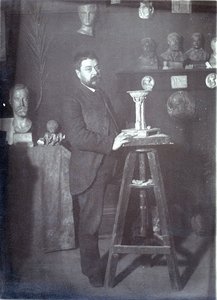
Olin Levi Warner
1844 - 1896 , USA
Kort om kunstneren
- Artistic Movement Or Style: Basrelieff-skulptur
- Artists Or Movements Influenced By This Artist: ['Nyklassisisme']
- Artists Who Influenced This Artist: ['Jean-Baptiste Carpeaux']
- Date Of Birth: Suffield, USA
- Date Of Death: 1896
- Full Name: Olin Levi Warner
- Nationality: Amerikansk
- Notable Artworks:
- Thomas Fenton
- Portrett av en mann
- Place Of Birth: Connecticut