

 Send
Send Del med andre
 Vis detaljer

 Last ned bildet
 Liknende objekter
 Lysbildefremvisning
Landscape
 Silk
Silk- Textile
- Nanga
 1833
1833- 19th Century
 28.0 x 18.0 cm
 Cleveland Museum of Art
 Vis hele teksten
Kjøp et høyoppløselig, forbedret digitalt bilde som er langt bedre enn forhåndsvisningen på nettet.
Hver fil er omhyggelig klargjort av våre egne spesialister ved hjelp av avanserte verktøy og profesjonell manuell retusjering. Vi sørger for at hvert bilde har eksepsjonell klarhet, presis fargegjengivelse og fine detaljer.
Den endelige filen leveres via e-post innen 72 timer, optimalisert for umiddelbar bruk i profesjonelle, redaksjonelle og trykte miljøer. Dette er den samme kvaliteten som benyttes av ledende designstudioer, utgivere og gallerier.
Digitalt bilde
Last ned en høyoppløselig fil for personlig bruk, utskrift og kreative prosjekter. ( Kjøp trykk Kjøp håndlaget maleri)
Inkludert i alle bestillinger av digitale bilder
Ekspert digital levering, garantert
Når du velger OriginalUniqueArt.com, får du ikke bare et bilde – du mottar et profesjonelt forbedret digitalt kunstverk, skapt med presisjon og med en garantert tilfredshetsgaranti. Her er alt som automatisk følger med din bestilling:

Rask digital levering
Din høyoppløselige digitale bildefil sendes til din e-post innen 72 timer etter bestilling – klar til umiddelbar bruk.

KI-forbedret digital fil
Ditt kunstverk blir profesjonelt optimalisert ved hjelp av avanserte AI-verktøy og manuell redigering, noe som sikrer maksimal detaljrikdom, klarhet og fargegjengivelse.

Gratis livslang nyutlevering
Har du ved et uhell slettet eller mistet filen din? Ingen bekymring – vi sender den på nytt når som helst, helt gratis.

Ingen importavgifter – noen gang
Nyt ditt kunstverk umiddelbart uten toll, avgifter eller leveringskostnader – digitale nedlastinger er alltid avgiftsfrie.

Garantert fargenøyaktighet
Vi sikrer at ditt digitale bilde gjenspeiler de originale fargene så nøyaktig som mulig ved hjelp av profesjonelle verktøy og fargehåndtering.

60 dagers tilfredshetsgaranti
Hvis du ikke er fornøyd med ditt digitale bilde, vil vi revidere det eller refundere 100% innen 60 dager – uten spørsmål.

100% Penggaranti
Ikke fornøyd? Få full refusjon innen 60 dager etter at du har mottatt din digitale fil – uten spørsmål.

Rabatt ved storkjøp
Kjøp 3 bilder, spar 10% - Kjøp 5, spar 15% - Kjøp 10+, spar 20%. Ideelt for kreative prosjekter, gallerier og byråer.
A Journey Through Edo Serenity: The Landscape of Nukina Kaioku
To gaze upon this exquisite landscape by Nukina Kaioku is to step across the threshold of time and into a realm steeped in profound tranquility. Dating from 1833, this piece captures not merely a vista of mountains, trees, and rocks, but rather the very spirit of contemplation that defined much of Edo period Japanese artistry. The delicate rendering on silk, combined with the presence of oriental calligraphy, elevates this work beyond simple decoration; it becomes a meditative object, a tangible whisper from a bygone era when art served as both mirror and guide for the soul.
Mastery in Nanga: Technique and Tradition
Kaioku’s genius is inextricably linked to the tradition of Nanga—the masterful fusion of landscape painting with calligraphy. This integration demands an extraordinary level of skill, requiring the artist to treat ink strokes not just as descriptive elements, but as carriers of philosophical weight. The technique employed here speaks to a deep understanding of materials; the silk substrate allows for a luminosity and softness that wood or paper cannot replicate, giving the mountains a breathy, ethereal quality. Observe how the brushwork guides the eye: it moves seamlessly from the solid grounding of the rocks to the delicate sweep of the distant peaks, all while being anchored by the elegant script that frames the scene.
Symbolism Woven into the Brushstrokes
In Japanese art, landscape is rarely just about geography. The mountains often symbolize permanence and the enduring spirit, while the scattered trees and rocks speak to resilience amidst change. The inclusion of calligraphy adds a layer of intellectual depth; these characters are not mere labels but distillations of poetry or philosophical thought, inviting the viewer to pause and decipher their meaning. For the collector or designer, this piece offers more than aesthetic beauty; it offers conversation—a dialogue between visual art, written word, and natural philosophy. It suggests that true beauty lies in the harmony between the wild grandeur of nature and the disciplined elegance of human contemplation.
Bringing Edo Calm into Modern Spaces
This reproduction captures the essence of a masterpiece designed for quiet appreciation. Whether adorning a formal reception room or lending a serene focal point to a private study, this artwork introduces an immediate sense of cultured calm. Its dimensions (28 x 18 cm) suggest its perfect placement as a treasured accent piece—a window into Japanese aesthetic ideals. Owning a reproduction allows one to partake in the history and profound artistry of Kaioku’s hand without the constraints of time or distance, inviting daily moments of quiet reflection.
CLASSIFICATION: AsianOm kunstneren
Nukina Kaioku: A Master of Tranquility and Tradition
Nukina Kaioku (1778-1863) stands as a pivotal figure in Edo period Japanese art, embodying the spirit of Nanga—a fusion of landscape painting and calligraphy—and representing one of the “Three Brushes,” a prestigious group of artists recognized for their exceptional skill and artistic vision. His legacy continues to inspire artists today, reminding us of the enduring power of beauty and contemplation. Born into a samurai family steeped in archery instruction to the Hachisuka clan of Awa Province, Kaioku’s upbringing instilled a disciplined ethos that subtly shaped his artistic pursuits. Unlike many of his peers destined for martial prowess, he embraced the intellectual traditions championed by Confucian philosophy and excelled in calligraphy, specifically adopting the stylistic influence of Kūkai—the revered Buddhist monk known for his innovative kana syllabary. This foundational training would prove instrumental in shaping his artistic sensibilities throughout his life.Early Life and Education: Seeds of Artistic Vision
Kaioku’s formative years were dedicated to mastering both art and scholarship. His uncle, a priest at Mount Kōyasan’s Shingon-shū temple, nurtured his passion for calligraphy by introducing him to Kūkai's distinctive writing style. This meticulous attention to detail—capturing subtle variations in light and shadow—combined with his masterful command of brushwork created images that resonate with timeless beauty. He demonstrated remarkable versatility, skillfully employing Kara-e—the Chinese-style painting technique—to depict breathtaking vistas of Japan’s largest inland lake, Lake Biwa. This unwavering adherence to Wang Xizhi's principles served as a guiding force throughout his artistic journey.The Artistic Style of Tranquil Landscapes
Kaioku’s mature artistic style was characterized by unwavering adherence to the orthodox tradition of Wang Xizhi—a monumental figure in Chinese calligraphy whose elegant strokes and profound philosophical underpinning served as a guiding principle. However, he wasn't merely a slavish imitator; Kaioku demonstrated remarkable versatility, skillfully employing Kara-e—the Chinese-style painting technique—to depict breathtaking vistas of Japan’s largest inland lake, Lake Biwa. His landscapes are imbued with a palpable serenity, reflecting the contemplative spirit of Nanga and conveying a deep appreciation for the natural world. He meticulously captured subtle variations in light and shadow—a hallmark of Kara-e—creating images that embody harmony and balance.Lake Biwa in Four Seasons: A Panoramic Reflection
Perhaps Kaioku’s most celebrated achievement is “Lake Biwa in Four Seasons,” completed in 1834. Measuring 62 x 154 cm, this monumental panel painting exemplifies the grandeur and subtlety of Kara-e artistry. It portrays Lake Biwa across its seasonal transformations—spring blossoms, summer greenery, autumn foliage, and winter snow—offering viewers a panoramic glimpse into Japan’s natural splendor. This artwork stands as a testament to Kaioku's technical prowess and his ability to distill complex emotions into visual form. He skillfully blended meticulous observation with philosophical contemplation, resulting in an image that transcends mere representation.Legacy and Influence: An Enduring Spirit
Nukina Kaioku’s influence extended far beyond his own lifetime, inspiring subsequent generations of artists who sought to emulate his stylistic elegance and intellectual depth. He remains a cornerstone of Edo period art history—a symbol of artistic refinement and unwavering devotion to tradition. His serene landscapes continue to captivate audiences today, reminding us of the enduring power of beauty and contemplation. He was one of the renowned calligraphers in groups of three referred to as Sanpitsu, or three brushes, during the Bakumatsu period. His mature calligraphy style and paintings continue to inspire artists today. Kaioku's legacy is evident in the numerous artists who followed in his footsteps.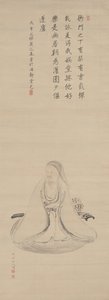
Nukina Kaioku
1778 - 1863 , Japan
Kort om kunstneren
- Artistic Movement Or Style: Nanga Style
- Artists Or Movements Influenced By This Artist: ['Kara-e']
- Artists Who Influenced This Artist: ['Wang Xizhi']
- Date Of Birth: 1778
- Date Of Death: 1863
- Full Name: Nukina Kaioku
- Nationality: Japanese
- Notable Artworks: ['Lake Biwa in Four Seasons']
- Place Of Birth: Shikoku

