Oljeversjon
 Alt om Triptych







































 For kunstverk eller reproduksjoner som er større enn 105 cm (ca. 41 tommer) på noen side, vil rammen bli sendt som et sett som må monteres. Denne metoden sikrer trygg levering og forhindrer skader under transport.


A Divine Narrative in Wood and Pigment
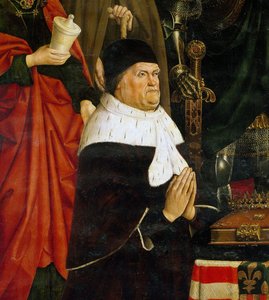
Behold this magnificent triptych, a profound meditation on the life of Jesus Christ, executed by the master hand of Nicolas Froment in 1461. This work is not merely a depiction; it is a devotional journey across three pivotal moments of Christian history—the serene beginnings, the agonizing sacrifice, and the triumphant dawn of resurrection. The sheer narrative scope contained within these panels invites the viewer into an intimate dialogue with sacred storytelling. From the gentle glow surrounding the Nativity scene in the first panel, where Mary cradles the infant Jesus amidst shepherds and angels, to the dramatic tension etched into the crucifixion tableau, and finally to the radiant emergence from the tomb, each segment pulses with untold human drama and divine mystery.
Mastery of the Early Renaissance Style
Nicolas Froment stands at a fascinating crossroads in art history—a painter whose work beautifully bridges the lingering grace of the Gothic tradition with the burgeoning naturalism whispered by Flemish influences. His technique, characteristic of the Second School of Avignon, allows for an astonishing level of detail while maintaining a spiritual resonance. Observe the figures: they are not static icons but breathing participants. The drapery falls with convincing weight, and the faces carry distinct, palpable emotions—a mixture of awe, sorrow, piety, and wonder. This commitment to naturalism, coupled with the vibrant palette achieved through meticulous hand-painting, gives the entire piece an immediate, almost tangible presence that transcends its age.
Symbolism and Emotional Resonance
The symbolism woven throughout this triptych is rich and deeply layered. The progression from birth to death to resurrection encapsulates the core tenets of Christian faith—the cycle of sacrifice leading inevitably to eternal life. Each figure, whether a Roman soldier, a grieving disciple, or an angelic messenger, carries symbolic weight. For the modern collector or decorator, owning such a piece means acquiring more than just art; it is acquiring a focal point for contemplation and spiritual reflection. The vibrant colors are employed not just for beauty, but to heighten the emotional stakes of each scene, drawing the eye through the narrative arc.
A Statement Piece for Any Grand Interior
Measuring 175 x 134 cm, this triptych possesses a commanding presence. It is designed to anchor a significant space—perhaps a grand hall, a library, or a chapel-inspired room. While the original wood paneling speaks of centuries of history, acquiring a high-quality reproduction allows you to integrate this monumental piece of art into your contemporary décor with confidence. The depth and complexity of Froment’s vision ensure that it will remain a captivating centerpiece, drawing admiration for its masterful execution and profound subject matter.
Spørsmål og svar
Er Triptych malt for hånd eller er det et trykk?
Håndmalt: en utdannet kunstner kopierer Triptych i olje på linlerret.
Hvilken størrelse bør jeg velge for Triptych?
Originalen måler 175 x 134 cm. Størrelsene varierer fra 25.9 x 38.6 cm (Nkr1858) til 165.1 x 246.4 cm (Nkr14123); tabellen på denne siden viser de viktigste alternativene og deres priser.
Hvor lang tid tar leveringen?
Levering tar 4 til 5 uker med gratis ekspressfrakt over hele verden; en mulighet for hurtigproduksjon tilbys på denne siden. Du kan returnere varen innen 100 dager for full refusjon, uten betingelser.
Hvor befinner originalen av Triptych seg?
Originalen er i samlingen til Galleria degli Uffizi, Firenze.
Hvilket medium brukte Nicolas Froment for Triptych?
Oil On Panel
 Forhåndsvisning

 Send
 Del
 Vis detaljer
 Faktablad


 Last ned bilde
 Liknende objekter
 Røntgenundersøkelse
 Lysbildefremvisning
 Spørsmål og svar

 Statistikk