 Bytt til trykk
 Vis hele teksten







































 For kunstverk eller reproduksjoner som er større enn 105 cm (ca. 41 tommer) på noen side, vil rammen bli sendt som et sett som må monteres. Denne metoden sikrer trygg levering og forhindrer skader under transport.


St. George the Victorious: A Symbol of Courage and Triumph
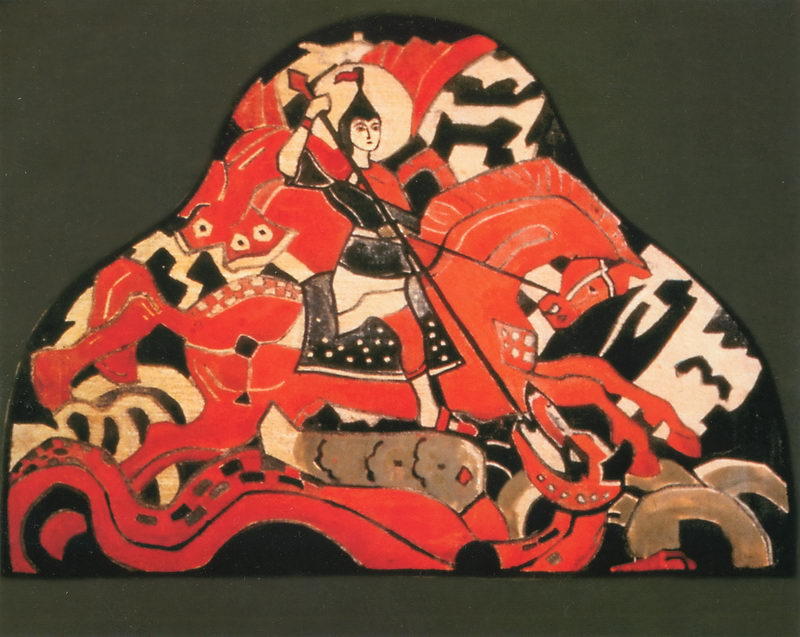
The painting St. George the Victorious by Nicholas Roerich is a masterpiece that embodies the essence of symbolism, inviting viewers to delve into its profound meaning. Created in 1920, this oil on canvas work measures 13 x 16 cm and is a testament to Roerich's skill in conveying complex ideas through art.
Artistic Style and Composition
Roerich's St. George the Victorious is characterized by its vibrant red background, intricate designs, and the depiction of St. George on horseback with a lance in hand. The composition showcases two horses, one on either side of the painting, adding to the sense of movement and energy. A figure is also visible near the top center, possibly representing an attendant or bystander, which adds depth to the scene. The overall effect is dynamic and visually arresting, drawing the viewer into a world of heroic action.
Symbolism and Interpretation
The symbolism in St. George the Victorious is multifaceted. St. George, as a figure, represents courage, victory, and the triumph of good over evil – a timeless narrative celebrated across cultures. The use of red in the background signifies passion, strength, and sacrifice, intensifying the dramatic impact of the scene. The horses, often symbols of power and freedom, underscore the dynamic nature of the encounter. The dragon itself represents chaos or evil that must be overcome, making St. George's victory a powerful symbol of hope and righteousness. Roerich masterfully uses these elements to create a work rich in meaning.
Historical Context and Artistic Influences
Created in 1920, St. George the Victorious reflects a period of significant cultural and artistic change. Roerich was deeply influenced by Russian Symbolism, which emphasized spirituality and emotional depth. His involvement with Sergei Diaghilev's “World of Art” society further shaped his aesthetic sensibilities. The painting’s stylized figures and simplified forms also suggest an influence from traditional East Asian art, particularly Korean celadon pottery. This blend of influences creates a unique artistic voice that resonates with both Eastern and Western traditions.
Emotional Impact and Legacy
St. George the Victorious evokes a sense of awe and inspiration. The vibrant colors, dynamic composition, and powerful symbolism combine to create an emotionally resonant experience for the viewer. It is not merely a depiction of a historical event but rather a timeless allegory about overcoming adversity and achieving victory through courage and faith. Roerich’s work continues to inspire art enthusiasts and collectors alike, solidifying his place as one of the most important artists of the 20th century.
Spørsmål og svar
Hvilken stemning uttrykker "St. George the Victorious" av Nikolai Roerich innenfor Art Nouveau?
Den Spiritual stemningen i "St. George the Victorious" ledsager dens Art Nouveau-stil.
Hvilken stilart tilhører "St. George the Victorious"?
"St. George the Victorious" av Nikolai Roerich tilhører Art Nouveau-retningen. Denne retningen gir det stilistiske kontekstet til verket.
Når og innen hvilken stilretning ble "St. George the Victorious" laget?
"St. George the Victorious" ble laget i 1920, innenfor Art Nouveau-retningen.
 Forhåndsvisning
 Send
Send Del
Del
 Vis detaljer
 Utskriftsvennlig guide

 Last ned bilde
 Liknende objekter
 Røntgenundersøkelse
 Lysbildefremvisning
 Q&A
Q&A Statistikk







